
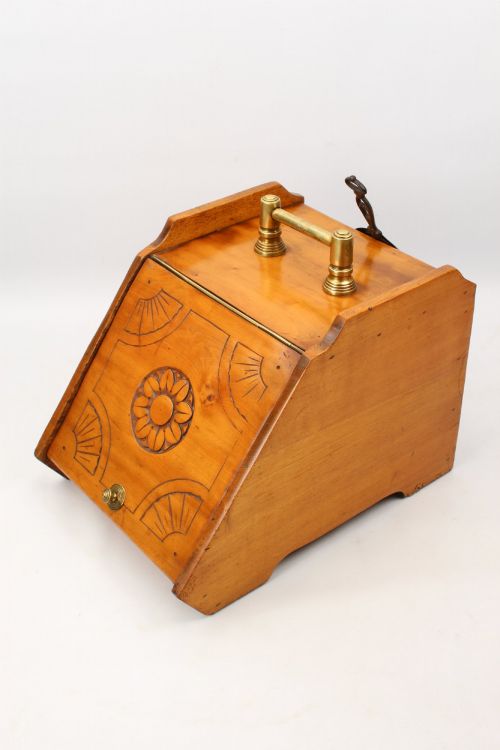


Edwardian Oak Fireside Box
These edwardian oak fireside box pieces are solid timber hearth containers designed to hold fuel close to the grate.

Edwardian Oak Fireside Box
When you search for an edwardian oak fireside box, you encounter sturdy timber containers built to hold coal, logs or kindling beside the fireplace. These pieces include purdoniums, coal scuttles, log boxes and coal bins originating mainly from the Edwardian and Victorian eras.
The version most commonly met on this page is the Edwardian oak coal box or purdonium, often fitted with a hinged front lid and a metal liner. Examples range from simple vernacular timber bins to decorative models featuring carved details and metal mounts.
Makers and designers of the period adapted these utilitarian hearth boxes to suit contemporary domestic interiors using regional timbers and workshop designs. They served as functional furniture designed to keep solid fuel contained while complementing the hearth furniture.
Construction and materials
Makers built these pieces primarily from solid oak and mixed woods, constructing the main bodies to withstand heavy daily use. Panels were joined using standard workshop techniques of the period, providing structural rigidity for holding dense loads of coal or logs.
Metal components played a crucial role in both function and decoration, with brass hinges, handles and iron fittings secured to the timber bodies. Many examples incorporated removable metal liners or pans to catch debris, alongside decorative copper panels reflecting Arts and Crafts influences.
The recorded object types range from simple log bins to specialised purdoniums with original matching shovels.
Material selection and detailing
Quality in these pieces depends on the selection of timber and the solidity of the construction, moving from plain utilitarian boxes to highly finished workshop items. Heavier gauge brass hardware and thicker oak panels distinguish better examples from simpler utility boxes.
Carved ornament and metalwork finish separate standard production items from finer pieces, particularly where hand-beaten copper panels or detailed relief carving adorn the front. The presence of original fitted metal liners and matching shovels also alters the completeness of a piece.
Liberty London
The Edwardian Oak Fireside Box Glossary
- Purdonium
- A specialised coal box featuring a sloping front door that drops forward to release fuel from an internal metal scoop or liner.
- Coal scuttle
- A traditional vessel designed for carrying coal to the fire, often equipped with a swing handle and a matching shovel.
- Arts and Crafts
- A design movement emphasising handcraftsmanship, simple forms and honest materials, frequently seen in copper-mounted oak boxes.
- Log box
- A sturdy timber container built specifically for storing and transporting larger logs for an open hearth.
- Liner
- The removable metal or zinc insert placed inside a coal box to contain dust and prevent moisture from damaging the surrounding wood.
Edwardian Oak Fireside Box: Frequently Asked Questions
What is a purdonium?
A purdonium is a specific type of coal box featuring a hinged, sloping front door that drops forward to provide access to an internal metal container. This design kept the fuel neatly enclosed while allowing straightforward access beside the hearth.
Such containers were common fixtures in Edwardian and Victorian drawing rooms where concealing the coal was preferred over leaving it in an open scuttle.
How were these boxes used?
These boxes stored solid fuel such as coal, anthracite or logs directly beside the fireplace for immediate use by the hearth. The internal metal liner allowed users to lift out the fuel residue or carry the container for refilling.
They functioned as both practical storage units and domestic furniture items designed to match other fireside accessories like companion sets and fenders.
How do I care for oak and brass?
Oak furniture benefits from occasional application of natural wax to nourish the grain and protect the surface from dry heat near the fireplace. Avoid placing timber boxes directly against active heat sources to prevent the wood from splitting.
Brass handles and mounts can be polished with a soft cloth, though many owners prefer to maintain the darker patination accumulated over decades of use.
How do I distinguish Edwardian from Victorian styles?
Victorian pieces often display heavier proportions, darker finishes and deeper carved ornamentation, reflecting mid to late nineteenth-century tastes. Edwardian examples frequently show lighter oak tones and simpler lines, occasionally incorporating Arts and Crafts copper details.
Makers working around the turn of the century blended traditional cabinet-making methods with newer decorative metalwork styles influenced by the Arts and Crafts movement.