
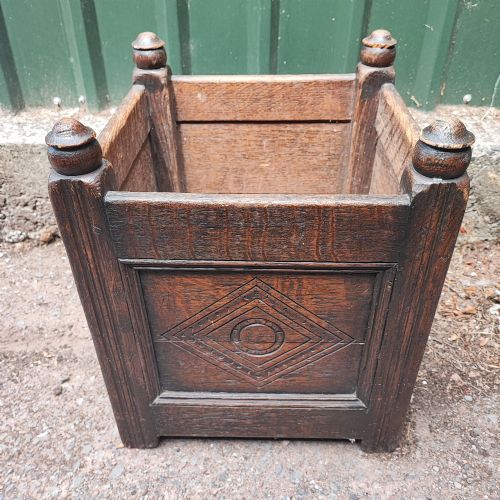
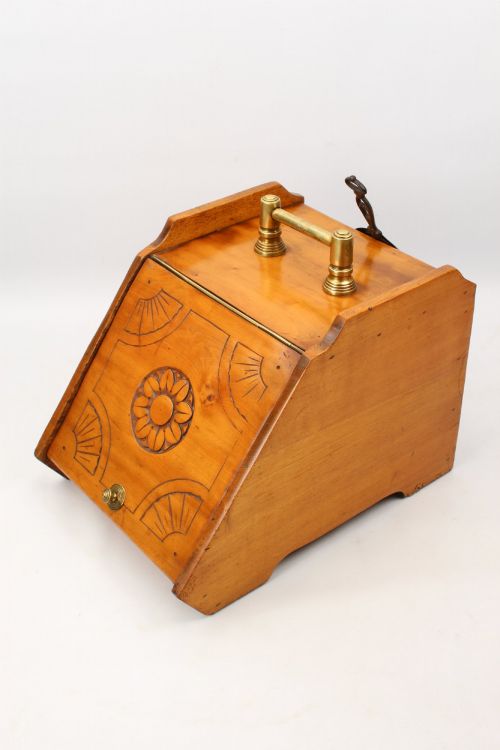


Carved Oak Hearth Storage
Carved oak hearth storage offers solid utility beside the fire, combining traditional timber construction with practical fire-side containment.

Carved Oak Hearth Storage
Carved oak hearth storage encompasses utilitarian boxes, scuttles, and purdoniums designed to hold fuel near a fireplace. These items serve the dual purpose of keeping fuel tidy while adding texture to the hearth.
The pieces available here typically span the Victorian and Edwardian periods, running from eighteen-eighty through to nineteen hundred. You will regularly encounter forms labelled as coal boxes, log boxes, and purdoniums.
Rustic country styles sit alongside more formal Victorian and Edwardian iterations. Each version reflects the domestic heating needs of its respective era through sturdy timber construction.
How they were made
Makers utilised solid oak alongside brass and iron fittings to build these containers. Timber frames provide the structural body, while metal components reinforce stress points and offer handles or shovels.
Carving defines the decoration on these boxes, often applied directly to the front panels. Metalwork is integrated through hinges, handles, and occasional shovel attachments to handle daily hearth use.
Many purdoniums arrived equipped with their own dedicated shovel, ensuring the hearth remained tidy after stoking.
What varies in quality
Quality rests in the crispness of the carved decoration and the substantial nature of the oak timber. Heavier construction and more deliberate detailing separate superior pieces from standard utilitarian boxes.
The grade of the brass and iron hardware also dictates overall quality. Well-cast handles and robust hinges indicate a higher standard of manufacture compared to simpler stamped metal fittings.
The Carved Oak Hearth Storage Glossary
- Purdonium
- A specialised coal box featuring a sloping front door that drops forward to reveal a metal liner. This form gained popularity during the Victorian era for domestic hearths.
- Coal Scuttle
- A bucket or box designed for carrying and storing coal, frequently equipped with a swing handle and a matching shovel. These items sit directly by the fireplace.
- Oak
- A dense, durable hardwood prized for its prominent grain pattern and strength. It forms the primary structural material for these storage boxes.
- Edwardian
- Pertaining to the period from nineteen hundred to nineteen ten, characterised by lighter proportions and refined domestic accessories. Pieces from this era often refine earlier Victorian designs.
Carved Oak Hearth Storage: Frequently Asked Questions
What is a purdonium?
A purdonium is a specialised coal box featuring a hinged front flap that drops forward to release fuel. It typically houses an internal metal liner to contain coal dust.
These containers were kept beside Victorian and Edwardian fireplaces as a tidy alternative to open buckets. The design allowed servants or homeowners to access fuel cleanly.
How do I date these pieces?
Dating relies on stylistic markers and construction methods associated with Victorian and Edwardian periods. Pieces from nineteen hundred often display lighter Edwardian detailing compared to earlier Victorian examples.
Listing descriptions generally assign items to specific decades or broad nineteenth-century windows based on these characteristic forms.
Are these suitable for logs?
Log boxes are specifically built to accommodate larger pieces of firewood rather than small coal pieces. They offer open or lidded storage tailored to timber dimensions.
Traditional country versions provide robust housing for logs beside rustic hearths. You should check the interior capacity before selecting a box for specific fuel sizes.
What metal parts are included?
Most pieces incorporate brass handles, hinges, and occasional metal shovels designed for fuel management. Iron fittings also appear on sturdier utility boxes.
These metal elements provide functional reinforcement to the oak frames. They frequently serve as decorative accents across the front panels and lids.