


Brass Oak Coal Box
A brass oak coal box is a sturdy fireside container that keeps fuel close to hand while bringing warm timber and bright metal into the room.

Brass Oak Coal Box
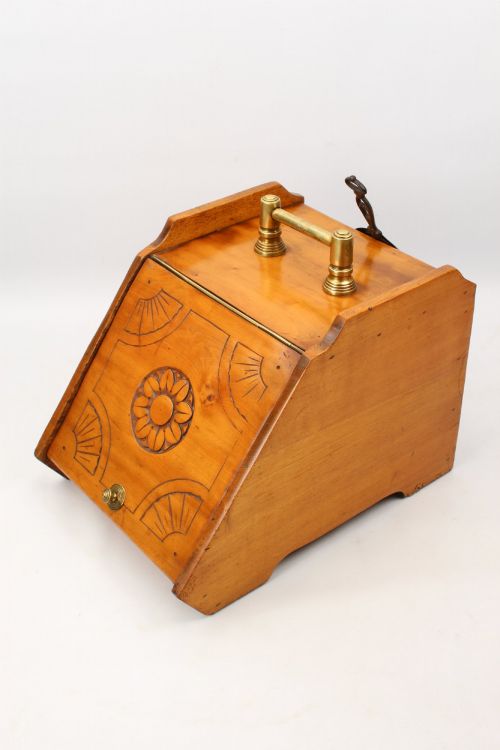
When you search for a brass oak coal box, you are looking at heavy timber fuel containers designed to sit beside the hearth during the Victorian and Edwardian eras. The examples meeting you here range from plain lidded storage boxes to sophisticated purdoniums with sloping fronts and drop-down doors.
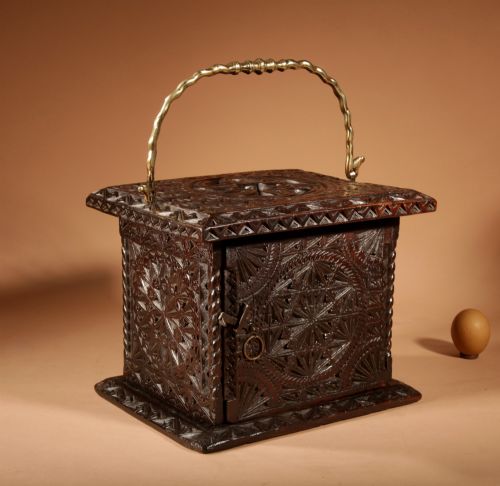
Most pieces date from the nineteenth century into the early twentieth century, spanning Victorian and Edwardian periods. You will encounter straightforward wooden boxes alongside carved front versions, chip-carved foot stoves, and related fireside accessories like slipper boxes.
Many of these boxes incorporate metal liners to hold the fuel safely and prevent dampness from reaching the timber. Handles, hinges, and shovel mounts in brass or copper provide both utility and a distinct metallic contrast to the dark oak grain.
How they were made
Construction relies on solid oak boards joined to bear the considerable weight of coal and logs. Brass mounts, hinges, and decorative bands are screwed or riveted directly to the timber frame to reinforce corners and handle stress.
Carving and embossing add surface detail across many examples, utilising techniques like chip carving on folk art pieces or embossed copper panels set into the wooden lids and drop fronts.
Listings feature oak combined with brass, copper, and iron across Victorian and Edwardian periods.
What varies in quality
The distinction between standard utility boxes and finer pieces lies in the crispness of the carving, the thickness of the brass mounts, and the integrity of the original interior fittings. Superior items often feature substantial brass handles, fitted shovels, and well-preserved metal liners.
Cabinetwork quality marks out the better examples, visible in tight dovetail or mitred joints that hold firm despite years of heat from the hearth and the heavy shifting load of coal.
Deane & Co, London
The Brass Oak Coal Box Glossary
- Purdonium
- A specialised coal box featuring a sloping front door that drops down to release fuel into a shovel or scuttle. This form became popular in late Victorian households to keep coal tidy.
- Slipper box
- A covered wooden container shaped somewhat like a shoe, utilised historically for warming feet or storing small fireside items. These often feature hinged lids and brass carrying handles.
- Foot stove
- A small perforated box, sometimes chip carved, designed to hold hot embers for warming the feet during cold weather. They represent earlier domestic heating methods before central radiators.
- Aesthetic Period
- A late nineteenth-century design movement focusing on visual beauty rather than narrative meaning. Pieces from this time often exhibit refined brass mountings and clean geometric lines.
Brass Oak Coal Box: Frequently Asked Questions
What is a coal purdonium?
A coal purdonium is a specialised fireside box with a sloping front flap designed for easy coal retrieval. These containers usually include a metal liner and matching shovel.
They emerged in the Victorian period to keep fuel tidy beside the fireplace while offering a more decorative appearance than a simple bucket.
How do I clean the brass?
Brass mounts and handles benefit from gentle wiping with a soft cloth to remove dust and soot accumulation. Avoid harsh chemical cleaners that can strip the aged patina or damage the surrounding oak.
Keeping the brass dry prevents corrosion and preserves the contrast between the bright metal and the dark wood grain.
Are original liners common?
Original metal liners appear in a good portion of surviving boxes, though many have been replaced over decades of active use. These galvanized or zinc inserts protected the wooden base from moisture and coal dust.
Finding a box with its original liner and matching shovel adds to the completeness of the piece.
How do I date a coal box?
Dating relies on observing construction methods, handle styles, and decorative motifs such as Victorian carving or Edwardian simplicity. Earlier pieces from the eighteenth century show distinct folk art carving techniques.
Hardware design and the presence of aesthetic movement brass mounts help narrow down the manufacture to specific decades.