


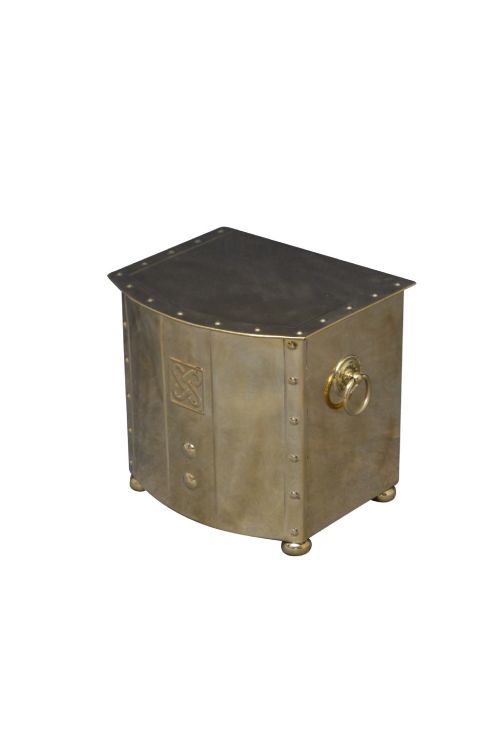


Edwardian Brass Coal Bin
An edwardian brass coal bin combines functional hearth storage with decorative metalwork from the early twentieth century.

Edwardian Brass Coal Bin
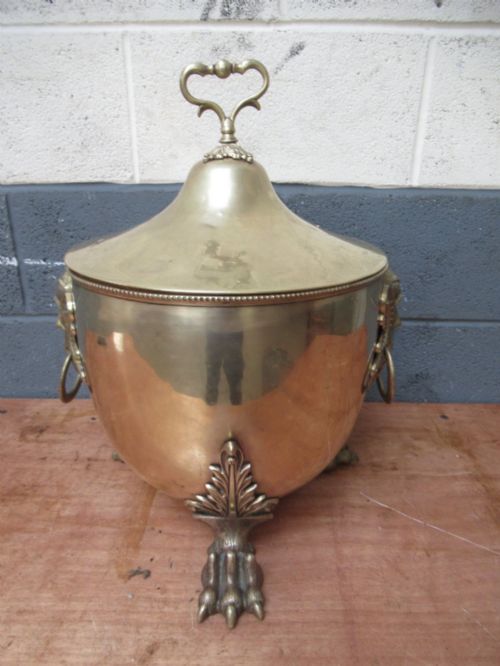
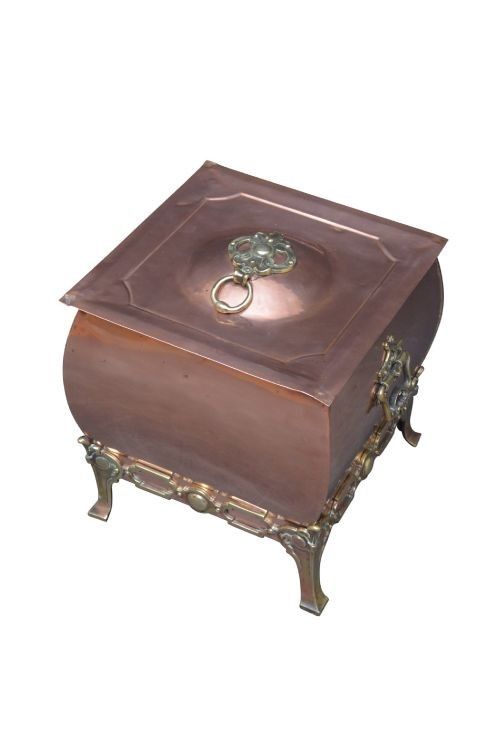
An edwardian brass coal bin serves as a domestic hearth accessory designed to hold solid fuel near an open fireplace. These vessels appear in forms such as buckets, scuttles, purdoniums, and lidded boxes.
The material combination typically pairs bright metal bodies with wooden or metal handles, and occasionally internal metal liners to contain coal dust and debris. Buyers often encounter pieces spanning the Victorian period through the Edwardian era and into the nineteen thirties.
Beyond holding fuel, these items function as planters, log stores, or umbrella stands within domestic interiors. The construction reflects the shift from utilitarian coal storage to decorative fireside furnishing.
Materials and construction
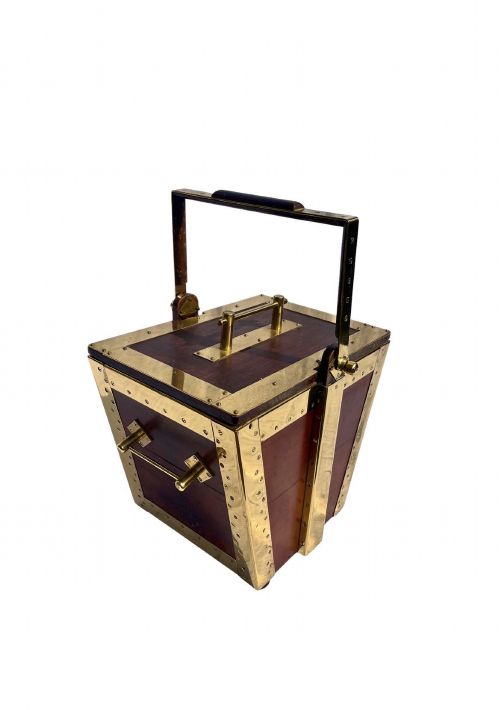
Makers utilised sheet brass and copper for the outer bodies, frequently hammering, spinning, or pressing the metal into bucket and scuttle shapes. Frames incorporated woods such as oak, mahogany, walnut, and rosewood, embellished with marquetry inlay, carved details, or ormolu mounts.
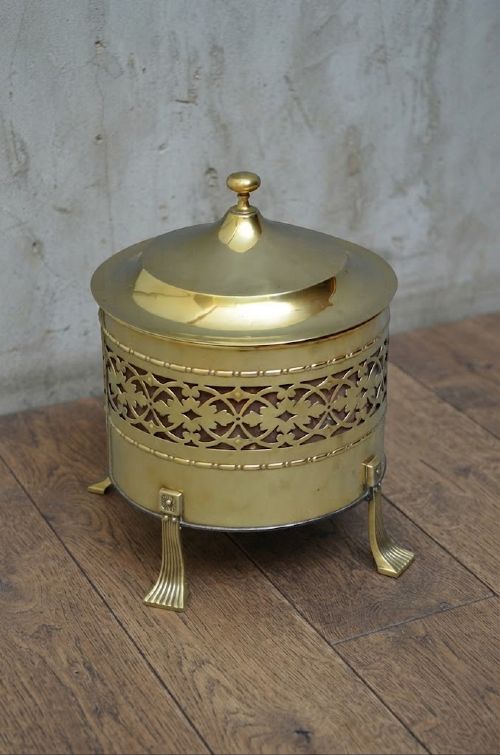
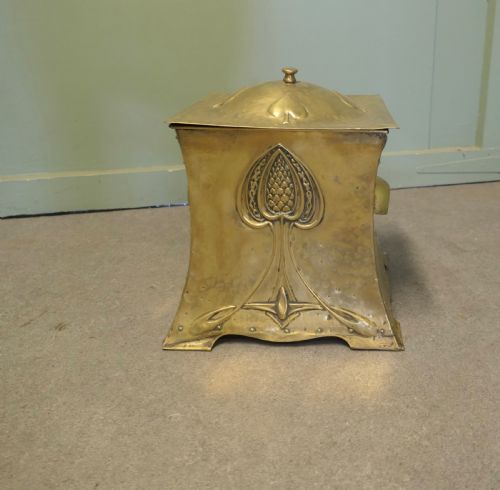
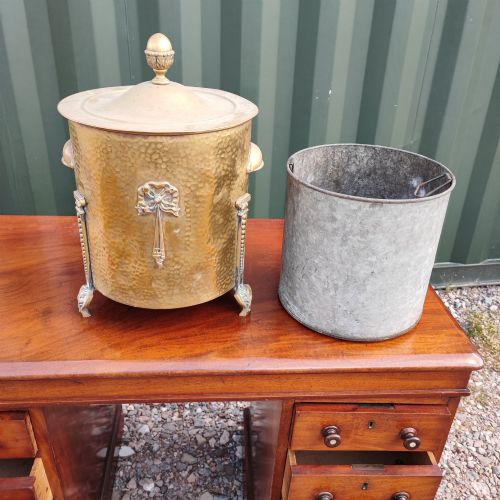
Details include riveted seams, swing handles, and applied fretwork or spade decorations associated with Arts and Crafts and Art Nouveau styles. Internal tin or metal liners protected the wooden or metal structures from moisture and coal dust.
Several heavy metal bins were repurposed over the decades to hold rolled umbrellas or office stationery rather than smoky coal.
Evaluating the pieces
Quality rests upon the gauge of the metal and the integrity of the joinery in the wooden chassis or riveted seams. Thicker brass resists dents and maintains structural rigidity under the weight of coal or logs.
The Edwardian Brass Coal Bin Glossary
- Purdonium
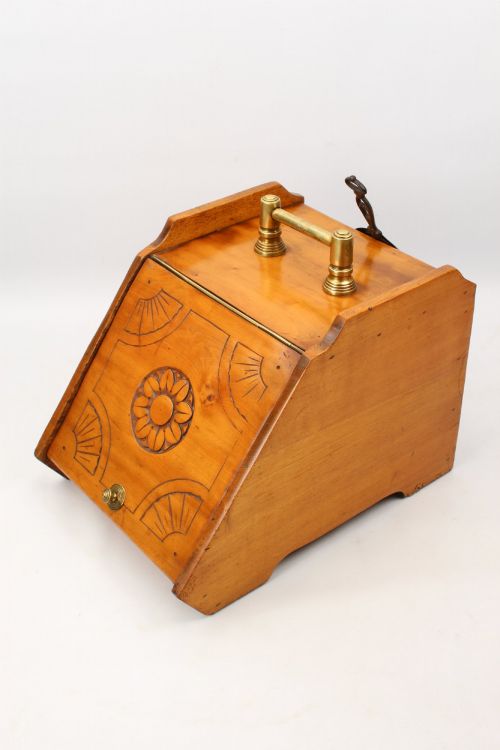
- A box-style coal container with a drop-front door and an internal shovel compartment. This form conceals fuel entirely within a cabinet structure.
- Coal Scuttle
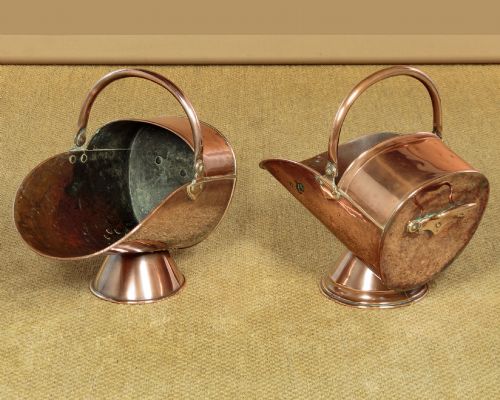
- A bucket-shaped or helmet-shaped vessel with a swinging handle for carrying fuel to the hearth. These often include a matching shovel stored in a side sleeve.
- Fretwork
- Pierced decorative metal or wood patterns allowing light and shadow to play across the surface. This technique appears on Arts and Crafts examples.
- Coopered
- Built from vertical wooden staves bound by metal hoops, similar to barrel construction. This technique occurs in peat buckets and log bins.
- Ormolu
- Gilded metal mounts applied for decoration. These mounts enhance the formal appearance of wooden coal boxes.
Edwardian Brass Coal Bin: Frequently Asked Questions
What is a coal purdonium?
A coal purdonium is a cabinet-style fuel container featuring a slanted drop-front door and an internal metal liner. This design keeps coal concealed beside the fireplace.
Such pieces often incorporate brass handles and matching shovels stored in side racks.
Can these bins be used for plants?
Many of these metal and wooden vessels serve double duty as indoor planters or log bins. Their waterproof liners make them suitable for holding potted plants.
Ensure any vulnerable wooden surfaces are protected from standing water.
How do I distinguish Edwardian from Victorian pieces?
Victorian examples tend towards heavier, more ornate carved oak or dark woods with cast brass embellishments. Edwardian items often display lighter woods, inlaid mahogany, and cleaner Arts and Crafts or Art Nouveau lines.
Overlaps occur as styles evolved gradually around the turn of the twentieth century.
Do these items include their original shovels?
Some pieces retain their original matched metal shovels, which slide into dedicated brackets on the side or back of the bin. Surviving shovels add completeness to the set.
Many surviving examples, however, have lost their shovels over decades of use.
How should I clean brass coal bins?
Maintenance involves dusting the metal surfaces regularly with a soft cloth to prevent the accumulation of grime. Avoid harsh chemical polishes that strip away the aged patina built up over decades.
Wooden elements require gentle treatment with appropriate furniture wax.