



Edwardian Oak Drop Leaf
Edwardian oak drop leaf furniture brings practical ingenuity and warm timber tones directly into daily living spaces.
Edwardian Oak Drop Leaf
An edwardian oak drop leaf piece combines folding flaps with sturdy timber construction to save floor space in compact rooms. These tables and trolleys emerge from periods spanning the late nineteenth century through the early decades of the twentieth century.
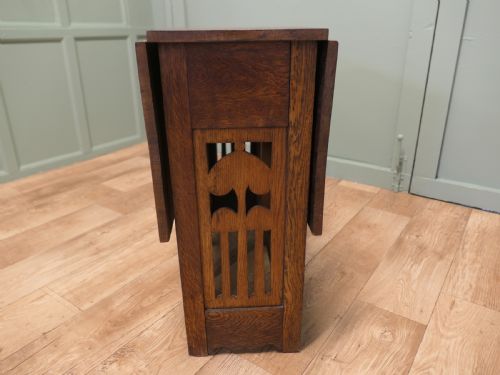
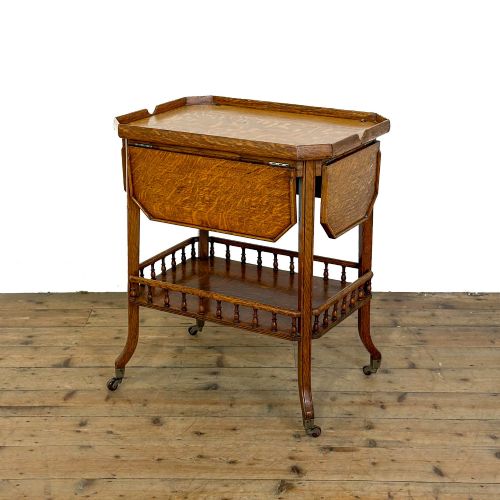
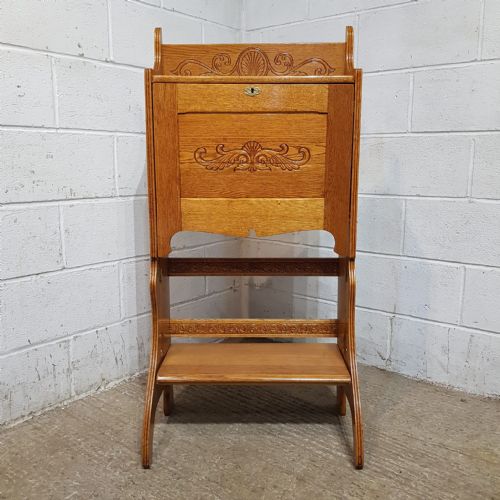
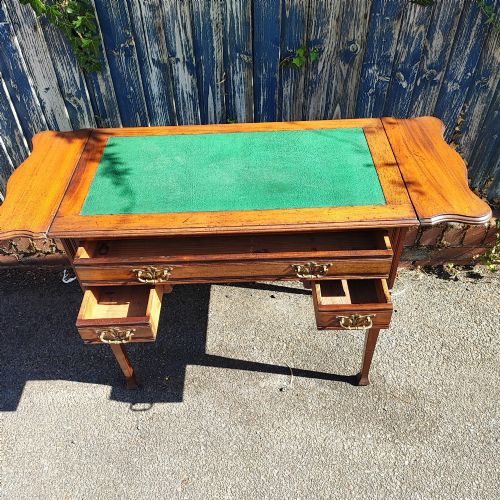
The selections encountered here range from compact coffee tables and tea trolleys to substantial gateleg dining tables and occasional writing desks. Many pieces display revival styles, drawing heavily on earlier Jacobean and Arts and Crafts traditions while maintaining domestic utility.
Materials and Construction
Solid oak provides the primary structural foundation for these tables, complemented by brass hinges, iron fittings, and occasional leather writing inserts. Cabinetmakers utilised sturdy timber planks for oval and rectangular tops, ensuring the folding leaves supported regular weight.
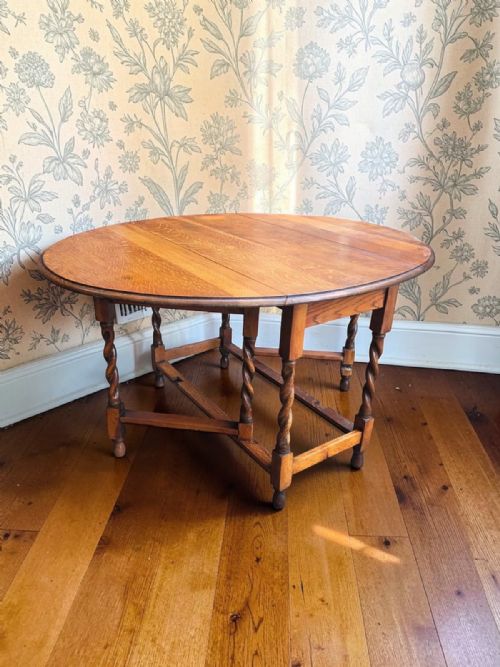
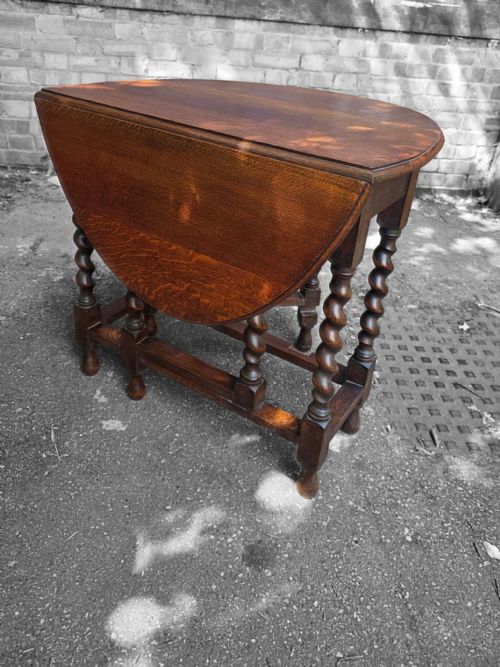
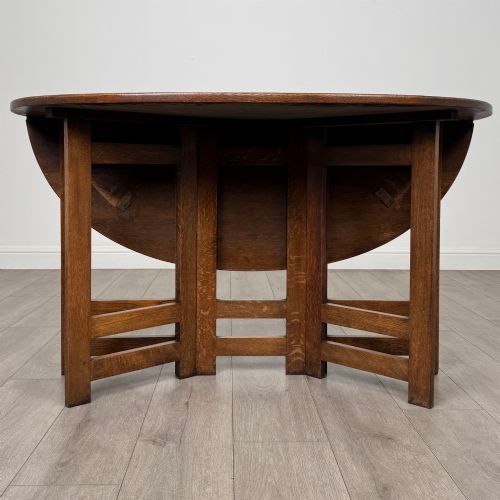
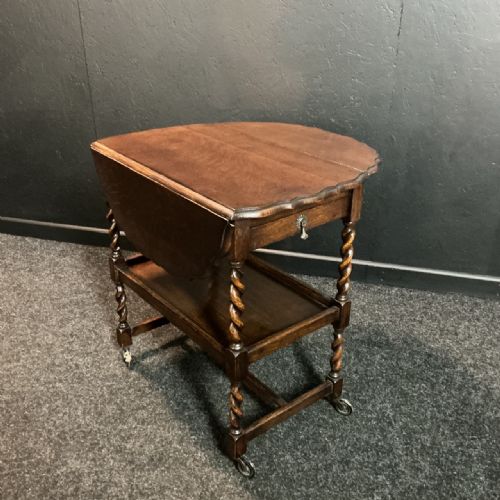
Turned supports, particularly barley twist legs, feature prominently alongside straightforward gateleg mechanisms that swing outward to hold the leaves. Joinery relies on traditional pegged joints and stable framing rather than modern adhesives.
Listings feature solid oak combined with brass and iron hardware across multiple decades, predominantly showcasing Edwardian and early twentieth-century craftsmanship.
Judging the Standard
Quality rests upon the selection of the timber grain and the precision of the turning on the legs. Superior examples show thoughtful proportion in the leaves and frames, maintaining stability whether the flaps are raised or lowered.
The integrity of the gateleg hinge mechanism and the smoothness of the folding action distinguish finer workshops from simpler utility pieces. Attention to carved detail and the depth of the oak finish further elevate the stature of a table.
The Edwardian Oak Drop Leaf Glossary
- Gateleg table
- A table featuring hinged flaps supported by legs that swing outward like a gate. This design provides robust support for folding leaves.
- Barley twist
- A decorative turning style resembling a twisted rope, carved into furniture legs during revival periods. It adds dynamic visual texture to upright supports.
- Drop leaf
- A hinged table section that folds down to save space when not in use. It rests on movable brackets or legs when elevated.
- Arts and Crafts
- A design movement valuing honest construction, visible joinery, and natural materials. Pieces from this tradition often eschew excessive ornamentation in favour of solid craftsmanship.
- Refectory table
- A long, narrow dining table originally built for communal halls. In later adaptations, this form incorporates folding leaves for domestic versatility.
Edwardian Oak Drop Leaf: Frequently Asked Questions
How do I use a drop leaf table daily?
Raise the side flaps and swing the supporting gatelegs outward to create a full dining or working surface. Lower the leaves when you need to reclaim floor space in smaller rooms.
Keep the timber conditioned and avoid placing hot items directly on the bare oak surface to preserve the finish.
Are these tables sturdy enough for meals?
Gateleg and drop leaf tables constructed from solid oak are built to bear substantial weight when fully extended. The swinging leg securely locks the folding flap into a flat, horizontal position.
Position the support leg correctly beneath the leaf edge to ensure complete stability during dining.
How do I tell Edwardian pieces from later revivals?
Examine the timber grain, hardware, and construction methods for clues regarding the manufacturing date. Edwardian and early twentieth-century pieces often utilise heavier solid oak and traditional hand-finished joinery.
Revival styles frequently borrow Jacobean or Arts and Crafts motifs, merging older aesthetic traditions with early twentieth-century domestic requirements.
What is a barley twist leg?
A barley twist is a decorative wood-turning technique that coils the vertical leg in a spiral pattern. This ornate detail became especially popular during revival periods for gateleg tables and tea trolleys.
The sculptural twist catches the light, adding depth and movement to the silhouette of the furniture.