
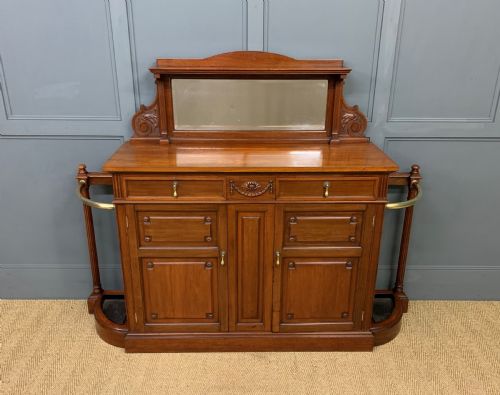
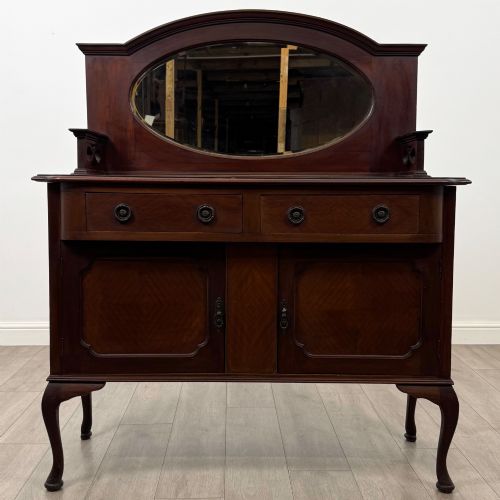
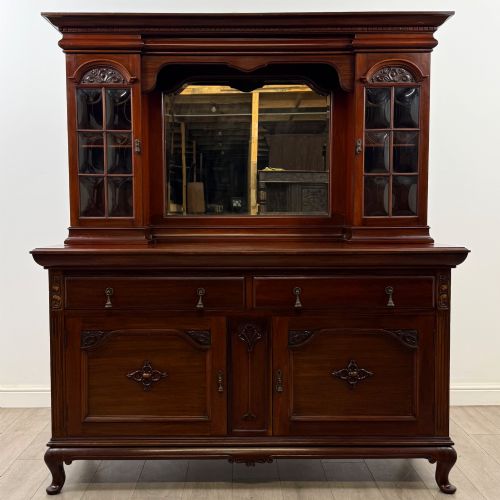
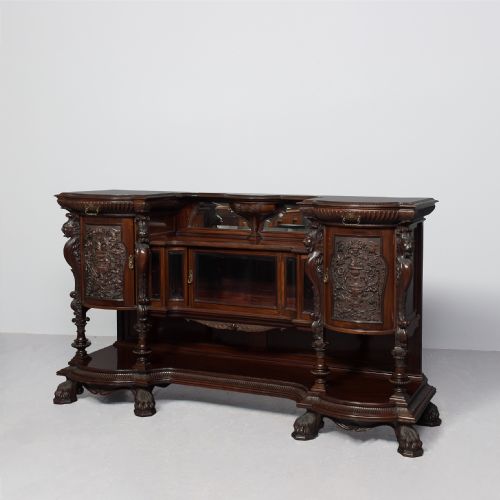
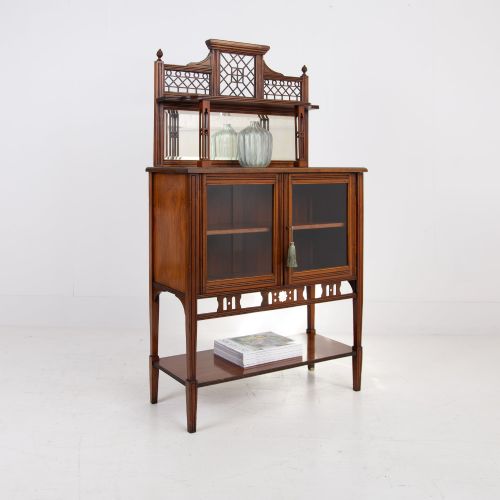
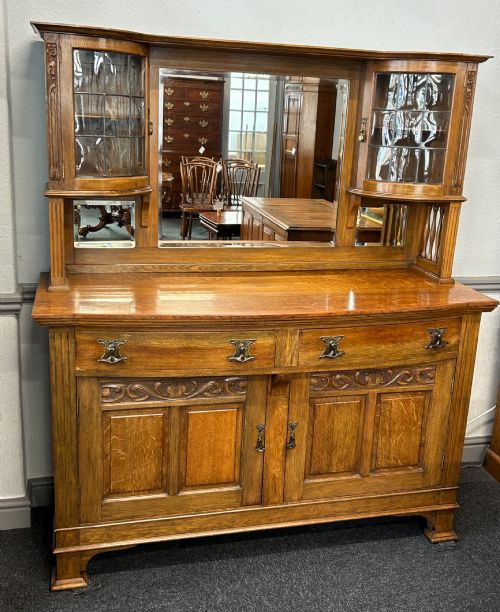
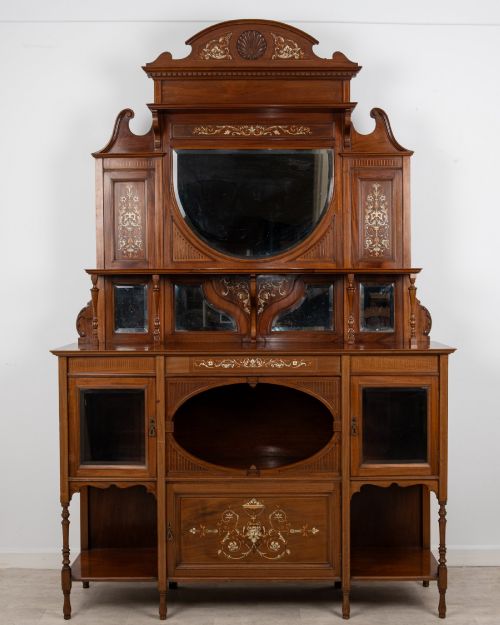
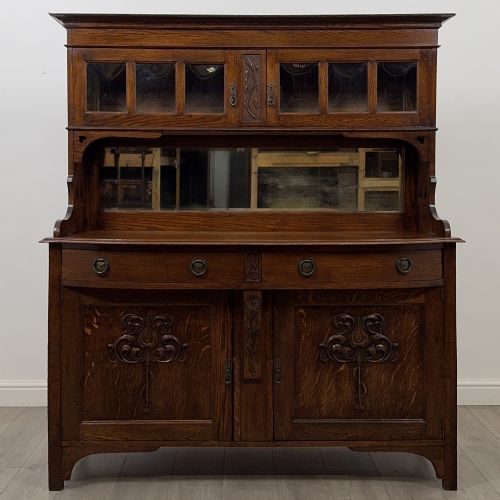
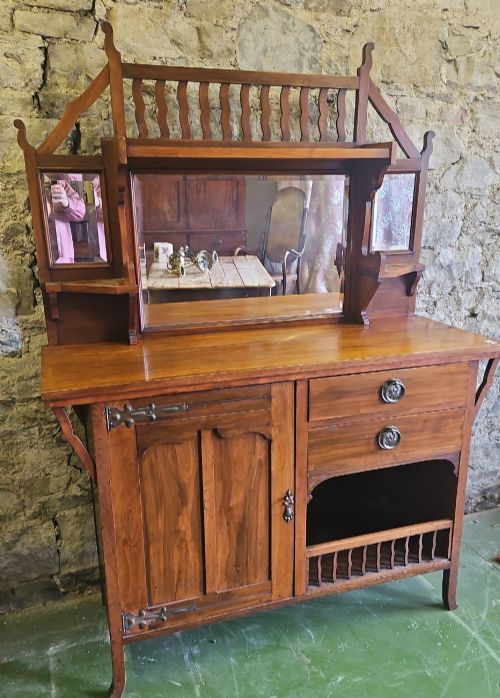

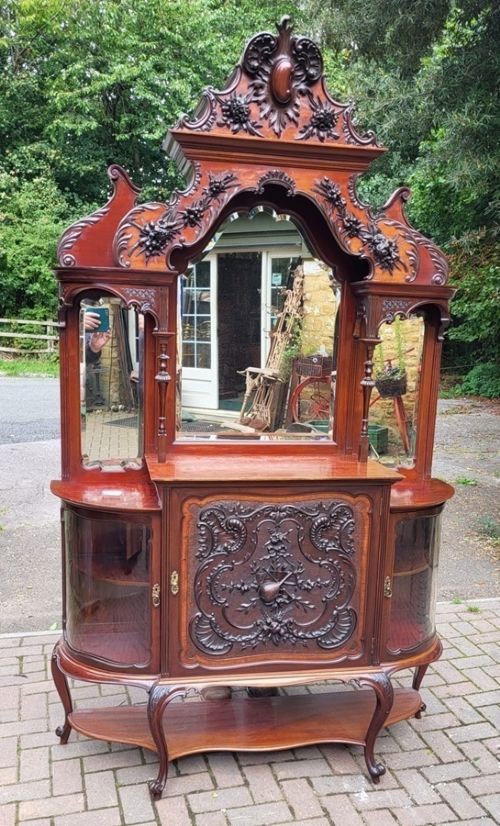
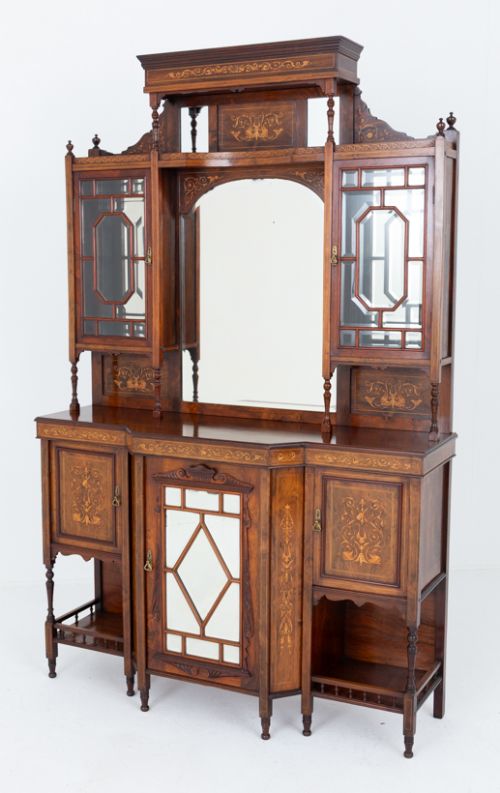


Edwardian Mirror Back Sideboard
An edwardian mirror back sideboard combines display and storage, bringing reflective depth and heavy timber presence into a dining room.
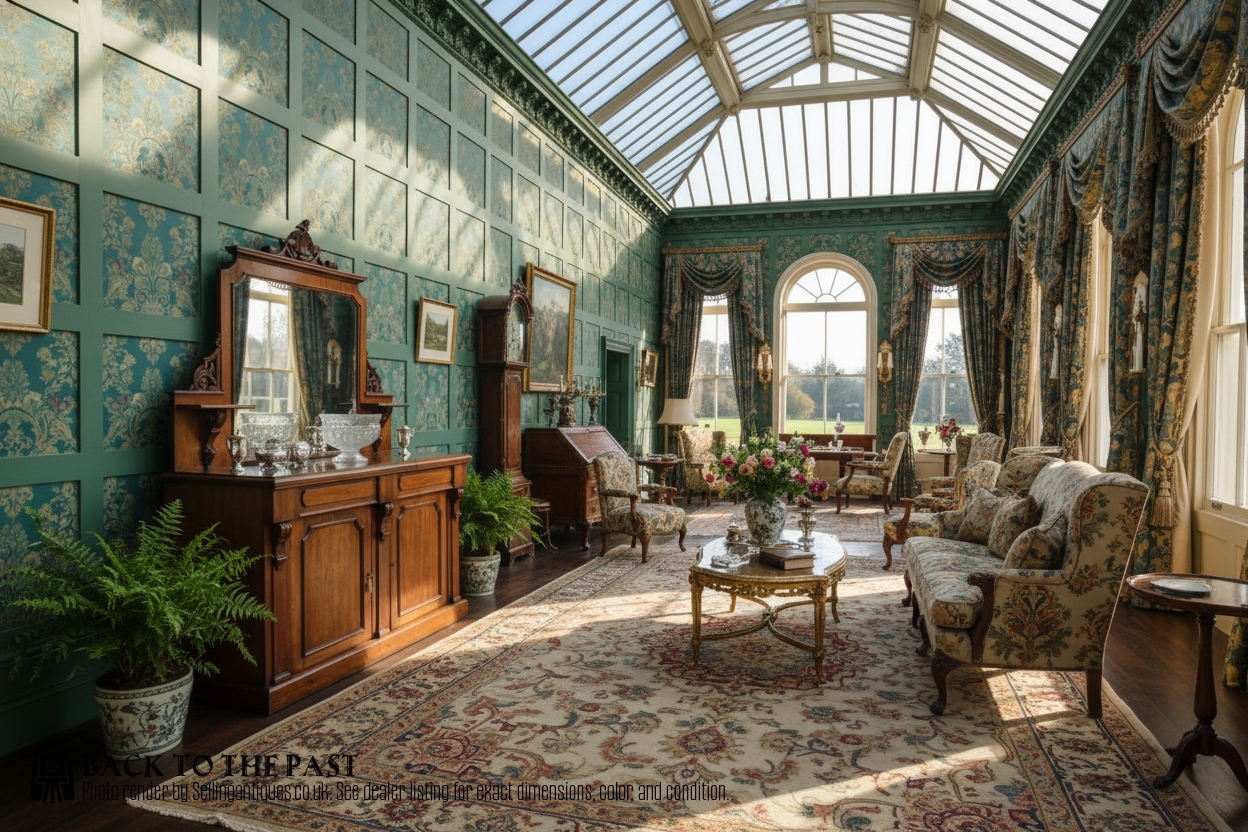
Edwardian Mirror Back Sideboard
An edwardian mirror back sideboard is a large dining room storage piece featuring a raised timber superstructure fitted with glass. These items emerge frequently from the Edwardian period and late Victorian years, standing on low bases with cupboards or drawers beneath the reflective plate.
Makers produced these forms in mahogany, oak, walnut, and rosewood, often pairing deep side cabinets with carved details or inlaid marquetry. They served primarily to display porcelain and silver while hiding heavier tableware below.
How They Were Made
Cabinet makers utilised solid and veneered timbers such as mahogany, oak, walnut, and rosewood over robust structural carcases. Surfaces frequently display hand carving, brass hardware, and intricate inlaid marquetry or stringing.
The mirror glass is set securely into wooden upstands, sometimes bevelled at the edges to catch the light. Marble tops or majolica panels occasionally appear on specific variants.
Listings feature oak, mahogany, walnut, and rosewood sideboards spanning the Victorian, Edwardian, and Arts and Crafts periods.
What Varies In Quality
The choice of timber and veneer dictates much of the visual distinction, with figured burr walnut and rich mahogany sitting above plain utility woods. Depth and crispness of hand carving separate ordinary production pieces from more ambitious cabinet work.
Construction details such as dovetailed drawer linings, original brass fittings, and intact bevelled mirror glass indicate higher standards of workshop execution.
Shoolbred and Co·T Simpson and Son·Shapland and Petter
The Edwardian Mirror Back Sideboard Glossary
- Mirror Back
- A wooden upstand attached to the rear of a sideboard containing an integrated mirror glass panel. It lightens the visual mass of the timber and reflects room light.
- Marquetry
- Decorative patterns formed by fitting contrasting veneers into a prepared wood background. It adds floral or geometric detail to cabinet doors and friezes.
- Credenza
- A low dining room side cabinet or sideboard format often associated with Victorian and Edwardian drawing rooms. These pieces frequently incorporate display cupboards.
- Chiffonier
- A compact sideboard or low cabinet typically fitted with drawers and doors beneath a mirror or shelf superstructure. They offer practical storage for smaller spaces.
- Upstand
- The vertical wooden backboard rising above the main surface of a sideboard or washstand. It often frames the mirror glass or supports a small display shelf.
Edwardian Mirror Back Sideboard: Frequently Asked Questions
What is an edwardian mirror back sideboard used for?
These large storage pieces held table linen, cutlery, and dining china within their lower cupboards and drawers. The upper mirror shelf displayed decorative ceramics, glassware, and silver objects.
In period homes, they anchored the dining room layout, providing both practical utility and a focal point for the interior scheme.
How do I care for the mirror glass?
Clean the mirror glass gently using a soft cloth and mild glass cleaner sprayed onto the cloth rather than directly onto the glass. This prevents moisture from seeping behind the silvered backing or into the wooden frame.
Inspect the retaining beads around the mirror periodically to ensure they remain secure against the timber upstand.
Which woods are most common?
Mahogany and oak dominate the surviving examples, ranging from light golden oak variants to rich dark polished mahogany. Walnut, rosewood, and pollard oak also appear, particularly on pieces with inlaid marquetry.
Makers matched these timbers to prevailing styles like Arts and Crafts, Art Nouveau, and Chippendale Revival.
Can I remove the mirror back?
The mirror back is an integral structural component attached to the base carcase with screws and dowels. Removing it alters the design balance and leaves unfininshed joints exposed on the top surface.
Buyers should accommodate the full height of the upstand when planning placement in a room.