



Edwardian Mens Jewellery
Edwardian mens jewellery brings together heavy gold watch chains, diamond gypsy rings and enamel cufflinks shaped by the tastes of the early twentieth century.
Edwardian Mens Jewellery
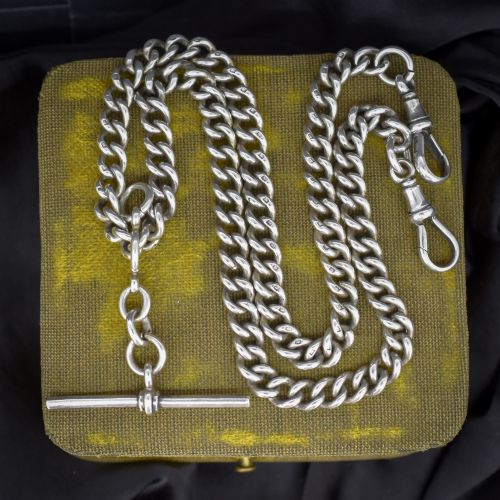
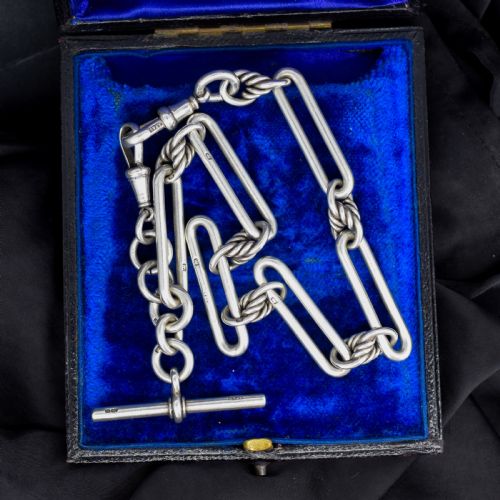
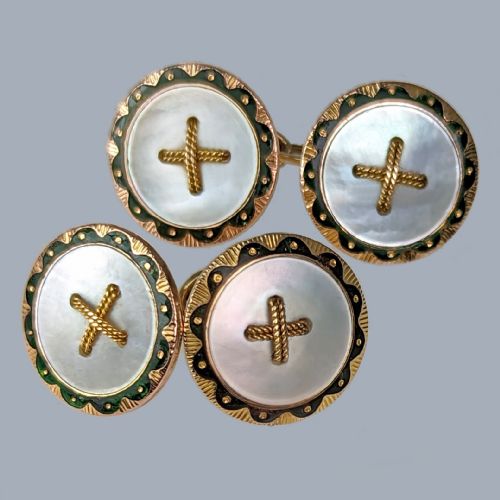
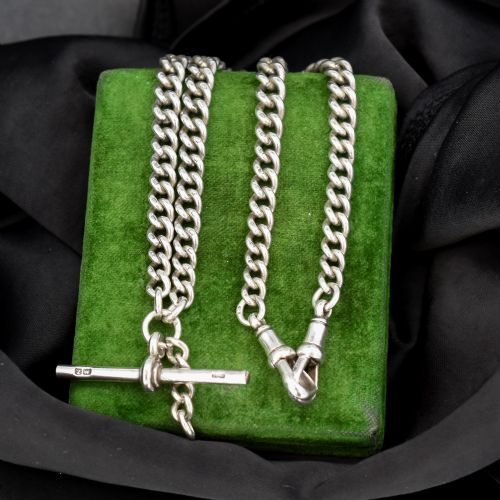
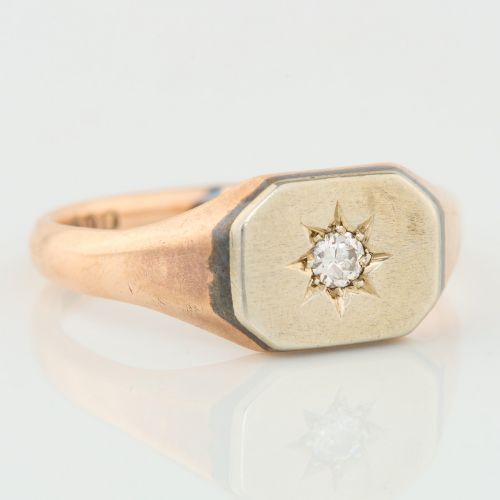
When a buyer searches for edwardian mens jewellery, the pieces encountered most frequently on this page are pocket watch albert chains, signet rings, gypsy rings and cufflinks. These items originate predominantly from the late nineteenth century through to the nineteen twenties, crossing the Edwardian era into the First World War and the Art Deco period.
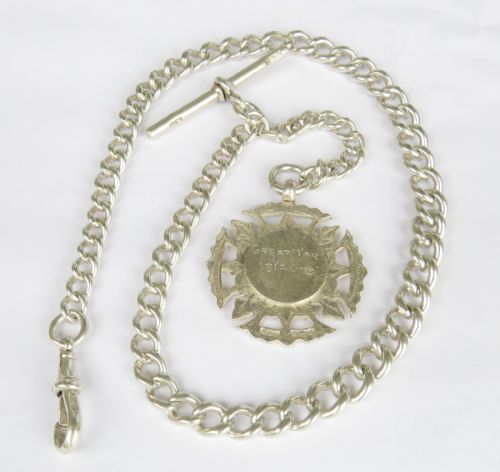
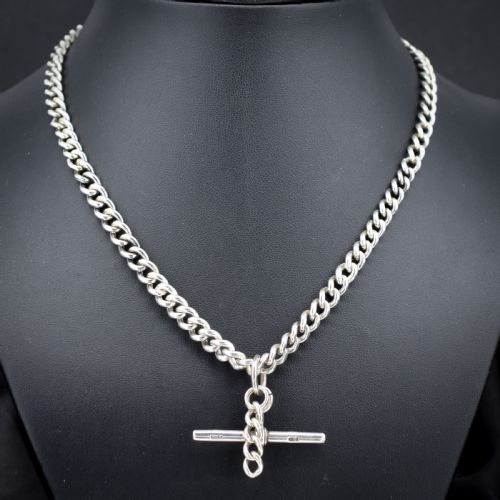
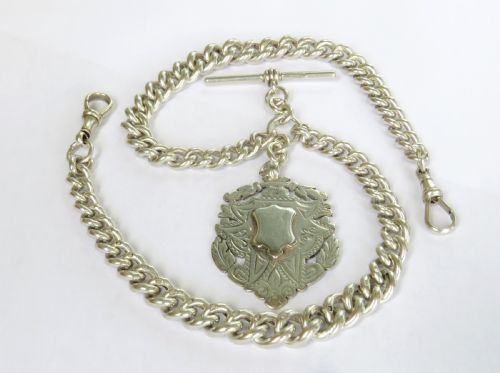
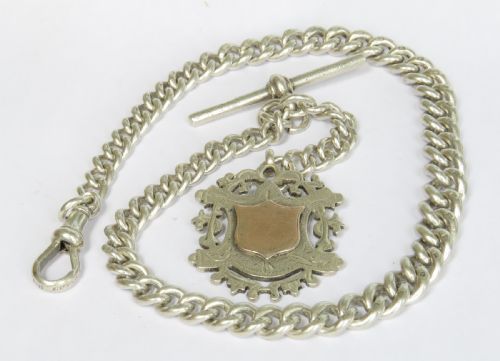
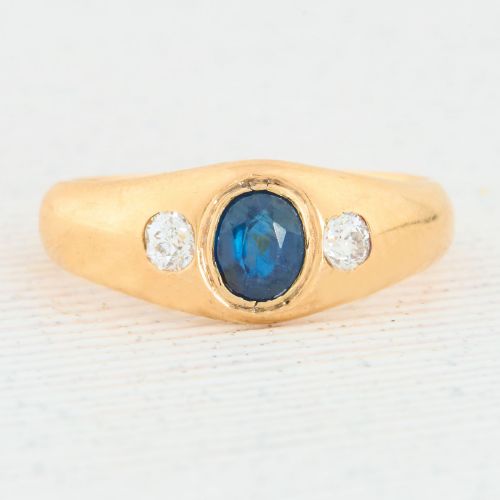
Chains take the form of curb, trombone and figaro links in sterling silver, rolled gold and nine carat, fifteen carat or eighteen carat gold, often complete with t-bars and dog clips. Rings include diamond and sapphire gypsy settings alongside monogrammed signet designs, while dress accessories span enamel cufflinks, mother of pearl pieces and Essex crystal dress buttons.
Materials and Techniques
Makers shaped these items using sterling silver and yellow or rose gold spanning nine, fifteen and eighteen carats, alongside rolled gold alternatives. Gemstones such as diamonds, sapphires, garnets, aquamarines and pearls were flush-set into gypsy rings or mounted alongside blue enamel and mother of pearl.
Construction techniques rely on sturdy link connections for albert chains, solid casting for signet and buckle rings, and detailed hallmarking stamped directly onto the precious metals by assay offices in cities such as Birmingham.
Listings feature sterling silver and gold spanning nine, fifteen and eighteen carats alongside rolled gold.
Distinctions in Standard
The distinction between standard examples and superior pieces rests on the weight of the metal and the presence of clear hallmarks. Heavy silver albert chains and solid gold signet rings demonstrate substantial material substance compared to lighter rolled gold equivalents.
Detailing creates further separation, seen in crisp monograms, secure stone settings, and the inclusion of original components like swivel fobs, dog clips and maker marks such as those from Solomon Blanckensee and Son or William Griffiths and Son.
Solomon Blanckensee and Son·William Griffiths and Son
The Edwardian Mens Jewellery Glossary
- Albert chain
- A pocket watch chain designed to pass across a waistcoat, secured with a t-bar at one end and a fob or watch at the other.
- Gypsy ring
- A ring style featuring a flush-set gemstone where the metal tapers smoothly towards the stone, popular during the late Victorian and Edwardian periods.
- T-bar
- A short transverse bar attached to the centre of an albert chain used to anchor the chain through a buttonhole.
- Dog clip
- A spring-loaded swivel fastening used on watch chains to attach pocket watches, fobs or charms.
- Essex crystal
- A technique involving reverse-carved and painted crystal cabochons that create a three-dimensional image when viewed from the front.
Edwardian Mens Jewellery: Frequently Asked Questions
How do I wear an albert chain?
Albert chains thread through a waistcoat buttonhole using the central t-bar, with the pocket watch tucked into the pocket and any attached fobs hanging below.
Single chains connect from the buttonhole to one pocket, while double chains span across the front of the waistcoat to pockets on both sides.
What is a gypsy ring?
Gypsy rings feature gemstones set flush into a thick band of gold where the metal swells around the stone. This low-profile setting protects the stone edges during daily wear.
They often incorporate diamonds, rubies or sapphires and were widely worn by gentlemen from the Victorian era into the twentieth century.
How do I read gold hallmarks?
British hallmarks stamp the metal purity, such as nine carat or eighteen carat, alongside symbols indicating the specific assay office and a date letter.
These marks provide a precise year of manufacture and confirm the authenticity of the precious metal used in the item.
Are these pieces suitable for daily wear?
Solid gold signet rings and heavy silver albert chains possess the structural durability required for regular use. Items with delicate enamel or mother of pearl elements benefit from more careful handling to preserve their surfaces.
Proper maintenance ensures these historical accessories remain functional for modern wardrobes.