






Edwardian Marquetry Tray
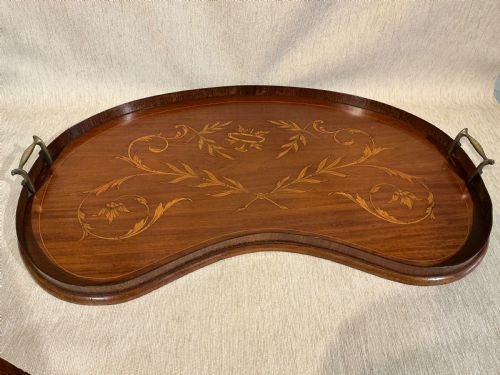
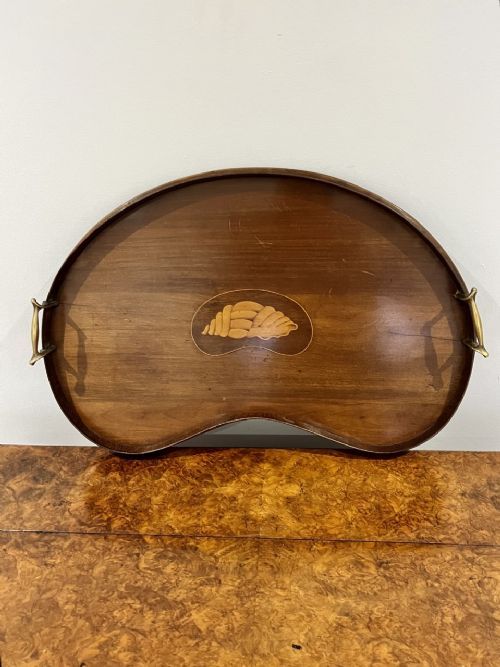
These edwardian marquetry tray pieces bring together refined woodwork and everyday utility, offering a functional centrepiece for the home.
What an Edwardian Marquetry Tray Is
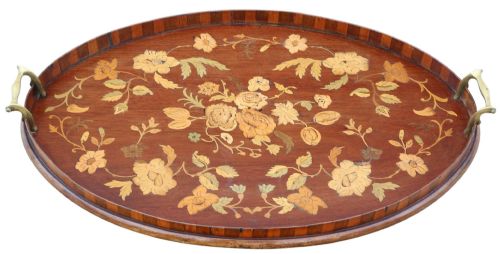
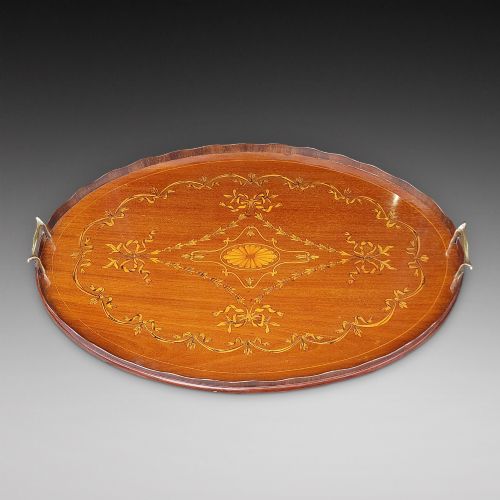
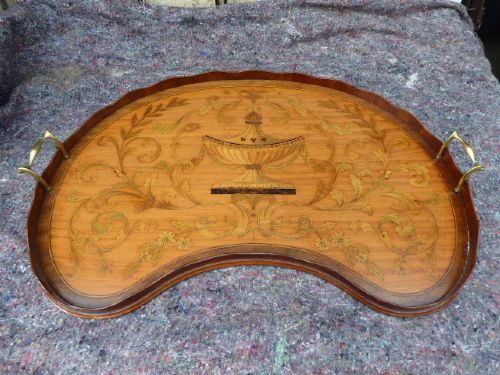
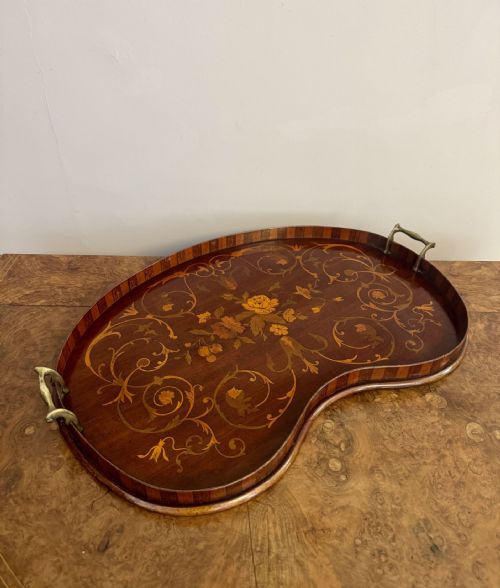
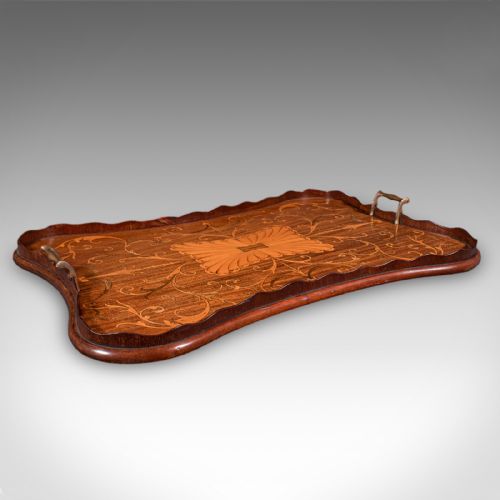
An edwardian marquetry tray combines the polished woods of the Edwardian period with intricate floral or geometric surface decoration. Most examples date from around 1900 to 1910, drawing heavily on Sheraton Revival designs that favour elegance and lighter colour palettes.
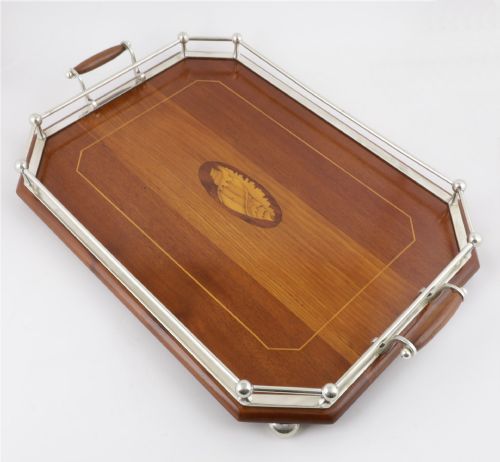
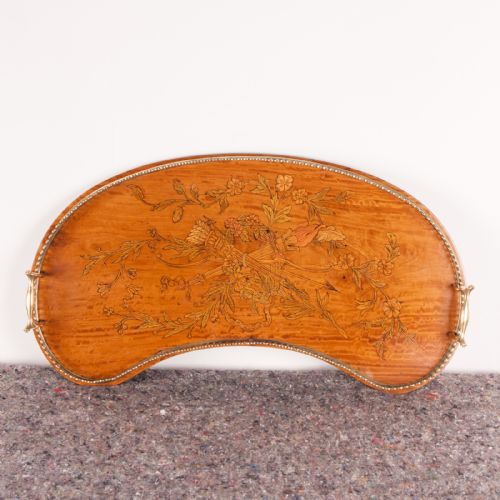
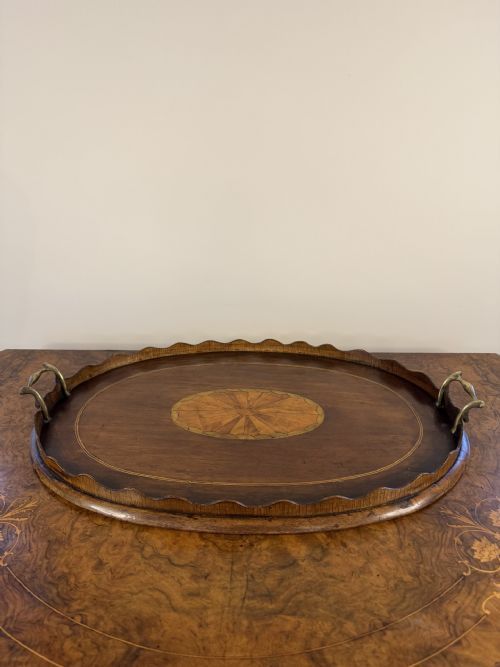
The forms span several distinct shapes, including oval tea trays, kidney-shaped servers, butler's trays, and occasional brass-galleried pieces. These items serve both as practical servingware and as decorative tabletop accessories within period and modern interiors.
Materials and Construction
Makers construct these trays primarily using a mahogany or satinwood ground, occasionally incorporating burr yew and rosewood for contrast. Marquetry inlay is meticulously fitted into the primary wood to form detailed patterns and decorative borders.
Many examples integrate polished brass handles or raised galleries to secure glassware and china during service. The combination of varied timber veneers and metalwork reflects the refined cabinet-making techniques of the era.
Retail Price Guide 2026
Typical UK retail prices for edwardian marquetry tray, calculated from the Sellingantiques database of over a million retail prices indexed since 2003. This retail price guide relies exclusively on Sellingantiques data; no external sources or auction records are used, so the figures do not describe the wider market.
Listings feature woods such as mahogany, satinwood, burr yew, and rosewood combined with brass fittings.
Judging Quality and Execution
The distinction between standard and superior pieces rests in the complexity of the veneer work and the crispness of the marquetry inlay. Finer trays utilise rarer timbers such as burr yew and rosewood alongside finely figured satinwood, creating greater depth and tonal variation.
Structural harmony also dictates value, where balanced proportions in oval and kidney-shaped forms meet secure handling galleries and seamless joints. The precision of the inlaid motifs demonstrates the skill of the original workshop.
The Edwardian Marquetry Tray Glossary
- Marquetry inlay
- The art of applying fitted pieces of wood veneer to a structure to form decorative patterns. This technique creates pictorial or geometric surfaces across the tray base.
- Satinwood
- A lustrous, yellow-toned timber prized for its fine grain and reflective quality. It frequently forms the bright background or contrasting border on Edwardian pieces.
- Gallery
- A raised rim or pierced metal border fitted around the edge of a tray. This prevents items from sliding off during service.
- Sheraton Revival
- A late 18th-century furniture style reprised during the Edwardian era. It emphasises graceful proportions, neoclassical motifs, and delicate inlay work.
Frequently Asked Questions
How do I clean an antique marquetry tray?
Dust gently with a soft, dry cloth to protect the delicate veneer surfaces from moisture damage. Avoid modern chemical sprays and instead use traditional beeswax sparingly.
Keep wooden pieces away from direct sunlight and heat sources to prevent the marquetry inlay from lifting over time.
Can I use these trays for daily serving?
While sturdy enough for light use, these trays function best for occasional service or static display. Placing hot teapots or wet glasses directly onto the antique surface risks marking the polish.
Line the base with a cloth or doily if you plan to carry drinks or glassware regularly.
What defines the Edwardian style?
Edwardian design bridges heavy Victorian aesthetics with lighter, more graceful forms inspired by earlier periods. Makers favoured brighter timbers and refined, delicate inlay rather than dark, dense masses.
Trays from this era balance practicality with ornamental elegance suited to drawing rooms.
How do I identify a reproduction?
Examine the timber underneath and the consistency of the varnish to check for modern manufacturing signs. Antique examples show natural wear and hand-cut veneer joints rather than laser-cut precision.
Look for period-appropriate brass fittings and authentic ageing in the grain.