


Edwardian Marble Vanity
These edwardian marble vanity pieces bring stone-topped practicality and fine cabinet-making into the bedroom.
Edwardian Marble Vanity
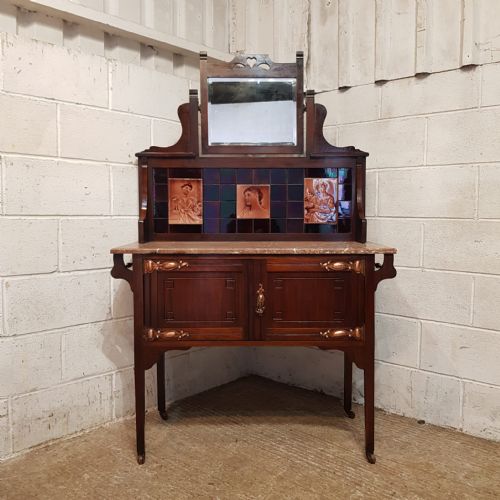
An edwardian marble vanity, most commonly encountered as a marble top washstand or dressing table, combines heavy stone surfaces with domestic timber frames. You will frequently find pieces executed in walnut, mahogany, satinwood, and painted pine.
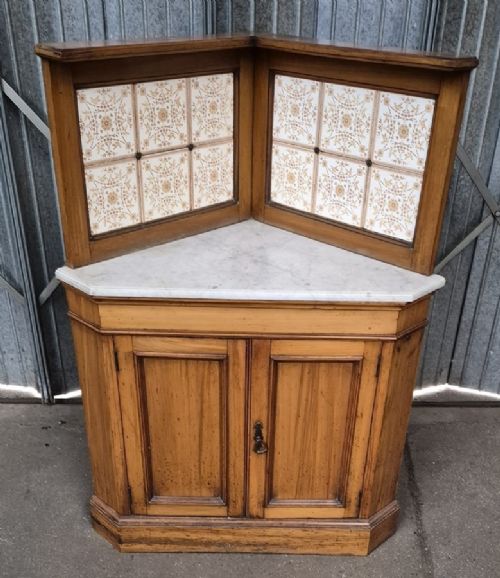
The designs span several related iterations including corner washstands, tiled back bathroom cabinets, and dressing stands. While many hail from the Edwardian era, the selection includes Victorian and nineteenth-century examples alongside Arts and Crafts and Aesthetic movement variants.
Materials and construction
Makers built these pieces using solid and veneered hardwoods such as mahogany, walnut, and satinwood, often pairing them with ceramic tiles and heavy marble slabs for hygiene. Brass hardware and glass components frequently complete the fixtures.
Joinery methods relied on traditional cabinet-making techniques to support the considerable weight of rouge and white marble tops. Inlays, painted pine, and ceramic elements added decorative contrast to the structural timber frames.
The listings show materials ranging from rouge marble and brass to satinwood, walnut, and ceramic tiles across the Edwardian and Victorian periods.
Assessing the workmanship
Superior examples distinguish themselves through the choice of timber figure, the intricacy of satinwood inlay, and the quality of the marble slab. Finer pieces often incorporate matching ceramic tiles and integrated brass towel rails.
The distinction between standard utility bedroom furniture and high-end cabinet-making lies in the crispness of the joinery and the selection of materials. Workshop attribution, such as work by Gillows, elevates the standing of a piece.
Walker and Sons·Gillows
The Edwardian Marble Vanity Glossary
- Washstand
- A piece of bedroom furniture designed to hold a basin, ewer, and washing accessories before plumbed bathrooms became standard. They frequently feature marble tops to protect the wood from water splashes.
- Rouge marble
- A rich red variety of limestone marble quarried in France and commonly used for luxury furniture tops. Its deep coloration provides a striking contrast against mahogany and walnut frames.
- Aesthetic movement
- A nineteenth-century design style that emphasised visual beauty over narrative or moral function. Pieces in this style often display clean lines and artistic craftsmanship.
- Satinwood
- A lustrous, yellow-toned timber imported from tropical regions and utilised for fine veneers and stringing. It brings a bright, reflective quality to Edwardian and Victorian cabinet-making.
Edwardian Marble Vanity: Frequently Asked Questions
What is an edwardian marble vanity?
An edwardian marble vanity is a washstand or dressing table topped with stone to provide a durable, water-resistant surface for washing and grooming in the bedroom.
These pieces combine functional timber frames with heavy marble slabs and often include tiled splashbacks or brass towel rails.
How do I clean a marble top?
Clean the marble surface using warm water and a soft cloth, avoiding acidic or abrasive household cleaners that can etch the stone.
Dry the surface thoroughly after wiping to maintain the polish and prevent water spotting on the polished finish.
Are these pieces suitable for modern bathrooms?
Many buyers adapt these washstands for use as modern bathroom sink vanities by mounting basins onto the marble tops.
Plumbing can be routed through the traditional timber framework with appropriate modifications made by a professional.
How do I distinguish Edwardian from Victorian washstands?
Edwardian pieces generally favour lighter timbers like satinwood and simpler neoclassical lines, while Victorian examples often feature darker walnut or mahogany with heavier proportions.
Arts and Crafts and Aesthetic movement variants from the nineteenth century display distinct decorative motifs such as stylized tiles and painted details.