
Edwardian Mahogany Set
An edwardian mahogany set brings matched dining chairs, nesting tables or salon suites together in dependable period timber.
Edwardian Mahogany Set
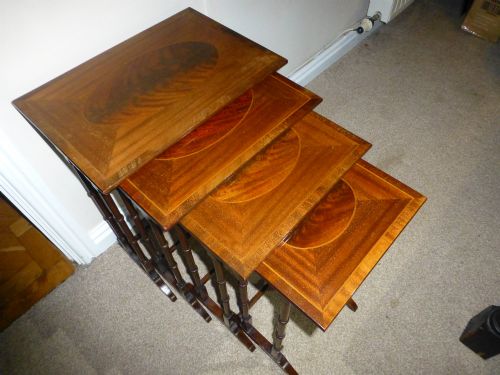
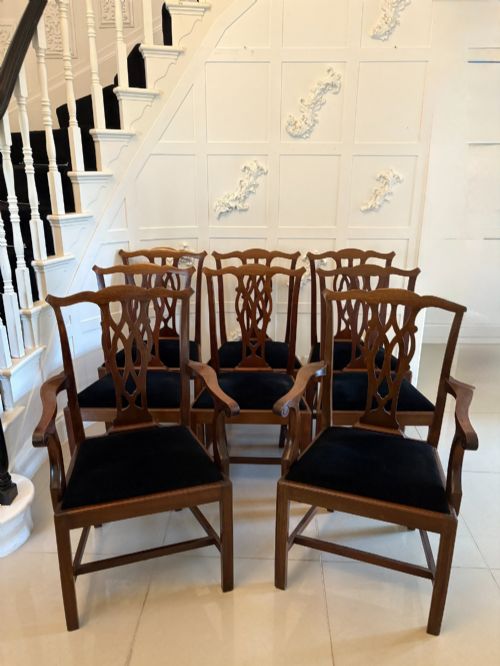
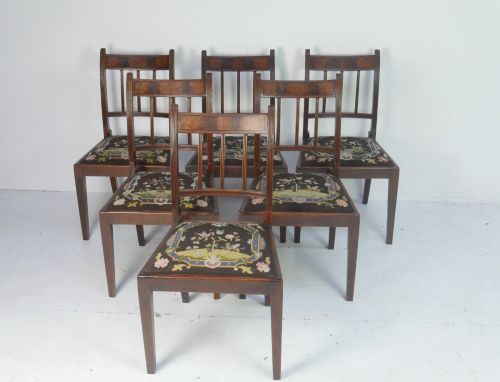
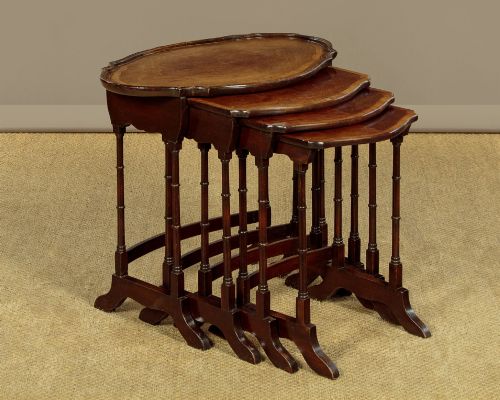
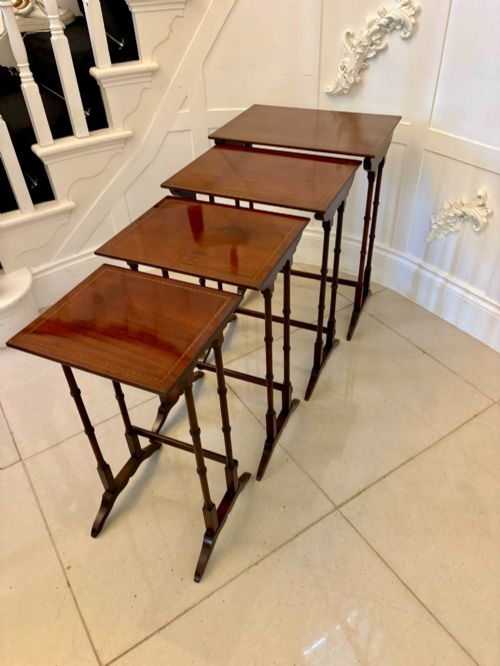
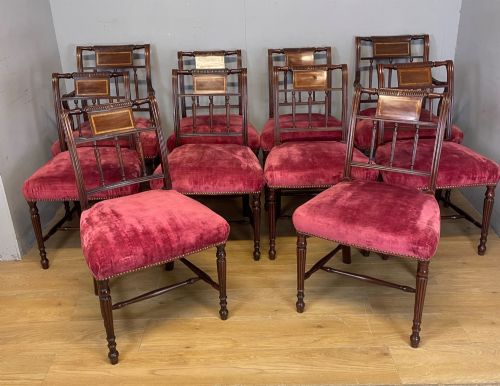
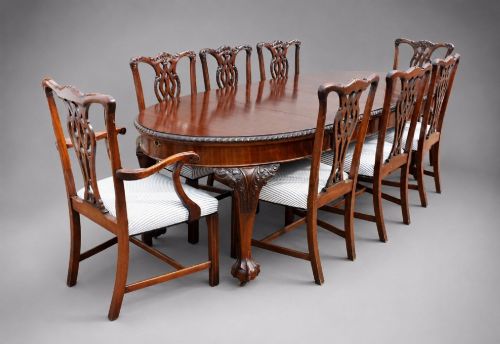
An edwardian mahogany set gathers multiple related pieces of furniture made around the turn of the twentieth century in rich tropical timber. The listings show that dining chairs, nesting tables and salon suites dominate these groupings.
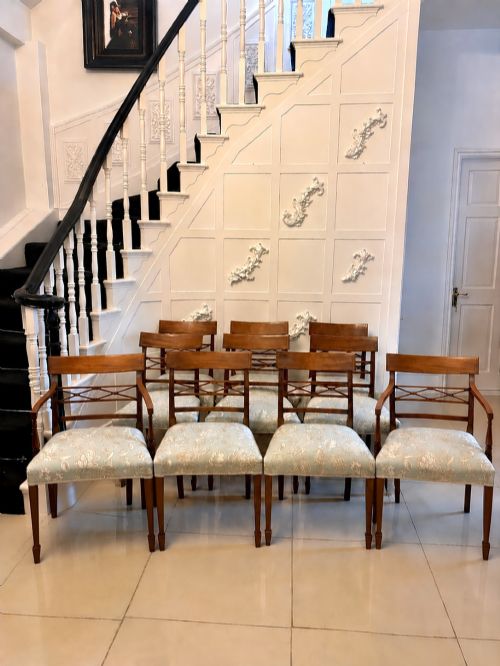
Buyers encounter large sets of eight or ten dining chairs alongside smaller quartets of occasional tables. These groupings reflect the period focus on formal hospitality and flexible domestic living.
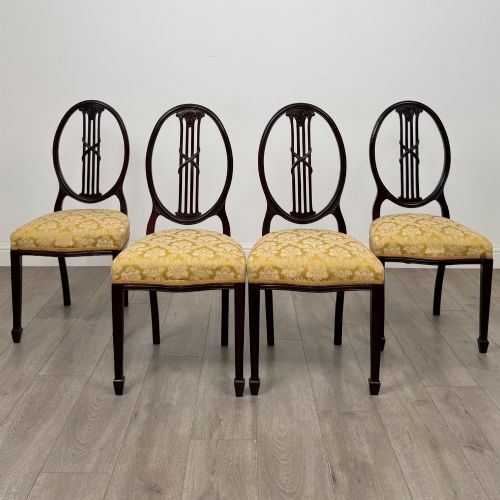
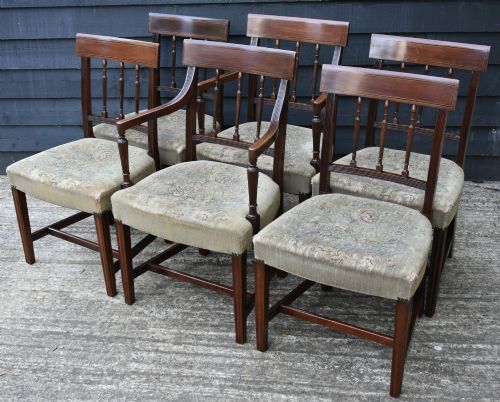
Design inspirations draw heavily on earlier eighteenth-century aesthetics, incorporating revival styles such as Chippendale and Hepplewhite alongside simpler Edwardian lines.
Materials and construction
Cabinet makers utilised solid mahogany and supporting veneers, frequently adding contrasting satinwood cross-banding or marquetry inlay to elevate surface detail.
Structural elements rely on traditional joinery techniques, ensuring the durability seen in large dining chairs and interlocking nesting tables.
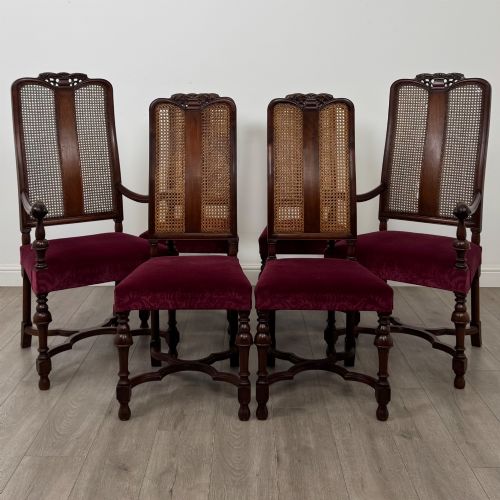
Upholstered components incorporate materials such as leather, fabric and cane, supporting the diverse seating forms found across the inventory.
The listings show mahogany, satinwood, brass and fabric as primary materials across Edwardian and Victorian dining chairs and nesting tables.
Factors separating tiers
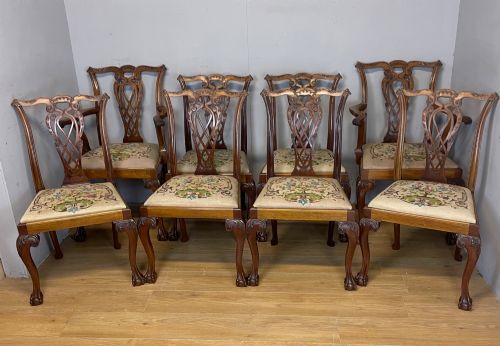
The refinement of carved details on chair splats and cabriole legs distinguishes standard production from superior craftsmanship.
Consistency across every piece in a large group determines the overall integrity of the set.
The precision of contrasting inlay work and the selection of figured mahogany veneer dictate the visual appeal.
Warings·De Grave Short And Co·Maple And Co·Alfred Allen·Waring And Gillow
The Edwardian Mahogany Set Glossary
- Chippendale Revival
- A late nineteenth or early twentieth-century reinterpretation of Thomas Chippendale designs. These pieces often feature carved ribbon backs or ball and claw feet.
- Cross-banding
- A decorative border of veneer laid with the grain running perpendicular to the central panel. This technique creates a contrasting frame on table tops and chair rails.
- Marquetry
- Elaborate patterns formed by fitting together contrasting pieces of wood veneer. Artisans apply this directly to cabinet fronts and table surfaces.
- Shield Back
- A chair back shaped in the outline of a heraldic shield. This silhouette is frequently associated with Hepplewhite revival dining sets.
- Carver
- An armchair designed with elbow rests, traditionally placed at the head of a dining table. Sets often include two carvers alongside standard side chairs.
Edwardian Mahogany Set: Frequently Asked Questions
How many chairs come in a typical set?
Dining sets commonly range from four to twelve chairs, frequently including carver armchairs for the heads of the table.
Larger groupings of ten or twelve pieces reflect formal dining requirements of larger Edwardian households.
Are nesting tables considered a set?
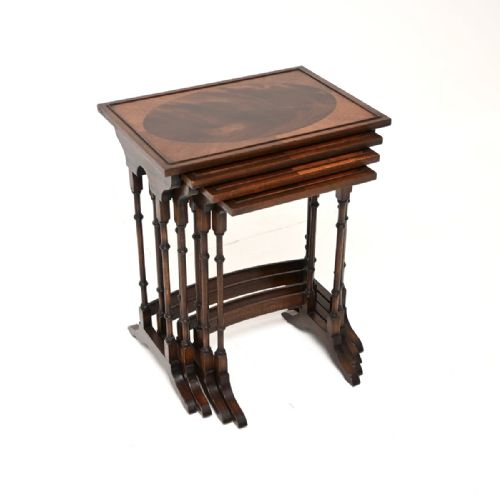
Graduated nesting tables count as sets because individual pieces fit together in a sequence. These items typically comprise groups of three, four or five tables.
Makers designed them to save floor space while providing supplementary surfaces for tea or games.
What revival styles influence these pieces?
Designers drew heavily on eighteenth-century aesthetics, incorporating Chippendale, Hepplewhite, Sheraton and Regency motifs into Edwardian production.
Cabinet makers adapted these earlier proportions to suit contemporary domestic interiors.
How do salon suites differ from dining sets?
Salon suites combine settees and armchairs intended for reception rooms rather than dining spaces. They often feature matching occasional chairs and upholstered framing.
These collections prioritised decorative upholstery and comfort for social gatherings.