
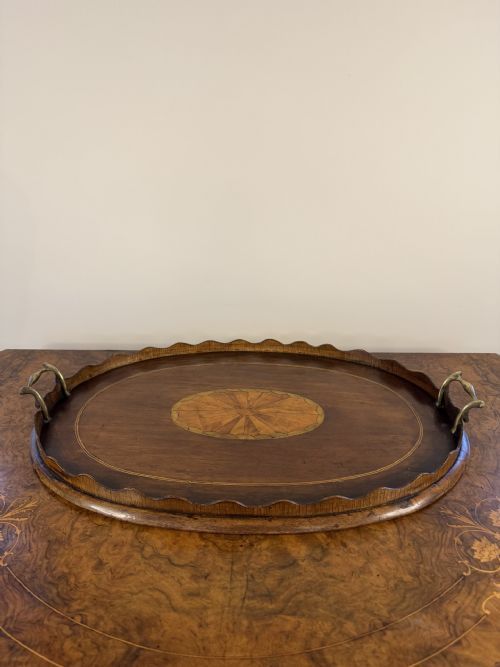
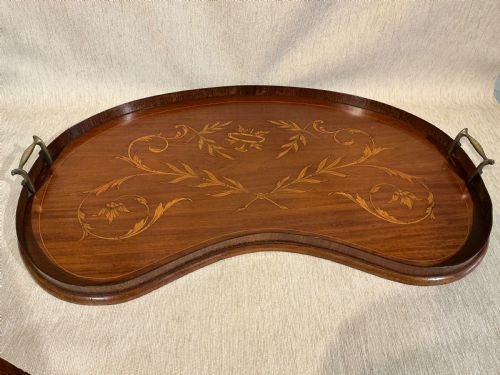


Edwardian Mahogany Serving Tray
An Edwardian mahogany serving tray combines practical hosting utility with refined marquetry, offering a durable surface suited to both display and daily service.
Edwardian Mahogany Serving Tray
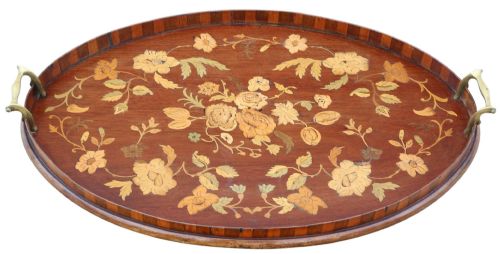
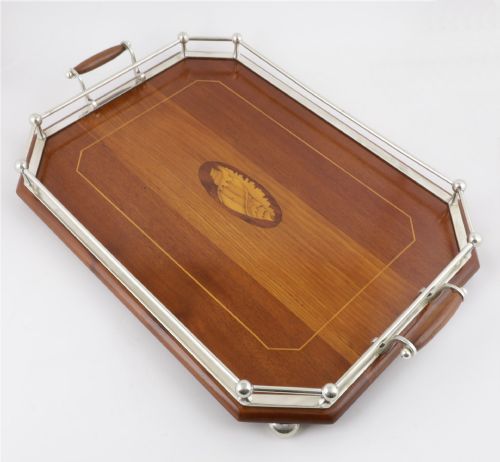
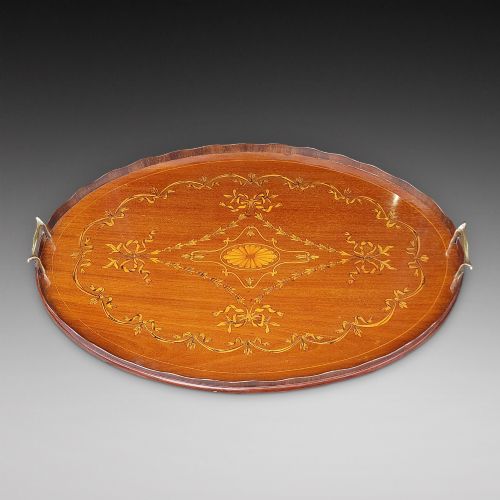
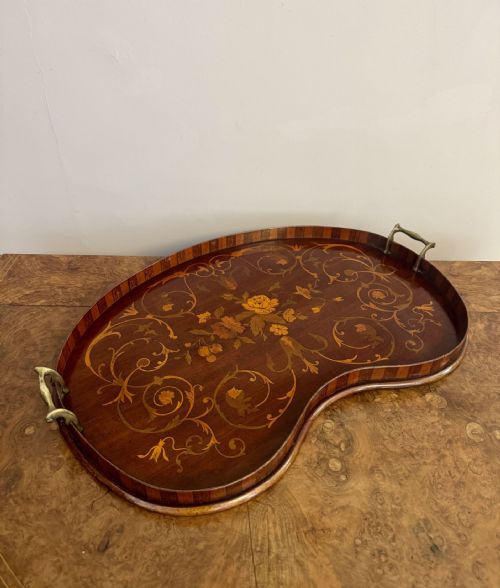
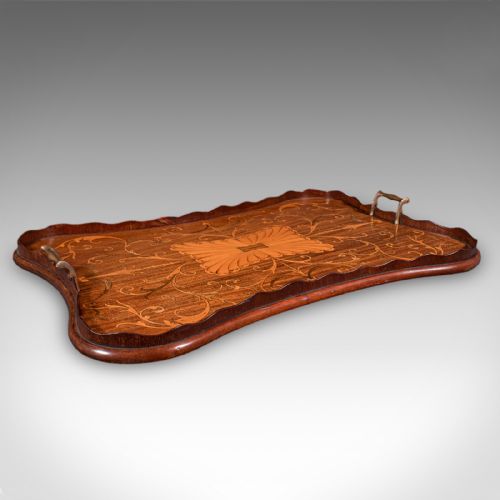
When you search for an edwardian mahogany serving tray, you encounter pieces designed primarily for afternoon tea, drinks service, or general household entertaining. The selection spans standard rectangular platforms, kidney-shaped models, and oval formats equipped with brass handles or wooden galleries.
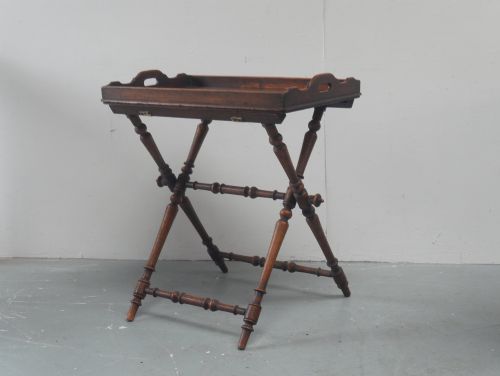
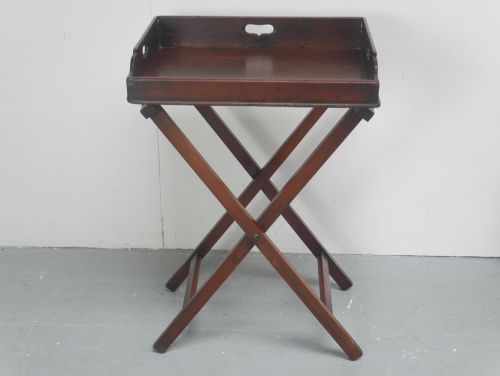
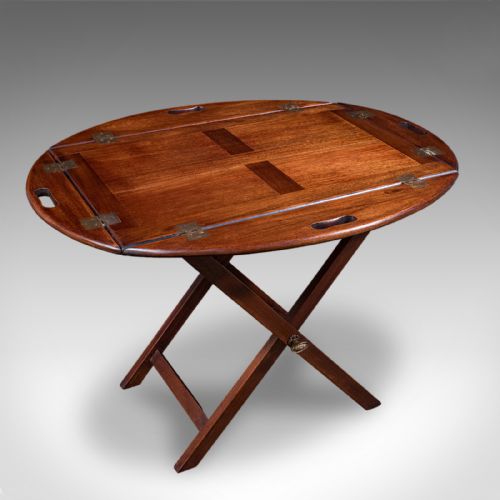
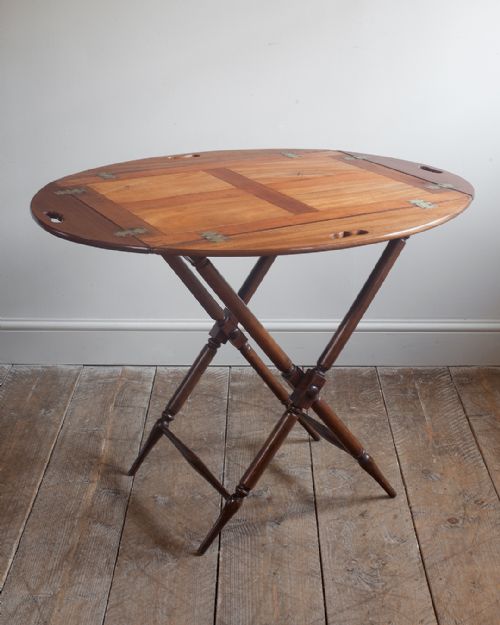
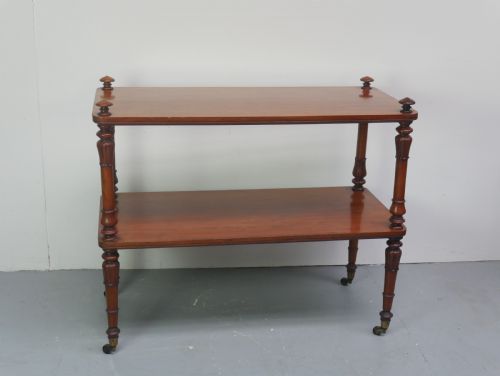
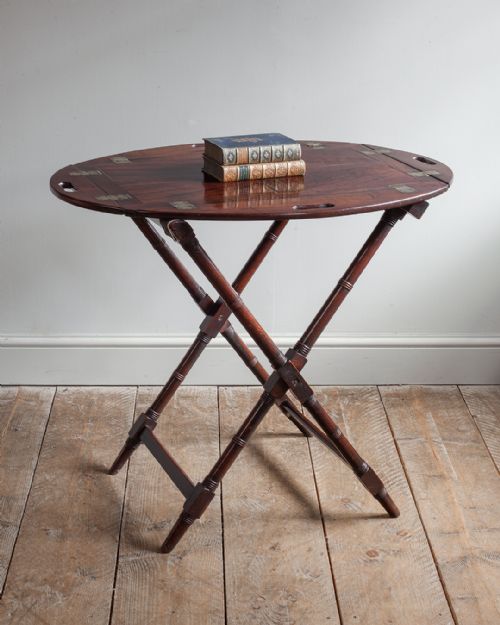
Many examples date from the Edwardian period itself or the surrounding decades of the late nineteenth and early twentieth centuries. These range from flat trays meant for handheld carriage to robust butler variants resting upon dedicated folding or fixed wooden stands.
Materials and construction methods
Makers utilised solid mahogany and supporting timbers like satinwood, rosewood, and oak to build structural stability into each edwardian mahogany serving tray. Contrasting veneers often formed geometric borders or central decorative motifs across the primary surface.
Inlay techniques such as marquetry defined the aesthetic, integrating lighter woods into the dark grain. Edges frequently featured raised wooden galleries, scalloped borders, or fitted brass handles secured with small screws to assist with lifting.
The archive reveals that butler trays paired with folding stands appear alongside handheld kidney-shaped serving platforms.
Assessing quality in trays
The distinction between ordinary and superior pieces rests on the precision of the marquetry inlay and the choice of secondary timbers. Crisp execution in floral or shell motifs separates standard production items from finer workshop output.
Structural integrity of the gallery edging and the retention of original handles or silver-plated mounts dictate overall desirability. Trays retaining unblemished timber surfaces and clear grain patterns command greater attention from collectors.
The Edwardian Mahogany Serving Tray Glossary
- Gallery
- A raised wooden or metal border running around the edge of a tray to prevent items from sliding off during transit. It is frequently pierced or scalloped for decorative effect.
- Marquetry
- The art of applying pieces of veneer to a structure to form decorative patterns and pictures. Craftsmen used contrasting timbers like satinwood to achieve distinct tonal effects.
- Butler Tray
- A detachable serving tray designed to sit atop a folding wooden stand. These pieces allowed servants to transport items from kitchen to parlour before placing the entire unit on display.
- Kidney-Shaped
- A curved, asymmetrical form popular in Edwardian design. This contour allowed the user to hold the tray closer to the body during service.
Edwardian Mahogany Serving Tray: Frequently Asked Questions
How do I clean an antique tray?
Wipe surfaces gently with a dry or barely damp lint-free cloth to remove dust without disturbing the polish. Avoid chemical cleaners or excessive moisture that might lift delicate satinwood inlay.
Feed the dry mahogany periodically with a suitable traditional wax polish to preserve the depth of the timber grain. Buff softly with a clean cloth to maintain a natural sheen.
Can these trays still be used?
Most pieces remain structurally sound and capable of light domestic service, such as holding drinks or displaying items. Consider placing a protective barrier or cloth on the surface if carrying heavier objects.
Due to the age of the veneer and delicate marquetry, frequent heavy use risks cosmetic damage. Many owners prefer to use them as stationary display pieces on side tables or coffee tables.
How do I identify an Edwardian piece?
Edwardian items typically feature lighter, more delicate proportions than their heavier Victorian predecessors. The wood choice often includes rich mahogany accented with crisp satinwood stringing or floral marquetry.
Construction details, such as machine-sawn backing boards or specific brass handle styles, help confirm the era. Compare the decorative motifs against known examples from the early twentieth century.