



Oval Wooden Serving Platter
An oval wooden serving platter brings tactile warmth to a table, offering deep timber grains and refined craftsmanship for everyday hosting.
Oval Wooden Serving Platter
An oval wooden serving platter is a functional tabletop piece designed for carrying or presenting food and drink, appearing across multiple eras from the eighteenth century to the twentieth century. These items manifest primarily as serving trays, trays, and combined trays and platters formed from solid woods and veneered timbers.
The versions most commonly met on this page span Georgian, Victorian, Edwardian, and later twentieth-century periods. Builders shaped these objects in styles such as Georgian, Regency, Victorian, Edwardian, and Art Deco, reflecting the prevailing aesthetic tastes of their respective decades.
Makers utilised various construction methods, sometimes incorporating gallery rails or inlaid details. The resulting objects range from simple timber boards to decorative pieces intended for formal display and service.
How they were made
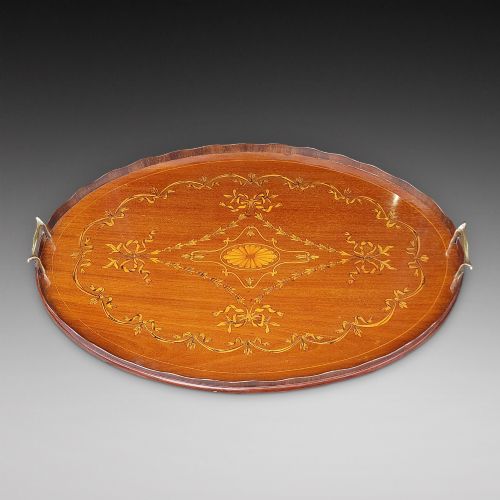
Craftsmen built these pieces using traditional timber manipulation, selecting woods such as mahogany, oak, walnut, and satinwood, alongside wood veneer and timber. Mahogany appears frequently, often paired with contrasting inlay work or oyster veneering to create visual depth on the surface.
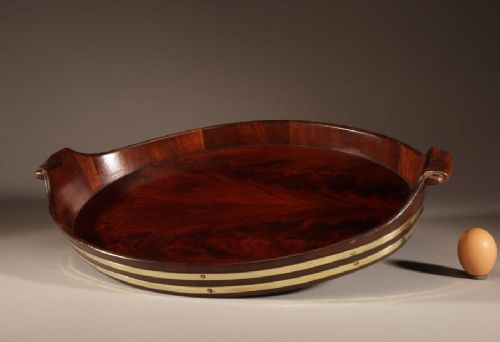
Metal elements frequently complement the woodwork, incorporating brass for handles or galleries, and silver plate for mounts and rims. Coopered construction techniques also appear, shaping staves of wood into secure oval vessels bound by metal.
One exceptional piece utilises coopered construction, bringing traditional barrel-making techniques straight to the afternoon tea service.
What varies in quality
The standard of a piece rests on the selection of timber and the precision of the joinery. Fine grain alignment in mahogany or satinwood and crisp execution of marquetry or inlay distinguish superior examples.
The integration of metalwork dictates another tier of distinction, where cast brass galleries and sturdy handles show careful fitting to the wooden base. Pieces demonstrating thoughtful proportion and uncompromised structural integrity command greater appreciation.
The Oval Wooden Serving Platter Glossary
- Gallery
- A raised rim or border surrounding the edge of a tray, often pierced or turned from brass or wood to secure items during transport.
- Marquetry
- Decorative veneer work forming intricate patterns using various coloured woods laid into a ground material.
- Oyster veneer
- Timber cut transversely across the branch to produce circular or oval rings resembling oyster shells, popular in decorative furniture.
- Coopered
- Constructed from wooden staves fitted together side by side and bound by metal hoops, similar to barrel-making techniques.
Oval Wooden Serving Platter: Frequently Asked Questions
How were these trays used?
These items served primarily for carrying drinks, tea services, or food dishes from the kitchen to the parlour or dining table. Their raised edges prevented items from sliding off during transit.
Beyond utilitarian service, many remained on display on sideboards or tables when not in active use, functioning as decorative furnishings within the home.
How do I care for wooden trays?
Maintenance requires gentle cleaning with a dry or barely damp cloth to preserve the polished timber surface and any delicate veneer. Avoid soaking the wood or exposing it to extreme temperature fluctuations.
Application of appropriate furniture wax periodically helps nourish the timber and protects the finish from drying out over time.
How can I tell the periods apart?
Georgian examples often feature rich mahogany with understated classical lines or carved galleries, reflecting eighteenth-century proportion. Edwardian pieces frequently showcase lighter woods, intricate marquetry inlay, or brass galleries.
Twentieth-century items, such as those from the Art Deco period, introduce exotic woods like Macassar ebony and cleaner, modernist geometric silhouettes.
What materials are most common?
Mahogany forms the foundation of a large proportion of these pieces due to its durability and rich red-brown hue. Oak and satinwood also appear regularly alongside decorative veneers.
Metal additions like brass and silver plate frequently accent the wooden bases, appearing as handles, rims, or protective gallery rails.