
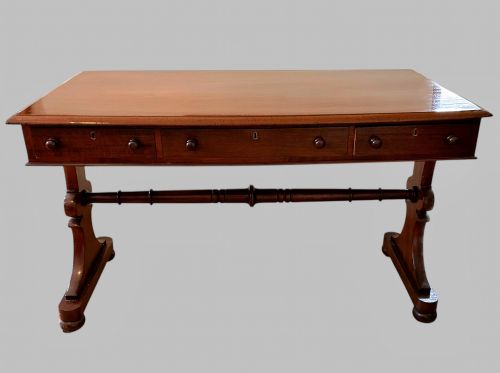
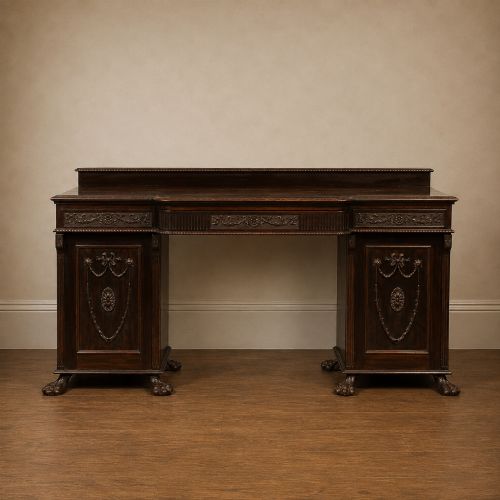
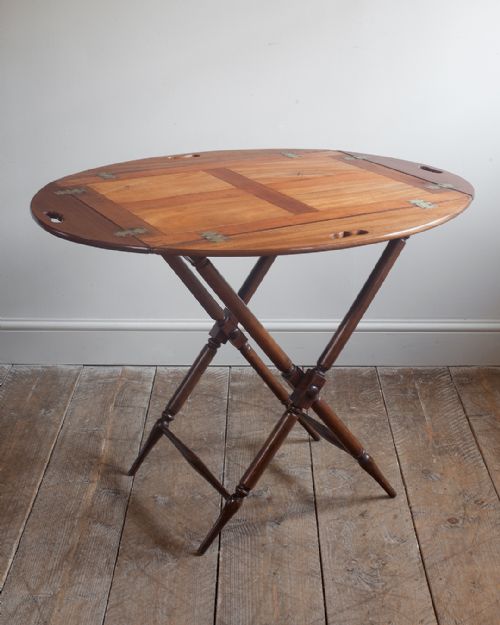
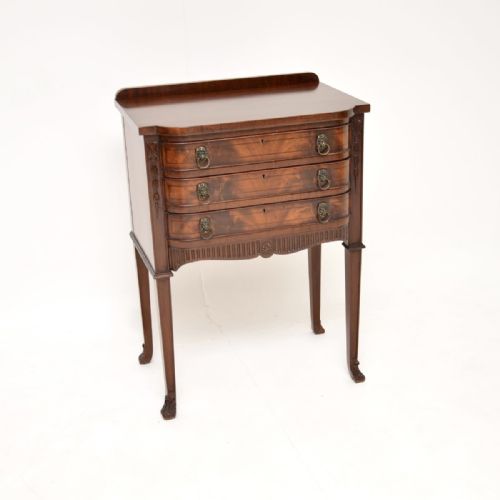

Edwardian Mahogany Serving Table
An edwardian mahogany serving table is a refined dining room essential offering a stable surface for food and drink.
Edwardian Mahogany Serving Table
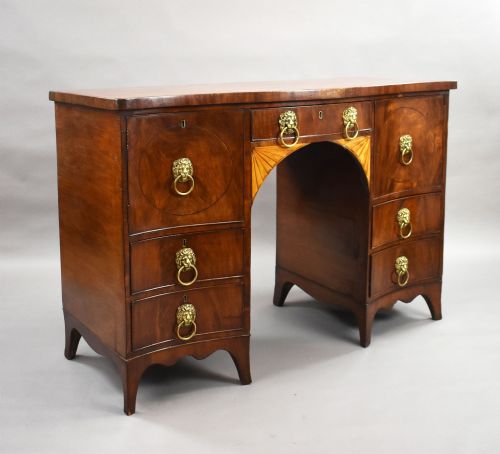
When you search for an edwardian mahogany serving table, you are looking at formal dining furniture produced in the early years of the twentieth century. These pieces display the rich tones and linear grain of mahogany, often enriched by lighter wood inlays or brass details.
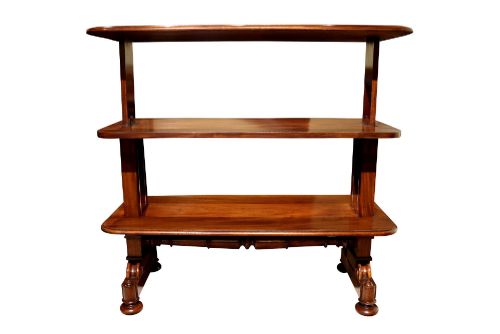
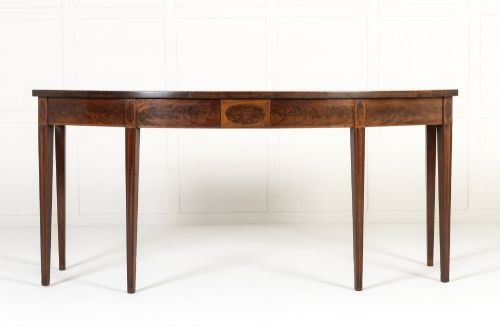
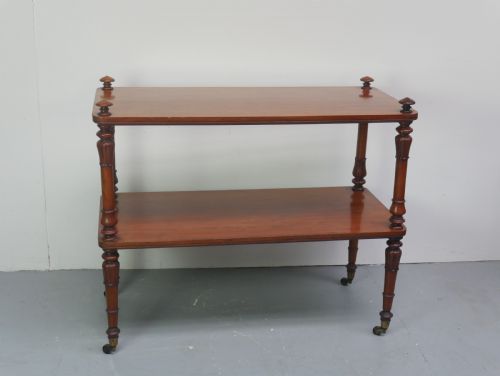
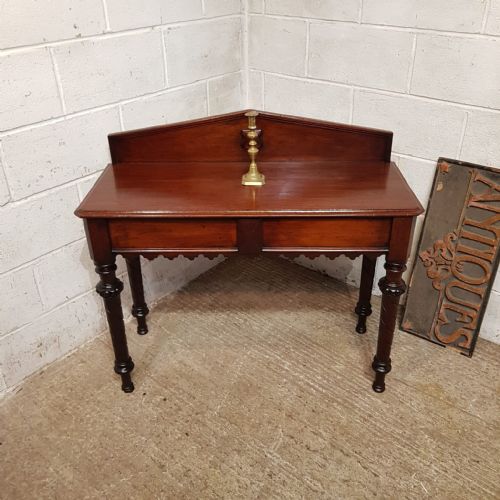
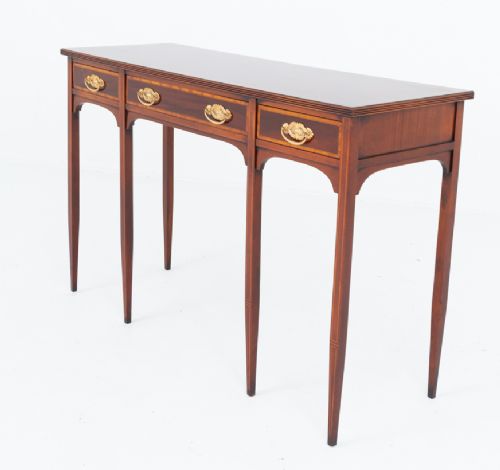
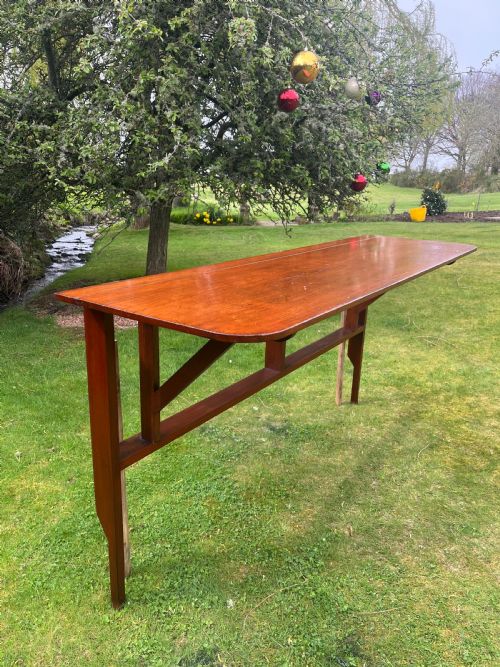
On this page, you will meet several variations including straightforward side tables, multi-tiered serving trolleys, and serpentine console forms. Many echo earlier Georgian or Sheraton revival designs, reflecting the Edwardian preference for classical proportion paired with practical dining utility.
Materials and Construction
Makers utilised solid mahogany and polished mahogany veneers over secondary timbers, shaping the timber into flat surfaces, serpentine fronts, and slender tapered legs. Cabinetmakers added decorative contrast through delicate boxwood and satinwood inlays, creating geometric borders and classical urn motifs.
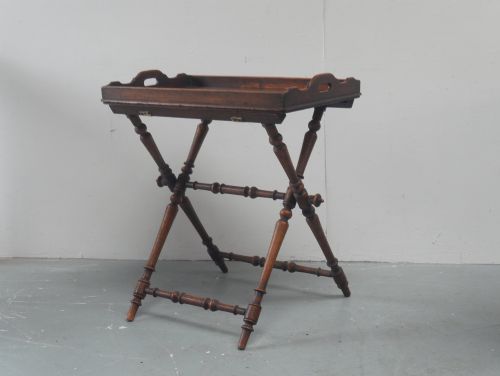
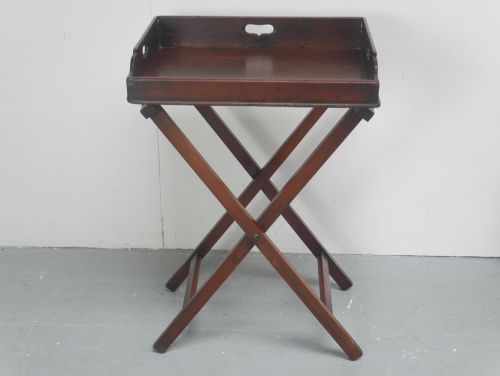
Functional metal elements such as brass handles, castors, and occasional gallery rails were integrated to ease movement and protect surfaces during service. Glass inserts and detachable trays also appear, particularly on trolley and stand variations designed for portable hospitality.
Evaluating Quality
The standard of a piece rests upon the selection of timber figures, where richly flamed or figured mahogany veneers elevate the visual impact above plain stock. Crispness in the execution of boxwood inlay and the precision of structural joinery distinguish superior output from standard commercial production.
Proportion and decorative restraint dictate the desirability of surviving examples. Pieces retaining original brass hardware, stable secondary timbers, and balanced revival styling demonstrate the care applied by period makers.
Maple & Co·Gillow
The Edwardian Mahogany Serving Table Glossary
- Serpentine
- A gently undulating curved front shape that sweeps inward and outward, adding sculptural movement to a sideboard or serving table.
- Satinwood
- A durable, light yellowish timber utilised extensively for contrasting stringing and marquetry inlays on darker woods like mahogany.
- Drop-flap
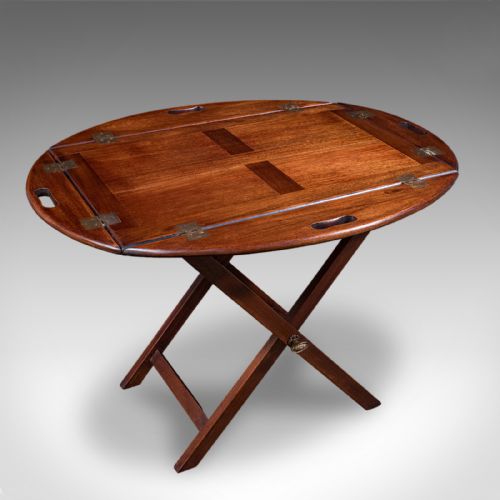
- A hinged leaf on a table or tray that folds down when not in use to save space and extends to enlarge the surface area during service.
- Butlers tray
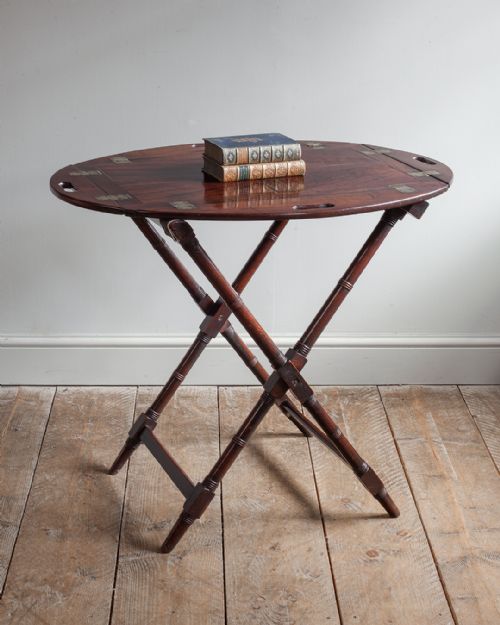
- A portable wooden tray with raised sides, traditionally lifted onto a folding X-frame stand for serving food or beverages.
- Marquetry
- Decorative veneer work arranged in pictorial or geometric patterns using various contrasting woods.
Edwardian Mahogany Serving Table: Frequently Asked Questions
What is an edwardian mahogany serving table used for?
These tables were designed to hold dishes, glassware, and serving platters during large family meals in Edwardian dining rooms.
Today, they function well as sideboards in modern dining spaces or as display surfaces in living areas.
How do I tell an Edwardian piece from a Georgian original?
Edwardian pieces often revive earlier styles but typically display machine-cut elements, lighter internal construction, and twentieth-century secondary timbers.
Georgian originals feature hand-cut joinery and period-specific timber stocks unique to the eighteenth century.
Can these tables be used for everyday dining?
Yes, solid mahogany and sturdy frame construction make these tables durable enough for daily domestic use.
Care should be taken with hot dishes and liquids to protect the polished wood finish and any inlaid details.
What styles influenced Edwardian serving tables?
Cabinetmakers of the Edwardian era drew heavy inspiration from George III designs, Sheraton revival patterns, and Adam aesthetics.
This resulted in light, elegant proportions featuring classical motifs, tapered legs, and subtle stringing.