
Edwardian Mahogany Rack
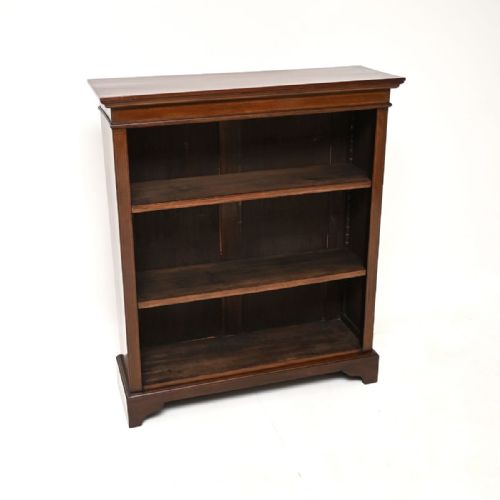
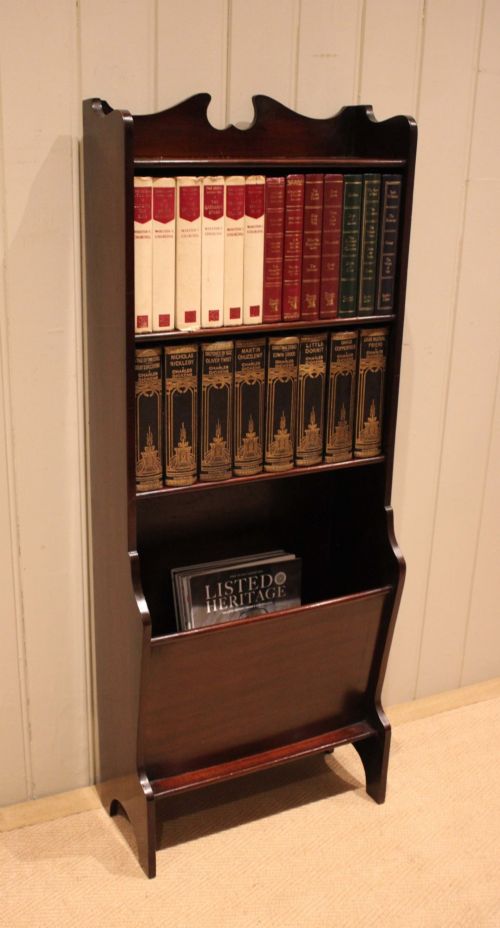
When you search for an edwardian mahogany rack, you uncover a varied selection of practical furniture designed to hold everything from books and magazines to coats and boots.
Edwardian Mahogany Rack
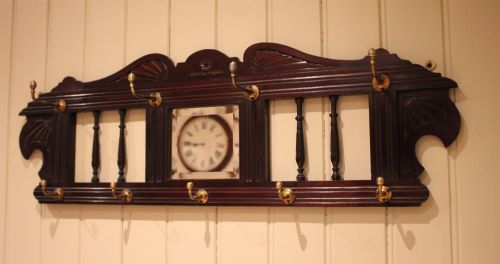
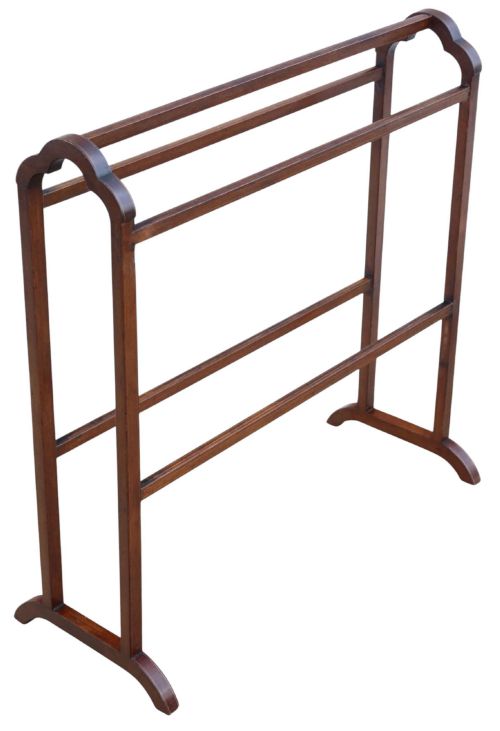
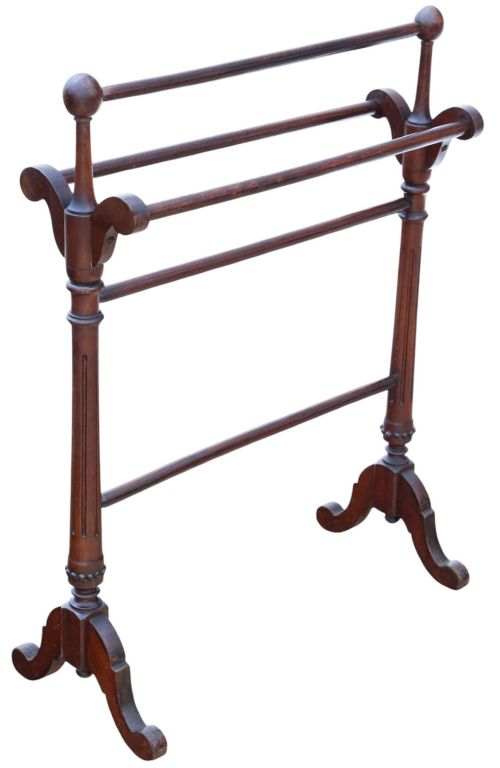
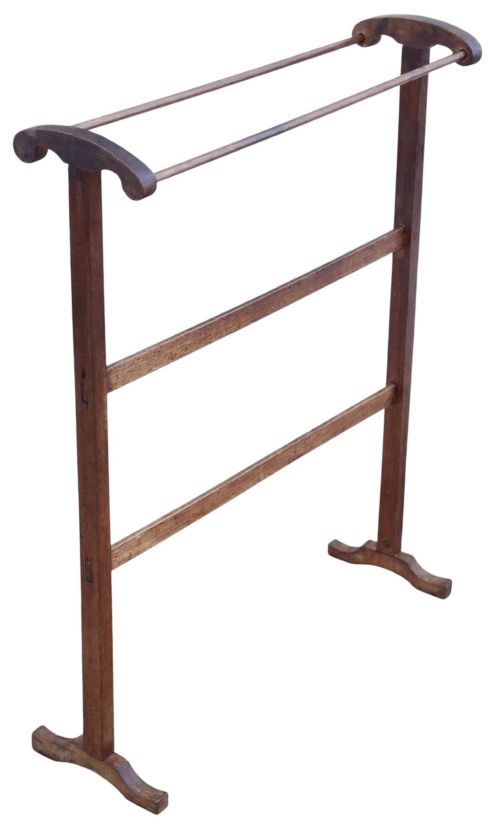
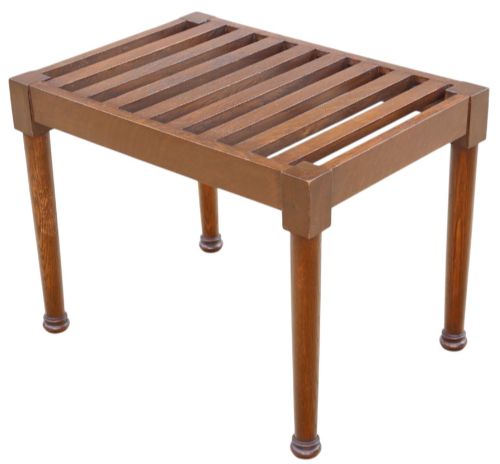
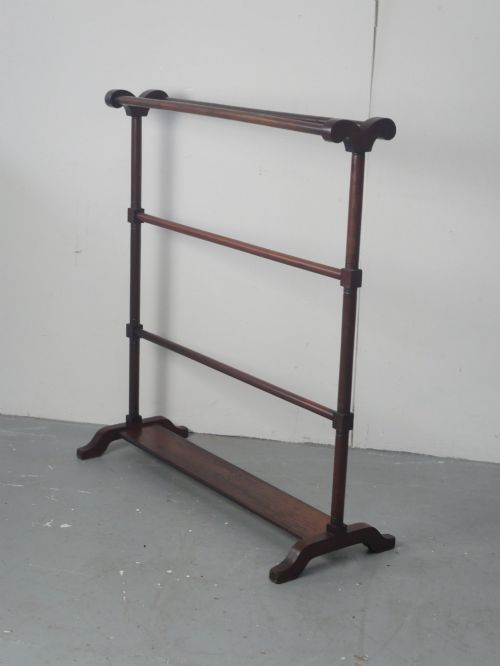
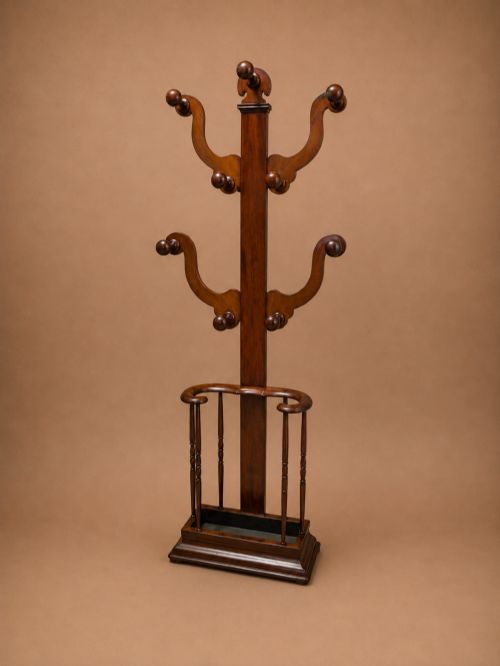
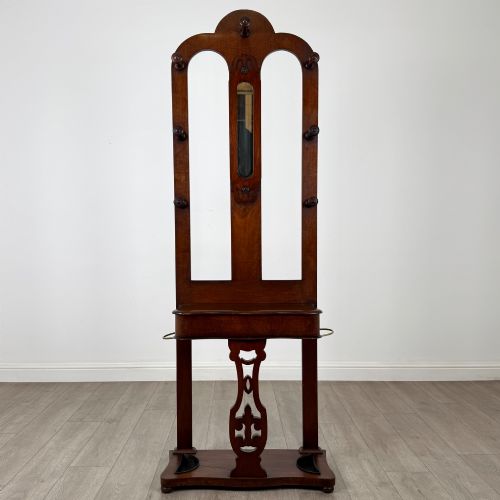
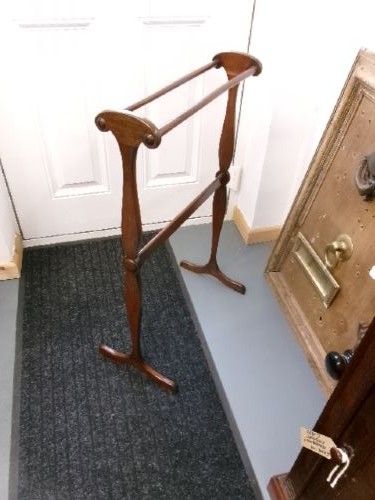
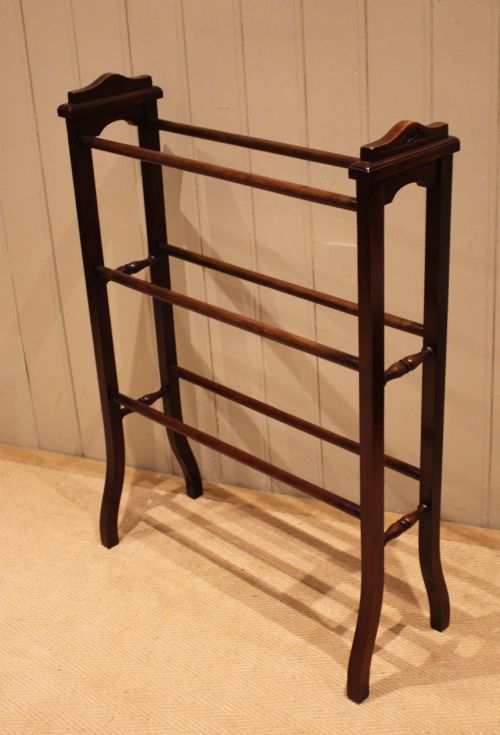
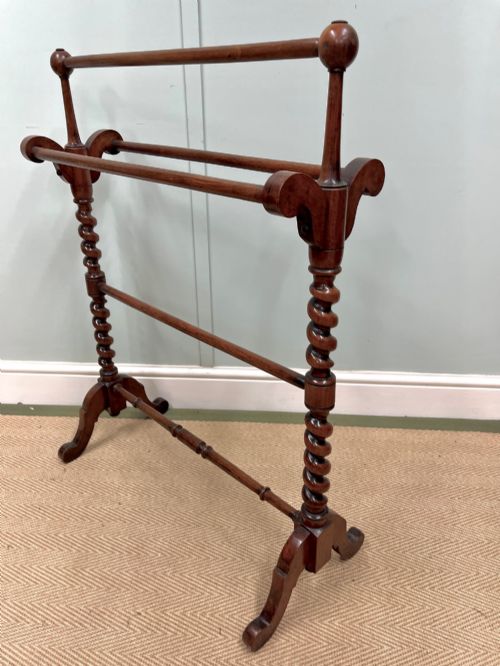
An edwardian mahogany rack spans a multitude of functional domestic forms, appearing frequently as magazine holders, luggage stands, coat hooks, and towel rails. These pieces originated primarily during the Edwardian era and the nineteenth century, reflecting the organised domestic habits of period households.
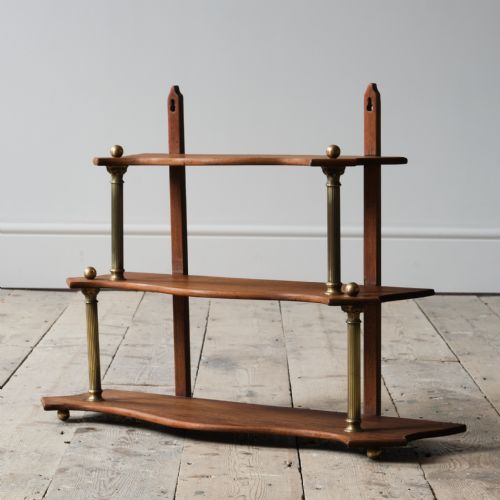
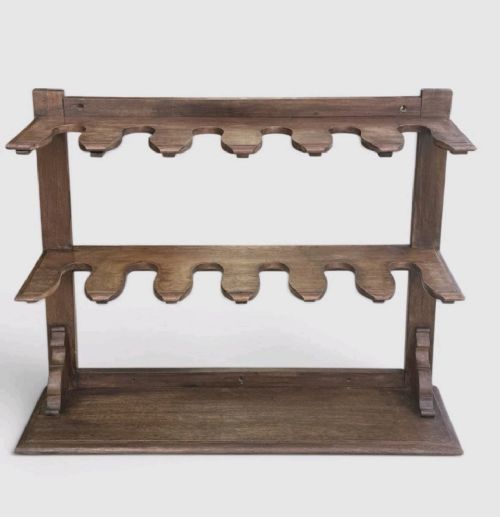
Book racks, Canterbury stands, and wall-hanging shelves also populate this category, offering compact storage for papers, music sheets, and volumes. Buyers encounter both simple utility items and more decorative hall stands fitted with mirrors and umbrella holders.
The selection ranges from robust nineteenth-century country-house luggage stands to refined Edwardian stationary holders and inlaid display shelves. Each form serves a distinct organizational purpose, shaped by the practical needs of Victorian and Edwardian interiors.
How they were made
Cabinet makers relied predominantly on mahogany, often selecting flame mahogany veneers to highlight rich grain patterns on larger surfaces. Satinwood inlay frequently provides contrasting linear detail, adding decorative refinement to panels and borders.
Brass fittings, such as coat hooks, mounting plates, and gallery rails, appear routinely alongside the timber, contributing structural durability and metallic contrast. Hardwoods like oak occasionally support internal framing or secondary elements within these domestic racks.
Boot and whip stands remind us of a time when mud rooms needed dedicated mahogany furniture for riding crops.
What varies in quality
The caliber of an edwardian mahogany rack rests largely upon the crispness of its joinery and the selection of timber figures. Pieces featuring carefully matched flame mahogany veneers and precise satinwood stringing stand apart from plainer utility items.
Hardware selection similarly marks distinction, where substantial cast brass mounting plates and hooks elevate a piece beyond standard production. Fine proportioning and balanced integration of inlay dictate the upper tier of surviving examples.
Mappin and Webb
The Edwardian Mahogany Rack Glossary
- Canterbury
- A low, freestanding rack traditionally used for holding sheet music, books, or periodicals, usually featuring slatted or divided partitions.
- Inlay
- A decorative technique where contrasting woods, such as satinwood, are set into recesses flush with the surrounding mahogany surface.
- Upstand
- A raised barrier along the back edge of a shelf or luggage stand designed to prevent items from sliding off the rear.
- Whatnot
- An open set of movable shelves used for displaying or storing small household objects and books.
Edwardian Mahogany Rack: Frequently Asked Questions
What is a Canterbury rack used for?
A Canterbury serves as a partitioned stand designed originally for organising sheet music, periodicals, and books near a seating area. These pieces often incorporate a small lower drawer for loose accessories.
Over time, their compact form made them popular general-purpose tidies for modern living spaces.
How do I distinguish Edwardian from Victorian racks?
Edwardian examples generally display lighter framing, delicate satinwood inlay, and refined proportions influenced by Sheraton revivals. Victorian pieces tend to be heavier in construction with darker timber tones and robust structural members.
Both periods utilise mahogany, but the decorative restraint usually sets the Edwardian items apart.
Were luggage stands used in bedrooms?
Luggage stands originated as practical furniture for guest bedrooms to hold travel trunks off the floor at a convenient height for unpacking. They frequently feature folding frames and raised rear upstands to protect wallpaper.
Today, many buyers repurpose them as sturdy tray tables or blanket holders.
Where should I place a wall-hanging shelf?
Wall-hanging shelves and book racks suit narrow hallways, studies, or bathrooms where floor space is limited. Their structural brackets allow secure mounting while displaying books or holding small items.
Ensure the wall fixings match the weight capacity of the solid mahogany frame.