


Castored Magazine Stand
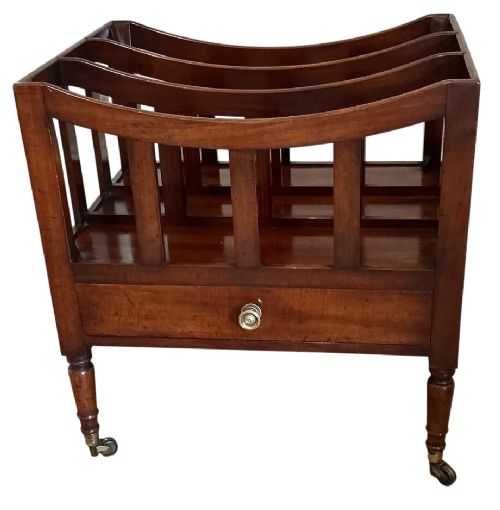
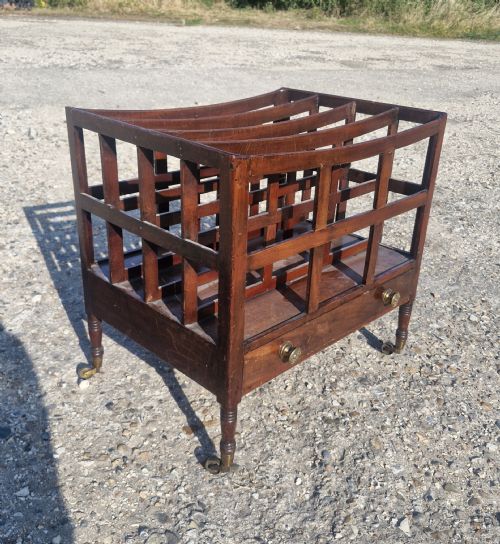
A castored magazine stand is a wheeled compartmented rack for periodicals and folios, offering portable organisation for the traditional sitting room.
Castored Magazine Stand
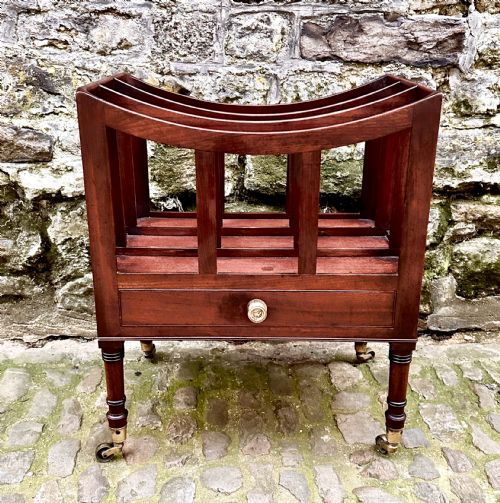
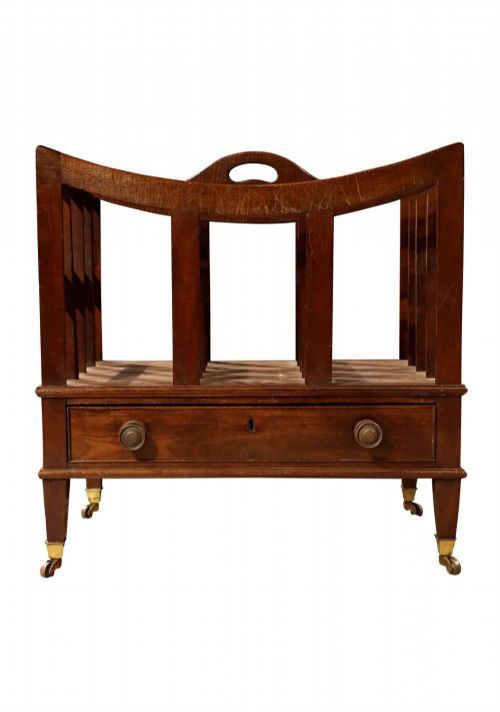
A castored magazine stand primarily takes the form of the Canterbury, a traditional multi-tier stand designed for sheet music, newspapers and periodicals. When buyers search for a castored magazine stand, they encounter pieces originating from the Georgian, Regency, William IV, Victorian and Edwardian periods.
The selections span boat-shaped frames, music racks, book troughs and what-nots equipped with small wheels for mobility across the floor. Mahogany, rosewood and walnut dominate the construction, often enhanced with brass details and turned supports.
Regency and Victorian examples appear most frequently in the current selection, offering partitioned divisions above a low drawer. These versatile pieces function as practical storage beside seating or desks while retaining their original mobility.
Materials and construction methods
Cabinet makers utilised dense hardwoods including mahogany, rosewood and walnut, frequently selecting figured veneers and burr walnut for decorative impact. Ebony banding, inlay and gilded wood applied detail to surfaces across Georgian and Edwardian iterations.
Joining techniques relied on traditional cabinet-making joinery to secure upright slat partitions, drawers and tiered shelves to low platforms fitted with castors. Brass castors enable smooth movement, while turned legs provide structural support beneath the compartmentalised racks.
Evaluating craftsmanship and execution
Quality rests on the selection of timber veneers and the crispness of carved or inlaid decoration. Pieces featuring finely figured mahogany, burr walnut or rosewood demonstrate superior material choice by the maker.
Construction rigidity distinguishes finer examples from standard production. Well-executed pieces maintain tight joints across the slatted divisions and incorporate integrated drawers that operate smoothly within the frame.
Gillows of Lancaster·J.C.Loudon
The Castored Magazine Stand Glossary
- Castor
- A small wheel mounted on a swivel attached to the base of furniture. It permits easy relocation across floor surfaces.
- Book trough
- An open-topped receptacle designed to hold books or folios upright. These items often feature shaped wooden ends or tiered structures.
- What-not
- A set of open shelves standing one above another for displaying or holding small objects. Victorian examples frequently combine this form with lower rack compartments.
Castored Magazine Stand: Frequently Asked Questions
What is a Canterbury used for?
A Canterbury serves as a compartmented stand for holding sheet music, newspapers, and periodicals within reach of a seating area.
Over time, these pieces adapted readily to storing modern magazines and books while maintaining their mobility on small wheels.
How do I identify a Regency Canterbury?
Regency models often feature boat-shaped frames, reeded or turned legs, and brass castors supporting slatted vertical divisions.
They rely on dense mahogany or rosewood timbers, sometimes accented with ebony banding or delicate brass mounts.
Are these stands suitable for daily use?
These pieces function well in contemporary interiors for organising current reading material near armchairs or sofas.
Their sturdy hardwood construction and functional wheel mountings allow them to move smoothly across living spaces.
What distinguishes Victorian models from earlier pieces?
Victorian stands frequently employ burr walnut, rosewood, or ebonised mahogany alongside elaborate inlay and multi-tier shelf arrangements.
They often incorporate lower drawers and refined marquetry reflecting the decorative tastes of the later nineteenth century.