
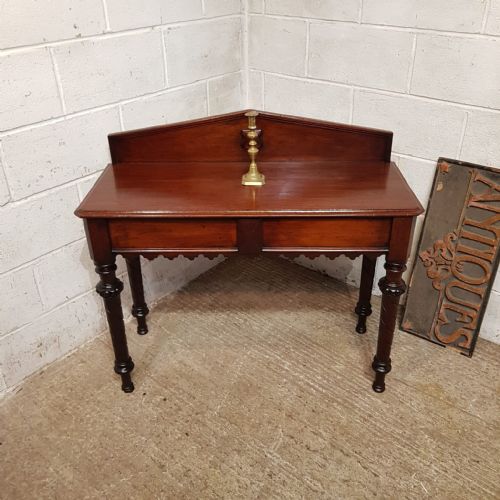


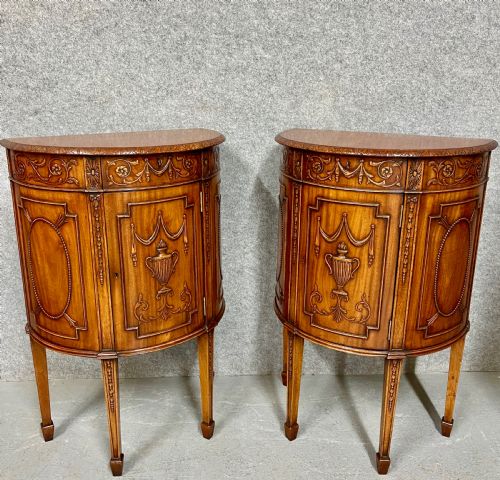
Edwardian Mahogany Foyer Table
An Edwardian mahogany foyer table is a practical and decorative piece designed for a hallway, combining rich timber with refined period styling.
Edwardian Mahogany Foyer Table
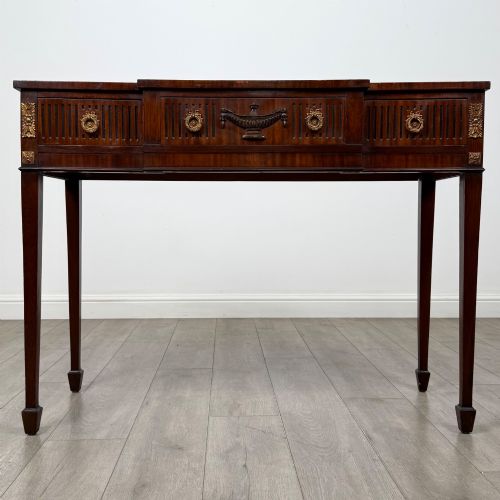
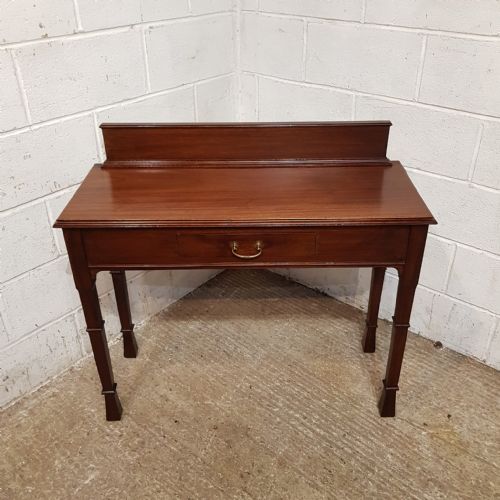
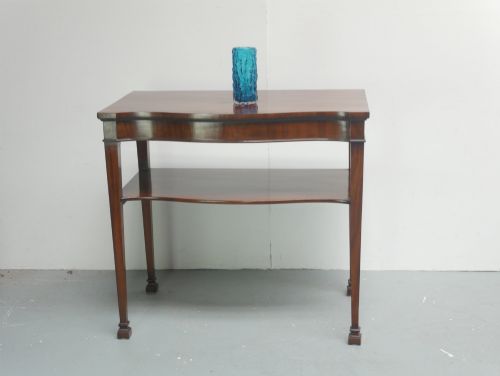
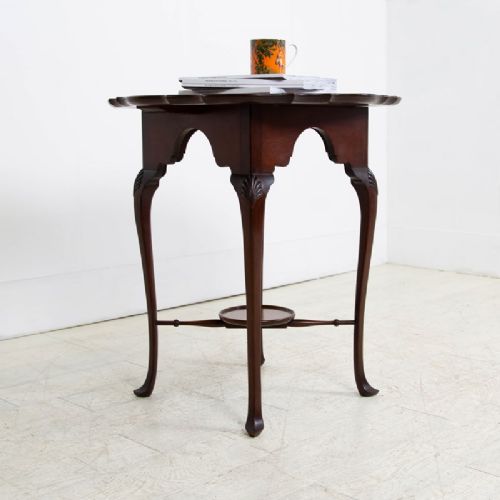
An edwardian mahogany foyer table serves as a functional surface in an entrance hall, designed to sit against a wall or stand freely in the centre of the space. The selection includes console tables, hall tables, occasional pieces and centre tables spanning the Edwardian period alongside Victorian and later revivals.
Makers and workshops produced these forms in various formats, ranging from narrow console tables to octagonal centre tables and demilune shapes. Influences draw heavily from Neoclassical and Adam styles, often featuring symmetrical proportions suitable for formal hallways.
How they were made
Cabinet makers utilised solid mahogany and selected veneers to build the carcasses and tops of these tables, frequently incorporating secondary timbers. Construction methods relied on traditional joinery techniques suited to load-bearing furniture destined for prominent entrance spaces.
Decorative embellishments often include marquetry inlay using satinwood, boxwood and rosewood to create contrasting borders and centre motifs. Brass hardware and occasional glass inserts appear across specific console and side table designs.
Table forms include console cabinets, octagonal centre tables, occasional side tables and demilune hall tables decorated with brass accents.
What varies in quality
The standard of timber selection and the precision of the marquetry inlay determine the visual depth of the surface. Finer examples display meticulous attention to grain matching and crisp execution of classical revival motifs.
Structural integrity and the refinement of carved details distinguish standard production from exceptional pieces. The presence of attributed workshop designs or sophisticated revival influences elevates the overall character of the table.
Shapland and Petter·Edward and Roberts
The Edwardian Mahogany Foyer Table Glossary
- Demilune
- A half-moon shape used for console tables designed to sit flush against a wall in narrow hallways. This form maximises floor space while providing a functional surface.
- Marquetry
- Decorative veneer work arranged in geometric or pictorial patterns using contrasting woods like boxwood and satinwood. Artisans apply these patterns to table tops to create visual interest.
- Console table
- A table supported by wall brackets or legs, intended to stand against a wall in an entrance hall. These tables frequently accommodate matching wall mirrors.
- Centre table
- A freestanding piece designed to be viewed from all angles, often placed in the middle of a room or foyer. Octagonal and round formats are typical examples.
Edwardian Mahogany Foyer Table: Frequently Asked Questions
Where should a foyer table be placed?
These tables traditionally sit against an entrance hall wall to receive post and keys, or stand centrally in a large foyer as a focal point.
Freestanding centre tables require adequate clearance on all sides to allow movement through the hallway.
How do I identify an Edwardian table?
Edwardian pieces often show lighter proportions and refined classical revival influences, such as Adam style details, compared to heavier Victorian predecessors.
Materials frequently include mahogany paired with delicate satinwood or boxwood inlay work.
Can I use a console table in a small hall?
Narrow console tables and demilune shapes fit closely against walls, making them suitable for compact entrance spaces without obstructing doorways.
Pairing a console table with a matching wall mirror helps reflect light in smaller hallways.
What is the difference between a console and a centre table?
Console tables feature flat backs designed to stand directly against a hallway wall, sometimes requiring wall support.
Centre tables are finished on all sides for freestanding placement in the middle of a room or large foyer.