
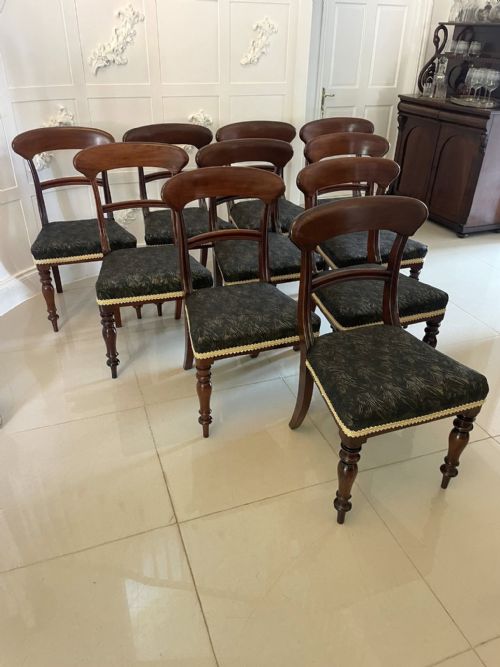
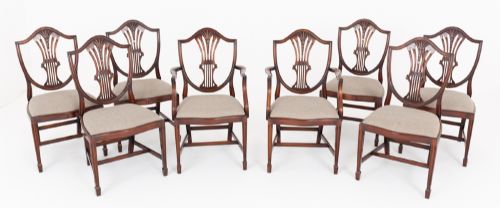
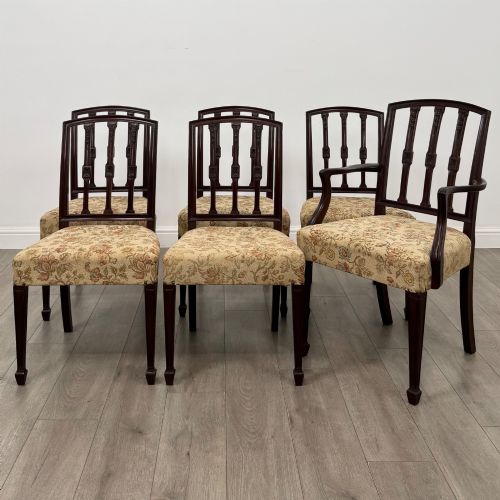
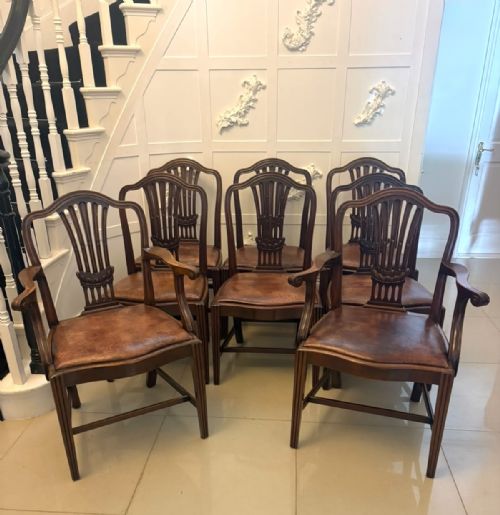
Edwardian Mahogany Dining Set
An Edwardian mahogany dining set brings together matched seating crafted from dense tropical timber, designed to anchor formal spaces with traditional proportion and rich grain.
Edwardian Mahogany Dining Set
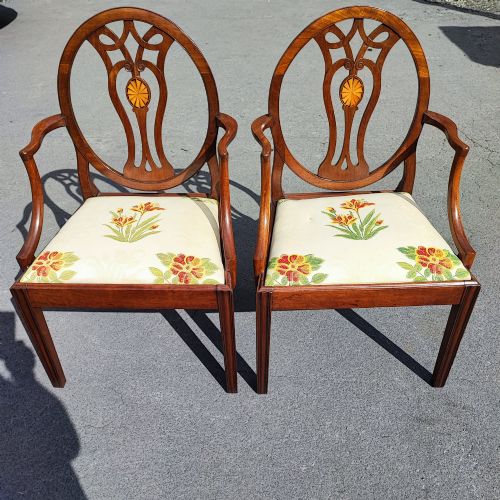
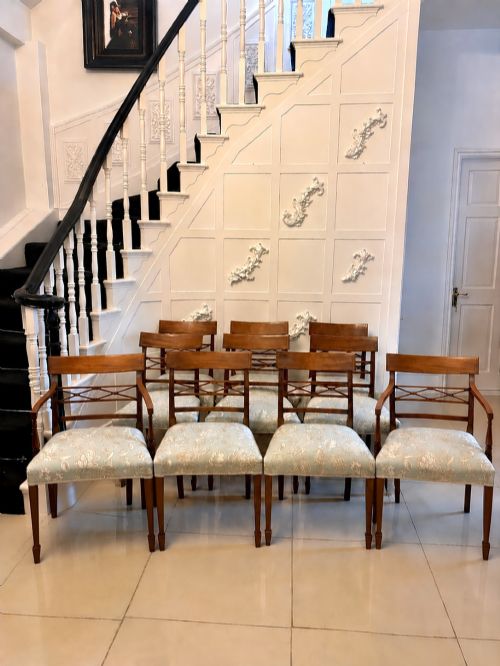
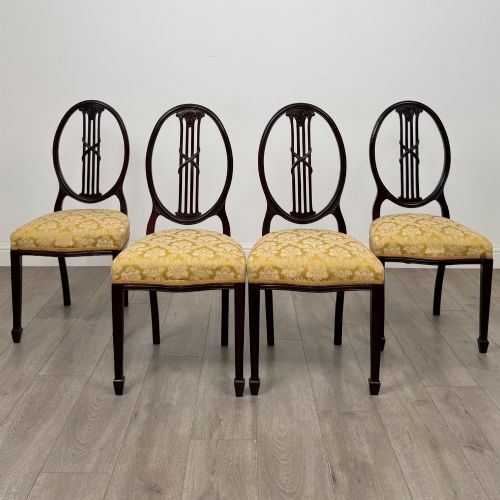
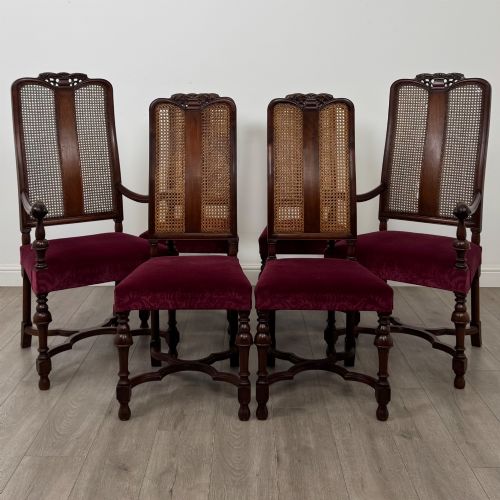
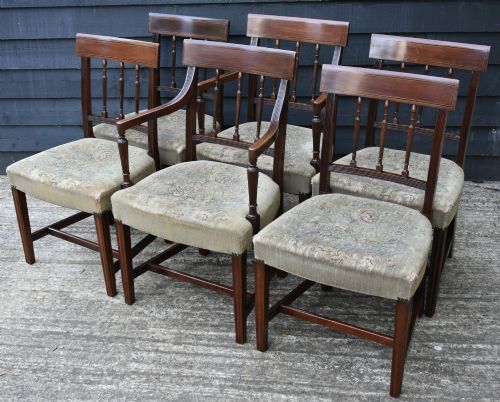
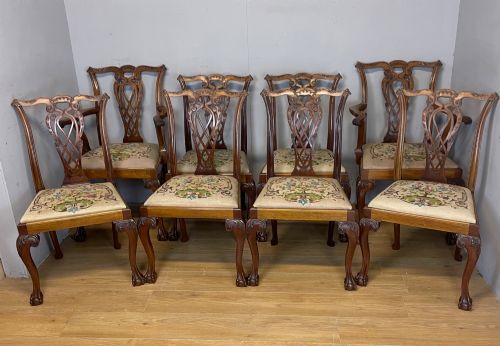
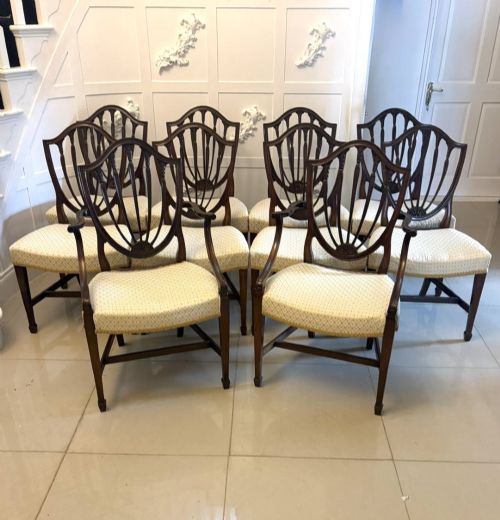
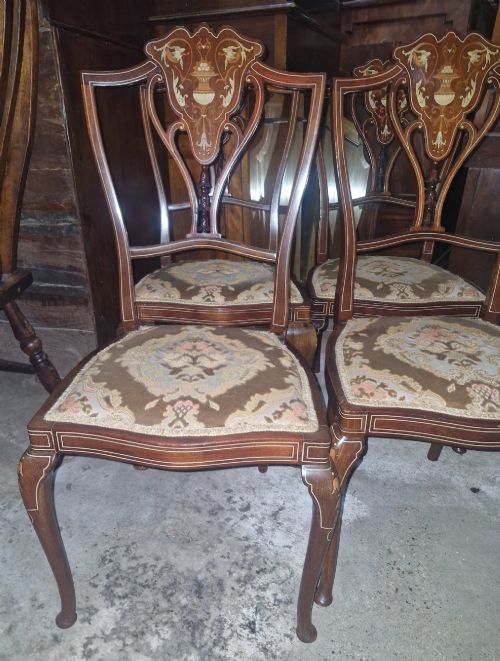
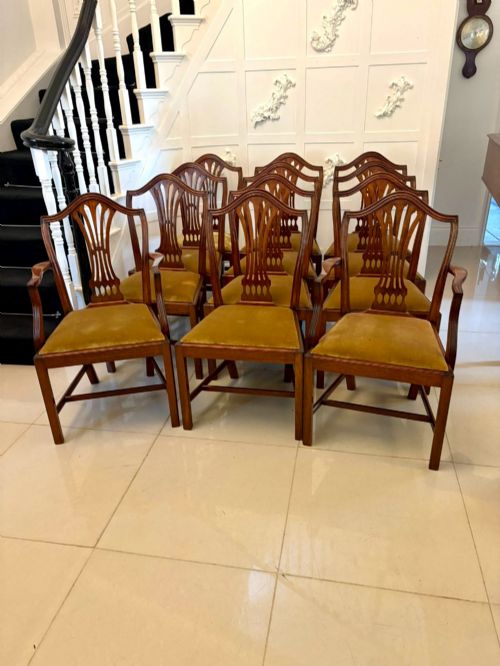
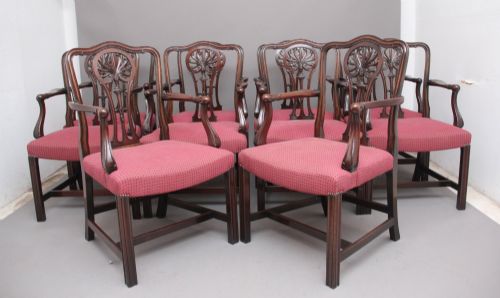
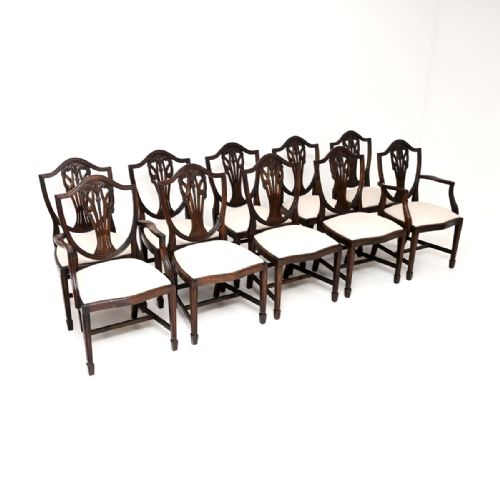
An edwardian mahogany dining set typically comprises a group of dining chairs, often numbering four, six, eight, ten or twelve, frequently accompanied by matching carver armchairs. These suites draw heavily on earlier design vocabularies, presenting revival styles such as Chippendale, Hepplewhite, and Sheraton alongside simpler Edwardian forms.
The surviving groups reflect the formal entertaining habits of the early twentieth century, utilising robust native and imported hardwoods. Pieces vary from understated solid frames to intricately carved shield backs and inlaid surfaces decorated with satinwood stringing.
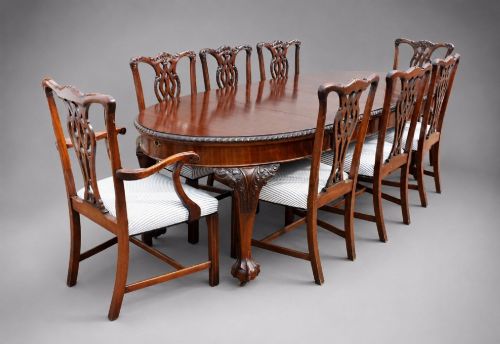
Buyers encounter sets ranging from intimate four-seat arrangements to extensive dining suites designed for large extension tables. The predominant aesthetic balances the dark, polished warmth of mahogany with classical proportions inherited from the eighteenth and nineteenth centuries.
Materials and construction methods
Cabinetmakers constructed these seating sets using solid mahogany and mahogany veneers over secondary timbers, exploiting the wood's stability and deep reddish-brown tone. Frames relied on traditional joinery techniques, including mortise and tenon joints, to ensure structural endurance under daily use.
Surface enrichment frequently involved contrasting timber inlays such as satinwood, along with delicate stringing and marquetry motifs. Upholstered drop-in seats or fixed pads incorporated materials like leather, fabric, velvet, and cane, secured with brass tacks.
Several dining sets retain secret chalk markings scrawled beneath the seat rails by Victorian workshop hands to keep matched chair groups together.
Distinguishing quality across sets
Quality reveals itself primarily in the crispness of carved details, such as the execution of ribbon backs, ball and claw feet, or shield frames. Higher tier sets demonstrate superior selection of timber grain, matching figure across all chairs in the group.
The integrity of the original joinery and the survival of matching carver armchairs substantially elevate a set's standing. Finer examples also maintain their structural rigidity without excessive re-gluing, preserving the maker's intended proportions.
Warings·Maple and Co·Alfred Allen of Birmingham·Waring and Gillow
The Edwardian Mahogany Dining Set Glossary
- Carver
- An armchair designed with elbow rests, traditionally placed at the head of a dining table. These frequently accompanied sets of single dining chairs.
- Stringing
- A narrow strip of contrasting lighter wood inlaid into a channel on the furniture surface. It creates delicate linear borders around panels and legs.
- Marquetry
- Decorative patterns formed by fitting together small pieces of veneered wood of varying colours and grains. It adorns chair crest rails and splats.
- Cabriole Leg
- A furniture leg that curves outward in a convex arc and then bends inward in a concave arc, terminating in a pad or claw foot. This shape derives from classical animal forms.
Edwardian Mahogany Dining Set: Frequently Asked Questions
What defines an Edwardian dining set?
These collections consist of coordinated chairs produced during the Edwardian era, usually constructed from mahogany and styled after Georgian or Chippendale revival designs.
They emphasise traditional craftsmanship, often featuring carved splats, inlaid stringing, and upholstered seats suitable for formal dining rooms.
How are carver chairs used in a set?
Carver armchairs serve as the principal seats positioned at the head and foot of a dining table. They offer supportive armrests while matching the visual style of the surrounding single side chairs.
Most larger dining groups include a pair of these armchairs alongside six or eight matching side chairs.
How do revival styles differ from original pieces?
Revival furniture borrows aesthetic elements from earlier historical periods, such as the designs of Hepplewhite or Sheraton, but dates to the late nineteenth or early twentieth century.
These later interpretations utilise contemporary workshop practices and machinery while retaining hand-carved details and classical proportions.
How should mahogany furniture be maintained?
Mahogany requires stable indoor humidity away from direct heat sources to prevent timber movement and cracking. Regular dusting with a soft cloth preserves the polished finish.
Applying occasional natural wax helps nourish the wood surface and maintain its deep lustre over time.