






Edwardian Mahogany Bookstand
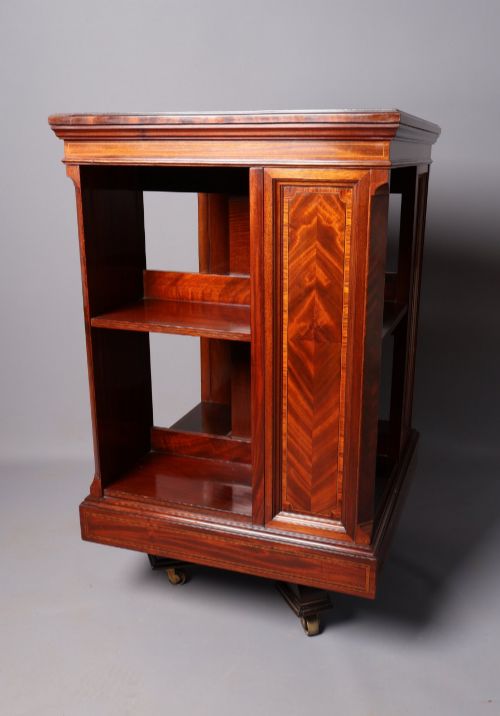
Edwardian mahogany bookstand pieces are compact, practical library items in durable timber that keep volumes within reach.
Edwardian Mahogany Bookstand
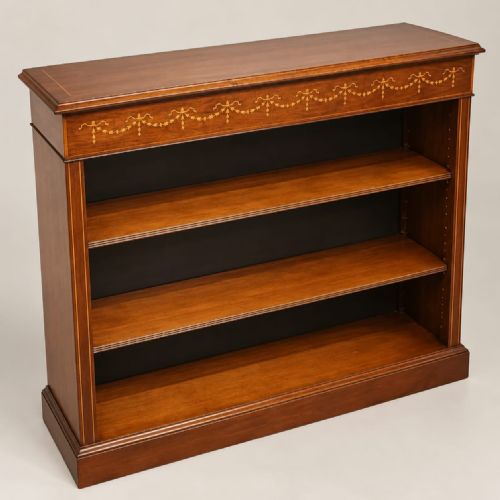
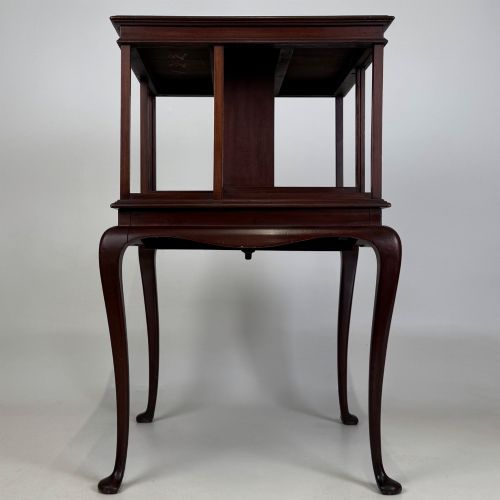
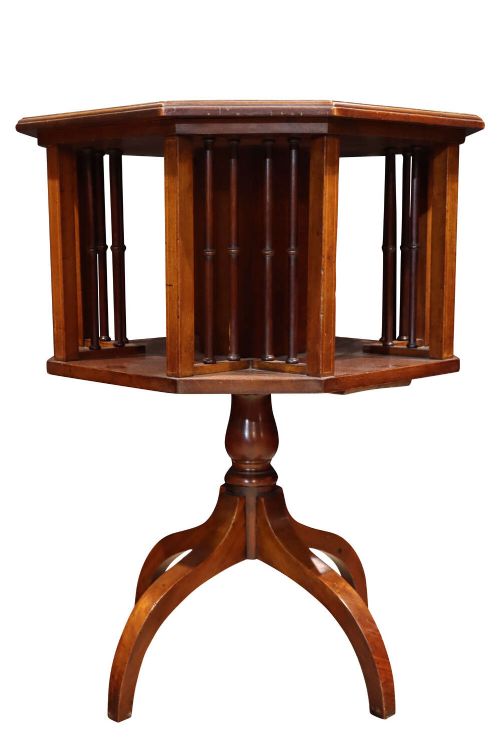
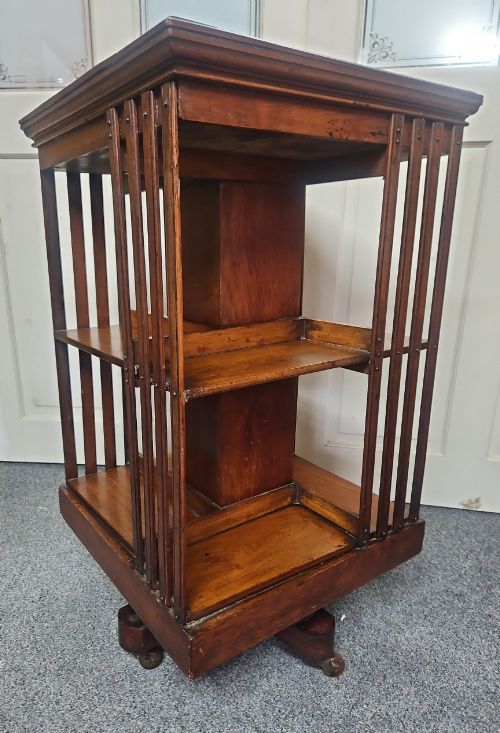
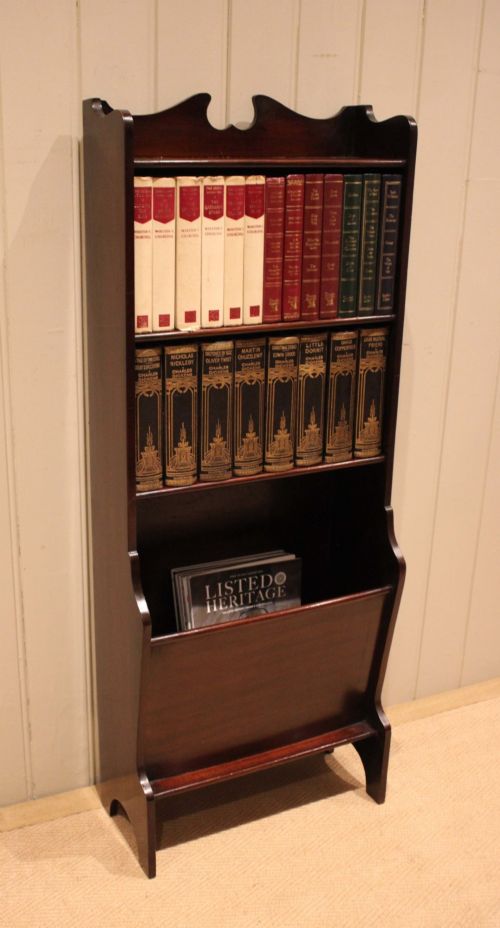
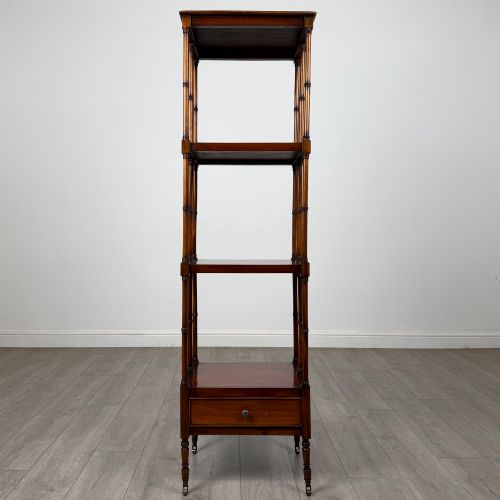
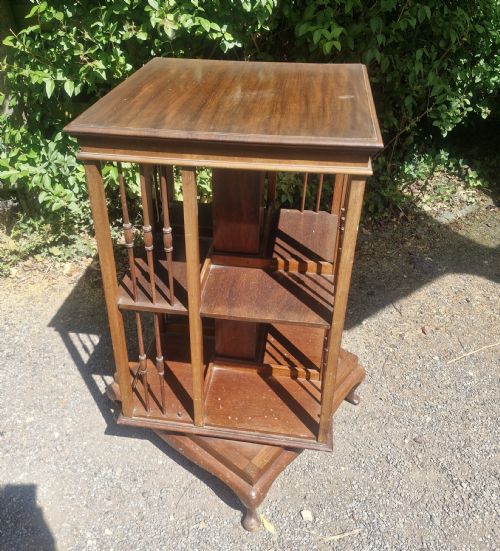
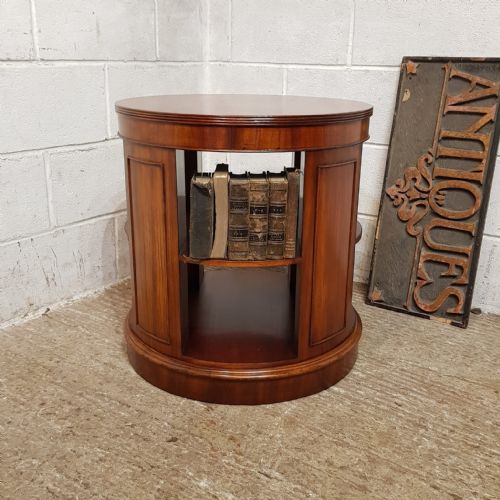
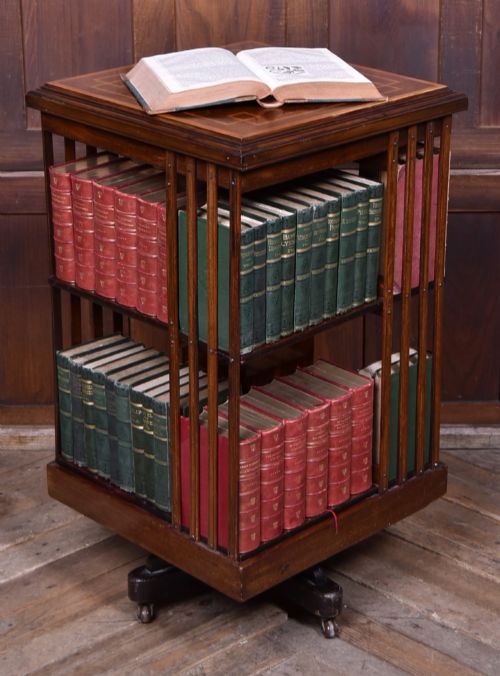
The search phrase edwardian mahogany bookstand brings up practical reading furniture designed to hold volumes close at hand in domestic or library settings. These items appear primarily as revolving bookcases, round revolving variants, library book troughs, and waterfall bookstands or shelves.
Most examples date from the Edwardian period or around nineteen hundred, with a small number originating in the late nineteenth century. The prevailing forms rotate on central mechanisms or provide tiered open shelving for daily use.
How They Were Made
Makers utilised mahogany as the primary timber, often selecting flame mahogany variants for enhanced grain pattern visibility on prominent surfaces. Detail work sometimes incorporates satinwood elements to create contrast.
Internal and mechanical components integrate brass and iron or cast iron, particularly within the revolving mechanisms that allow the tiers to turn smoothly.
Edwardian Mahogany Bookstand Retail Price Guide 2026
Typical asking prices for edwardian mahogany bookstand among the pieces listed under this phrase on Sellingantiques today, from the lower quarter to the upper quarter. They describe what is for sale here now, not the wider market.
Current listings feature mahogany combined with iron, brass, and satinwood across revolving and trough forms.
What Varies in Quality
Quality rests in the choice of timber figure, such as the depth of flame mahogany veneer, and the finesse of any satinwood inlay. Finer examples display careful timber selection across the entire revolving structure rather than just the top tier.
Mechanical execution dictates performance at the upper end of the scale. A superior revolving bookstand turns smoothly and silently on its iron or brass fittings, maintaining stability without tilt regardless of how heavily the shelves are loaded.
The Edwardian Mahogany Bookstand Glossary
- Flame mahogany
- A veneer cut from timber where the grain creates a distinctive flame-like figure. This highly decorative surface appears on finer Edwardian desk and bookstand surfaces.
- Revolving bookcase
- A freestanding tiered stand fitted with a internal pivot mechanism allowing access from all sides. Users spin the tiers to browse titles without moving.
- Book trough
- An open-topped container with sloping sides designed to hold a small selection of books upright on a table or desk. These compact troughs keep current reading material tidy.
- Satinwood
- A pale, lustrous timber utilised for contrasting inlay work and stringing on darker mahogany furniture. It provides bright linear detail against the deeper background.
- Waterfall bookcase
- A stepped shelving unit where each lower tier extends further forward than the one above, resembling falling water. The open shelves graduate in depth from top to bottom.
Edwardian Mahogany Bookstand: Frequently Asked Questions
How do revolving bookstands work?
Revolving bookstands sit upon a concealed internal pivot mechanism fitted with iron or brass components.
This mechanism allows the tiers of shelves to spin freely so a reader can access multiple directions of books from a single seated position.
Where were these pieces used?
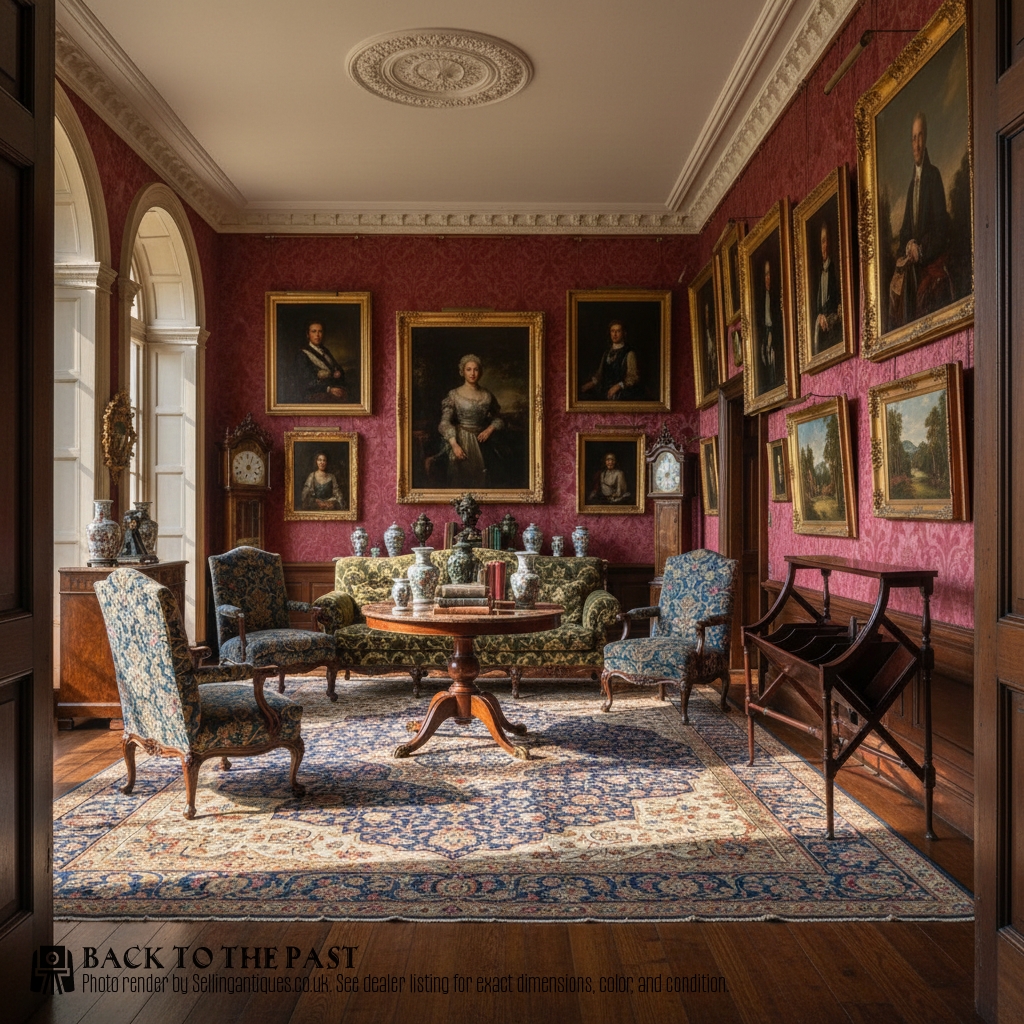
These bookstands were designed for studies, libraries, and drawing rooms in Edwardian homes where space near armchairs needed efficient book storage.
Their compact footprints allowed them to stand freely beside desks or between seating without crowding the room.
How do I identify Edwardian mahogany?
Edwardian mahogany shows a rich reddish-brown tone, sometimes featuring prominent flame grain patterns or subtle satinwood stringing.
Pieces from this era typically exhibit lighter construction and more restrained decoration than heavier Victorian precedents.