

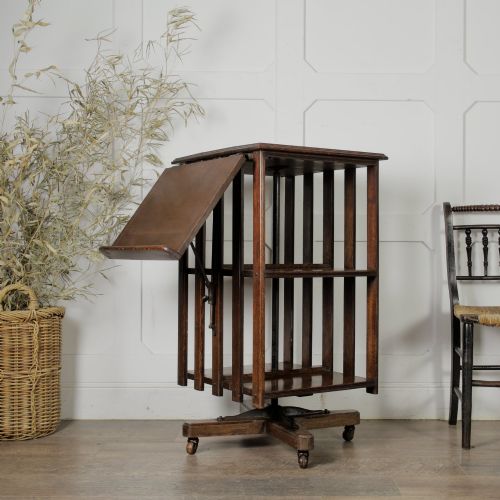
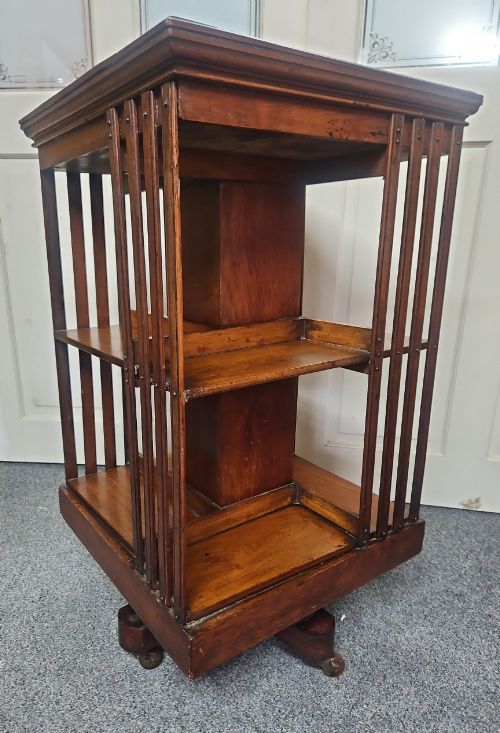


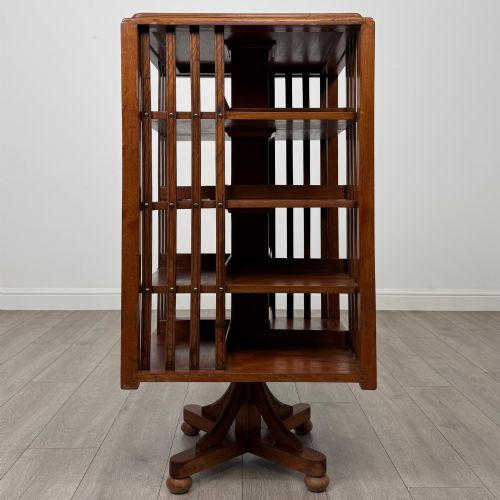


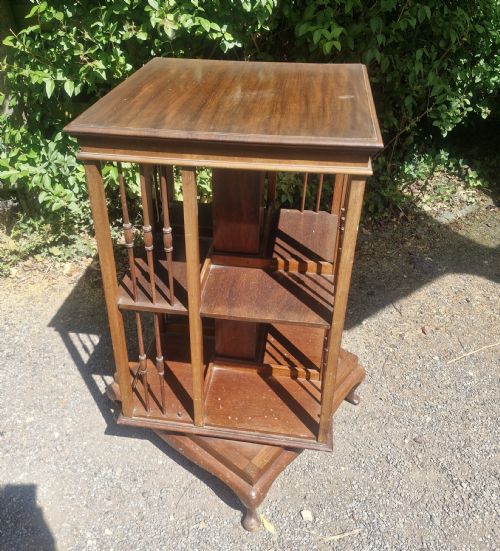

Vintage Rotating Bookstand
A vintage rotating bookstand brings desk-height literature within easy reach through a clever revolving mechanism.
Vintage Rotating Bookstand
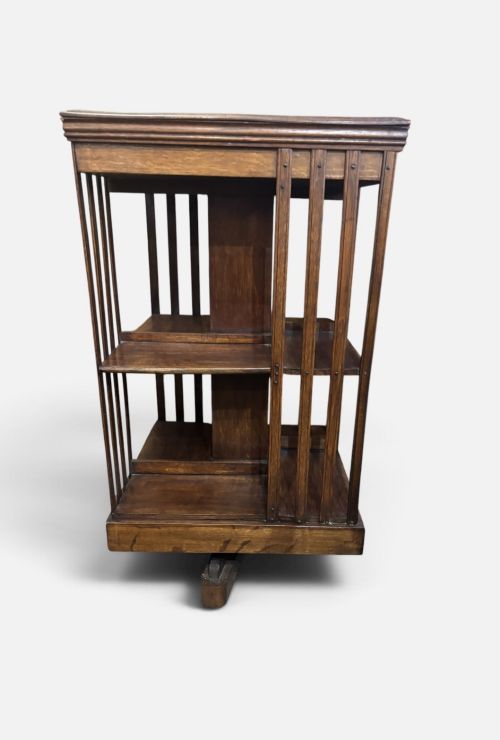
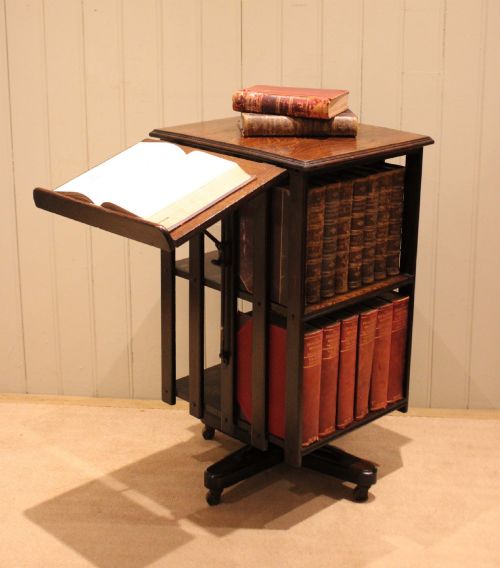
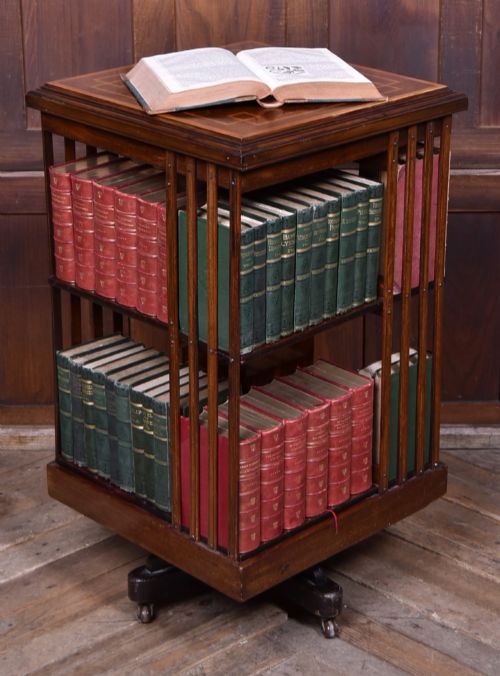
A vintage rotating bookstand serves as a compact, desk-height or table-top library designed to turn smoothly on a central pivot. You will most frequently encounter Edwardian and late Victorian examples on this page, spanning the turn of the twentieth century.
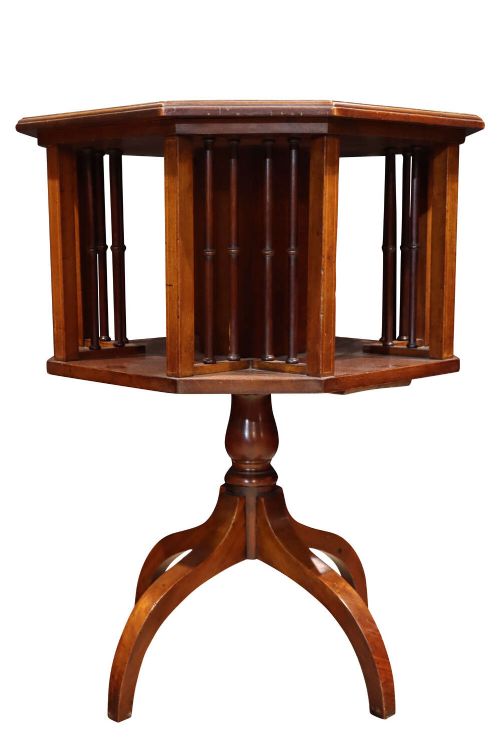
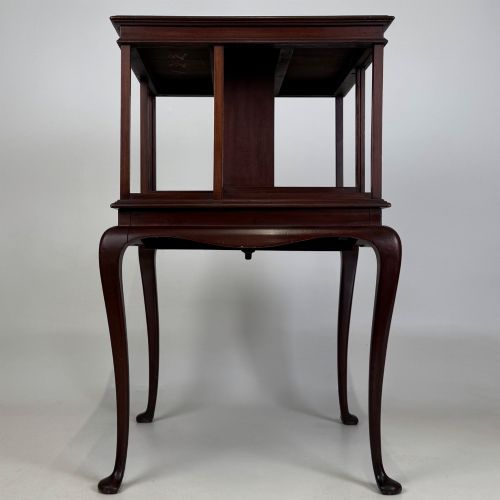
These pieces appear primarily as revolving bookcases and bookstands, occasionally taking the form of side tables or rotary book companions. They offer tiered storage for multiple volumes while occupying a minimal footprint in a study or sitting room.
The materials reflect the cabinet-making preferences of the late nineteenth and early twentieth centuries, drawing heavily on rich timbers and sturdy internal hardware. Each piece balances decorative presence with the practical mechanics of rotation.
How they were made
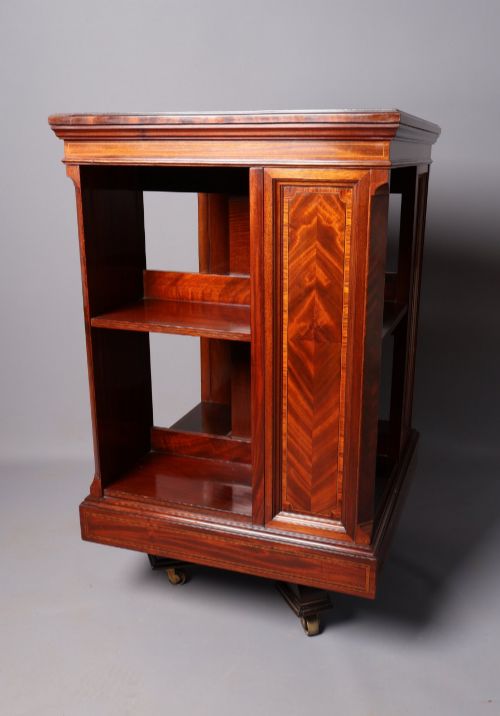
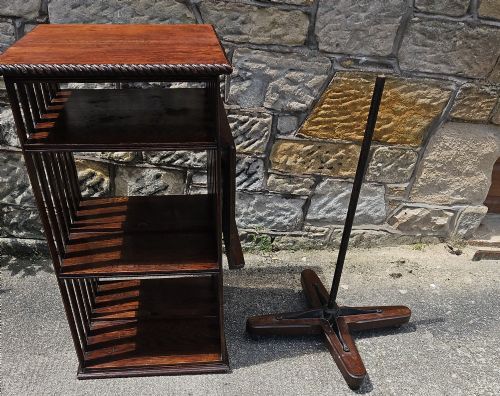
Cabinet makers utilised solid timbers and selected veneers, predominantly mahogany and oak, building the slatted or panelled framework around a concealed internal iron and brass spindle mechanism. This robust construction allowed the body to bear the heavy weight of books whilst turning effortlessly.
Surface decoration on finer examples incorporated satinwood inlay, contrasting stringing, and flame mahogany figures to accentuate the grain. Joinery relied on traditional techniques to ensure the vertical dividers and shelves remained rigid under constant use.
Vintage Rotating Bookstand Retail Price Guide 2026
Typical asking prices for vintage rotating bookstand among the pieces listed under this phrase on Sellingantiques today, from the lower quarter to the upper quarter. They describe what is for sale here now, not the wider market.
Materials recorded across the selection include brass, cast iron, satinwood inlay, and walnut alongside standard mahogany and oak.
What varies in quality
Quality rests on the integrity of the rotating mechanism and the choice of timber, where solid oak or figured mahogany with crisp satinwood inlay commands greater appreciation. The smoothness of the rotation and the stability of the central axis dictate the everyday utility of the piece.
Subtleties in proportion, such as a lower, wider stance for stability or finely slatted gallery work, separate standard workshop output from exceptional cabinet-making. Original surface patination and intact structural joinery further distinguish the finer specimens.
Maple and Co
The Vintage Rotating Bookstand Glossary
- Revolving bookcase
- A freestanding or table-top piece of furniture designed to turn on a pivot base so that books on all sides remain accessible.
- Stringing
- A narrow strip of contrasting timber inlaid into the surface of furniture to create delicate decorative borders.
- Satinwood
- A lustrous, hard timber of yellowish-orange hue utilised for contrasting panels and decorative inlay work.
- Flame mahogany
- A veneer cut from the fork of a mahogany tree that displays a distinctive, fiery rippled grain pattern.
- Pivot mechanism
- The internal metal and wooden bearing assembly that allows the upper bookcase structure to turn freely upon its base.
Vintage Rotating Bookstand: Frequently Asked Questions
How do I care for a vintage revolving bookstand?
Maintain the timber by applying a quality beeswax periodically to nourish the grain and preserve the natural patination. Avoid placing the stand in direct sunlight or near heat sources to prevent the wood from drying out or warping.
Keep the internal rotating mechanism free from dust and debris to ensure it continues to turn smoothly. A light application of suitable lubricant to the central pivot, if accessible, can help maintain effortless rotation over time.
Where were these bookstands typically placed?
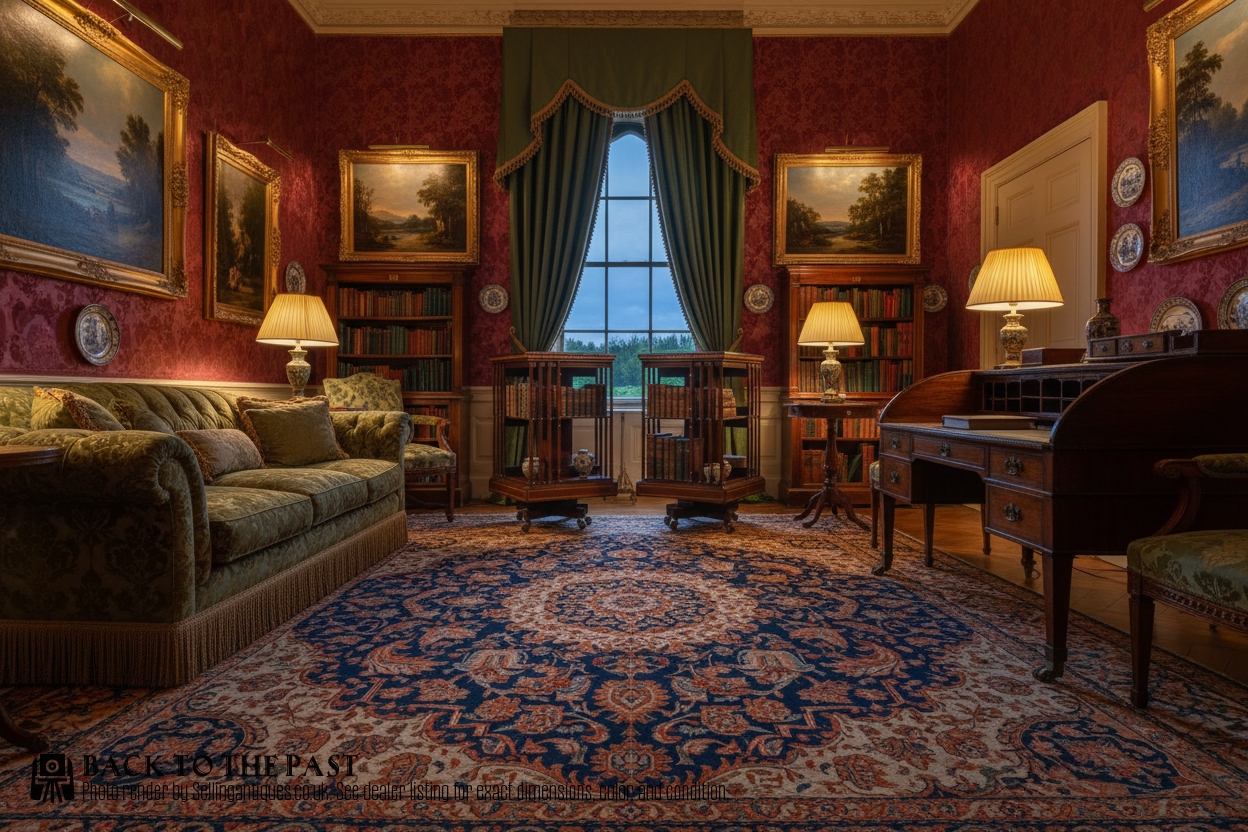
These revolving stands were designed to sit beside a desk, armchair, or in the centre of a study where books needed to be accessed from multiple angles. Their compact footprint made them ideal for rooms where floor space was at a premium.
Today, they function equally well beside a modern sofa or as an end table in a library. Their ability to present a curated selection of volumes within arm's reach remains as practical now as it was a century ago.
How do I distinguish Edwardian from Victorian models?
Victorian examples tend to be heavier in construction, often utilising robust oak with simpler lines and deeper mouldings. They reflect a period of sturdy domestic utility and substantial proportions.
Edwardian pieces frequently display lighter woods such as satinwood inlay, mahogany, and more refined decorative flourishes like Sheraton Revival motifs. The overall aesthetic shifts towards elegance and airiness while retaining mechanical strength.
Are all revolving bookstands made of solid wood?
Many examples combine solid timber frames for structural integrity with selected veneers on the flat panels and shelves. This technique was standard practice to prevent warping on larger surfaces while displaying attractive grain patterns like flame mahogany.
Internal framing and the rotating platform often incorporated secondary woods and metal components to support the weight of heavy volumes. Examining the edges and interior surfaces helps reveal the construction methods employed by the maker.