

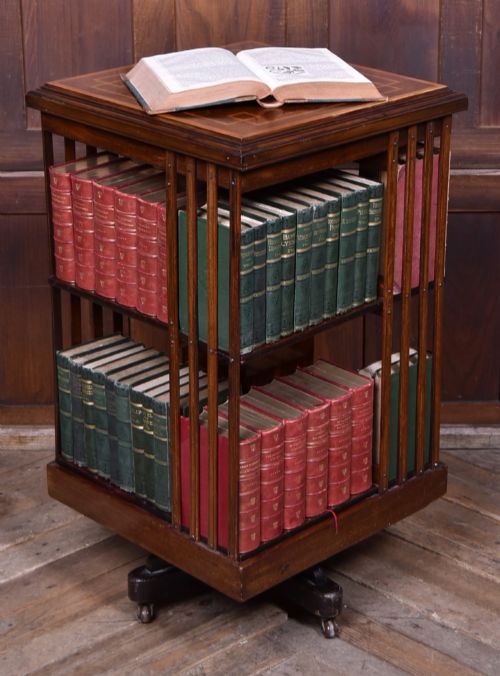


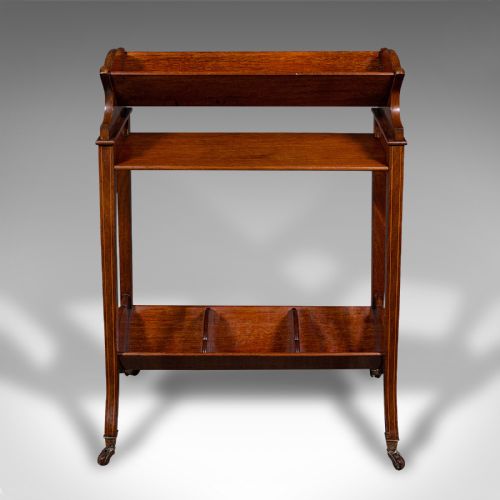
Edwardian Inlaid Bookstand
An edwardian inlaid bookstand brings revolving function and fine marquetry into a room, offering both practical desktop storage and period charm.
Edwardian Inlaid Bookstand
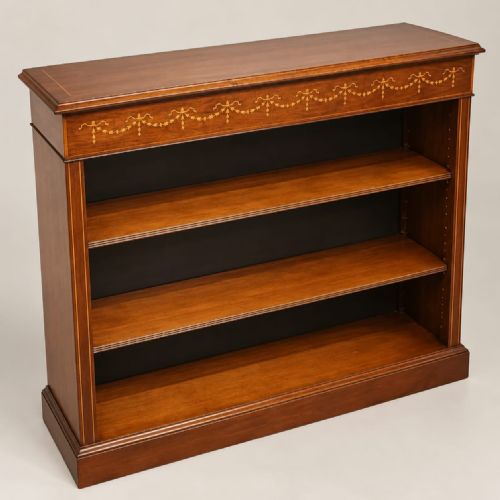
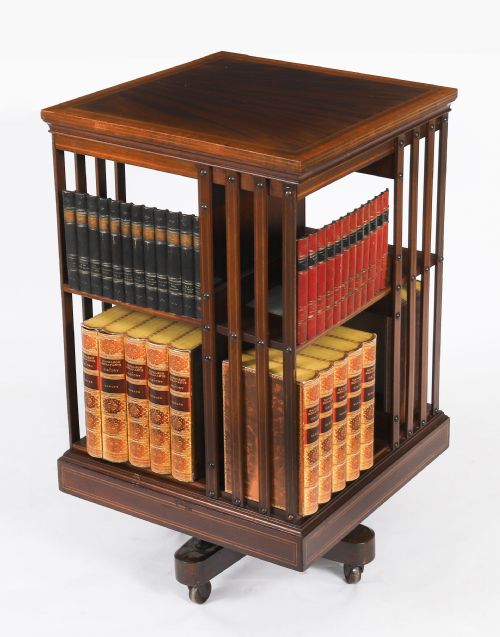
The selections on this page span straightforward table top models to larger floor standing revolving variants, alongside related bookcase and shelving forms. Makers often incorporated Sheraton-style design principles and occasional Art Nouveau influences into the structural layout.
How they were made
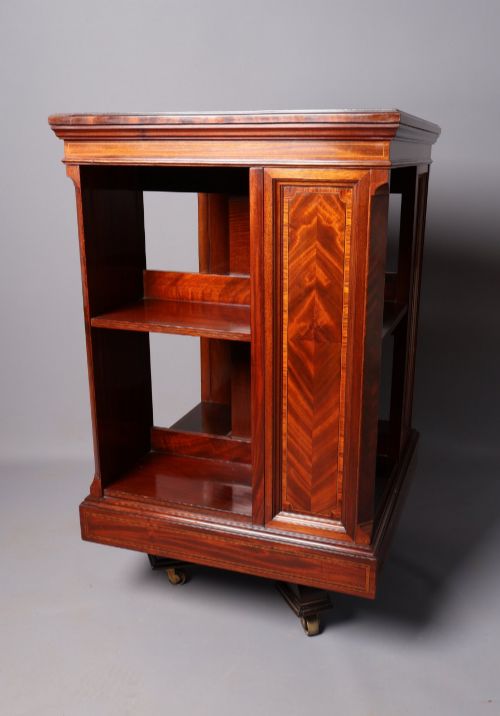
Makers constructed these stands using mahogany and satinwood as the primary timber foundations, frequently selecting flame mahogany veneers for enhanced visual depth. The wood components undergo careful shaping and joining to support the weight of books during rotation.
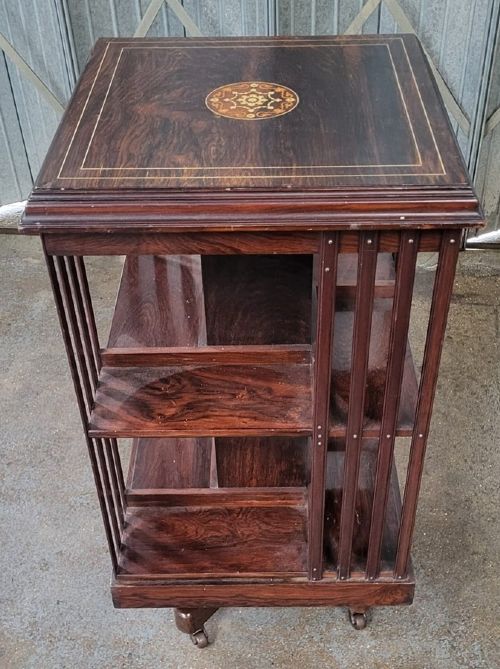
Inlay work forms a central decorative technique, utilising satinwood and boxwood inlay to create contrasting geometric or classical motifs across the surfaces. Brass and iron internal mechanisms provide the necessary pivot and support for the revolving action, sometimes supplemented by cast iron elements.
Edwardian Inlaid Bookstand Retail Price Guide 2026
Typical asking prices for edwardian inlaid bookstand among the pieces listed under this phrase on Sellingantiques today, from the lower quarter to the upper quarter. They describe what is for sale here now, not the wider market.
Listings feature mahogany, satinwood, and boxwood inlay alongside brass and iron revolving hardware.
What varies in quality
The standard of timber selection and veneer choice dictates much of the visual appeal, ranging from plain mahogany boards to richly figured flame mahogany and satinwood. Finer examples display meticulous attention in the crispness and complexity of the boxwood and satinwood inlay.
Mechanical performance distinguishes the construction standard, depending on how smoothly and silently the revolving mechanism operates under weight. The precision of the joinery and the overall structural stability during rotation mark the difference between standard production and superior craftsmanship.
Maple and Co
The Edwardian Inlaid Bookstand Glossary
- Edwardian
- Pertaining to the reign of King Edward the Seventh, spanning from nineteen hundred to nineteen ten. Pieces from this period often lighter in proportion than their Victorian predecessors.
- Revolving bookcase
- A freestanding or table top bookcase designed to turn on a hidden central pivot. This enables access to multiple sides of shelving without moving the furniture.
- Inlay
- A decorative technique where pieces of contrasting wood such as satinwood or boxwood are inserted into recesses in the primary timber surface. This creates flat ornamental patterns.
- Flame mahogany
- Mahogany timber cut at the branch junction to produce a distinctive flickering flame grain pattern. It appears frequently on high-quality table tops and cabinet fronts.
Edwardian Inlaid Bookstand: Frequently Asked Questions
How do revolving bookstands work?
These bookstands operate on a hidden internal pivot and ball-bearing mechanism concealed beneath the base or shelves. This allows the entire wooden superstructure to turn freely in either direction with minimal effort.
Users can sit at a desk or armchair and spin the tiers to locate a desired volume without leaving their seat. The engineering requires sturdy central framing to maintain balance while bearing the weight of heavy books.
How do I care for mahogany and satinwood?
Maintenance involves dusting regularly with a soft, dry cloth to prevent particulate accumulation on the polished surfaces and inlay. Avoiding direct sunlight and sustained heat sources protects the timber from drying out and guards against veneer cracking.
Occasional application of appropriate furniture wax helps nourish the wood and maintain the natural sheen of the polish. Harsh chemical cleaners should remain strictly avoided to preserve the historic finish.
What defines Edwardian Sheraton style?
Edwardian Sheraton style draws inspiration from the late eighteenth-century neoclassical designs associated with Thomas Sheraton. It prioritises rectilinear proportions, graceful elegance, and restrained ornamentation over heavy Victorian bulk.
Characteristic elements include contrasting stringing, satinwood crossbanding, and symmetrical floral or urn motifs rendered in fine inlay. This aesthetic suited the brighter, airier domestic interiors of the early twentieth century.