





Edwardian Magazine Holder
An Edwardian magazine holder keeps daily reading tidy with the sturdy craftsmanship of the early twentieth century.
Edwardian Magazine Holder
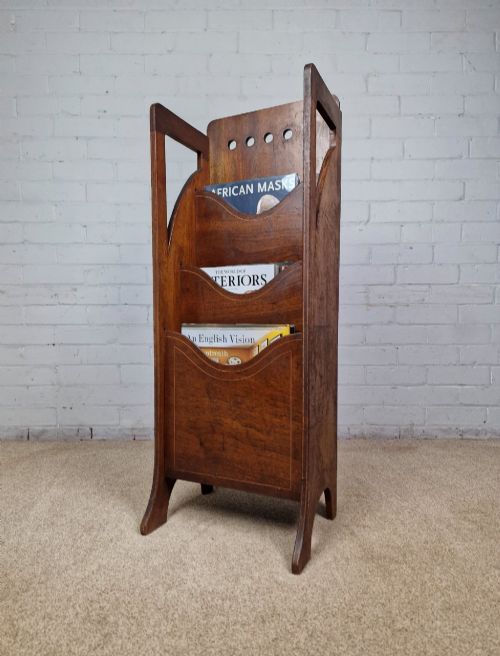
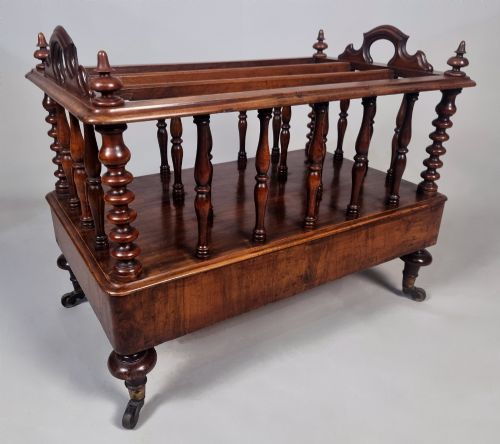
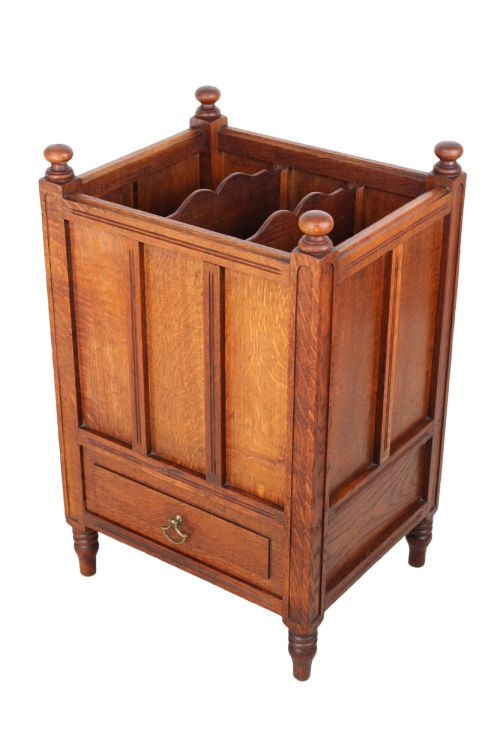
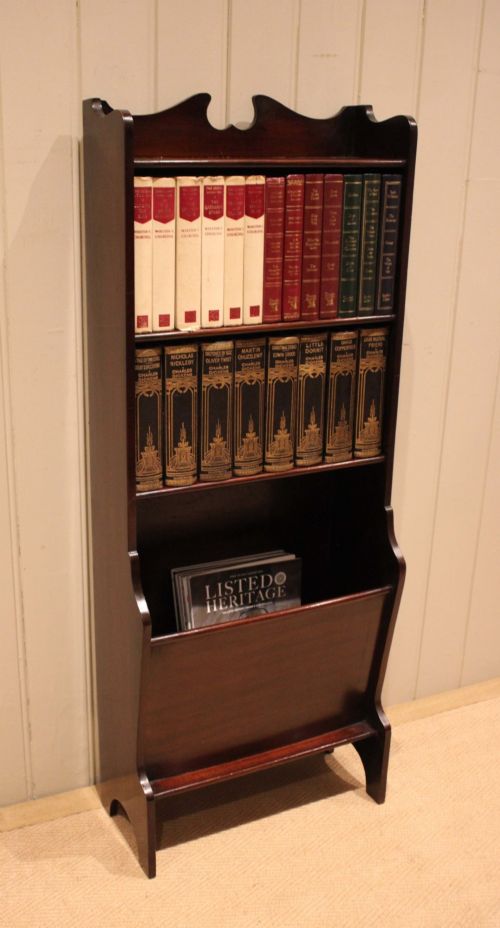
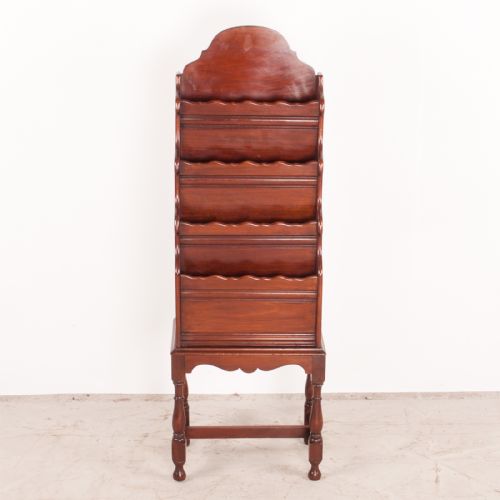
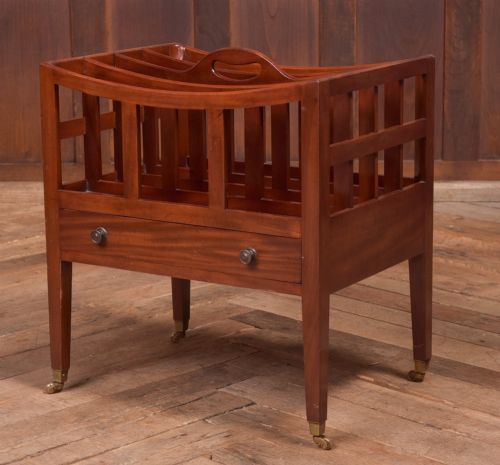
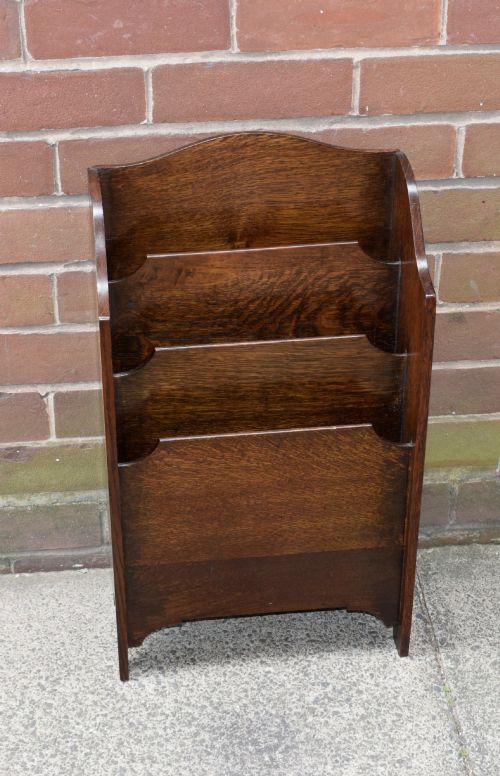
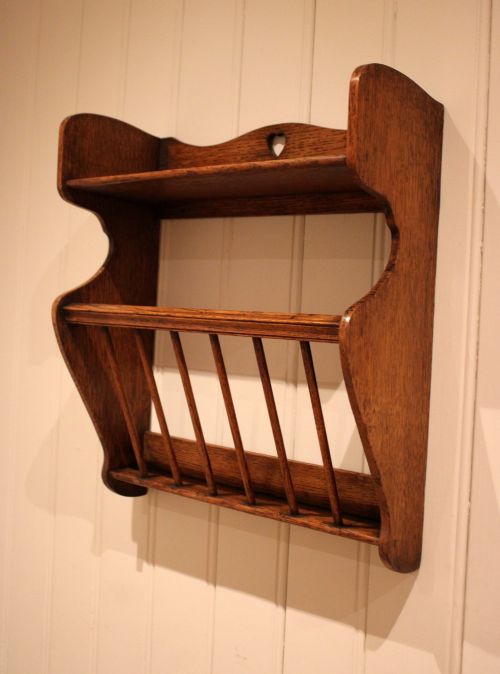
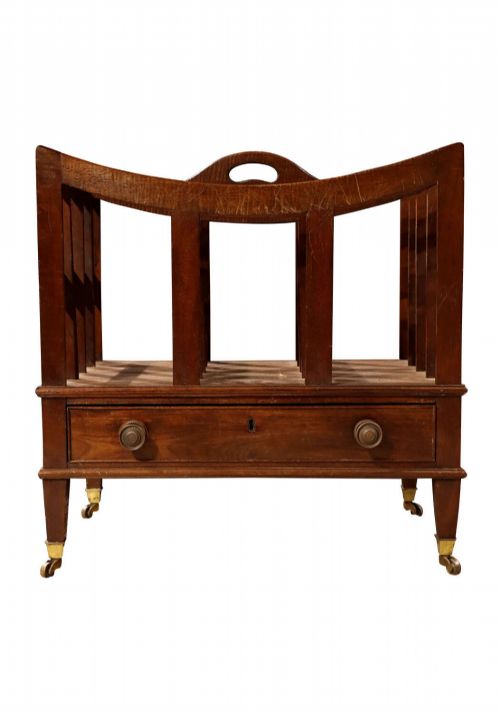
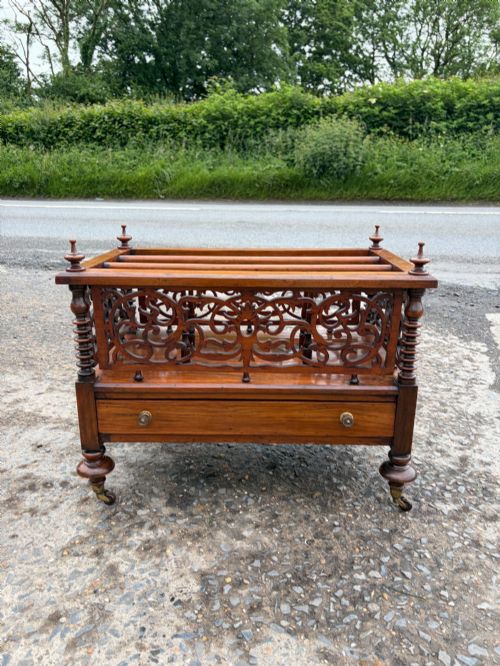
When you search for an edwardian magazine holder, you are looking at functional domestic furniture designed to organise periodicals and newspapers in the sitting room or study. These pieces include floor-standing racks, wall-mounted shelves, and traditional canterburys with partitioned compartments for sorting papers.
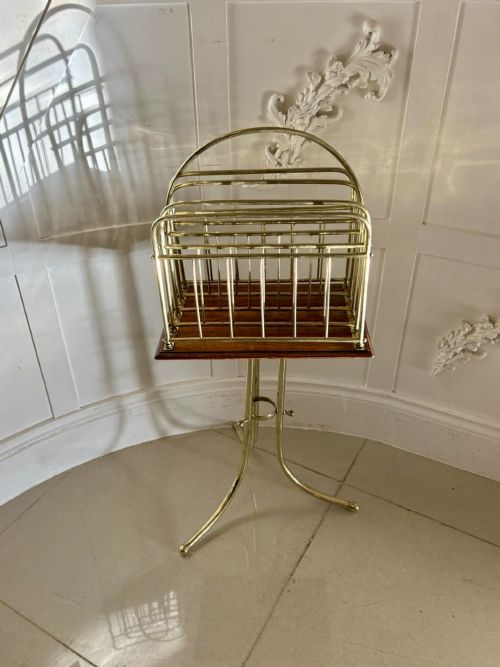
The version you are most likely to meet on this page is constructed from mahogany or oak, often following Edwardian design principles while occasionally drawing upon earlier Victorian, Regency, or Arts and Crafts forms. Many examples incorporate brass handles, rods, or castors for ease of movement.
Alongside dedicated magazine racks, the selection encompasses related items such as revolving bookstands, music cabinets with drawers, and multi-tiered stands. These variations reflect how homes of the period accommodated the growing proliferation of printed media and sheet music.
Materials and construction
Cabinetmakers relied heavily on hardwoods such as mahogany, walnut, burr walnut, and oak to build the frames and partitions of these holders. Rosewood and satinwood also appear in select pieces, providing rich grain patterns and deeper colour tones.
Metal components played a structural and decorative role, with brass utilised for carrying handles, support rods, revolving mechanisms, and castor wheels. Copper and tubular brass appear in specific Arts and Crafts and Victorian iterations.
Edwardian Magazine Holder Retail Price Guide 2026
Typical asking prices for edwardian magazine holder among the pieces listed under this phrase on Sellingantiques today, from the lower quarter to the upper quarter. They describe what is for sale here now, not the wider market.
Early newspaper racks ensured that homeowners could peruse the daily broadsheets without leaving stray pages scattered across the drawing-room carpet.
Factors of quality
The distinction between standard production items and finer examples rests upon the selection of timber and the sophistication of the joinery. Burr walnut veneers and figured mahogany exhibit superior visual depth compared to plain, utility-grade softwoods or basic oak.
Refinement in decorative detailing separates the ordinary from the exceptional. Hand-cut marquetry inlay, well-turned wooden legs, original castors, and substantial brass fittings indicate a higher standard of original manufacture.
Structural integrity depends on the rigidity of the partitions and the stability of the base. Pieces that retain their original finish without excessive rebuilding or replacement parts demonstrate greater authenticity.
Howard and Sons of London
The Edwardian Magazine Holder Glossary
- Marquetry
- Decorative veneer work arranged in pictorial or geometric patterns using various coloured woods. It frequently adorns the top panels or drop-fronts of better-quality walnut cabinets.
- Revolving bookcase
- A freestanding tiered stand mounted on a pivot mechanism that allows the user to spin the entire unit for easy access to books or periodicals. These often feature brass or wooden cruciform bases.
- Book trough
- A desk or table-top rack with sloping sides designed to hold a small selection of books upright. Edwardian examples sometimes incorporate painted decoration or inlaid trim.
- Castor
- A small swivelling wheel attached to the legs of furniture for mobility. Quality pieces often utilise brass castors fixed to turned wooden feet.
Edwardian Magazine Holder: Frequently Asked Questions
What is a canterbury?
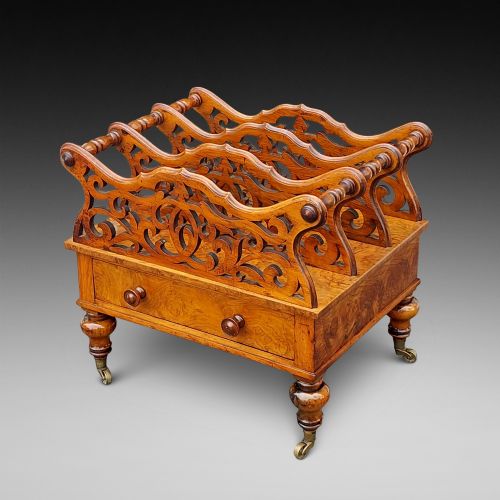
A canterbury is a low, partitioned stand originally created to hold sheet music but commonly used for periodicals in the Victorian and Edwardian eras. They often feature built-in drawers at the base.
These pieces were designed to sit beside armchairs or sofas for convenient access to daily reading materials.
How do I distinguish Edwardian from Victorian pieces?
Victorian magazine holders and canterburys tend to feature heavier timbers, deep carvings, and darker walnut or rosewood finishes. They often display more ornate detailing and robust proportions.
Edwardian examples, by contrast, generally favour lighter mahogany or oak construction with simpler lines, reflecting the brighter interiors popular at the turn of the twentieth century.
Were these stands meant to be moved around?
Many floor-standing magazine holders and canterburys were built with small brass castors or carrying handles specifically so they could be repositioned around the room. This made it easy to clear floor space or bring reading materials closer to the fireside.
Lighter wall-mounted shelves and fixed book stands, however, remained stationary.
How do I care for wood and brass magazine holders?
Maintain the timber surfaces by applying a traditional beeswax polish occasionally to nourish the grain and protect the finish from drying out. Avoid placing them in direct sunlight to prevent fading.
Clean the brass elements gently with a dry or very slightly damp cloth, taking care not to let harsh cleaning products touch the surrounding wood.