
Edwardian Library Glass
Edwardian library glass brings together glazed bookcases and desk magnifiers designed for reading rooms from the Edwardian period and adjacent decades.
Edwardian Library Glass
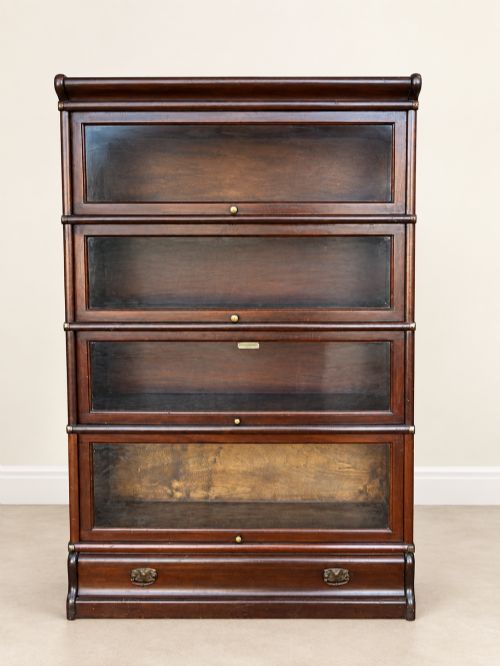
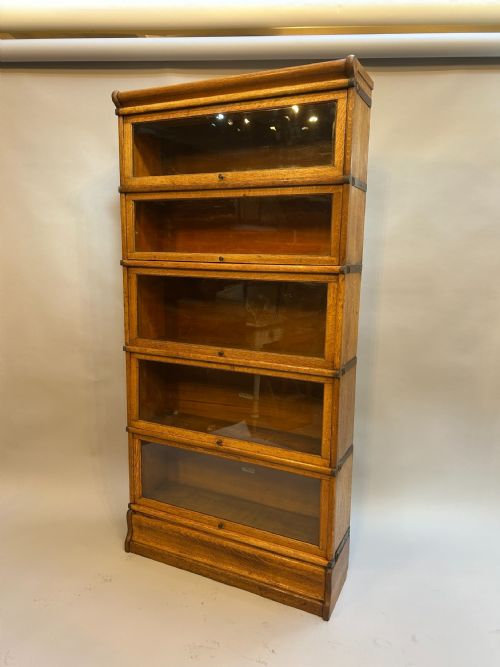
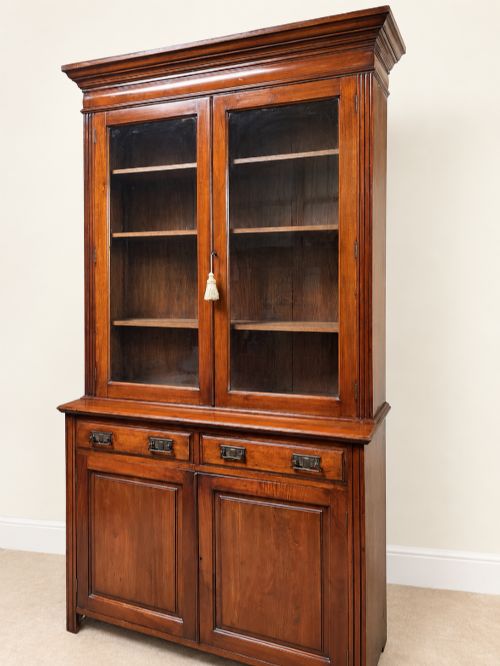
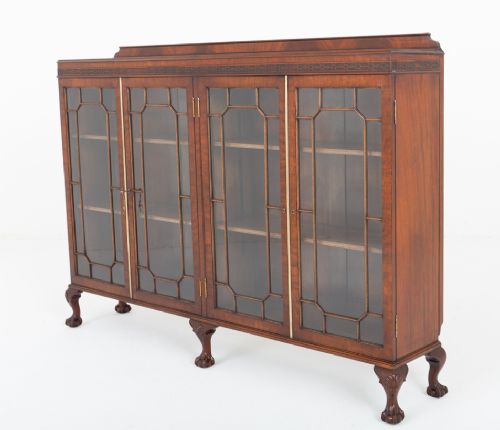
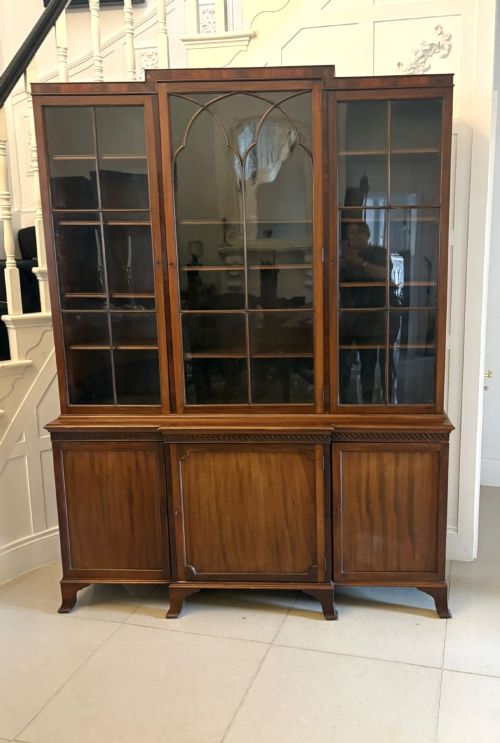
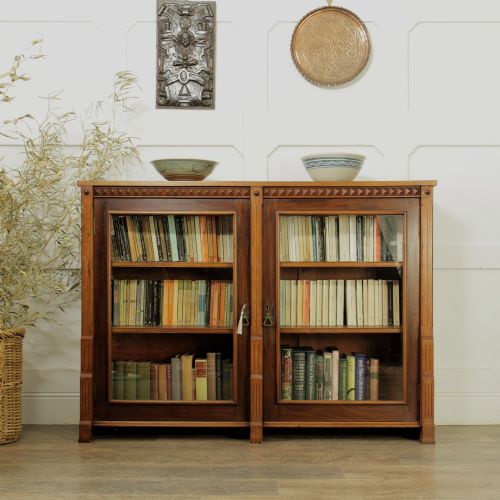
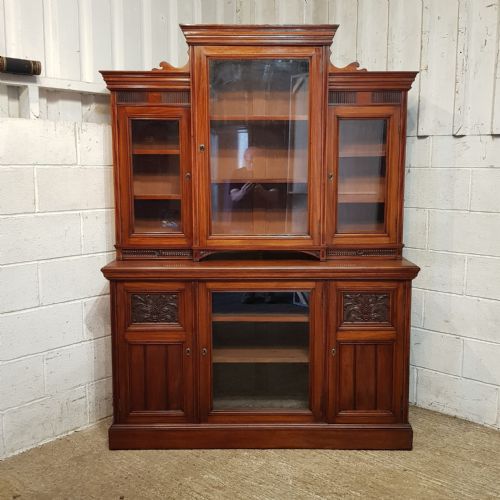
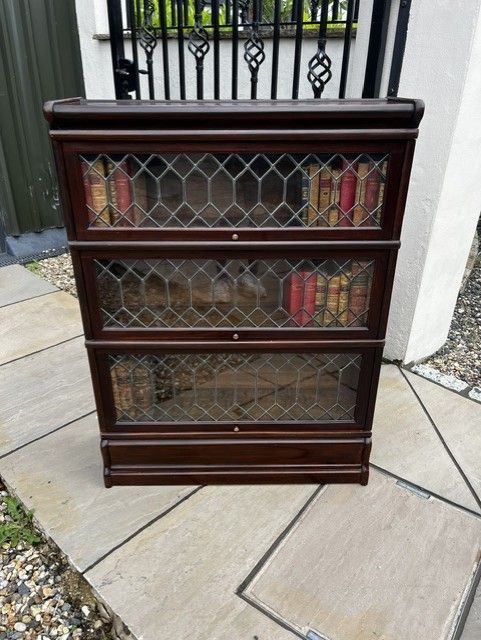
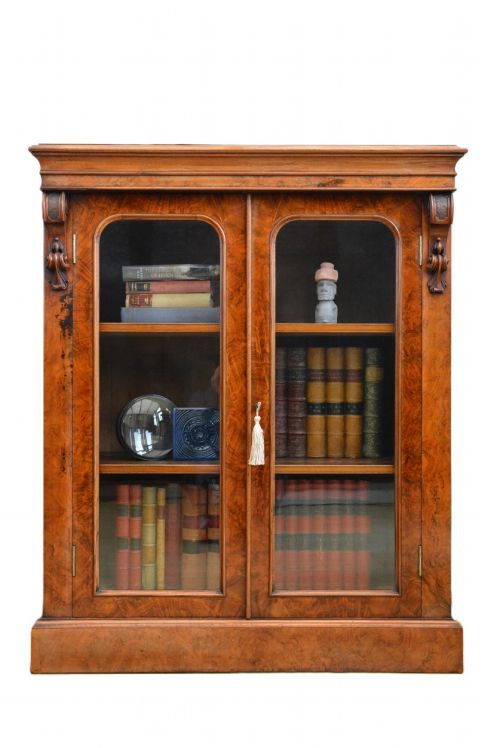
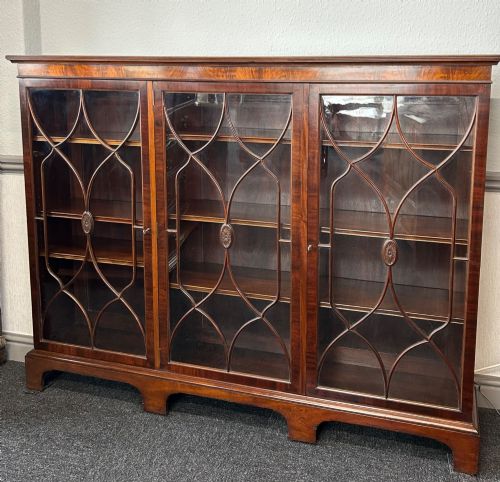
When you search for edwardian library glass, you encounter a selection of glazed bookcases, sectional stacking bookcases, and reading aids. The most common forms are large mahogany or oak breakfront cabinets and modular barrister bookcases designed to hold private collections.
The pieces date chiefly from the Edwardian era, alongside late Victorian examples and productions from the 1920s and 1930s. Alongside cabinetry, the category encompasses brass desk lamps and magnifying glasses intended for study use.
Factors that determine quality
Quality rests on the selection of timber and the precision of the modular mechanisms in stacking bookcases. Finer cabinets display figured mahogany or quarter-sawn oak with intact original glazing and smooth lifting door actions.
Maker attribution also separates standard commercial output from superior workshops. Pieces bearing maker stamps or specialist brass hardware command greater interest through their sturdier build and refined proportions.
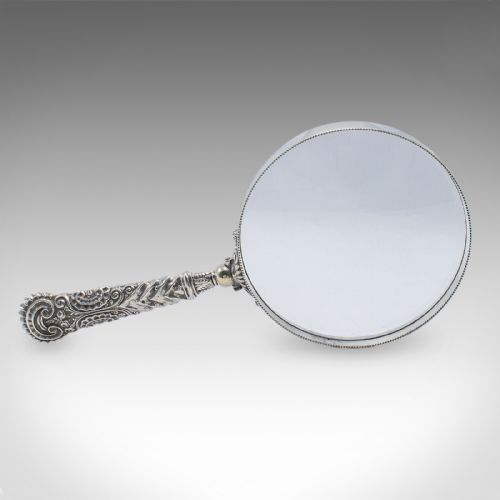
A magnifying glass sturdy enough to double as a small brass sculpture.
Globe Wernicke·Lebus·Minty·Wylie and Lochhead
The Edwardian Library Glass Glossary
- Globe Wernicke
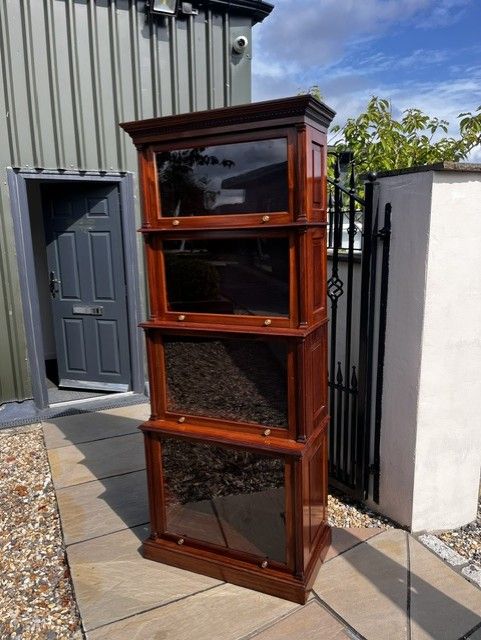
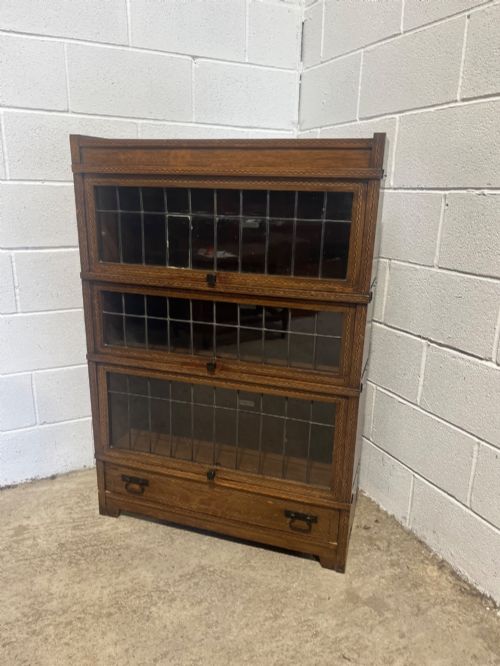
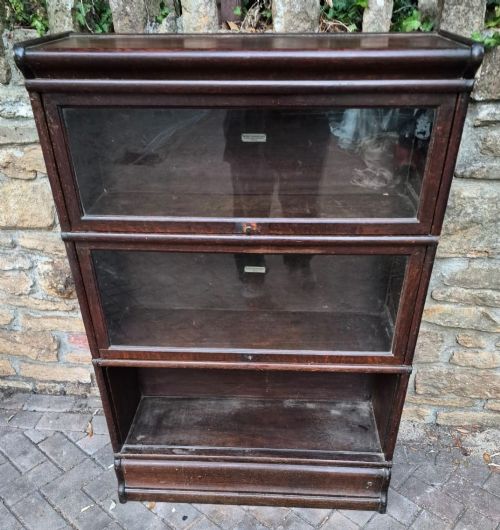
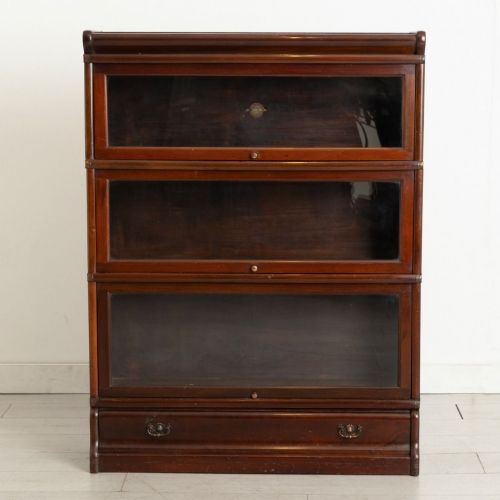
- A patented modular stacking bookcase system featuring glazed doors that lift and slide inside the cabinet. This design allowed libraries to expand their shelving vertically one tier at a time.
- Barrister bookcase
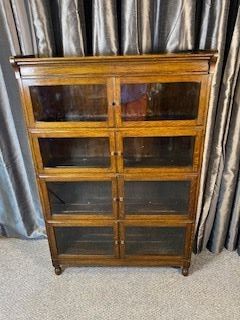
- A sectional bookcase fitted with glass fronted shelves designed for easy transport and reassembly. Each tier operates as an independent box with an upward swinging door.
- Astral glazed
- A style of cabinet door where thin wooden bars divide the glass pane into geometric patterns. This technique originates in earlier centuries but reappears in Edwardian revival furniture.
- Opaline glass
- An opaque or translucent glass often tinted in soft tones. It appears in period lighting fixtures and decorative items associated with study interiors.
- Breakfront
- A large cabinet configuration where the central section projects forward from the flanking wings. This architectural arrangement creates depth and visual variety in large bookcases.
Edwardian Library Glass: Frequently Asked Questions
What is a barrister bookcase?
A barrister bookcase is a modular shelving unit made of stacked, interchangeable sections with glass doors that lift outward and slide into the cabinet above the books.
This design protected valuable volumes from dust while allowing lawyers and scholars to add matching tiers as their libraries grew.
How do I date an oak bookcase?
Dating an oak bookcase involves examining the timber grain, hardware, and door construction methods. Edwardian and early twentieth-century examples often use quarter-sawn oak with distinctive medullary ray patterns.
Modular stacking versions typically display patent stamps or maker labels from firms operating between the late nineteenth century and the nineteen-twenties.
Are sectional bookcases stable?
Sectional bookcases rely on interlocking wooden pins or simple gravity to hold the stacked tiers securely in place. When assembled on a level floor, the weight of the books provides natural stability without permanent fixings.
Individual boxes lift off the base independently, which makes moving large library furniture considerably easier.
How were library magnifiers used?
Library magnifiers served as desk accessories for examining fine print, maps, and illustrations in large reference volumes. They often featured heavy brass mounts and adjustable arms to hold position over documents.
These optical tools sat alongside desk lamps and inkstands on reading tables in private studies.