

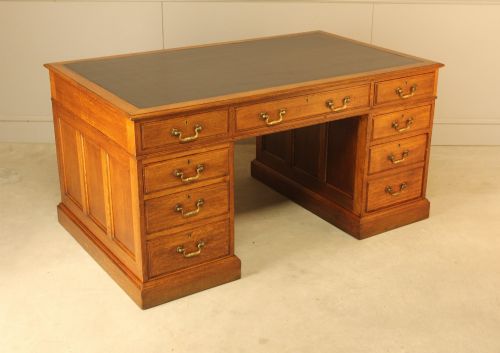
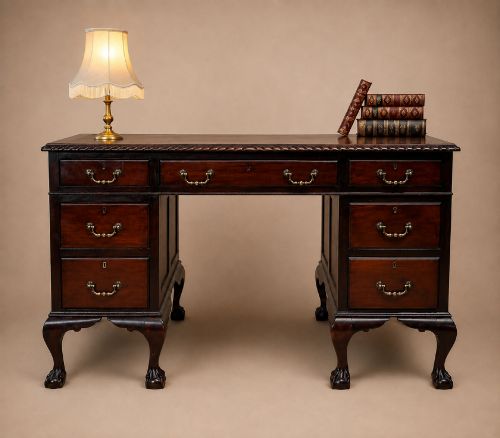
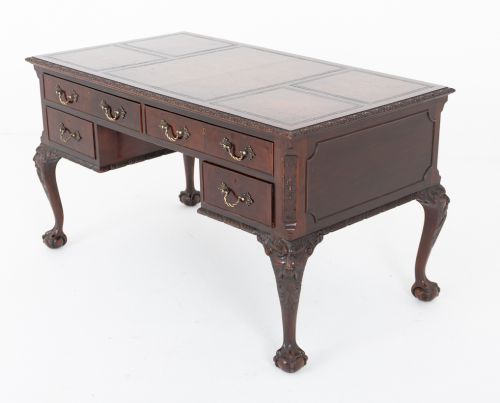
Edwardian Leather Top Desk
An edwardian leather top desk brings warmth and a dedicated writing surface to a room, combining period timber with a traditional hide writing insert.
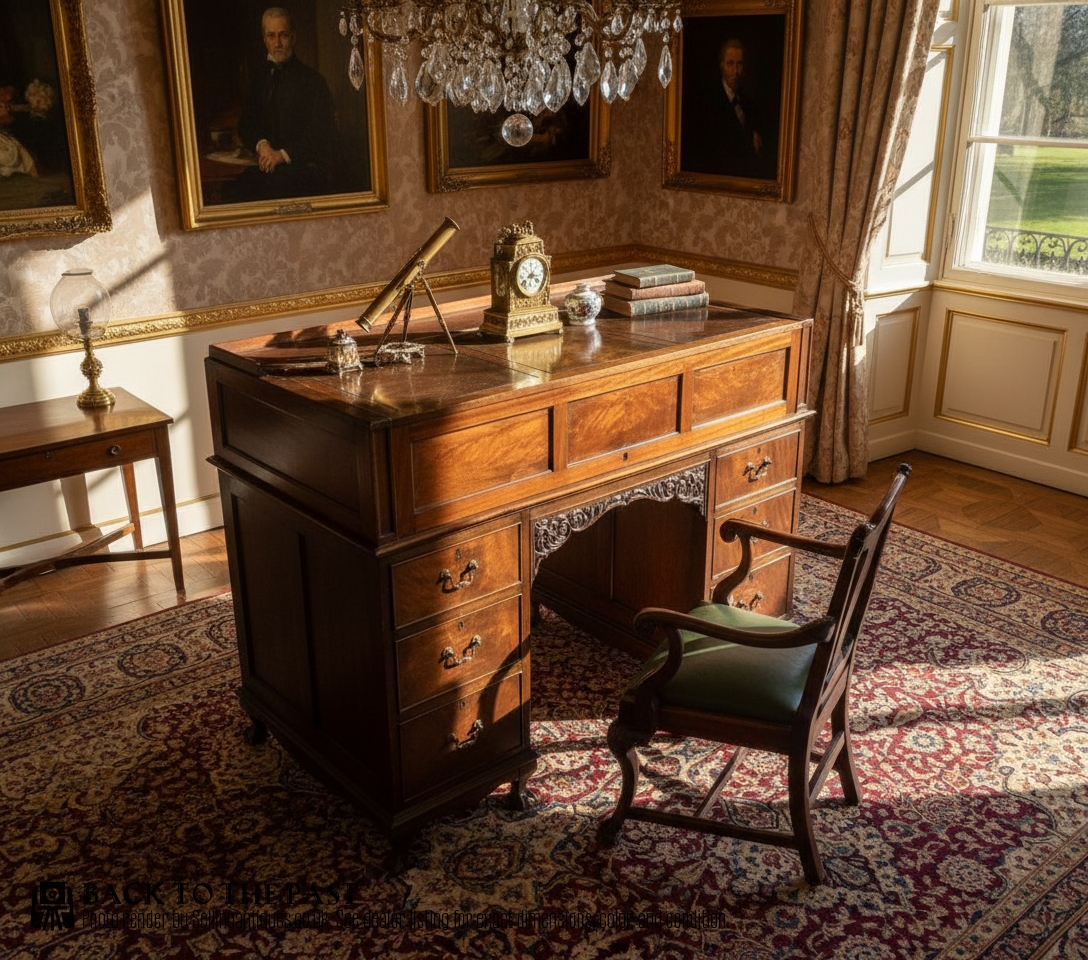
Edwardian Leather Top Desk
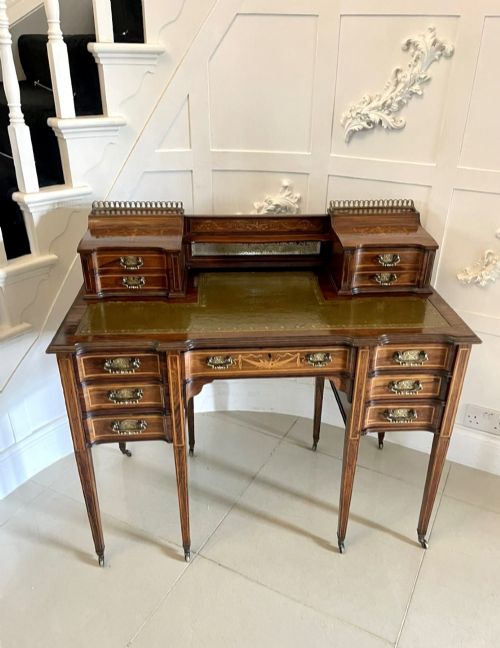
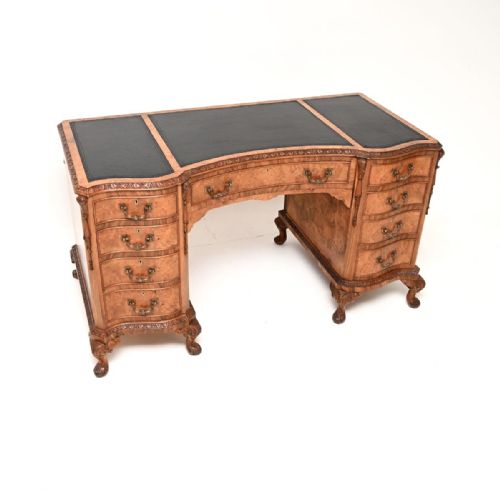
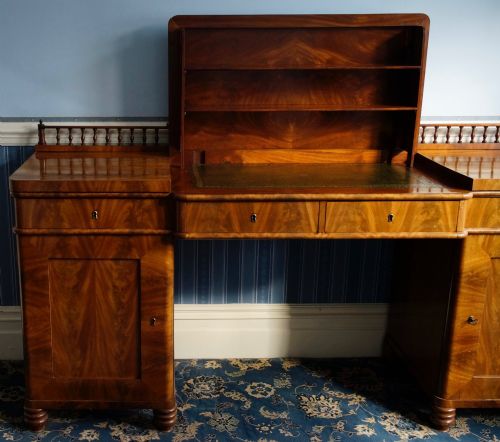
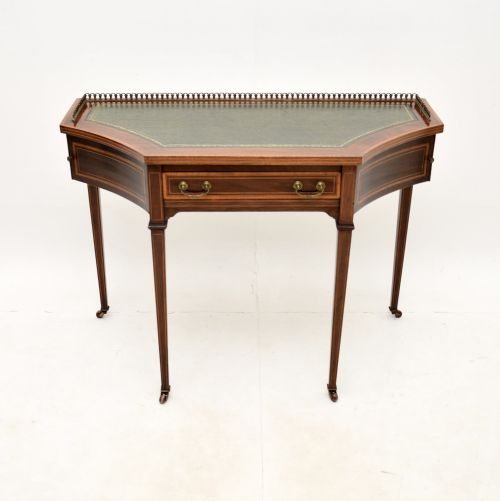
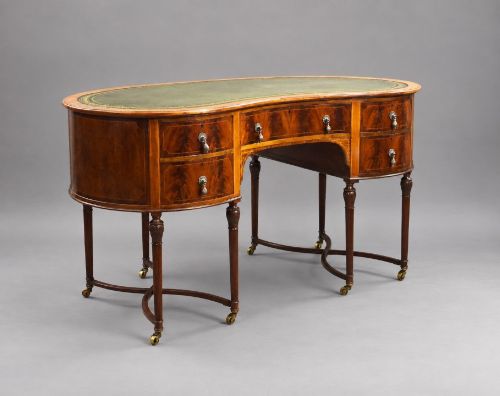
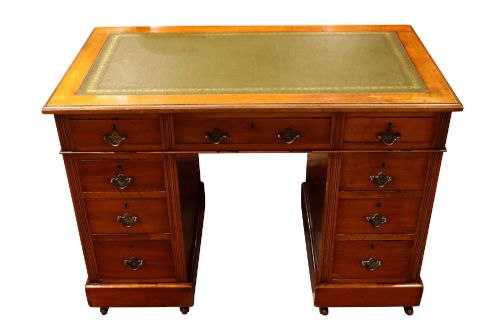
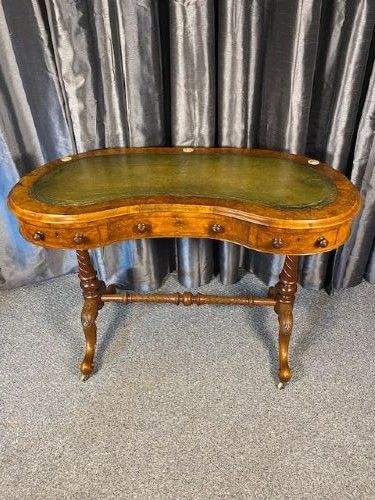
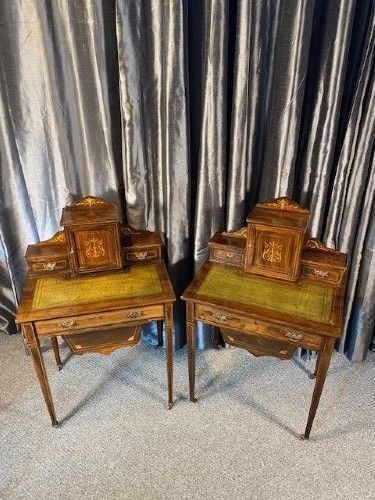
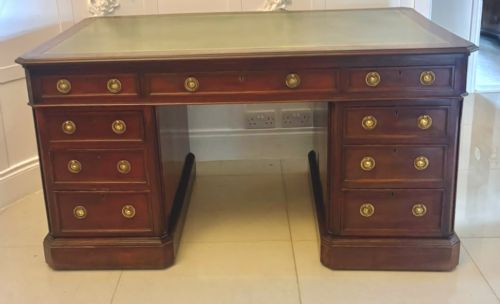
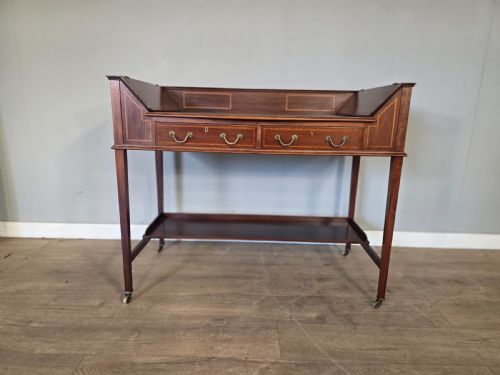
When you search for an edwardian leather top desk, you encounter pieces typically built around the turn of the twentieth century in mahogany, walnut, or oak. The most common form on this page is the twin pedestal desk, alongside writing tables and kidney-shaped variants.
Makers of the period often drew on Sheraton or Chippendale revivals, incorporating satinwood inlay and crossbanding. These pieces served as functional office or library furniture for the Edwardian household, offering drawers for stationery alongside the central writing hide.
How they were made
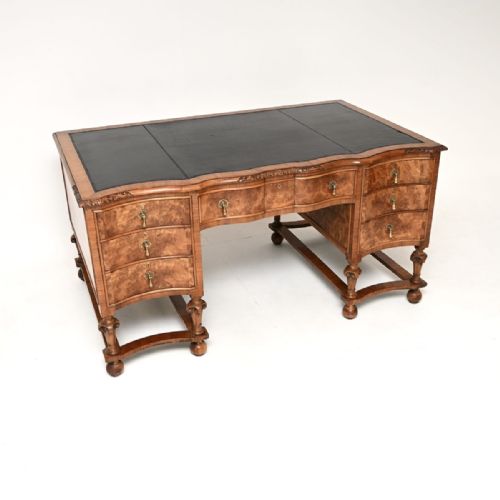
Carpenters constructed carcasses from solid hardwoods such as mahogany and oak, often applying flame mahogany or burr walnut veneers to drawer fronts and top surfaces. Inlays in satinwood and boxwood provided contrasting geometric or floral borders.
The writing surfaces feature inset leather hides, frequently decorated with blind or gilt tooling around the perimeter. Brass hardware, including drop handles and escutcheons, completed the construction of pedestal and writing tables.
Edwardian Leather Top Desk Retail Price Guide 2026
Typical asking prices for edwardian leather top desk among the pieces listed under this phrase on Sellingantiques today, from the lower quarter to the upper quarter. They describe what is for sale here now, not the wider market.
Materials recorded across the archive include satinwood, rosewood, brass, and tooled leather.
What varies in quality
The distinction between standard commercial output and superior craftsmanship lies in the selection of timbers and the precision of the cabinetwork. Fine examples utilise highly figured burr walnut or flame mahogany veneers matched symmetrically across the desk front.
Superior pieces display crisp hand-cut dovetails on drawer boxes, well-executed marquetry inlay, and high-grade tooled leather inserts that sit flush with the surrounding wooden frame.
Maple and Co·Trollope and Sons·Wylie and Lochhead Glasgow·James Shoolbred and Co London·Whytock and Reid of Edinburgh·Edwards and Roberts
The Edwardian Leather Top Desk Glossary
- Pedestal desk
- A heavy freestanding desk comprising two supporting columns of drawers with a central kneehole space.
- Kidney-shaped desk
- A writing table featuring a curved, kidney-profile top that wraps around the user, often finished in satinwood or mahogany.
- Crossbanding
- A decorative border of veneer laid so that the grain runs at right angles to the main surface.
- Blind tooling
- An impressing technique using heated brass tools to create patterns on leather without applying gold leaf.
- Escutcheon
- A protective plate surrounding the keyhole of a drawer or cabinet door, usually cast in brass.
Edwardian Leather Top Desk: Frequently Asked Questions
Are Edwardian desks comfortable for daily computer work?
Most Edwardian kneehole desks provide adequate legroom and surface area for modern laptops and writing tasks.
However, standard writing table heights can occasionally sit slightly lower than contemporary office desks, so checking the clearance is advisable.
How do I care for the leather top?
The leather writing surface benefits from occasional treatment with specialised leather balms to maintain flexibility and prevent drying.
Avoiding direct sunlight and excessive moisture protects both the hide insert and the surrounding timber finish.
How do I distinguish Edwardian desks from Victorian ones?
Edwardian furniture generally exhibits lighter proportions, brighter mahogany or satinwood tones, and neoclassical revival inlay motifs.
Victorian pieces often display heavier timber sections, darker finishes, and more robust, unadorned structural forms.