




Edwardian Leather Steamer Trunk
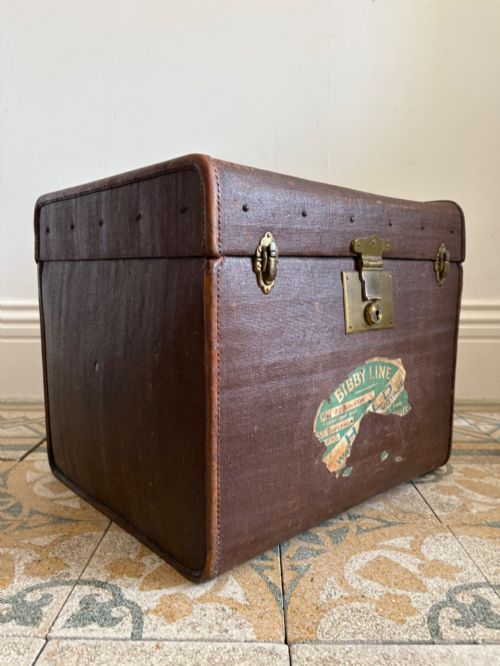
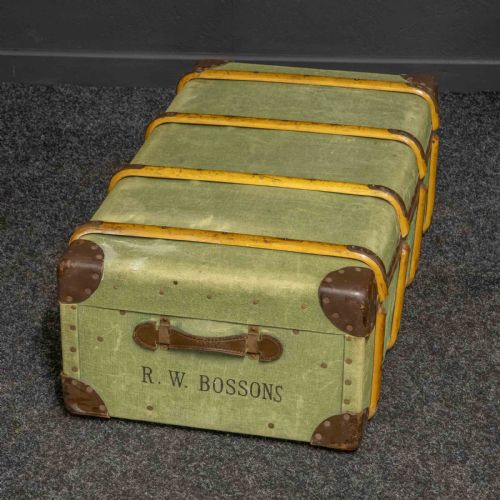
An Edwardian leather steamer trunk brings genuine travel history and robust utility into a modern room.
Edwardian Leather Steamer Trunk
An edwardian leather steamer trunk is a sturdy piece of vintage luggage built to withstand the rigours of transatlantic travel and long-distance journeys by rail or ocean liner. These trunks combine practical storage capacity with handsome period character, making them popular for use as coffee tables or blanket chests.
The pieces you will most frequently encounter on this page date from the Edwardian era and the early twentieth century, occasionally stretching back into the nineteenth century or forward to the nineteen-twenties. They span diverse forms including hat boxes, fitted luggage, dome top chests, and compact portmanteau cases.
Originating from various international makers and retailers, these trunks often bear the marks of extensive travel through historic labels and stamps. They appear in materials ranging from traditional leather and canvas to vellum, wood, and metal reinforcement.
Materials and Construction
Makers constructed these trunks using a robust wooden foundation covered in durable hides, canvas, or vellum to protect the contents from rough handling and the elements. Leather bound edges and heavy brass or iron hardware provide essential structural reinforcement at vulnerable corners and stress points.
Internal fittings often include specialised compartments, trays, and hat boxes lined with fabric to secure garments during transit. Rivets, studs, and reinforced wooden slats secured the exterior materials while allowing the trunk to endure the weight of stacking in luggage holds.
The inventory spans the nineteenth century, the Edwardian era, and the nineteen-twenties.
What Varies in Quality
Quality in these trunks is largely determined by the integrity of the original materials and the sophistication of any internal fittings or maker signatures. Pieces featuring specialised compartments, polished oak or heavy brass hardware, and documented origins stand apart from standard utility luggage.
The degree of original preservation, including legible travel labels, intact fabric linings, and functional locks, distinguishes a collector piece from a simple storage box. Expert restoration that retains the authentic patina also elevates the standing of a trunk.
Louis Vuitton·Goyard·Aux Etats Unis·A W Insall·Army and Navy
The Edwardian Leather Steamer Trunk Glossary
- Vellum
- A fine calfskin parchment used to cover luxury trunks for a smooth and resilient exterior finish. It provides a distinctive pale surface that takes travel labels particularly well.
- Portmanteau
- A large travelling case or suitcase, typically made of leather and opening into two equal compartments. The term often describes cases designed for extended journeys.
- Dome top
- A trunk style featuring a rounded lid designed to shed water and prevent other luggage from being stacked directly on top. These early designs often utilise wood and canvas construction.
- Malle penderie
- French for wardrobe trunk, referring to tall travelling cases equipped with internal hanging space and drawers. These sophisticated pieces represent the pinnacle of early twentieth-century luggage design.
- Campaign trunk
- A portable storage chest built for military officers or travellers requiring robust mobility in rugged conditions. They typically feature recessed brass handles and reinforced corners.
Edwardian Leather Steamer Trunk: Frequently Asked Questions
How do I clean the leather?
Dust the surface gently with a soft dry cloth to remove loose particles.
Apply a suitable wax or leather conditioner sparingly to maintain flexibility without darkening the historic finish.
Can I use it as a coffee table?
These trunks provide a stable surface and generous internal storage when placed in a living space.
Ensure the lid is secure and consider placing a glass top to protect the historic leather from spills.
How do I date an edwardian leather steamer trunk?
Examine the construction materials, hardware style, and any maker stamps or interior labels for period clues.
Edwardian pieces generally date from nineteen hundred to nineteen hundred and ten, though similar styles continued through the twenties.
Are the locks usually functional?
Many trunks retain their original brass or iron locks, though keys are frequently lost over the decades.
Specialist locksmiths can sometimes supply replacement keys if the mechanism remains operable.