


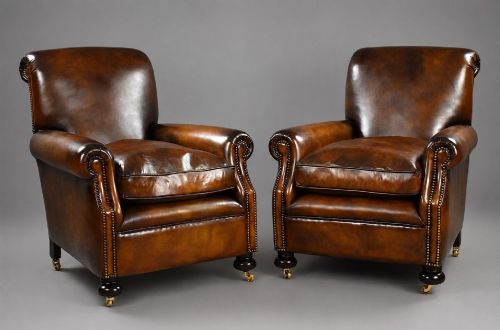
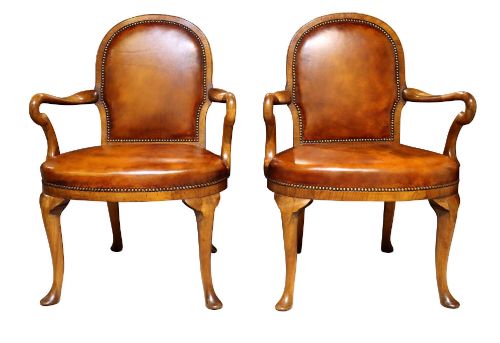
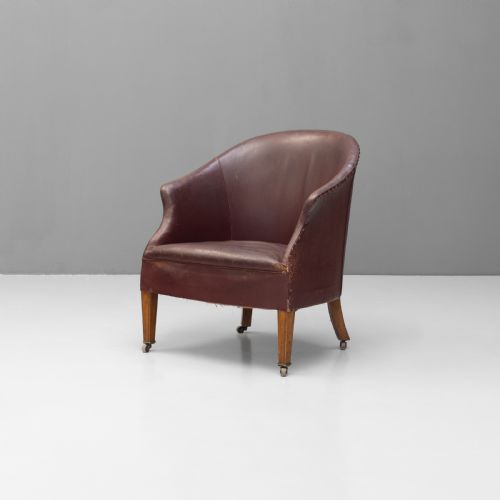
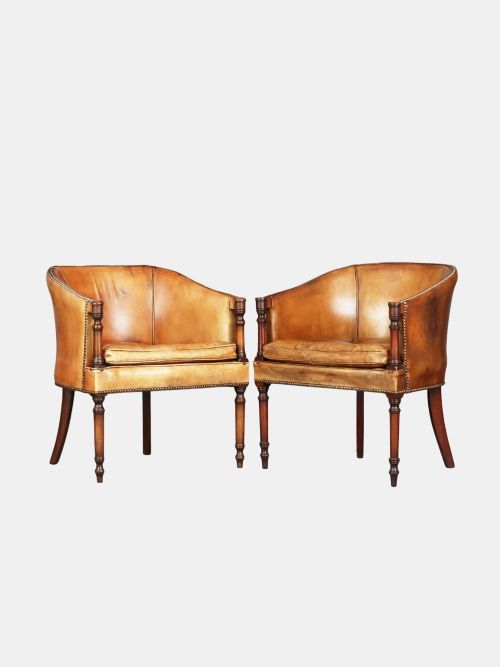
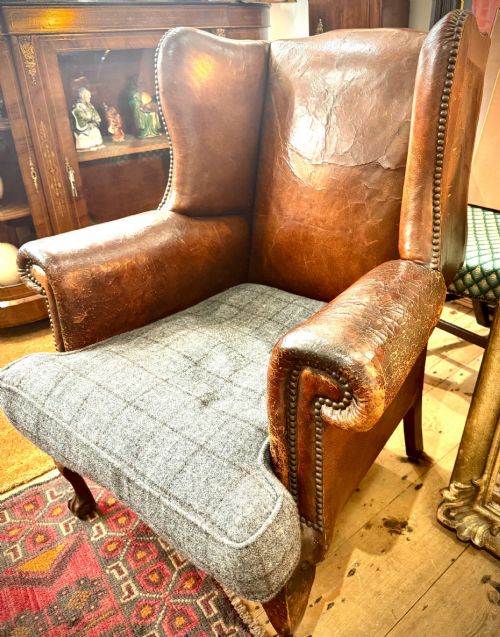
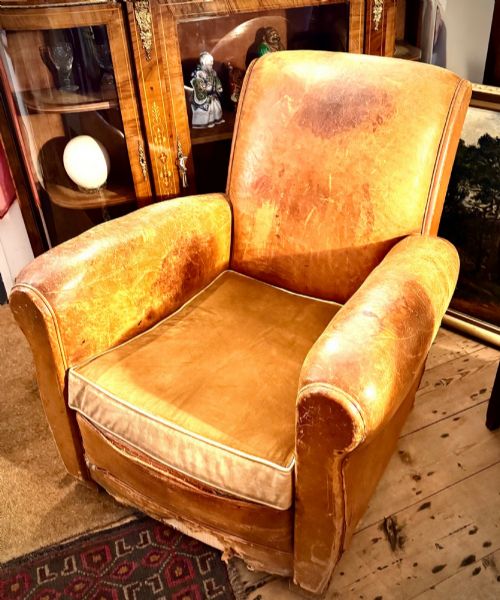
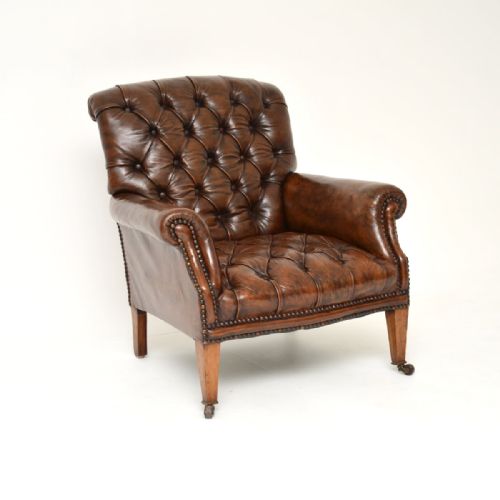
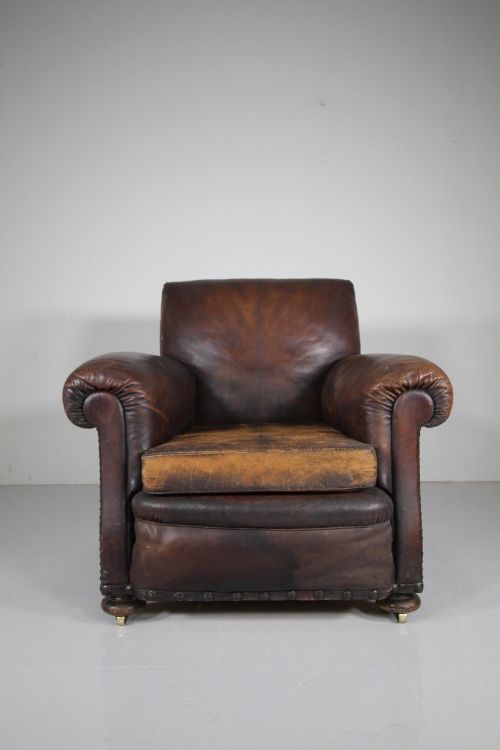
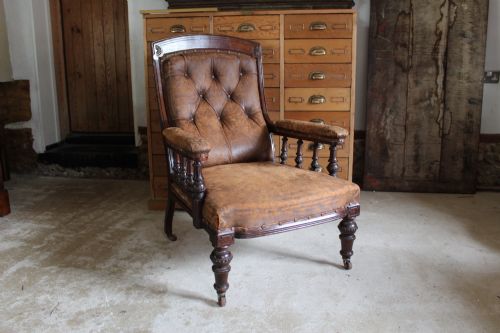

Edwardian Leather Club Chair
An edwardian leather club chair brings deep comfort and quiet authority to a room, offering tactile pleasure and sturdy proportions.
Edwardian Leather Club Chair
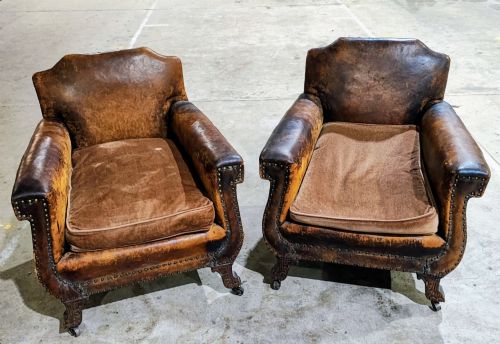
When searching for an edwardian leather club chair, you will encounter generous low-slung seating designed for repose. The pieces listed span from the late nineteenth century through to the art deco era, though the edwardian period dominates the selection.
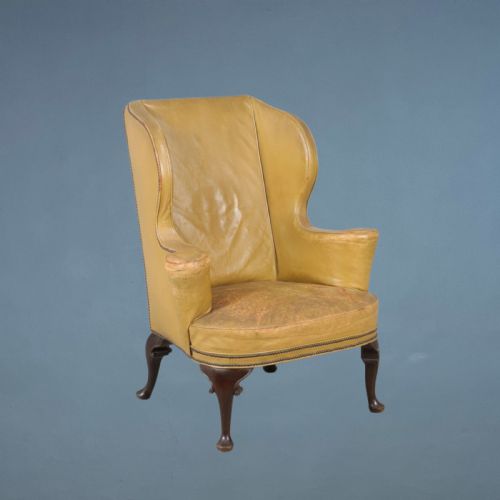
Beyond single armchairs, the inventory includes matching pairs, library chairs, and occasional sofa suites. Frames range from simple timber structures to substantial wingbacks and deep chesterfield designs.
Most examples lean towards English country house styles, featuring low profiles and heavy upholstery suited for studies, smoking rooms, and libraries.
How they were made
Construction relies upon solid timber frames built from oak, mahogany, or walnut, often fitted with brass detailing and castors. These robust internal skeletons support dense stuffing and heavy leather hides.
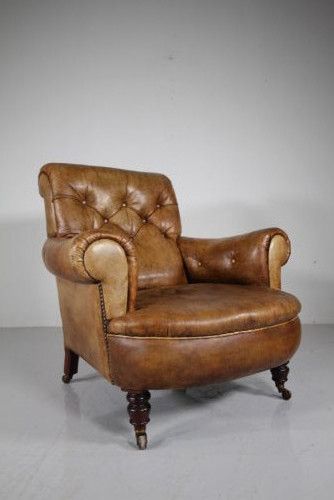
Upholstery techniques utilise traditional springs and horsehair padding secured beneath supple leather. Many pieces incorporate hand-finished details such as brass studding and turned wooden feet.
Several chairs include secret maker numbers hidden beneath the upholstery for quiet identification.
What varies in quality
The distinction between ordinary and exceptional examples rests upon the integrity of the frame and the character of the hide. Superior pieces display substantial proportions, untouched patination on the leather, and sturdy internal framing that has survived a century of daily use.
Subtleties in carving, such as lion hand-carved elements or claw and ball feet, elevate certain pieces above standard library seating. The depth of the cushioning and the proportion of the arms dictate the overall presence and comfort of the chair.
Heals of London·Howard And Sons·Foot And Sons
The Edwardian Leather Club Chair Glossary
- Chesterfield
- A style of upholstered seating characterised by deep buttoning and rolled arms of equal height to the back.
- Patina
- The surface sheen and softening developed on wood and leather through age and handling.
- Tub chair
- An armchair featuring a rounded back that curves continuously into low arms.
- Caned
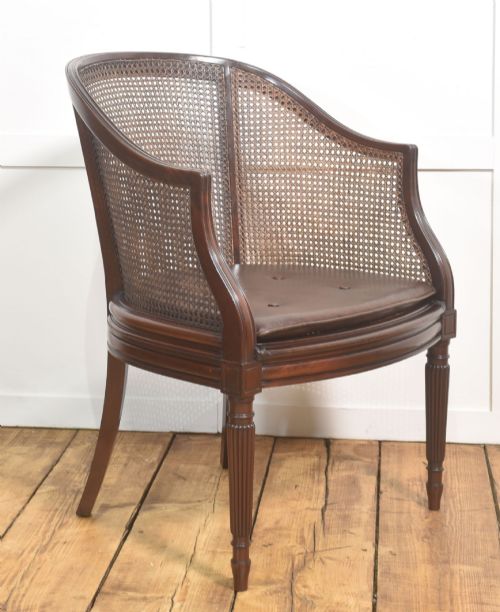
- Woven rattan or split cane utilised for seat panels or backrests to lighten the visual weight of timber frames.
- Reclining armchair
- An adjustable seat mechanism popular in the early twentieth century for domestic ease.
Edwardian Leather Club Chair: Frequently Asked Questions
What is an edwardian leather club chair?
It is a low, deep-seated armchair produced during the edwardian era, built for domestic comfort and reading. These seats typically feature padded arms and leather upholstery.
They emerged from gentlemen's clubs into private homes, becoming staples of English country house decor. Their sturdy construction ensures they remain functional seating today.
How do I care for antique leather?
Antique leather requires gentle cleaning and occasional conditioning to maintain its suppleness and prevent cracking. Keep chairs away from direct sunlight and heat sources to preserve the hide.
Natural oils and patination accumulate over decades, so harsh modern chemical cleaners should be avoided entirely in favour of specialist leather balms.
Are these chairs comfortable for daily use?
These armchairs were originally engineered for relaxation, offering deep proportions and supportive sprung seats. Their generous dimensions accommodate long periods of sitting.
Many examples feature upholstered backs and sloping arms designed specifically for reading or fireside repose, making them practical for modern living spaces.
How can I tell an edwardian chair from a victorian one?
Edwardian seating often displays lighter proportions and simpler lines compared to the heavier, more ornate mahogany framing favoured in the victorian era. Aesthetic shifts moved toward understated comfort.
Details like turned feet, cane panels, and tan leather hides frequently characterise the edwardian period, whereas victorian pieces lean toward dark walnut and deep buttoning.