
Edwardian Leaded Glass
Edwardian leaded glass brings architectural warmth into a room through geometric lead cames holding individual panes of glass.
Edwardian Leaded Glass
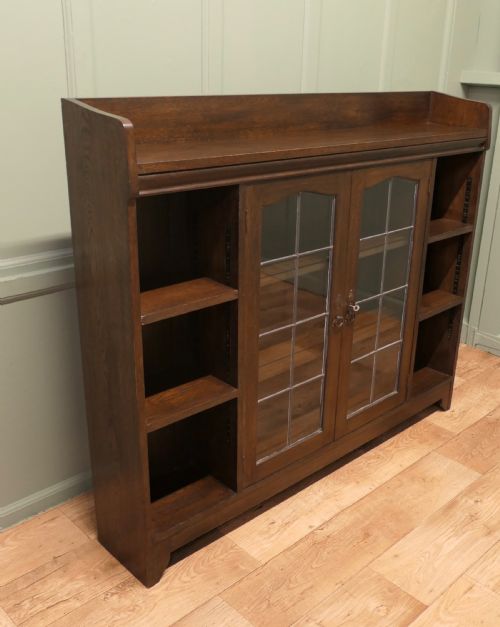
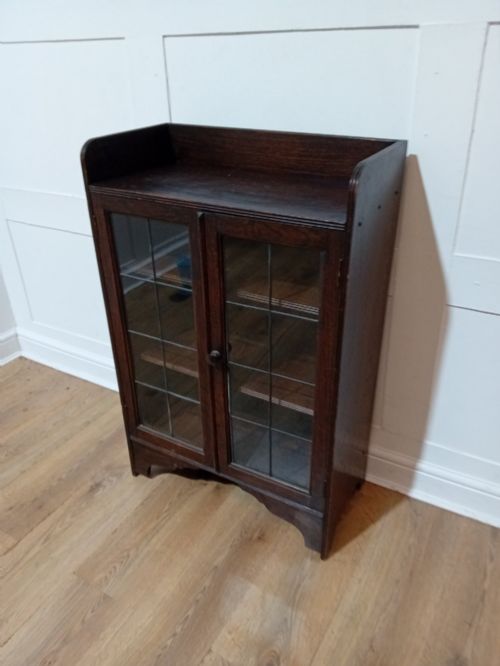
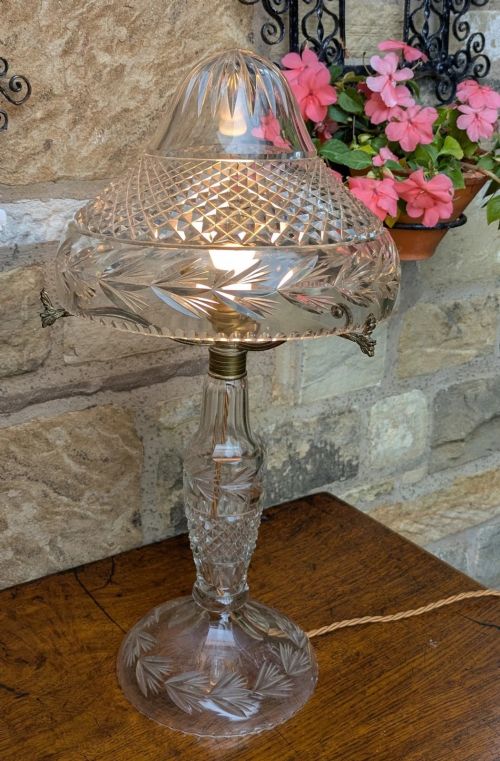
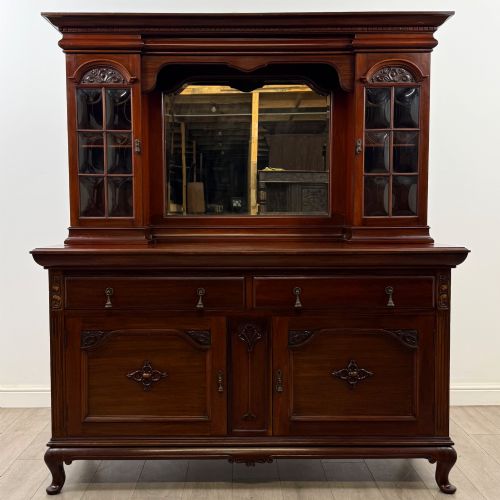
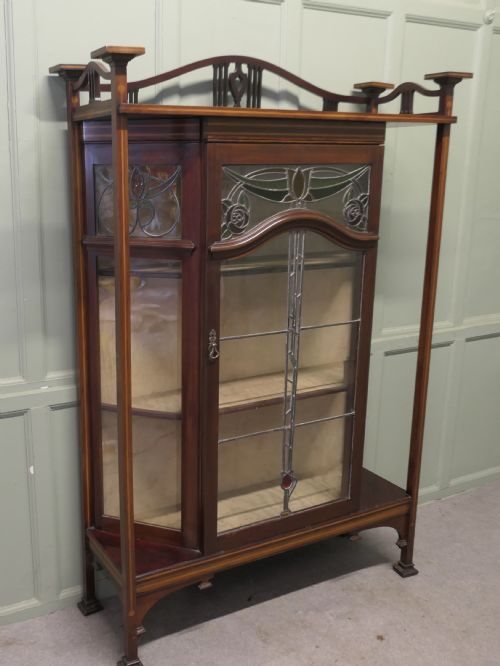
When you search for edwardian leaded glass, you encounter functional household objects where transparency meets decorative craft. The selection ranges from architectural salvage panels and hanging lanterns to fitted cabinet doors on stacking bookcases.
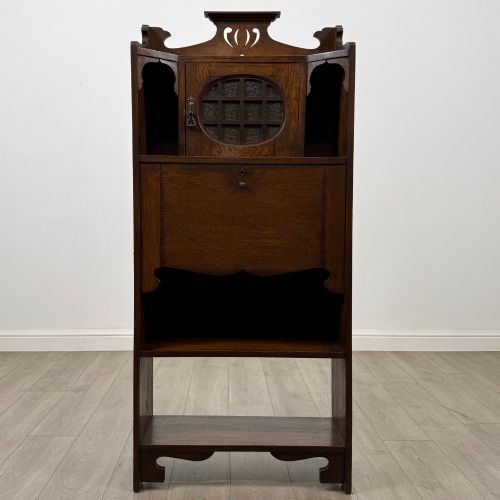
Oak and mahogany dominate the furniture items, while hanging lanterns and signs utilise brass, copper, and specialised glass. Most pieces originate from the early twentieth century, aligning with Edwardian, Arts and Crafts, and Art Nouveau movements.
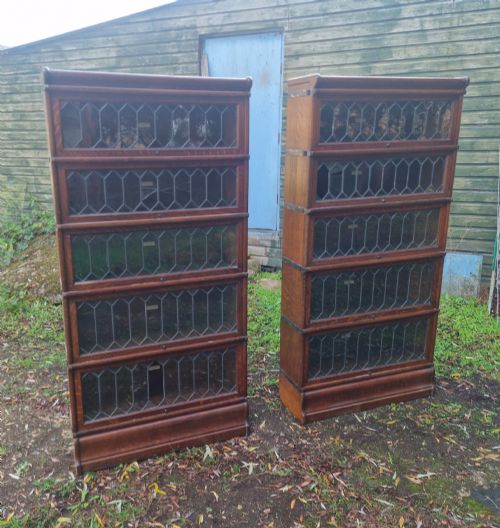
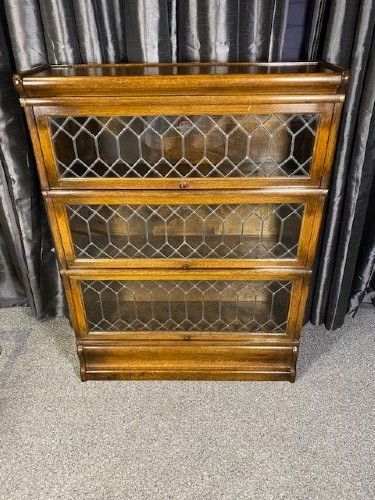
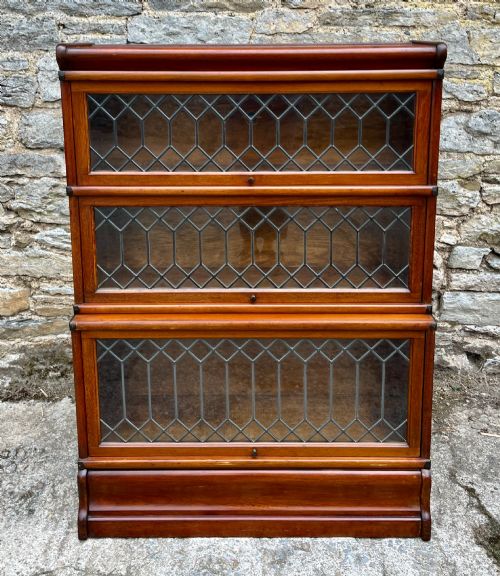
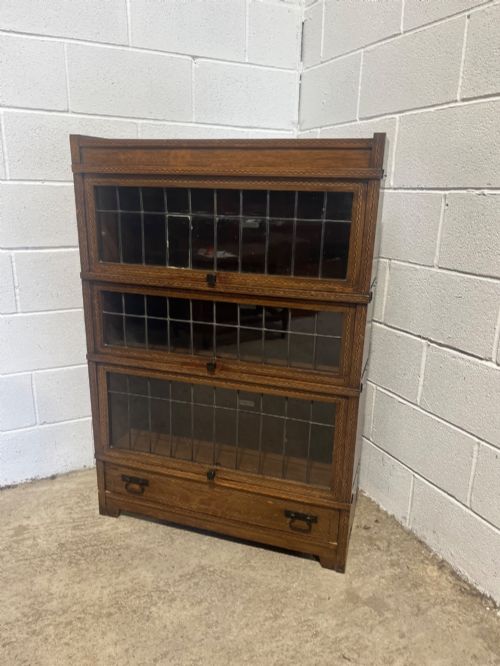
The version you meet most frequently on this page is the sectional barrister bookcase or display cabinet with leaded glass doors. These practical storage pieces brought domestic organisation to Edwardian libraries and offices.
Materials and Construction
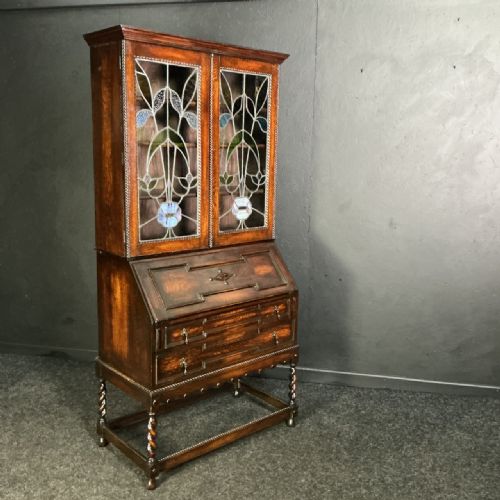
Craftsmen built these pieces using solid hardwoods like oak, walnut, and mahogany paired with structural metals such as brass and copper. Glass panels were secured within flexible lead cames, soldered at the joints to form intricate geometric or floral patterns.
Woodwork relied on traditional joinery, often incorporating inlaid timber details, panelled backs, and stacking modular frames. Metalwork components combined cast brass frames, patinated copper shades, and iron support stands.
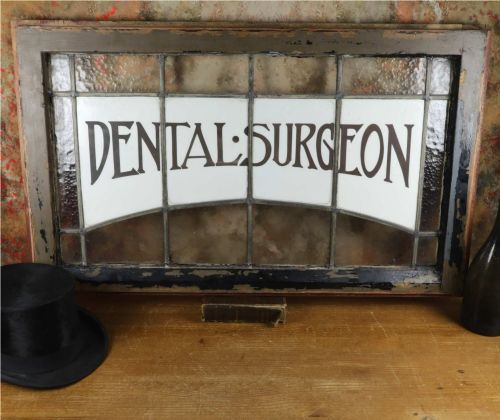
An antique dental surgeon glass sign illuminates the practical side of Edwardian window lettering.
Distinctions in Execution
Quality rests in the precision of the lead work and the selection of timber. Finer examples display tight, uniform solder joints and varied glass textures that catch light unevenly, whereas standard production uses repetitive patterns and plain glass.
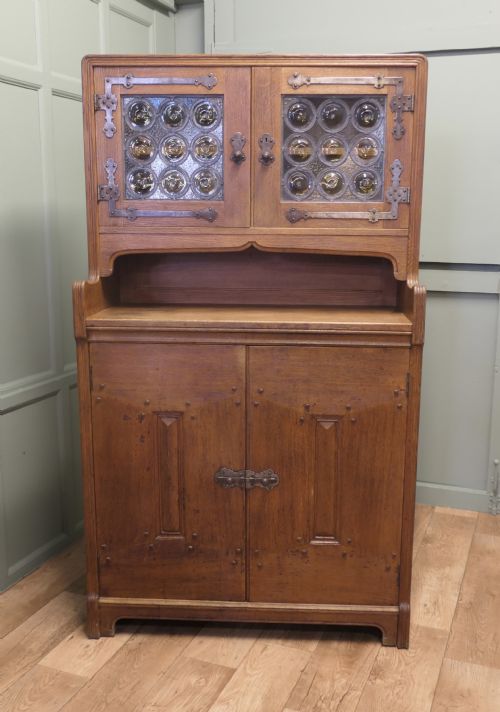
The integration of the glass into the surrounding furniture defines the upper tier of the range. Superior pieces feature custom designed cabinet doors with carefully matched wood grain and robust internal fittings.
Globe Wernicke·Liberty & Co.·Heal & Son·Shapland and Petter·Minty·Maple & Co.
The Edwardian Leaded Glass Glossary
- Came
- The H-section lead strip used to hold individual pieces of glass together in a window or cabinet door. Cames provide the structural grid and linear pattern.
- Globe Wernicke
- A modular stacking barrister bookcase system with glass doors that lift and slide inward. These units allowed libraries to expand vertically shelf by shelf.
- Arts and Crafts
- A design movement valuing handcraft, traditional materials, and simple forms over mass production. It heavily influenced Edwardian cabinetmaking and metalwork.
- Firescreen
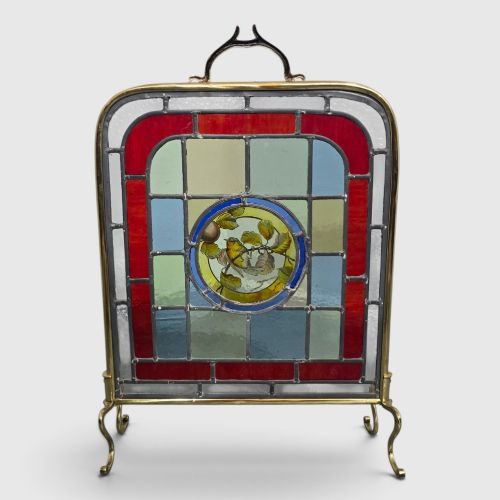
- A decorative panel placed in front of an unused fireplace. Many Edwardian examples utilised stained or leaded glass mounted in brass or iron frames.
- Architectural Salvage
- Building components rescued from demolition sites, including windows, panels, and lanterns. These items are reused in modern interior schemes.
Edwardian Leaded Glass: Frequently Asked Questions
How do I clean leaded glass panels?
Wipe the glass gently with a soft cloth and a mild, ammonia-free cleaning solution. Avoid pressing hard against the lead cames, as older solder joints can be fragile.
Keep moisture away from the surrounding wooden frames and dry the lead thoroughly after cleaning to prevent corrosion or white oxidation spots.
Are stacking bookcases sturdy?
Stacking bookcases use independent modular tiers that rest one upon another without permanent fixings. This modular construction makes them stable when assembled correctly.
Take care when moving them by separating the individual sections first rather than trying to lift the entire loaded stack at once.
Where were hanging lanterns used?
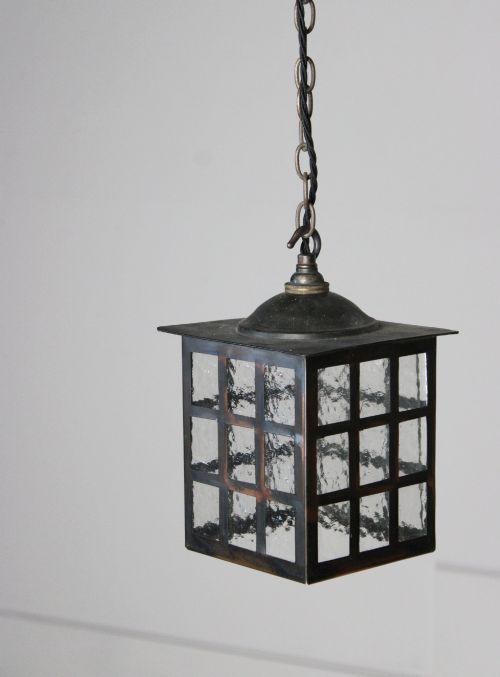
Hanging lanterns in brass and copper lit hallways, porches, and vestibules in Edwardian homes. Their enclosed glass designs protected candles or early electric bulbs from draughts.
Position them where natural light can pass through the leaded panels, creating decorative shadows on nearby walls and floors.
What defines an Arts and Crafts cabinet?
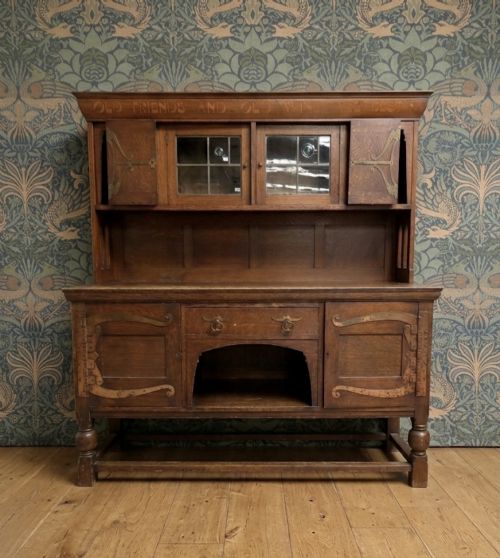
Arts and Crafts cabinets emphasise visible construction, natural wood grains, and handcrafted details like hammered copper hardware and leaded glass inserts. They reject heavy Victorian industrial revival styles in favour of honest utility.
Look for quarter-sawn oak timbers displaying prominent medullary rays and simple, unpretentious silhouettes that prioritize function.