



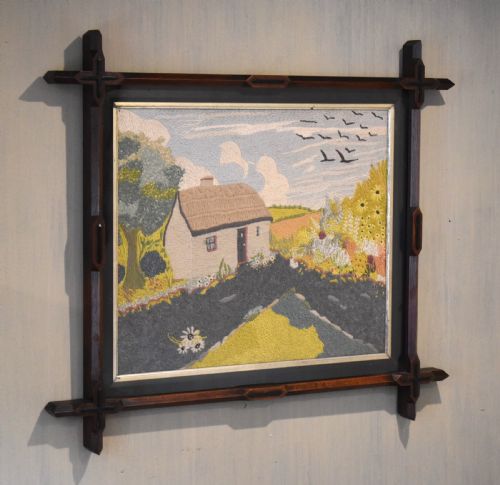


Edwardian Landscape Art Panel
These edwardian landscape art panel works capture pastoral scenes on timber and glass, offering a direct window into early twentieth-century rural life.
Edwardian Landscape Art Panel
An edwardian landscape art panel brings domestic interiors alive with depictions of countryside views, rivers and village life. The selection ranges from oil paintings on wood panel to leaded glass window panels and needlework pictures.
Most examples date from the early twentieth century, spanning British Impressionism and Arts and Crafts styles. They frequently measure suitable proportions for wall display in living spaces or hallways.
Makers and artists of the period utilised timber and board supports to render tonal subtleties of British landscapes. These works often arrive within original gilt frames or wooden surrounds suited to their period.
How they were made
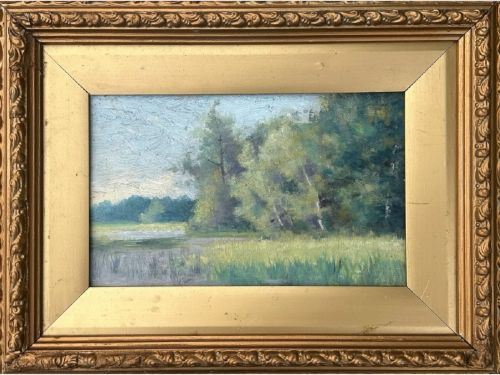
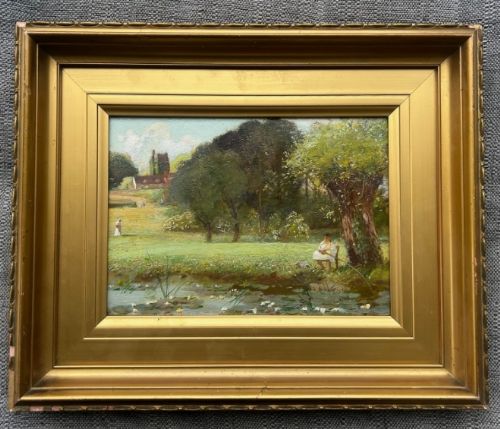
Makers applied oil paint directly onto wood panels, timber boards and prepared surfaces. Artisans frequently integrated gilded gesso frames to house these landscape paintings securely.
Alternative pieces combined leaded glass construction with hand-painted countryside scenes, uniting stained glass techniques with pictorial design. Textile works utilised needlework stitches to form rural pictures on fabric.
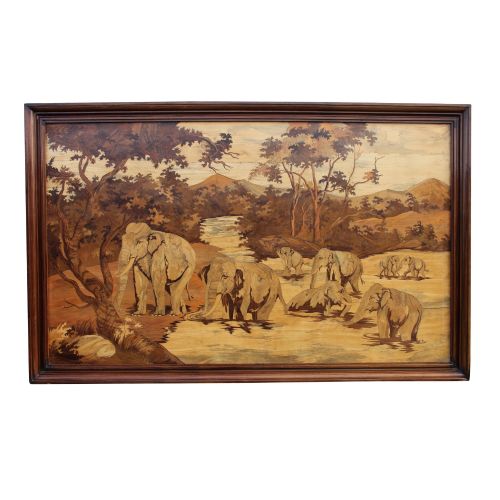
Marquetry examples deployed varied wood veneers laid into timber panels to build pictorial inlay scenes. Workshops combined traditional joinery with surface finishing to complete each panel.
Object types span oil paintings, wall art, wall mirrors, window panels and framed needlework pictures.
What varies in quality
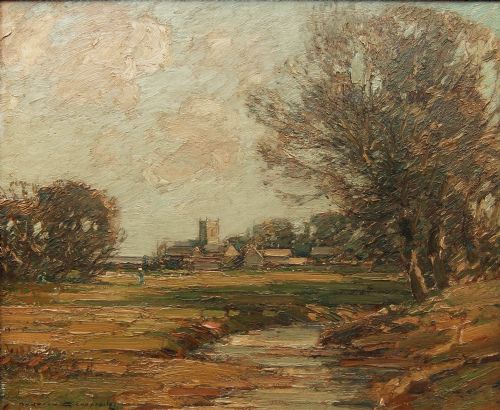
Execution of brushwork and sensitivity of atmospheric light distinguish superior oil paintings from standard decorative works. Artists of greater renown demonstrate confident handling of river reflections and tree foliage.
Condition of the original timber panel or wood support influences overall integrity. Intact gilt frames and preserved leaded glass window structures contribute significantly to historical value.
Provenance and attribution to recorded artists elevate specific panels above anonymous workshop output. The complexity of inlay work or needlework density defines the standard of craft in non-paint media.
Maud Raphael Jones·Sir David Murray·Pieter Cornelis Dommersen·Rowley Gallery·Kershaw Schofield·William Greaves·Owen Bowen·Joseph Vickers de Ville
The Edwardian Landscape Art Panel Glossary
- Wood Panel
- A rigid support of timber used instead of canvas for painting. It provides a stable flat surface that endured decades without slackening.
- Gesso
- A plaster mixture applied to wood frames or panels as a base for gilding and paint. It accepts gold leaf and tooling cleanly.
- British Impressionism
- A painting movement focusing on natural light and outdoor scenes using loose brushstrokes. Artists captured shifting weather across fields and rivers.
- Arts and Crafts
- A design movement valuing handcraft, traditional materials and simple forms. It rejected mass-produced ornament in favour of honest construction.
- Oil Paint
- Pigment mixed with drying oil that dries slowly to a durable finish. It permits subtle blending of tones for landscape skies.
Edwardian Landscape Art Panel: Frequently Asked Questions
What is an edwardian landscape art panel?
These works are pictorial representations of rural scenery created on rigid supports during the early twentieth century. They encompass oil paintings on wood, leaded glass window designs and needlework pictures.
Craftsmen and artists produced them to adorn domestic interiors with natural scenes. They reflect the aesthetic tastes of the Edwardian era and Arts and Crafts movement.
How should I hang an art panel?
Panels on timber or board require secure wall fixings suited to their weight and the composition of the wall. Ensure the hanging wire or integrated brackets match the substantial build of the frame.
Position pieces away from direct sunlight and damp environments to protect oil paint, timber supports and gilt gesso finishes.
How do I identify the period of a panel?
Examine the materials, framing style and framing technique employed by the maker. Edwardian pieces often display characteristic Arts and Crafts frames or specific artist signatures from the period.
Backboards, fixings and label fragments on the reverse frequently provide clues to the exact decade of manufacture.
Are these panels painted on canvas?
The works listed utilise wood panels, timber boards or glass rather than stretched canvas. Artists favoured rigid wood supports for stability and smoothness.
This substrate type allows for fine detail in landscape depictions and suits decorative framing without sagging.