


Edwardian Kneehole Table
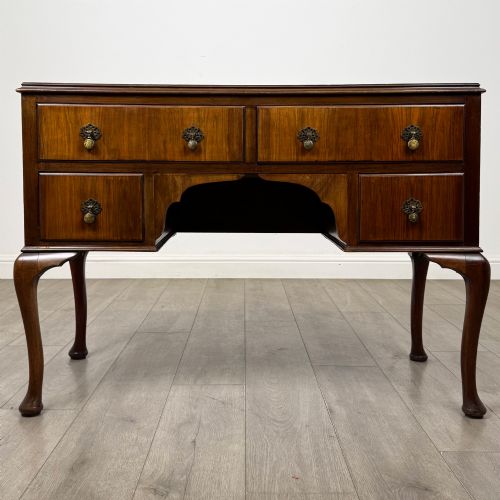
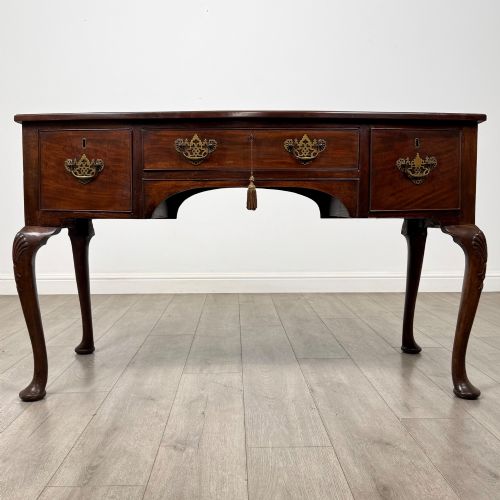
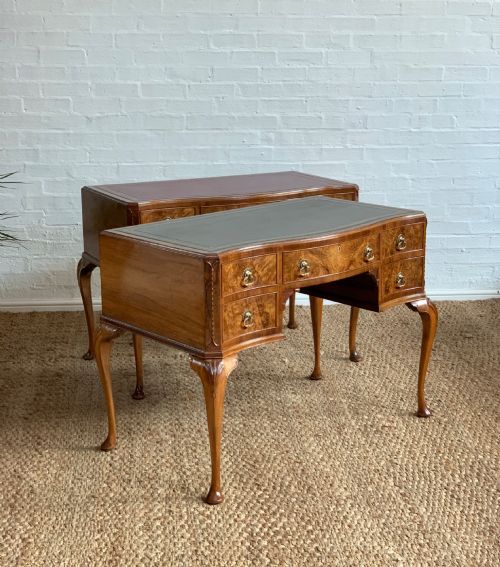
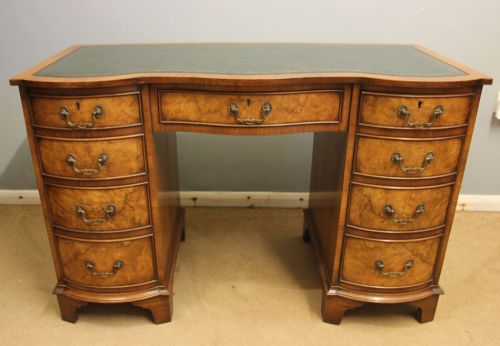
An Edwardian kneehole table is a purposeful workspace built with a central recess for the legs, offering practical proportions and refined period timber.
Edwardian Kneehole Table
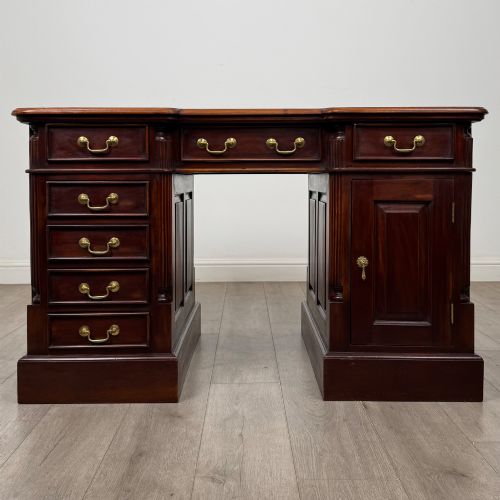
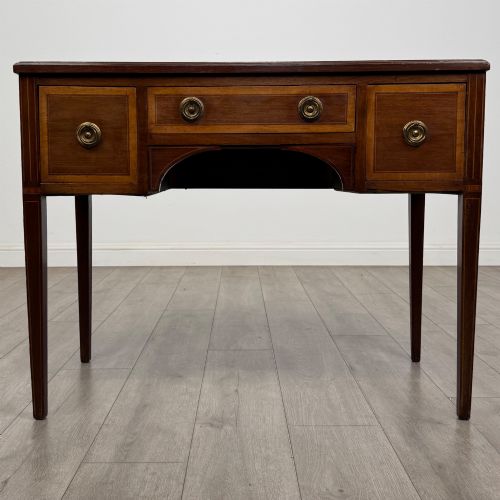
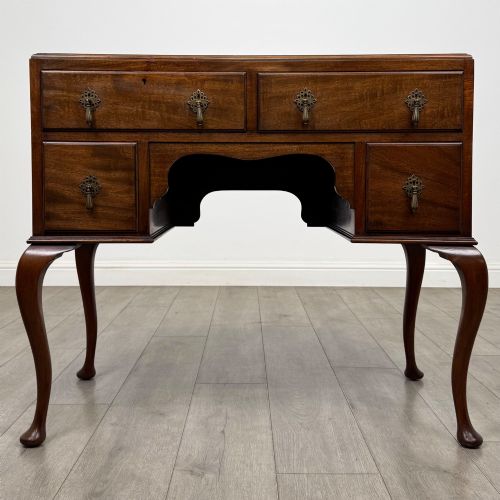
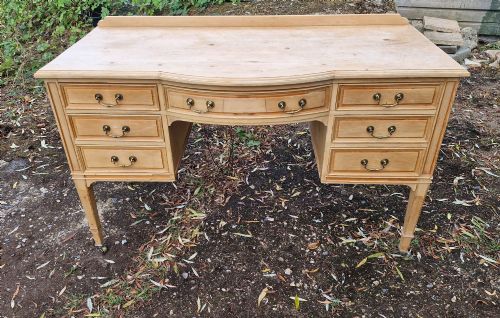
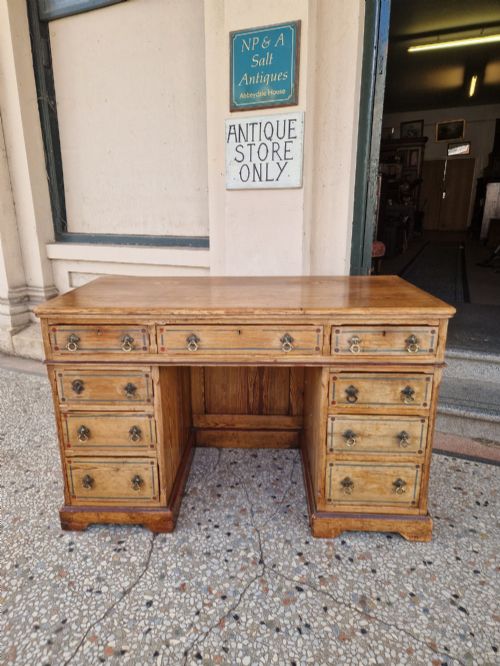
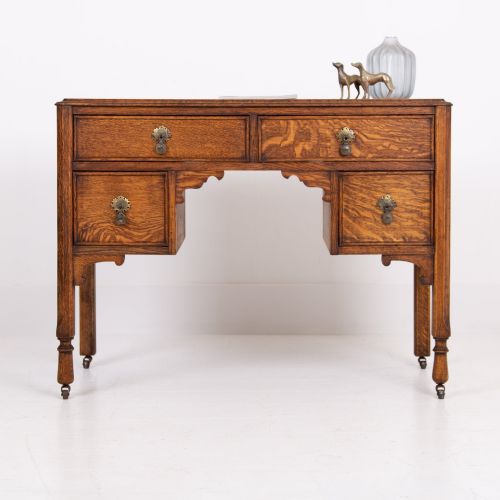
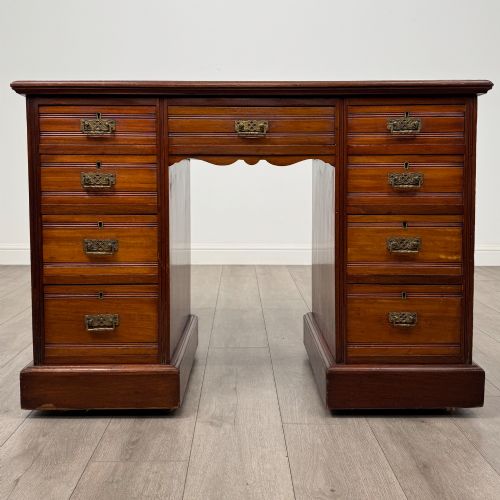
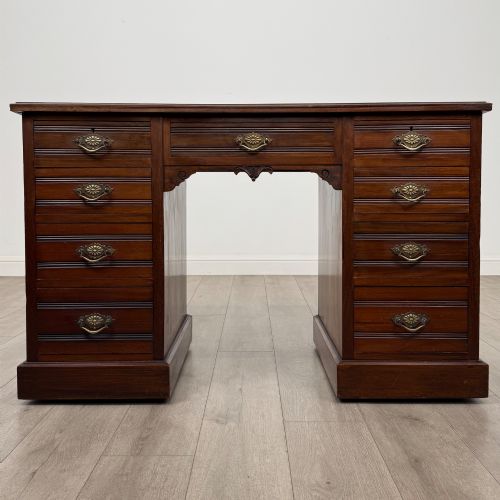
When you search for an Edwardian kneehole table, you encounter compact writing desks, pedestal desks, and dressing tables designed with a central void flanked by banks of drawers. The examples found here span the Edwardian period alongside related Victorian, Georgian Revival, and Chippendale Revival interpretations.
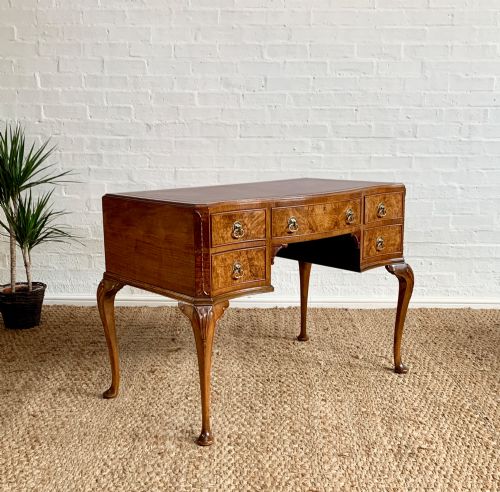
Mahogany and walnut predominate among these pieces, often enriched with burr walnut veneers, boxwood stringing, or brass hardware. Forms range from simple pine and oak writing tables to elaborate kneehole desks and dressing furniture bearing distinct period characteristics.
How they were made
Cabinetmakers constructed these tables using solid timbers such as mahogany, oak, and pine for the foundational frames and drawer linings. Finer surfaces frequently display burr walnut or satinwood veneers applied to give striking grain patterns across the primary panels.
Detailing often included inlaid boxwood stringing and cast brass handles, reflecting traditional joinery methods adapted to the lighter aesthetic of the era. Drawers were typically dovetailed carefully to ensure long-term durability in daily use.
Listings feature periods spanning from the nineteenth century through the Edwardian era into the nineteen thirties, utilising mahogany, walnut, oak, and brass.
What varies in quality
The choice of timber and veneer fundamentally separates standard workshop production from superior examples by notable makers. The selection of finely figured burr walnut or rich mahogany elevates the visual depth of the piece considerably.
The crispness of the inlaid boxwood stringing, the weight and original finish of the brass hardware, and the precision of the dovetail joinery distinguish finer furniture from simpler utilitarian items.
Trollope & sons·Wylie & Lochhead Glasgow·maples of London·Gill & Reigate·Shapland and Petter
The Edwardian Kneehole Table Glossary
- Kneehole table
- A desk or dressing table featuring a central recessed space for the legs, typically flanked by one or two pedestals of drawers. This configuration maximises storage while allowing the user to sit comfortably close to the writing surface.
- Pedestal desk
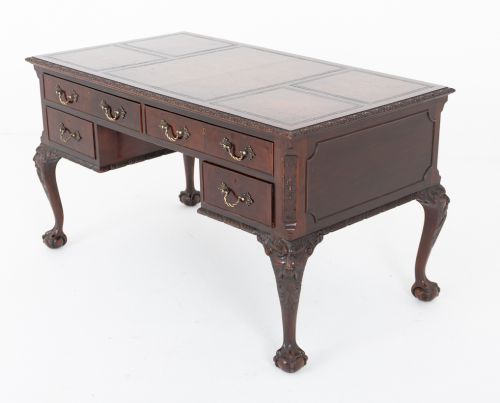
- A heavy freestanding desk comprising two separate banks of drawers that support a single wide top. These pieces often feature leather writing inserts and generous proportions.
- Stringing
- A narrow strip of contrasting wood inlaid into the surface of a panel as decorative edging. Boxwood was frequently utilised against darker mahogany or walnut veneers.
- Chippendale Revival
- A decorative style popular around nineteen hundred that reinterpreted eighteenth-century designs. It is characterised by carved mahogany details and classical proportions.
- Burr walnut
- Timber taken from the gnarled growth of a walnut tree, displaying highly intricate swirling grain patterns. It was sliced into thin veneers for high-grade desk and table surfaces.
Edwardian Kneehole Table: Frequently Asked Questions
What is an Edwardian kneehole table used for?
These versatile tables serve primarily as writing desks, study surfaces, or dressing tables depending on their original configuration. The central recess allows for comfortable seating while the surrounding drawers keep writing materials organised.
In modern interiors they function effectively as compact home office desks or console tables in hallways and bedrooms.
How do I distinguish Edwardian from Victorian tables?
Edwardian furniture generally exhibits a lighter, more delicate appearance with slender legs and refined inlay work, reflecting a shift away from heavy Victorian proportions. Mahogany and satinwood often replace the darker oak and heavier carvings typical of earlier decades.
Construction methods also evolve, with Edwardian workshops embracing cleaner lines while still employing traditional hand dovetailing and solid timber framing.
Are these tables suitable for daily computer work?
Many of these pieces provide ample surface area for laptops and modern writing equipment while offering useful drawer storage for paperwork. Their compact footprints make them well suited to contemporary rooms where space is at a premium.
Care should be taken to protect antique wood and leather surfaces from direct heat and moisture during everyday use.
What distinguishes revival styles from original antiques?
Revival pieces, such as Chippendale Revival or Queen Anne Style examples, were produced later using historical design motifs from previous centuries. They combine period aesthetics with the construction techniques and timber availability of their actual manufacturing date.
Examining the secondary woods, interior drawer linings, and overall wear helps determine whether a piece belongs to the original period or a later revival.