






Edwardian Kettle Stand
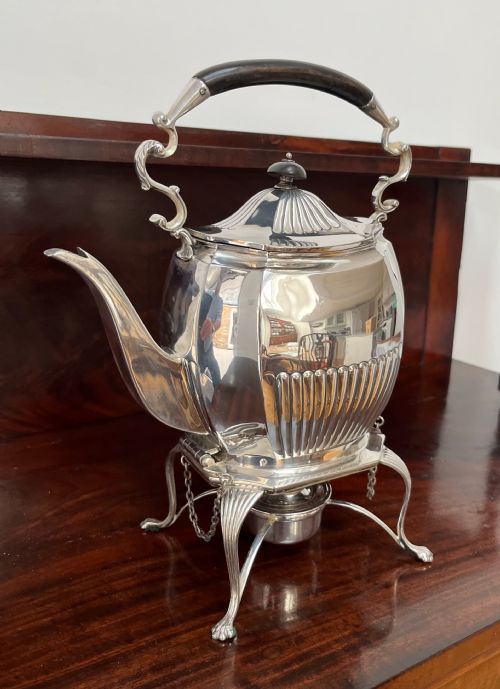
An edwardian kettle stand provides a dedicated elevated surface or a complete boiling vessel assembly for afternoon tea.
Edwardian Kettle Stand
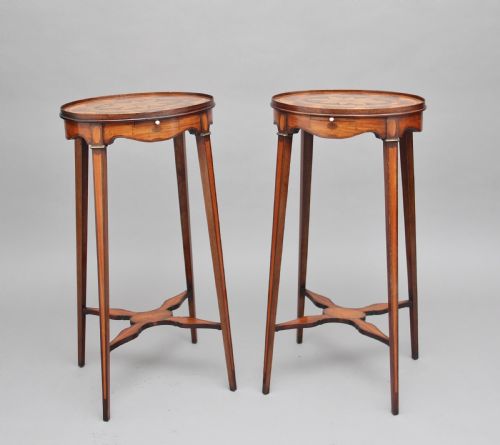
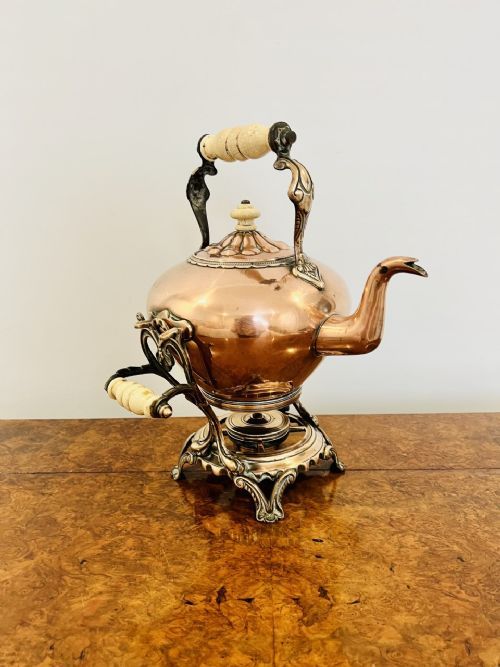
An edwardian kettle stand encompasses both independent wooden tables designed to hold teaware and metal spirit kettles mounted on integral stands with burners. The evidence shows these pieces appearing in Edwardian, Victorian, and eighteenth-century revivals.
Wooden examples frequently employ mahogany, satinwood, or walnut, often built in Sheraton or Chippendale styles with inlaid details. Metal versions combine silver plate, brass, and copper, sometimes incorporating ebony or bone handles.
Buyers encounter table forms alongside complete tea service equipment including spirit kettles and trivets. These pieces reflect the formal hospitality practices of their period.
Materials and Construction
Cabinetmakers utilised solid timbers and veneers, applying inlay techniques for decorative surfaces on mahogany and satinwood tables. Turned and carved supports provide stability for the raised tops.
Metal vessels and stands rely on silver plating over base metals, alongside heavy brass and beaten copper construction. Burners and handles integrate bone, ebony, or wood insulation components.
Design revivals run strongly through the record, drawing upon Georgian, Sheraton, and Arts and Crafts aesthetics.
Distinctions in Execution
The standard of timber selection and the precision of inlaid details separate standard tables from exhibition pieces. Refined joinery and balanced proportions indicate superior cabinet work.
Metal versions demonstrate quality through the weight of the silver plate, the crispness of cast brass decoration, and the integrity of the spirit burner assembly.
Fenton Brothers
The Edwardian Kettle Stand Glossary
- Spirit Kettle
- A metal kettle mounted on a metal stand above a small spirit burner used to heat water. This apparatus allowed hosts to maintain hot water for tea without leaving the room.
- Trivet
- A metal stand or support raised on feet, used to hold hot kettles off a tabletop or hearth. Brass and copper versions appear frequently in the record.
- Sheraton Revival
- A style drawing on eighteenth-century designs by Thomas Sheraton, characterised by classical geometry and mahogany veneer. Edwardian cabinetmakers used this idiom extensively for occasional tables.
- Inlay
- The technique of inserting contrasting strips of wood or shell into a recessed surface to form a pattern. Satinwood and mahogany stands frequently display this decorative work.
Edwardian Kettle Stand: Frequently Asked Questions
What is an edwardian kettle stand?
An edwardian kettle stand is either a small occasional table built to support a teapot or a complete metal kettle mounted on a frame with a spirit burner.
These items date predominantly from the early twentieth century, though they often imitate earlier Georgian or Victorian designs.
How were spirit kettles used?
Spirit kettles were filled with water and placed over a lit burner to maintain boiling temperature during tea service.
The setup allowed hosts to replenish teapots directly at the table.
What woods were used for stands?
Makers constructed wooden stands using mahogany, satinwood, walnut, and ebonised wood.
Many examples feature decorative stringing or inlaid motifs derived from Sheraton styles.
How do I identify metal types?
Metal kettles and stands are typically recorded as silver plate, solid brass, or copper.
Handles and finials may incorporate secondary materials like bone or ebony for insulation.