





Sheraton Tea Stand
A sheraton tea stand brings refined geometry and subtle inlay into a room, offering a compact surface built for quiet hospitality.
Sheraton Tea Stand
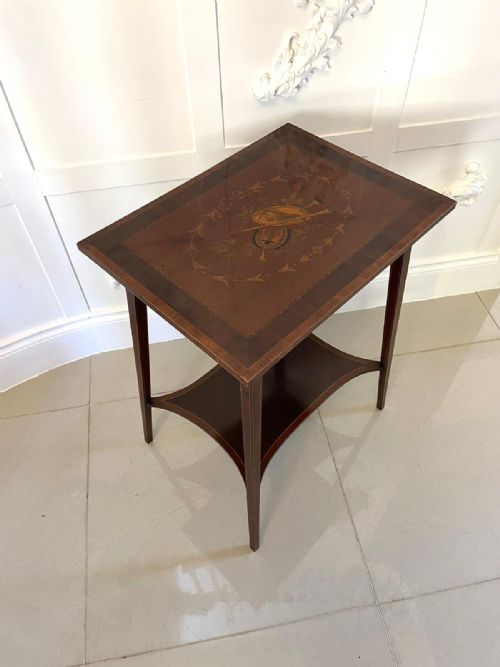
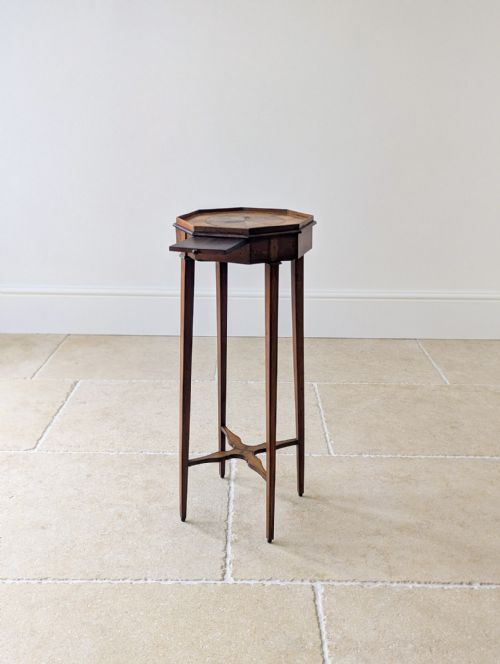
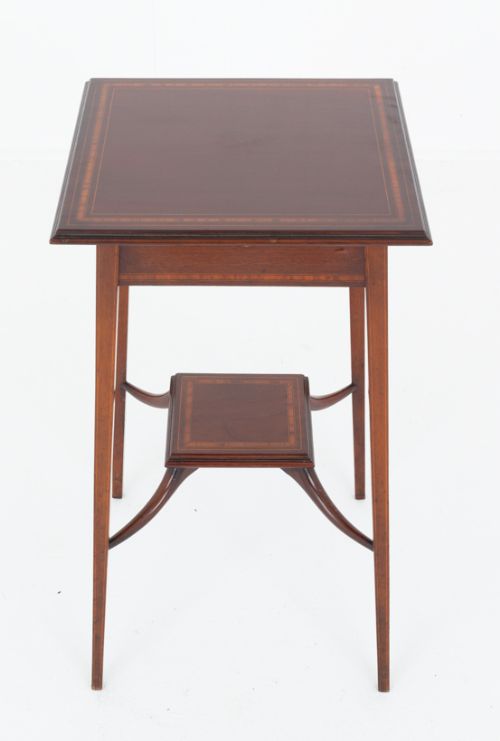
A sheraton tea stand is represented on this page through a selection of occasional tables, kettle stands, side tables, and cake stands spanning the Georgian, Edwardian, and Sheraton Revival periods. Buyers encounter pieces originating from the eighteenth, nineteenth, and early twentieth centuries, capturing both original Georgian craftsmanship and later revival interpretations.
The forms vary from octagonal and oval occasional tables to two-tier étagères and tripod tables, alongside dedicated kettle stands. Mahogany and satinwood form the primary structural foundations, frequently accented with marquetry and boxwood inlay.
Edwardian Sheraton Revival pieces sit alongside authentic George III examples, providing a direct continuum of slender proportions and classical symmetry. This range allows collectors to select between period originals and the lighter, decorative revivals of the early nineteen hundreds.
Materials and construction
Cabinet makers utilised solid mahogany and satinwood as the principal timbers, chosen for their grain and structural stability. These woods provide the durable framework necessary for slender legs and tiered surfaces.
Decoration relies on precision inlay, employing boxwood and satinwood inlay alongside detailed marquetry panels. Brass hardware frequently appears on trays and structural fittings, adding functional contrast to the polished timber.
Joinery techniques focus on lightness and balance, particularly visible in tripod bases, octagonal tops, and multi-tier etageres. Surfaces are finished to highlight the natural figures of the wood and the geometry of the marquetry motifs.
Listings span from the 18th Century through the Georgian and Edwardian eras up to 1910, featuring mahogany, satinwood, and boxwood inlay.
Distinctions in quality
Quality rests upon the precision of the timber selection and the crispness of the boxwood or satinwood inlay. Higher grade pieces display finely balanced proportions and meticulously cut marquetry that remains flush with the surrounding mahogany or satinwood surface.
The integrity of the structural joinery, especially in delicate tripod bases and multi-tier étagères, dictates the standing of a piece. Superior examples maintain rigidity and alignment without relying on heavy secondary bracing.
The Sheraton Tea Stand Glossary
- Sheraton Revival
- A late nineteenth and early twentieth century design movement that recreated the neoclassical elegance and lighter forms of the original eighteenth century maker.
- Kettle Stand
- A small, tall table specifically designed to hold a tea kettle above the floor or main table surface during formal service.
- Étagère
- A set of open shelves or tiers used for displaying small objects or serving tea, appearing frequently in Edwardian variants.
- Marquetry
- The art of applying decorative veneer pieces to a structure to form intricate pictorial or geometric patterns.
- Tripod Table
- A small occasional table supported by a central pillar resting on three spreading legs, common in Georgian furniture.
Sheraton Tea Stand: Frequently Asked Questions
What is a sheraton tea stand used for?
These pieces served originally to hold tea kettles, urns, or cups during formal domestic gatherings. Today they function primarily as decorative occasional surfaces for lamps, plants, or small display items.
Their compact footprints allow them to fit easily beside seating or in corners where larger furniture cannot go.
How do I date a piece?
Dating relies on examining the timber species, the style of inlay, and the structural construction methods. Georgian pieces from the eighteenth century show different timber seasoning and hand-cut joinery compared to Edwardian Sheraton Revival pieces from nineteen hundred.
Secondary woods and the specific type of marquetry also offer clear indicators of the era in which the workshop built the table.
Are these tables sturdy enough for daily use?
Most pieces are built with slender legs and delicate frames designed for light decorative display rather than heavy weight. Tripod tables and multi-tier etageres require careful placement to avoid tipping under uneven loads.
Placing them away from heavy traffic areas helps preserve their antique joinery and veneered surfaces.
What is the difference between Georgian and revival pieces?
Georgian pieces date from the eighteenth century, specifically the George III era, and represent the original period of design. Sheraton Revival pieces were manufactured around nineteen hundred, reinterpreting the earlier classical vocabulary with Edwardian sensibilities.
Both categories utilise mahogany and satinwood, but the revival items often incorporate machine-cut veneers and lighter Edwardian construction techniques.