


Edwardian Jewellery Cabinet
An Edwardian jewellery cabinet holds small treasures under glass, offering a neat way to display rings and keepsakes.
Edwardian Jewellery Cabinet
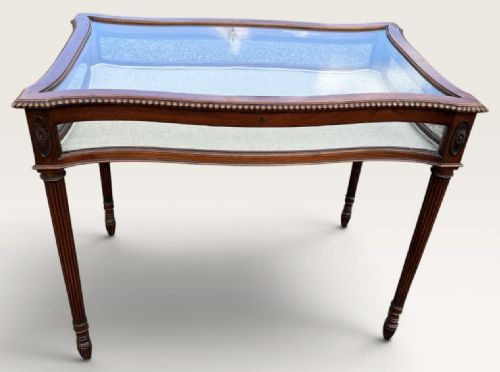
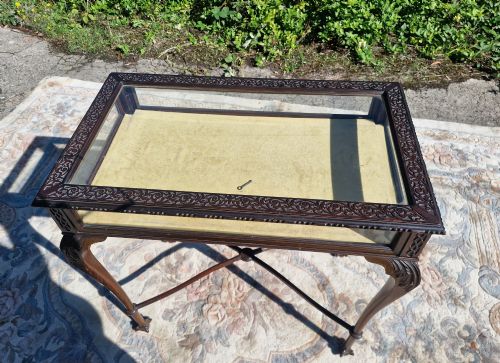
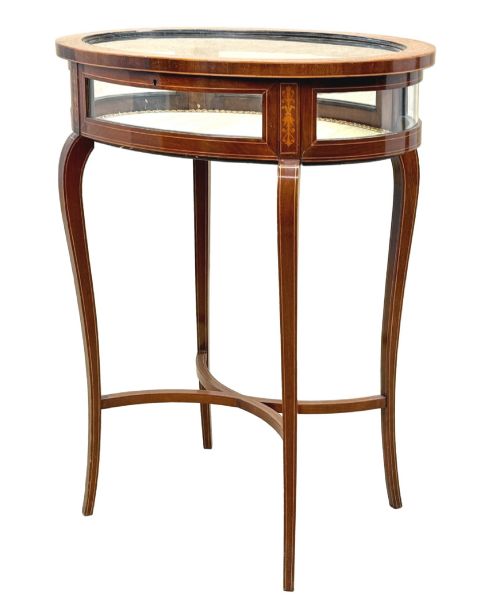
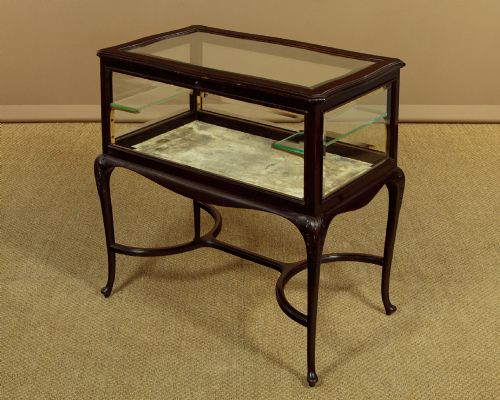
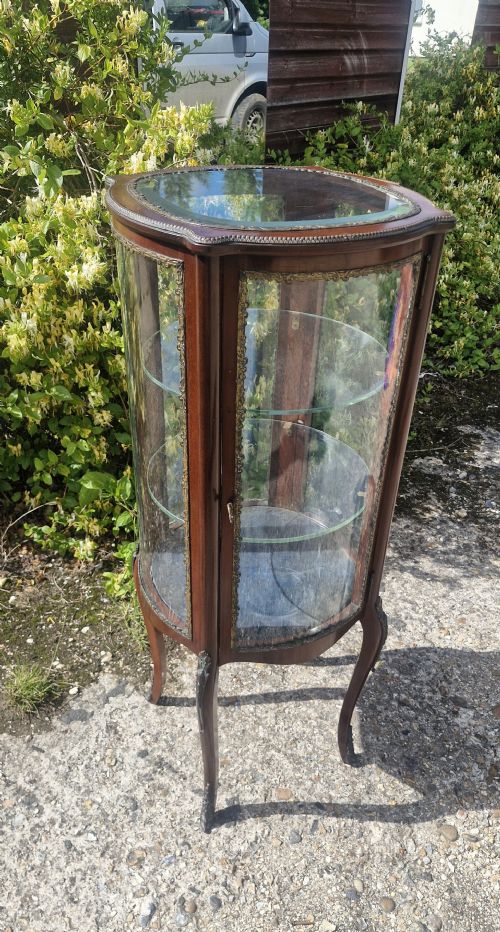
An edwardian jewellery cabinet encompasses tabletop vitrines, bijouterie tables, and small countertop display cases designed for precious items. Buyers searching for an edwardian jewellery cabinet most frequently encounter mahogany display tables with glazed tops, alongside standing pedestals and compact tabletop chests.
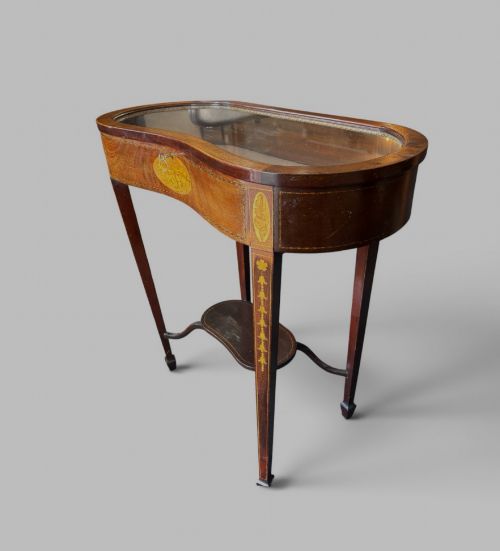
Makers shaped these pieces in serpentine, kidney, oval, and octagonal formats, often raising them on slender legs or placing them directly on counters. The period style mixes straightforward Edwardian and Late Victorian influences with occasional Louis XVI revival details.
Materials and construction
Craftsmen built the frames primarily from mahogany, oak, satinwood, and occasionally walnut or yew wood. They added glass panels to the upper display sections so contents remain visible from above.
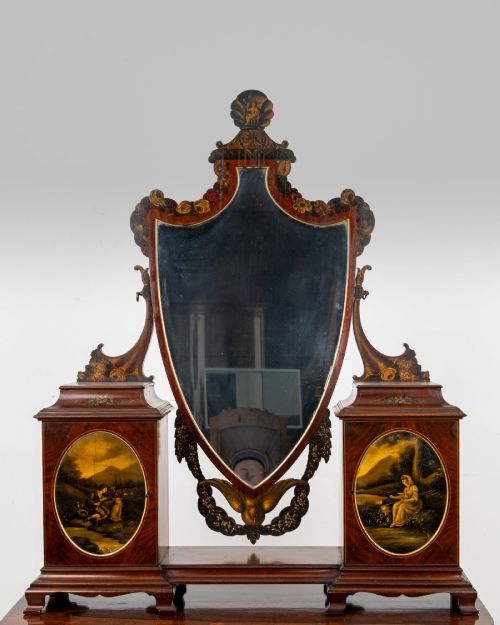
Decoration relied on satinwood inlay, marquetry, brass mounts, and velvet or fabric linings inside the compartments. Some examples incorporate mother of pearl detailing or gilt metal accents.
One yew wood display table carries later sign-writing for Breitling watches, marking its transition from drawing room furniture to commercial counter.
Judgement of quality
The distinction between standard pieces and finer examples rests on the crispness of the cabinetwork and the subtlety of the timber. Finely figured mahogany and intricate satinwood inlay separate workshop production from simpler output.
Original glass, working locks with keys, and retained fabric linings elevate an item, while well-executed proportions in curved or serpentine frames denote higher workshop skill.
Edwards & Roberts
The Edwardian Jewellery Cabinet Glossary
- Bijouterie table
- A glass-topped display table specifically designed for small ornaments, curiosities, and jewellery. These pieces usually feature a hinged or lift-off glazed lid.
- Vitrine
- A glass cabinet used for displaying objects or curiosities. The term covers both tabletop display cases and larger upright furniture.
- Marquetry
- Decorative woodwork where pieces of veneer are fitted together to form pictorial or geometric patterns on the surface. It often appears on cabinet tops and drawer fronts.
- Satinwood inlay
- Contrasting light-coloured timber inserted into darker wood surfaces to create linear or geometric borders. It defines much of the decorative work on Edwardian furniture.
- Serpentine
- A furniture shape featuring a curved front with a convex centre flanked by concave ends. This contour requires precise woodworking skill.
Edwardian Jewellery Cabinet: Frequently Asked Questions
What fits inside an edwardian jewellery cabinet?
These cabinets suit rings, brooches, pocket watches, medals, and small trinkets. The shallow glass-topped compartments keep delicate items organised and visible.
Larger table models can also hold letters or loose photographs alongside personal ornaments.
How do I date an edwardian jewellery cabinet?
Look for construction traits typical of the early twentieth century, such as machine-sawn interior framing combined with hand-finished mahogany and satinwood veneers. Stylistic cues often blend Late Victorian heaviness with lighter Edwardian inlay.
Brass fittings and original velvet linings provide further clues to the manufacturing era.
Where should I place a bijouterie table?
These tables work well in drawing rooms or bedrooms where natural light can reach the glass top to illuminate the contents. Placing them away from direct sunlight protects both the timber finish and the interior fabric.
Keep them clear of frequent foot traffic to protect the slender legs and glazed sections.
What is the difference between a jewellery box and a bijouterie table?
A jewellery box is a closed container designed to sit on a dressing chest, often featuring drawers and lift-out trays for private storage. A bijouterie table elevates the storage onto legs and incorporates glass panels specifically for display.
Both items served similar households but fulfilled different decorative purposes in period interiors.