
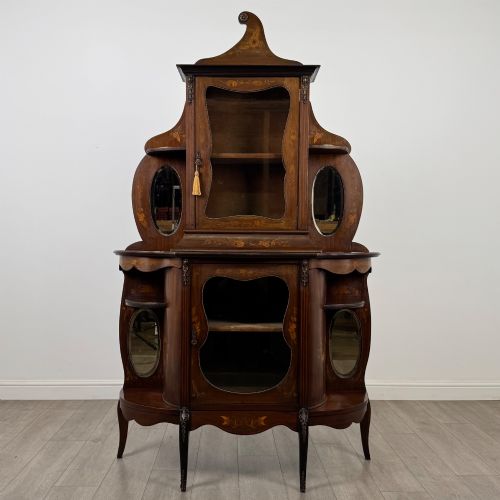
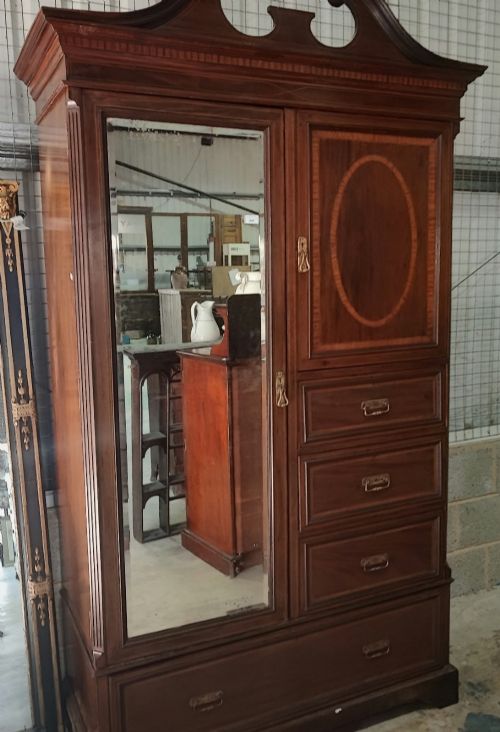
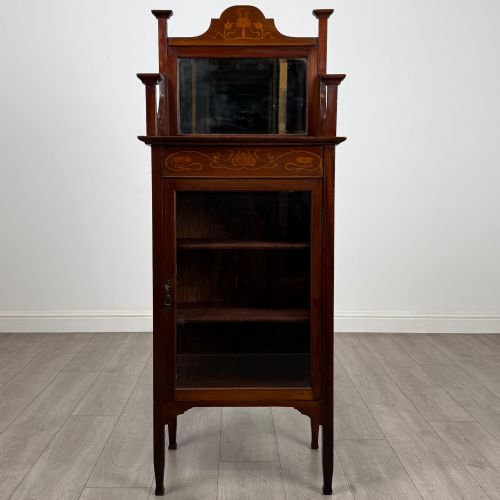
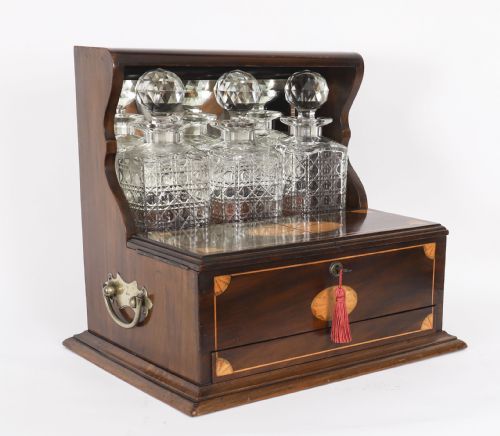
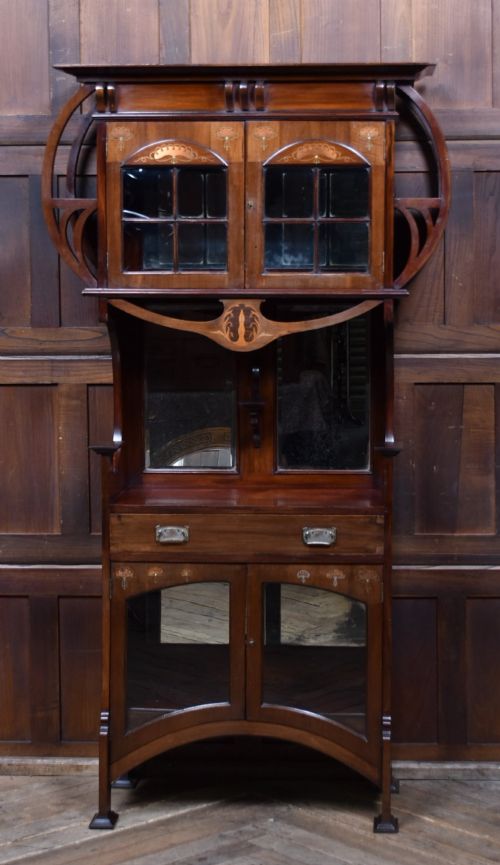
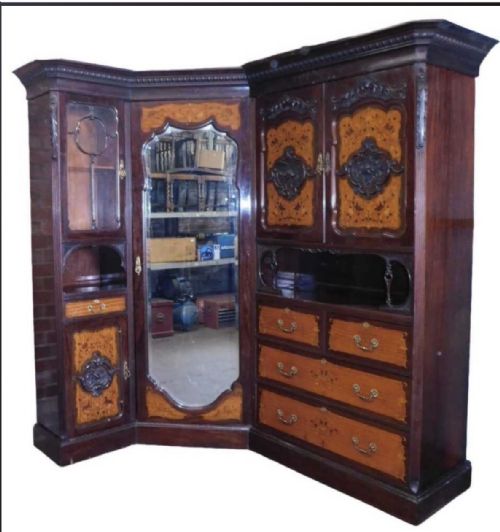


Inlaid Mahogany Mirror Cabinet
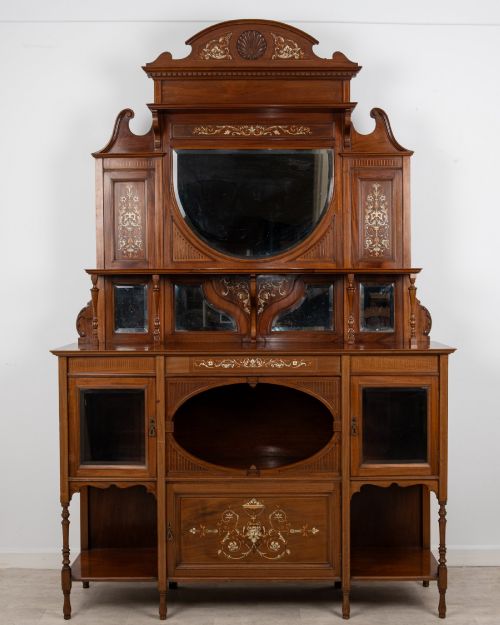
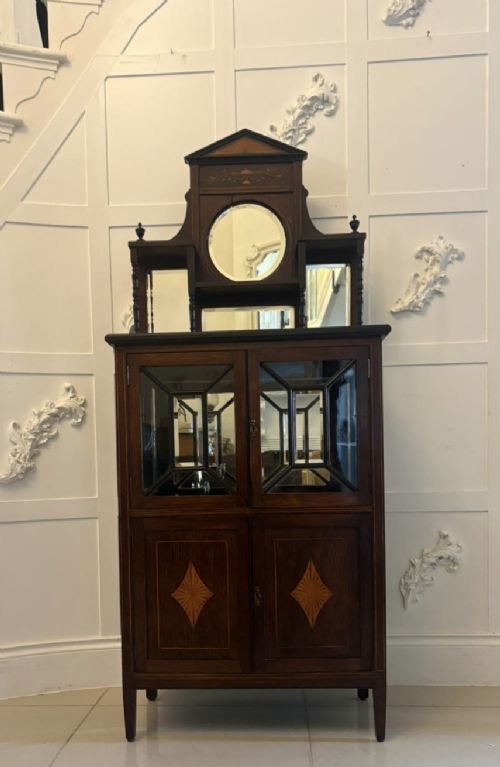
An inlaid mahogany mirror cabinet brings together figured timber and reflective glass to anchor a room.
Inlaid Mahogany Mirror Cabinet
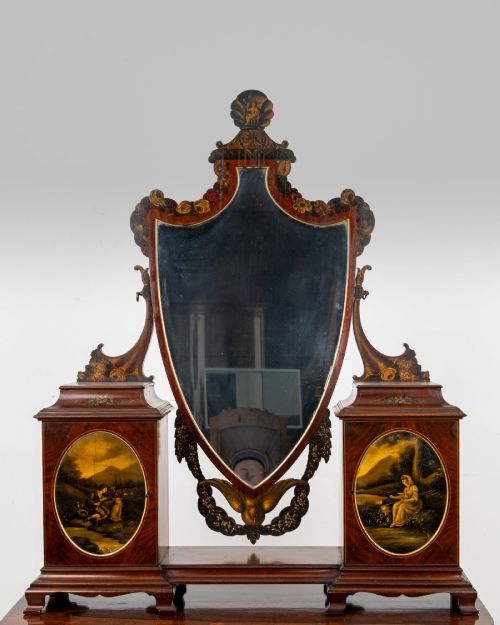
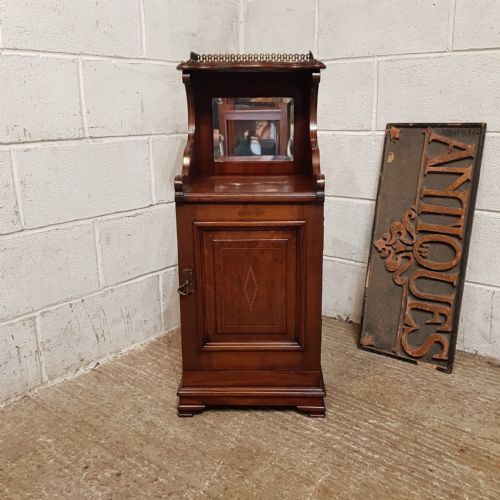
An inlaid mahogany mirror cabinet combines domestic storage with glass and decorative woodwork, appearing primarily across Victorian and Edwardian periods. These pieces serve functions ranging from display cabinets and corner units to dressing tables and compactum wardrobes.
The selection on this page leans heavily toward Edwardian and late Victorian iterations, often featuring satinwood inlay and mirror backs. Makers incorporated glazed doors, drop centres and bow fronts to suit the refined tastes of urban parlours and bedrooms.
How they were made
Cabinetmakers constructed these forms using solid mahogany and carefully selected veneers, applying satinwood and wood inlay in geometric or floral motifs. Brass hardware often secured doors, drawers and compartments.
Mirrors were integrated into back panels, pediments and table tops, reflecting light and adding depth to the room. Workshops utilised traditional joinery alongside marquetry techniques to bind contrasting timbers.
Periods represented span from the late nineteenth century through the Edwardian era and into nineteen-ten.
What varies in quality
The sophistication of the timber figure and the precision of the satinwood inlay set finer examples apart. Crisp execution in floral marquetry and well-figured mahogany grain indicate higher workshop standards.
Structural integrity and the clarity of the mirror glass dictate overall merit. Pieces retaining original brass fittings and undamaged veneer work demonstrate superior preservation.
Edwards and Roberts·Maple and Co·Gillows
The Inlaid Mahogany Mirror Cabinet Glossary
- Compactum wardrobe
- A large fitted wardrobe combining hanging space, drawers and shelving. These pieces maximise storage within a single footprint.
- Marquetry
- The art of applying pieces of veneer to a structure to form decorative patterns. Craftsmen utilised contrasting woods like satinwood for visual depth.
- Cheval mirror
- A freestanding full-length mirror mounted on a rotational frame. Smaller versions appear on tabletops alongside jewellery compartments.
- Drop centre
- A recessed middle section within a sideboard or cabinet design. This configuration creates visual variation across the front elevation.
- Tantalus
- A locking drink cabinet holding decanters securely behind a frame. These items frequently incorporate mirrors and games storage.
Inlaid Mahogany Mirror Cabinet: Frequently Asked Questions
Where should I place an inlaid mahogany mirror cabinet?
These cabinets suit reception rooms, hallways or bedrooms where reflective glass can bounce natural light. Pairing them with period upholstery enhances the overall scheme.
Ensure the floor is level so doors and drawers operate smoothly without binding against the frame.
How do I distinguish Victorian from Edwardian examples?
Victorian pieces typically display darker mahogany tones and heavier proportions with dense marquetry. Edwardian designs often appear lighter in feel with refined satinwood inlay.
Reviewing the brass hardware and secondary timbers helps clarify the manufacturing era.
How do I care for the mahogany and mirror glass?
Dust the timber regularly with a dry cloth and apply beeswax sparingly to nourish the grain. Avoid chemical sprays that degrade nineteenth-century polishes.
Clean mirror glass carefully to prevent moisture from seeping behind the silvered backing.
What items were typically stored in these cabinets?
Depending on the form, these pieces held glassware, display ceramics, writing instruments or clothing. Vanity and dressing variations accommodated toiletries and jewellery.
Interior configurations usually reflect the specific domestic function intended by the maker.