
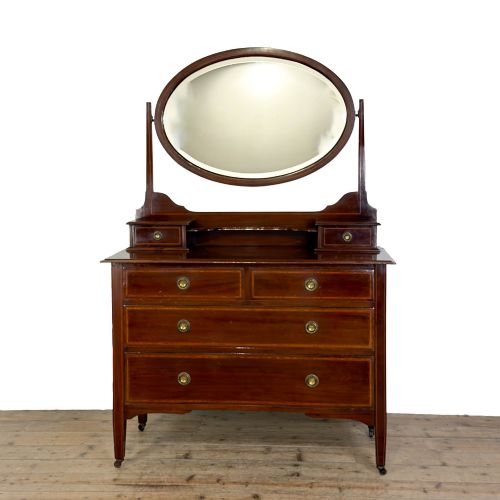


Edwardian Inlaid Vanity Desk
An edwardian inlaid vanity desk brings refined surface detail and compact utility to a room, combining a dressing table and a writing space.
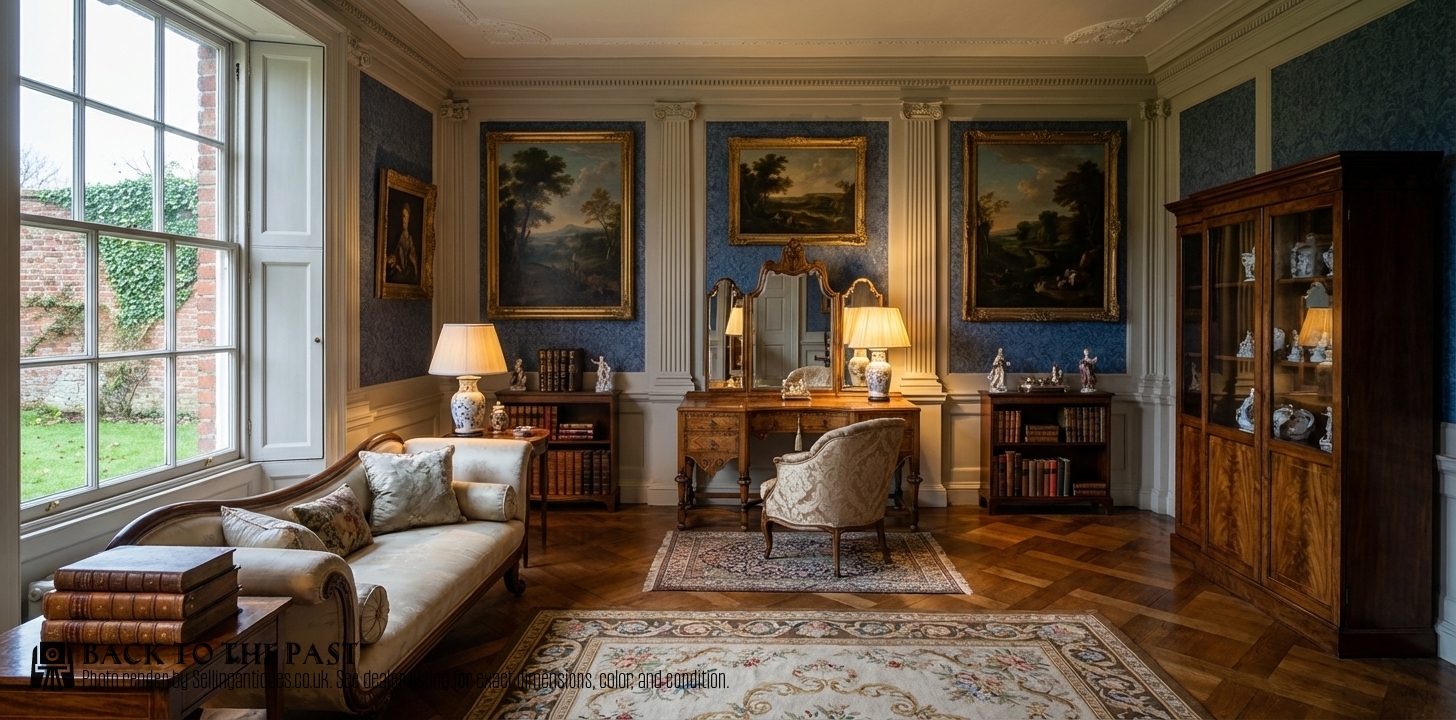
Edwardian Inlaid Vanity Desk
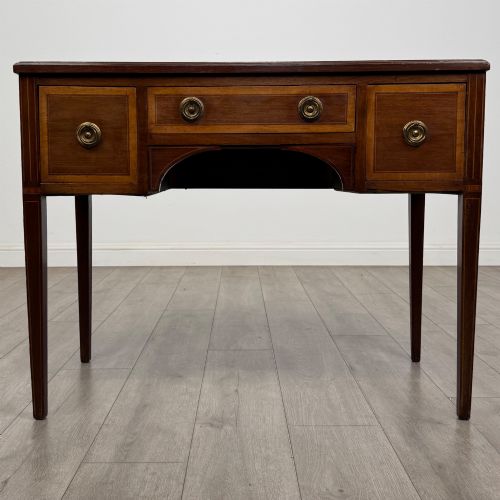
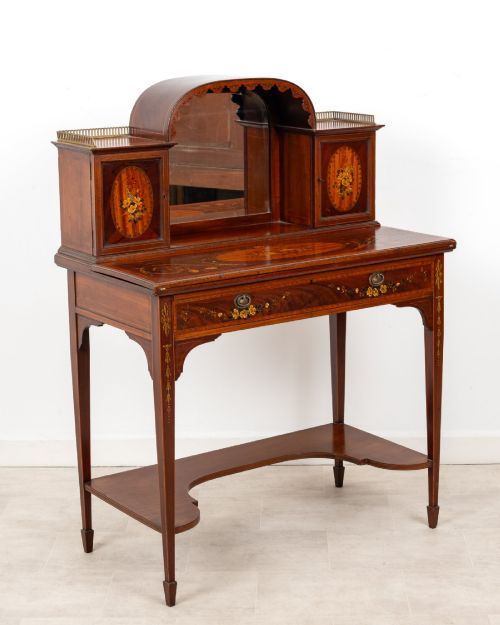
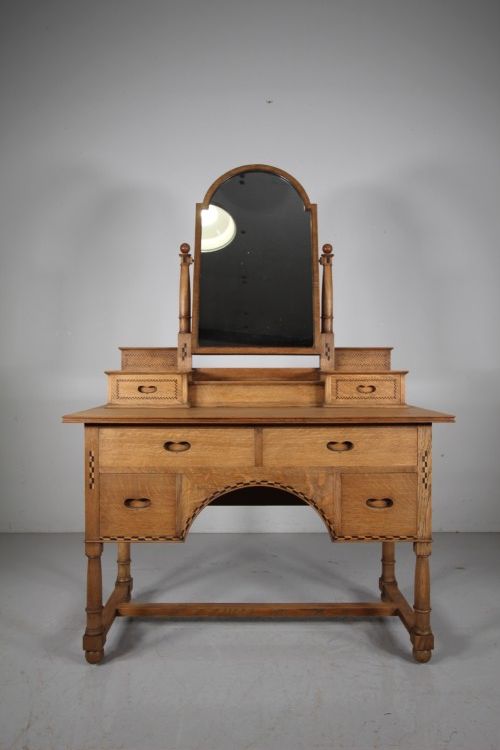
An edwardian inlaid vanity desk merges the functions of a dressing table and a writing desk, typically constructed during the late nineteenth and early twentieth centuries. These pieces frequently appear in forms such as kidney-shaped desks, bonheur du jours, and traditional dressing tables fitted with mirrors and drawers.
The dominant aesthetic draws heavily on Sheraton Revival and neoclassical design vocabulary, favouring light timbers embellished with delicate contrasting stringing and floral motifs. Alongside pieces explicitly from the Edwardian period, buyers will encounter nineteenth-century manifestations including Victorian marquetry examples and late nineteenth-century Georgian style interpretations.
The selection ranges from fitted dressing chests to ladies writing tables and kneehole desks, reflecting the diverse domestic requirements of the era. Woods like mahogany and satinwood provide the primary carcases, often paired with boxwood or rosewood inlay to create geometric and pictorial panels.
Materials and Technique
Cabinetmakers constructed the carcases of an edwardian inlaid vanity desk using dense timbers such as mahogany, walnut, and rosewood, frequently applying satinwood veneers to create bright contrasting surfaces. Boxwood and darker hardwoods were then utilised for delicate stringing, banding, and pictorial marquetry motifs set flush into the timber.
Makers integrated brass handles, galleries, and leather writing inserts to add both utility and decorative contrast to the woodwork. Glass elements appear primarily in the adjustable mirrors attached to dressing tables, while structural framing relied on traditional joinery techniques suited to domestic furniture of the period.
Several examples feature tiny secret compartments hidden behind miniature drawers, perfect for concealing love letters or lost collar studs.
Evaluating Execution
The distinction between standard commercial output and superior cabinet work rests upon the crispness of the inlay and the selection of timber veneers. Finely executed pieces display tightly fitted boxwood stringing and meticulous marquetry without gaps or heavy adhesive residue around the borders.
Structural refinement also dictates worth, visible in the careful shaping of kidney-shaped tops, the symmetry of pedestal arrangements, and the smooth operation of small accessory drawers. Maker attribution, through stamps, labels, or established workshop signatures, further separates standard factory production from documented master craftsmanship.
Edwards & Roberts·Wright & Hunter of Belfast·Gillows·Collinson and Lock·Maples
The Edwardian Inlaid Vanity Desk Glossary
- Inlay
- A technique where pieces of contrasting timber, shell, or metal are inserted into a recessed surface to form a decorative pattern. This method defines the ornamented panels seen on top surfaces and drawer fronts.
- Marquetry
- Elaborate veneer work arranged in pictorial or geometric designs across furniture surfaces. It differs from simple inlay by covering the entire background with fitted wood veneers.
- Bonheur Du Jour
- A light lady's writing desk featuring a small cabinet, set of drawers, or pigeonholes on the upper surface. These refined pieces became popular during the nineteenth and early twentieth centuries.
- Stringing
- Thin strips of contrasting wood embedded in the primary timber to create linear borders and geometric frames. It provides a subtle outline to drawer fronts and tabletops.
- Kneehole Desk
- A domestic desk or dressing table featuring a central recess for the user's legs, flanked by pedestals of small drawers. This configuration allows for compact storage beneath the writing surface.
Edwardian Inlaid Vanity Desk: Frequently Asked Questions
How do I clean the wood surface?
Dust the mahogany or satinwood regularly with a soft, dry cloth to prevent particulate buildup on the delicate veneer and inlay.
Avoid using modern liquid polishes or silicone sprays, opting instead for traditional beeswax applied sparingly and buffed to maintain the finish.
Can I use it as a desk?
Many of these pieces were specifically designed for correspondence and light paperwork, featuring integrated drawers and flat writing surfaces.
Ensure the kneehole clearance and writing height suit your chair before committing the piece to daily office work.
How do I identify a Victorian piece?
Victorian examples often display denser, darker mahogany carcases and heavier proportions compared to lighter Edwardian counterparts.
Examine the secondary woods inside the drawers and the style of the marquetry to help determine the manufacturing decade.
Are the mirrors original?
Many dressing tables retain their pivoting glass mirrors supported by upright arms, though replacement glass is common over a century of use.
Look for minor foxing or silvering deterioration in the glass as an indicator of age, alongside matching wood patination on the frame supports.