



Edwardian Inlaid Sofa Table
These pieces, found under edwardian inlaid sofa table, combine practical drop leaves with delicate contrasting wood details for versatile drawing room placement.
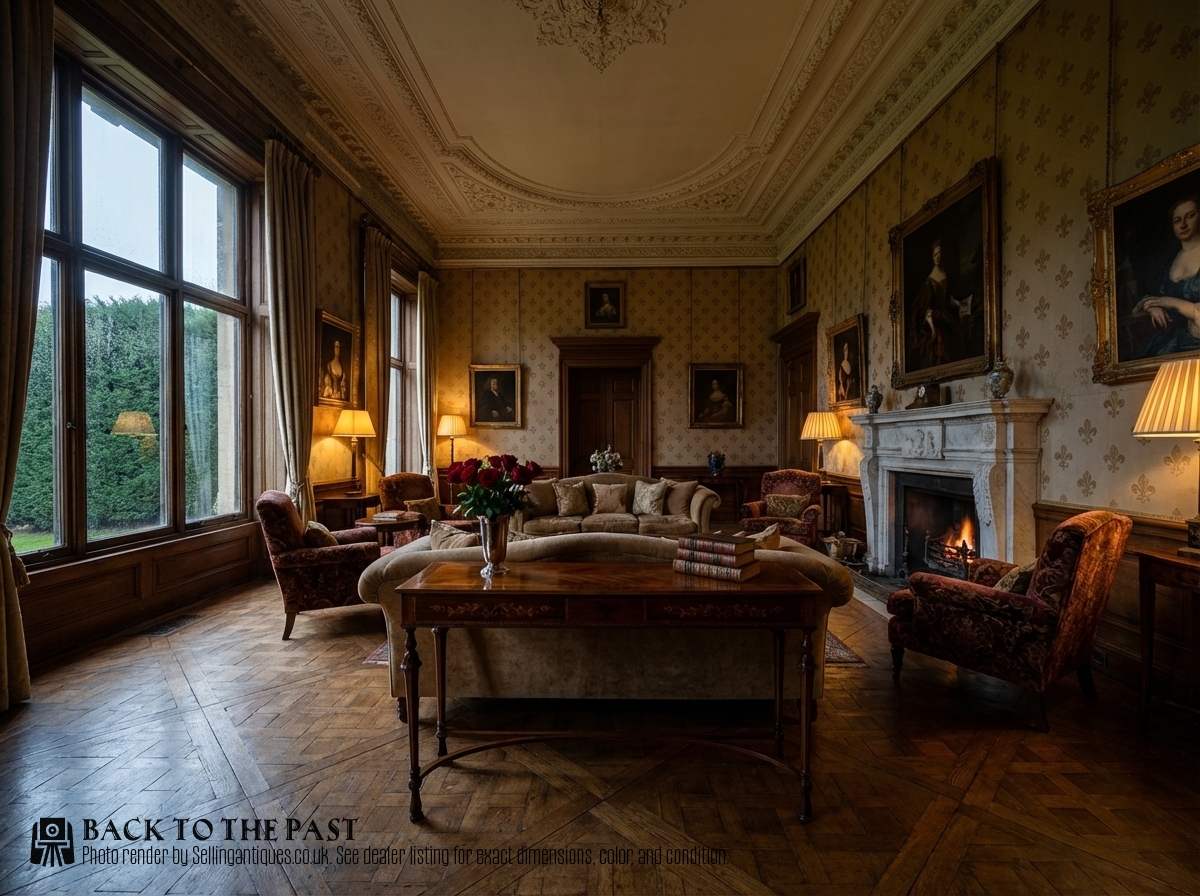
Edwardian Inlaid Sofa Table
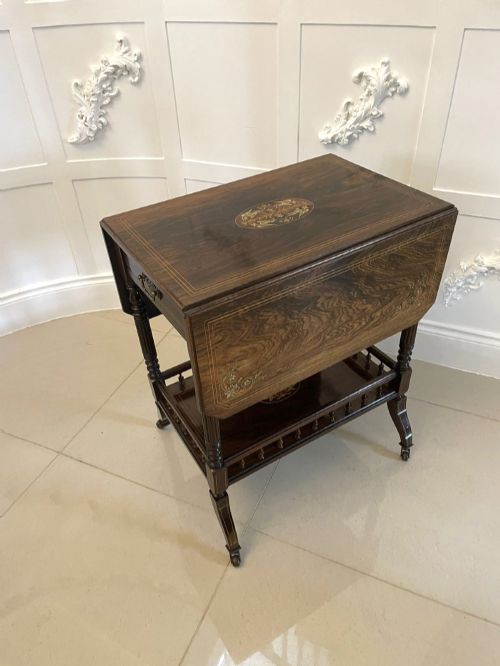
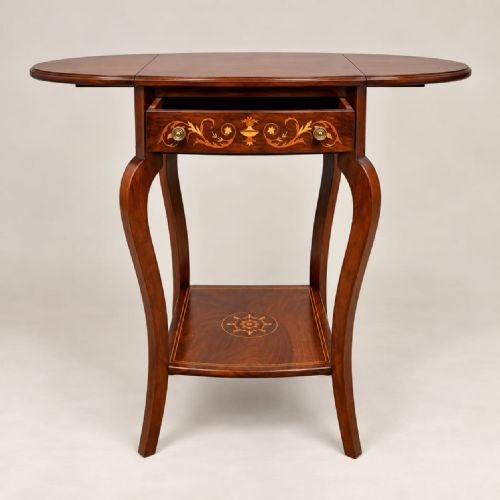
An edwardian inlaid sofa table typically presents a rectangular top flanked by drop leaves, often supported on twin pillar legs or stretcher frames. While the search points firmly towards the Edwardian era, the selection also draws in related nineteenth-century forms.
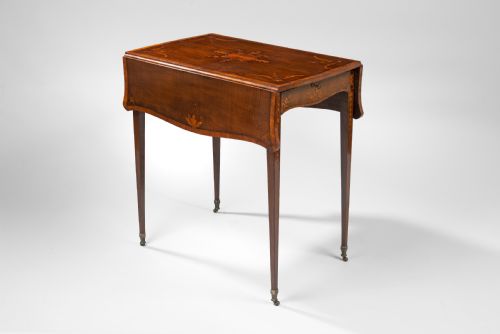
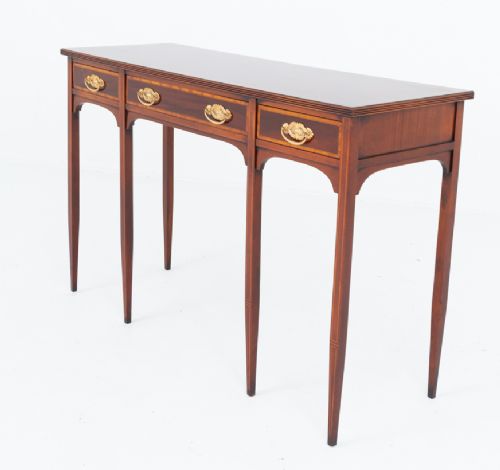
Buyers encounter frequent variations including occasional tables, pembroke tables, and centre tables sharing similar timber and inlay vocabularies. The construction ranges from compact lamp tables to longer freestanding dining variants designed for central room placement.
Mahogany and satinwood predominate among the surviving examples, augmented by walnut and rosewood. These pieces served polite domestic spaces as writing surfaces, work tables, or elegant tea holders.
Materials and construction methods
Cabinet makers utilised solid timbers and selected veneers for surfaces, applying boxwood and other contrasting elements to create intricate marquetry and line inlays. Brass fittings appear frequently on castors, hinges, and drawer pulls.
Drop leaves rely on hinged rule joints or swing brackets that require precise joinery to ensure stability when extended. Polished French finishes highlight the natural grain of the underlying mahogany, walnut, or satinwood.
Some Edwardian tables hide sewing compartments beneath their drop leaves for bygone needlework.
Distinguishing quality across the range
The standard of the timber selection and the crispness of the wood inlay establish the primary division between standard workshop production and finer examples. Sharply defined marquetry and well-matched grain patterns indicate superior craftsmanship.
Structural integrity, including the smoothness of drop leaf mechanisms and the weight of the brass mounts, separates robust pieces from lighter utilitarian items. Original castors and undisturbed patination on the polished surfaces further elevate a piece.
The Edwardian Inlaid Sofa Table Glossary
- Drop leaf
- A table top featuring hinged side flaps that fold down to save space or lift up to extend the surface area.
- Marquetry
- Decorative veneer patterns made from various coloured woods arranged to form pictures or geometric designs.
- Satinwood
- A luminous yellowish timber prized by cabinet makers for contrasting inlays and banded borders.
- Sutherland table
- A narrow drop leaf table with particularly slender leaves that fold down almost vertically.
- Stretcher table
- A table featuring horizontal rails connecting the legs near the base for added structural support.
Edwardian Inlaid Sofa Table: Frequently Asked Questions
What is an edwardian inlaid sofa table used for today?
These tables function well behind sofas, as lamp stands, or as occasional writing desks in living spaces.
Their drop leaves allow them to adapt easily when floor space is tight.
How do I tell an Edwardian piece from a Victorian one?
Edwardian versions generally display lighter satinwood inlays and brighter mahogany tones influenced by Sheraton Revival styles.
Victorian pieces often utilise heavier rosewood or burr walnut with deeper, darker finishes.
Are the drop leaves sturdy enough for daily use?
Original hinged brackets and rule joints provide reliable support for lamps, books, and everyday items.
Care should be taken not to apply excessive downward pressure on the unsupported edges of the leaves.
What woods were commonly used in these tables?
Mahogany forms the structural core of most pieces, accompanied by walnut, rosewood, and satinwood veneers.
Boxwood and various dark timbers provide the fine contrasting lines found in the border inlays.