


Edwardian Inlaid Piano Seat
An edwardian inlaid piano seat brings refined domestic music-making into a room, pairing functional seating with delicate period ornamentation.

Edwardian Inlaid Piano Seat
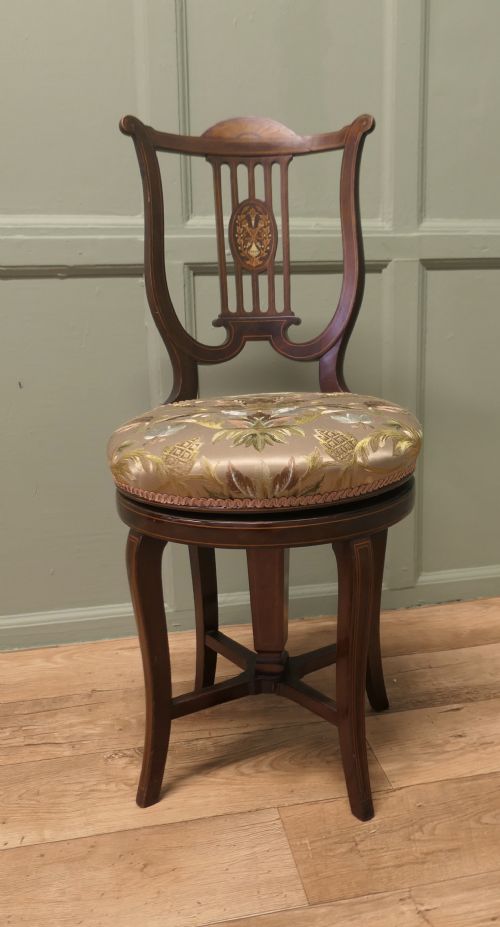
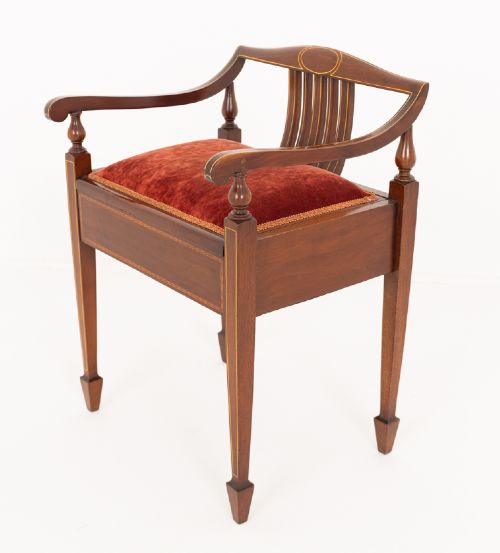
An edwardian inlaid piano seat is a specialised piece of music furniture designed for the keyboard, combining practical utility with the aesthetic refinements of the early twentieth century and the late nineteenth century. These seats appear most frequently as mahogany structures dating from the Edwardian era, 1900, and the Victorian period, incorporating various seating configurations such as box seats with lifting lids, music storage compartments, and revolving mechanisms.
The forms span piano stools, music chairs, and window seats, often reflecting a distinct Sheraton Revival influence in their balanced proportions and upright posture. Collectors frequently encounter pieces featuring X-frames, lyre backs, and rise-and-fall mechanisms that catered to the precise physical adjustments required by musicians of the period.
Originating predominantly from British workshops around the turn of the twentieth century, these seats served parlours and drawing rooms where home entertainment centred on the upright or grand piano. The survival of these pieces demonstrates the high standard of domestic carpentry and design prevalent during the Edwardian period.
Assessing Craftsmanship and Detail
The distinction between standard commercial pieces and finer examples rests upon the precision of the marquetry inlay and the complexity of the timber selection. Subtle stringing executed in boxwood and satinwood requires high levels of joinery skill, distinguishing meticulously planned pieces from simpler production items.
Mechanical integrity defines another tier of quality, particularly in the smooth action of rise-and-fall mechanisms, revolving piano stools, and lifting box seat lids. Original upholstery foundations and robust frame construction using mahogany further elevate the standing of a piece within the surviving repertoire.
The listings show that mahogany remains the dominant timber for these seats, almost exclusively paired with satinwood and boxwood string inlay.
The Edwardian Inlaid Piano Seat Glossary
- Sheraton Revival
- A design style popular around 1900 that reinterprets the classical forms and classical ornamentation associated with eighteenth-century designer Thomas Sheraton. This style emphasises refined geometry, lighter proportions, and delicate contrasting wood inlays.
- Marquetry Inlay
- A decorative technique where small pieces of varied woods and materials are fitted into a veneer to form pictorial or geometric patterns. On these seats, inlay frequently borders the edges or forms central medallions.
- Rise and Fall
- A mechanical adjustment system operated by a central screw mechanism that allows the seated musician to alter their height. This function was essential for proper posture at the keyboard.
- X-Framed
- A structural form where the legs cross in the shape of an X to support the seat platform, offering both rigidity and a distinct classical silhouette. It appears on both fixed and storage stool variations.
- String Inlay
- Very thin lines of contrasting timber embedded into grooves cut into the primary wood surface. This technique outlines panels and borders, adding linear definition to mahogany surfaces.
Edwardian Inlaid Piano Seat: Frequently Asked Questions
What is an edwardian inlaid piano seat used for?
These seats provided comfortable and adjustable seating for pianists and vocalists during practice and performance in the home. Many incorporated internal storage compartments beneath lifting lids to hold sheet music and scores.
Today, they function equally well as standalone occasional chairs, dressing table seats, or window seats in living spaces and bedrooms.
How do I identify an Edwardian piano stool?
Edwardian piano stools typically feature mahogany frames, often enhanced with satinwood or boxwood string inlay and Sheraton Revival design motifs. They frequently include functional elements like music storage boxes, lifting seats, or revolving mechanisms.
Construction details, timber patination, and the specific use of period upholstery fabrics help distinguish these early twentieth-century pieces from later reproductions.
Did all piano seats have music storage?
Not all piano seats included storage compartments, as the inventory encompasses a variety of forms including revolving music chairs, X-framed stools, and simple upholstered benches. Box seat variants specifically featured hinged lids that opened to reveal fitted compartments for organising sheet music.
The presence of storage depended on the intended placement and the specific preference of the original purchaser.
How do I care for the inlaid wood?
Maintaining the wood and inlay requires keeping the piece away from direct sunlight and sudden temperature fluctuations that can dry out the timber. Regular dusting with a soft, dry cloth preserves the polished mahogany surface without harming delicate stringing.
Applying traditional wax polish occasionally helps nourish the wood and maintain the natural lustre of the period finish.