
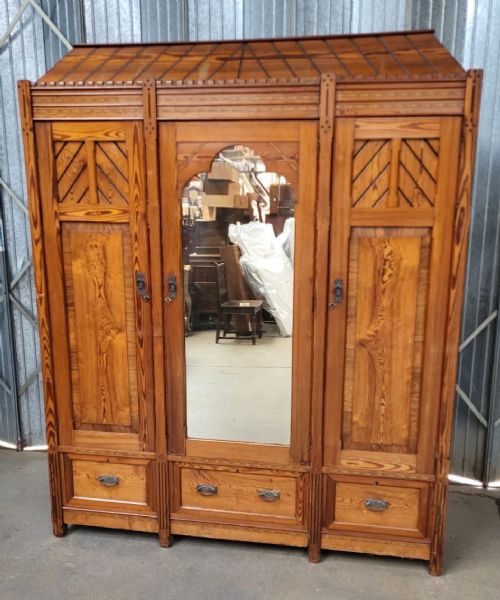
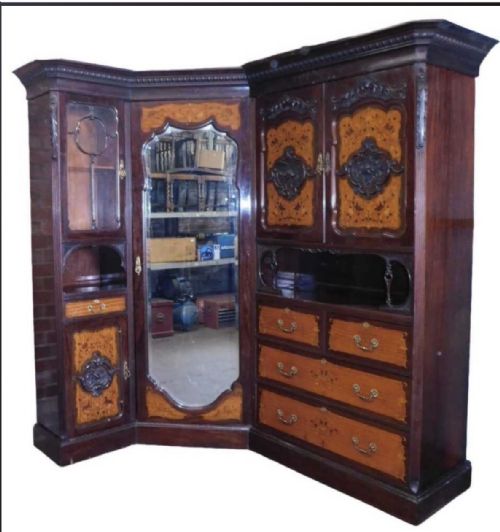


Edwardian Inlaid Compactum
An edwardian inlaid compactum combines generous wardrobe hanging space with fitted drawers and cupboards in a single substantial bedroom piece.
Edwardian Inlaid Compactum
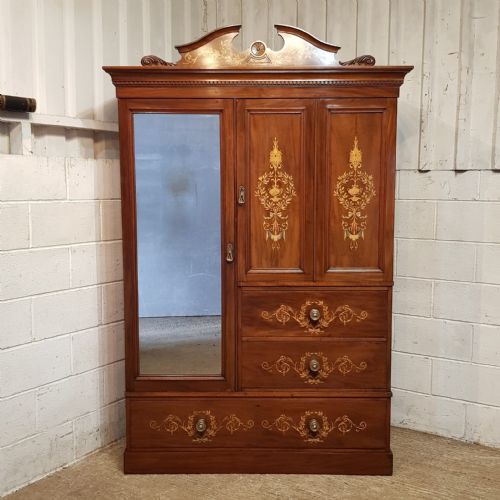
An edwardian inlaid compactum represents a sophisticated development in bedroom furniture, appearing predominantly around nineteen hundred in response to demands for efficient domestic storage. These combination wardrobes integrate hanging sections with interior drawers, linen presses, and compartments behind panelled or mirrored doors.
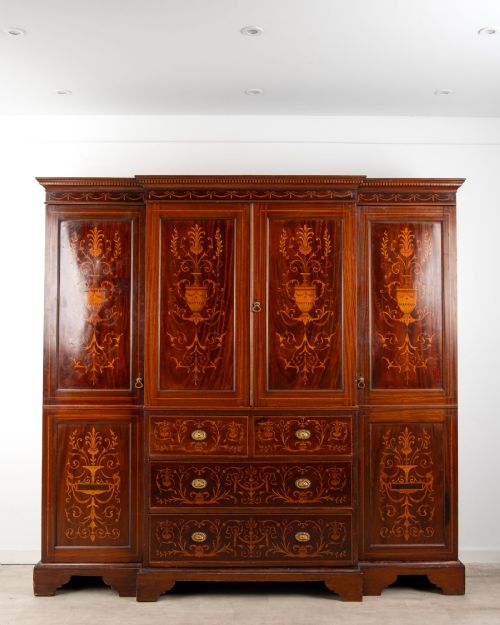
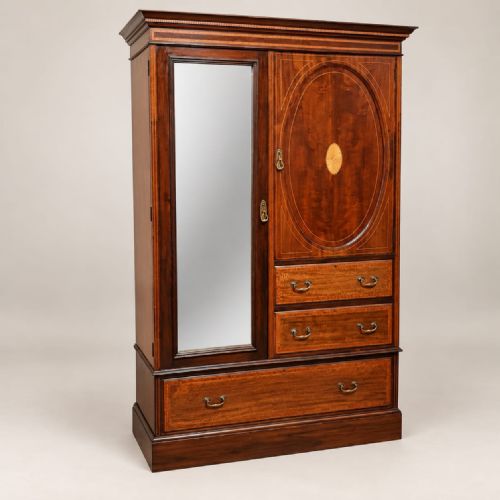
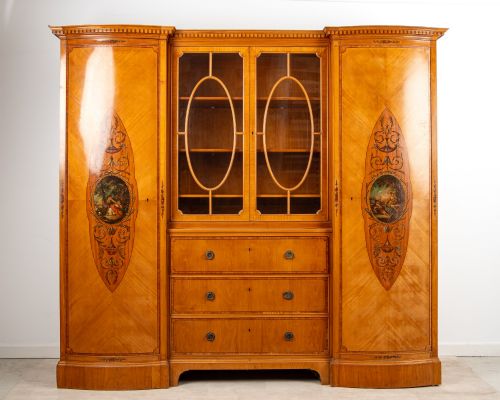
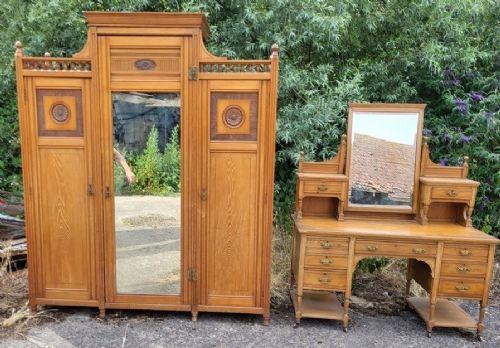
The pieces seen here span the late nineteenth century into the edwardian era, drawing on victorian proportions and the lighter aesthetics of the sheraton revival and arts and crafts movements. Mahogany and satinwood predominate, frequently enhanced by contrasting wood inlay and marquetry detailing.
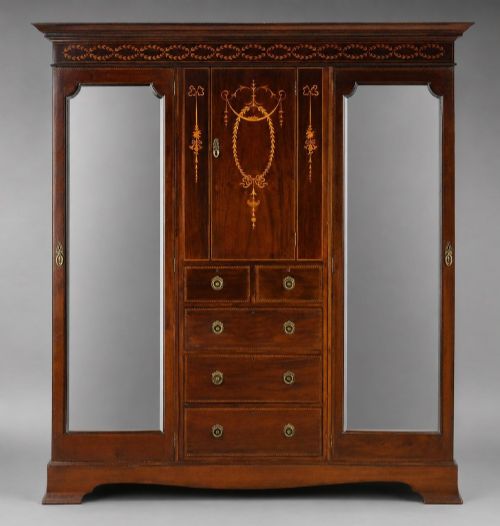
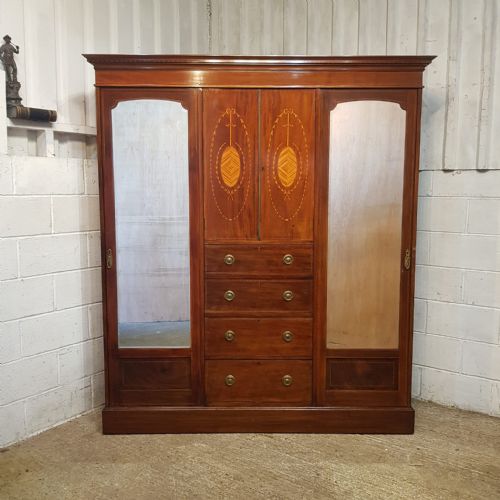
The typical layout consists of flanking hanging compartments bridged by a central tower of drawers or shelving, often surmounted by a moulded cornice. Tall proportions require careful positioning in modern interiors while offering exceptional internal capacity.
Materials and Construction
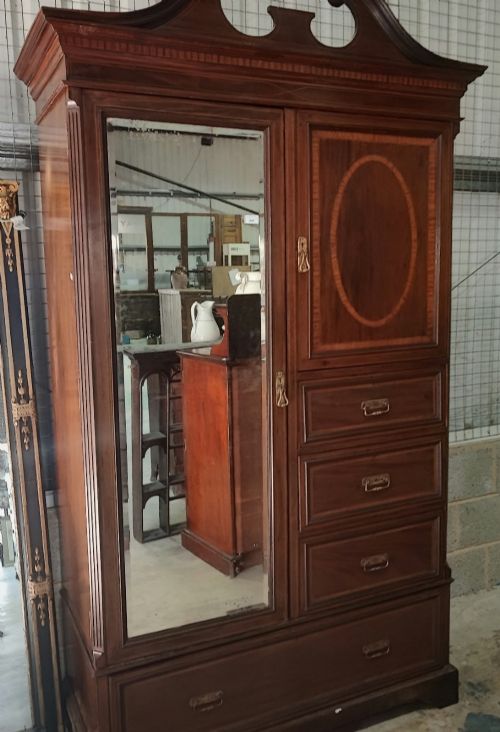
Cabinet makers utilised solid timbers and stable veneers, framing mahogany and oak carcasses with panels of satinwood, rosewood, and pitch pine. Brass fittings secure the doors and internal mechanisms, while bevelled mirror glass frequently forms the centre panels.
Inlay and marquetry techniques applied contrasting wood veneers to geometric and neo-classical motifs, creating decorative panels without compromising the structural integrity of the doors and friezes. Hand-painted panels occasionally supplement the wood inlays on select examples.
Finding forgotten collar studs and antique ticket stubs tucked behind internal drawers remains a charming ritual of unboxing these wardrobes.
Design and Execution
Differentiation across the range rests on the complexity of the internal configuration and the precision of the timber selection. Comprehensive fitted interiors with original linen trays and matching brass hardware denote higher workshop standards.
The finesse of the inlay work and the depth of the mahogany figuring separate standard production from superior cabinet making. Pieces bearing maker stamps indicate workshops employing skilled artisans for specialised carving and marquetry.
Edwards and Roberts·Shapland and Petter·Maple and Co·Gillows of Lancaster
The Edwardian Inlaid Compactum Glossary
- Compactum
- A multi-functional wardrobe combining hanging space, drawers, and shelving within a unified architectural carcass. This design maximises bedroom storage efficiency.
- Marquetry
- The art of forming decorative patterns using fitted veneers of various woods and materials. It creates intricate pictorial or geometric designs on wardrobe doors.
- Crossbanding
- A border of veneer laid around the perimeter of a panel with the grain running perpendicular to the centre. This technique frames the primary wood surface.
- Cornice
- The moulded projection finishing the top of a cabinet structure. It provides an architectural cap to tall wardrobe forms.
- Breakfront
- A cabinet design where the central section projects forward from the flanking wings. This creates depth and shadow across the facade.
Edwardian Inlaid Compactum: Frequently Asked Questions
How do I dismantle an edwardian inlaid compactum?
These large wardrobes typically separate into distinct modular components including a cornice, a base, flanking wardrobes, and a central section. Removing the doors and unscrewing internal bolts allows for manageable transport.
Keeping track of original screws and numbering the dismantled panels ensures straightforward reassembly in a new room.
What is the difference between a wardrobe and a compactum?
A standard wardrobe provides primarily vertical hanging space behind doors, perhaps with a single long drawer beneath. A compactum integrates extensive drawer stacks, linen slides, and shelving alongside the hanging compartments.
This multi-purpose internal arrangement was designed to hold an entire wardrobe of clothing within one unified piece of furniture.
How should I care for satinwood inlay?
Satinwood and delicate inlay work require protection from direct sunlight to prevent fading and drying of the fine veneers. Applying a microcrystalline wax periodically nourishes the wood without building up heavy residues.
Avoiding placement near heat sources prevents timber shrinkage and subsequent lifting of the delicate stringing and marquetry.
How do I identify a sheraton revival piece?
Sheraton revival furniture borrows classical eighteenth-century motifs such as urns, swags, and bellflowers executed in contrasting wood inlays. The overall silhouette remains restrained, symmetrical, and elegant.
Mahogany foundations accented with satinwood banding and subtle stringing are characteristic hallmarks of this aesthetic.