

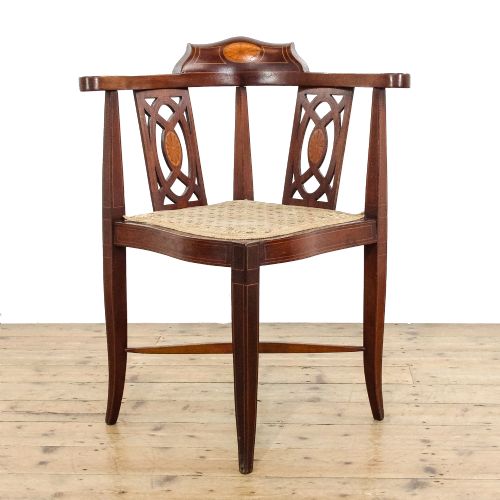
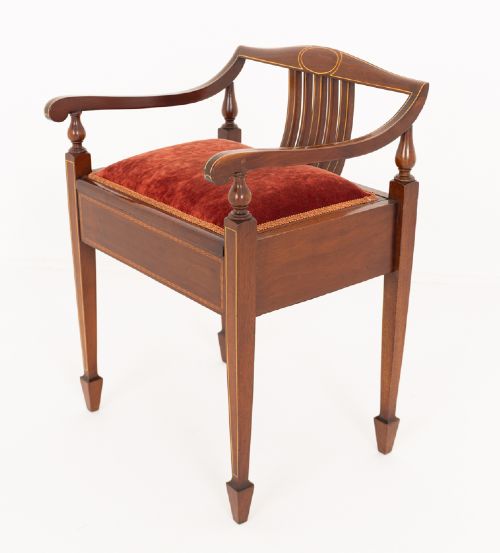
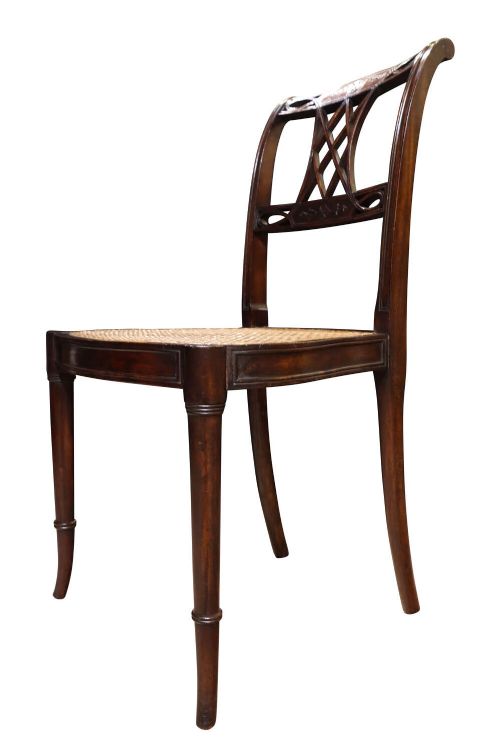
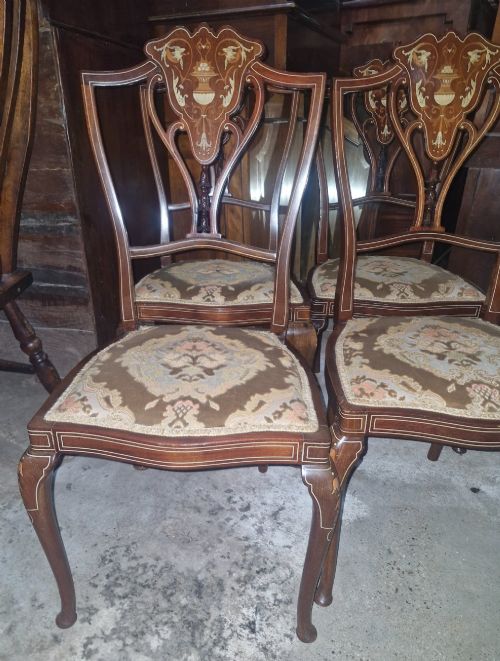
Edwardian Inlaid Chair
An edwardian inlaid chair brings refined woodwork and delicate decorative motifs into a room, offering both practical seating and distinct period charm.
Materials and Construction
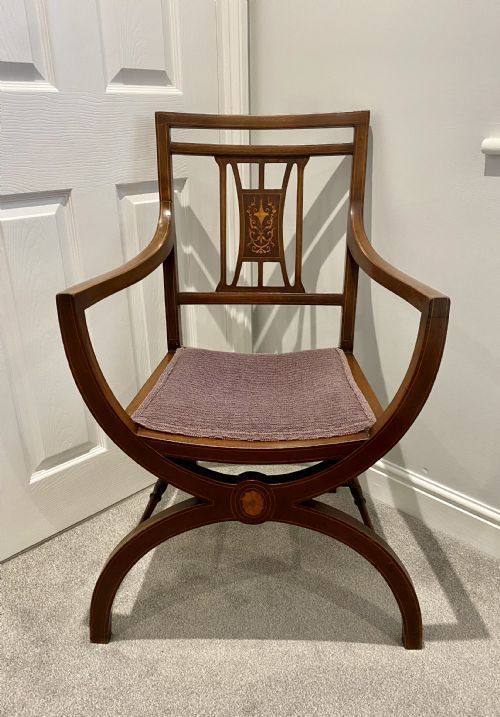
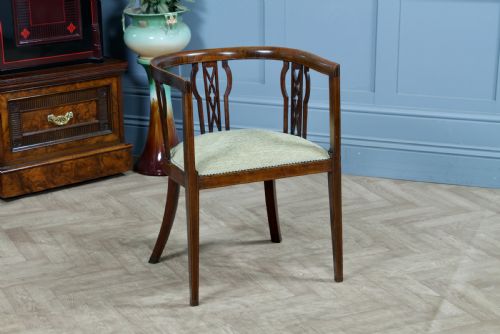
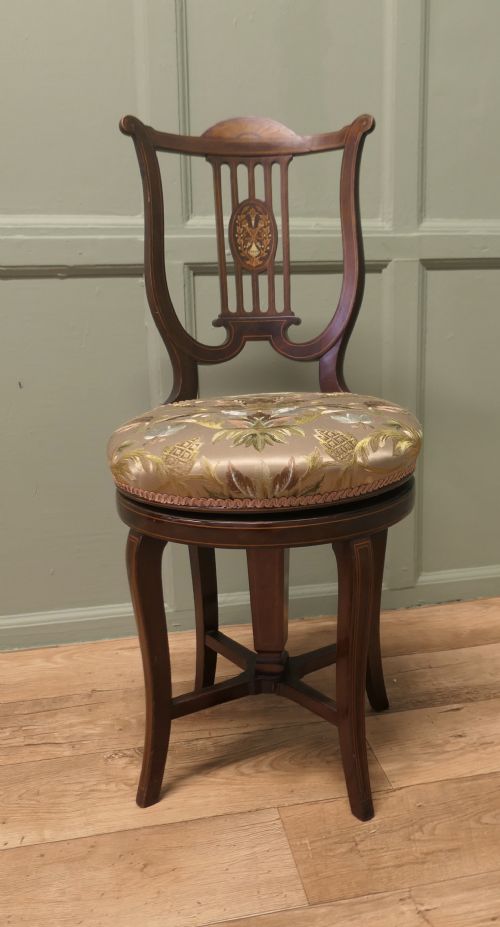
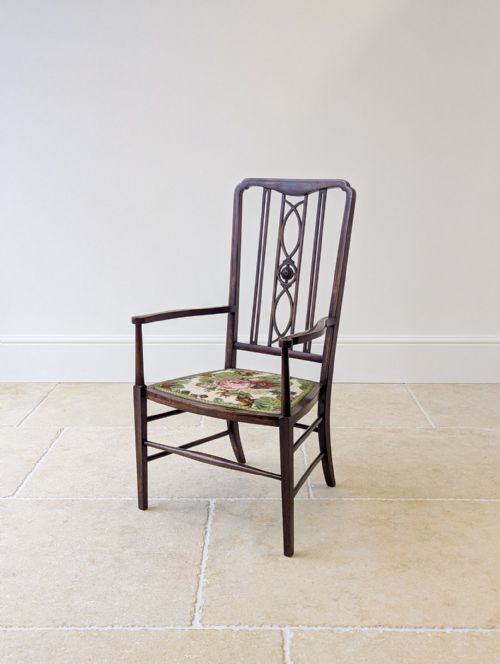
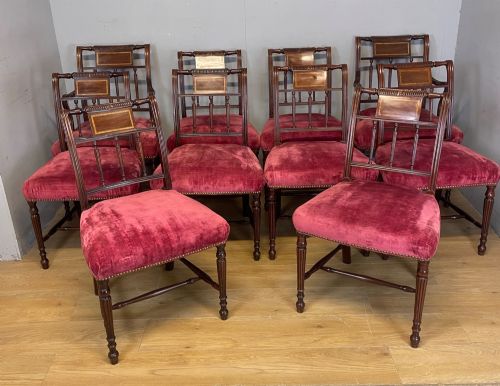
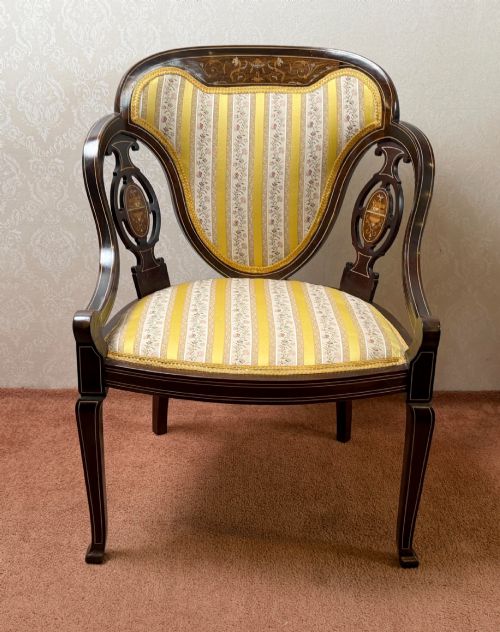
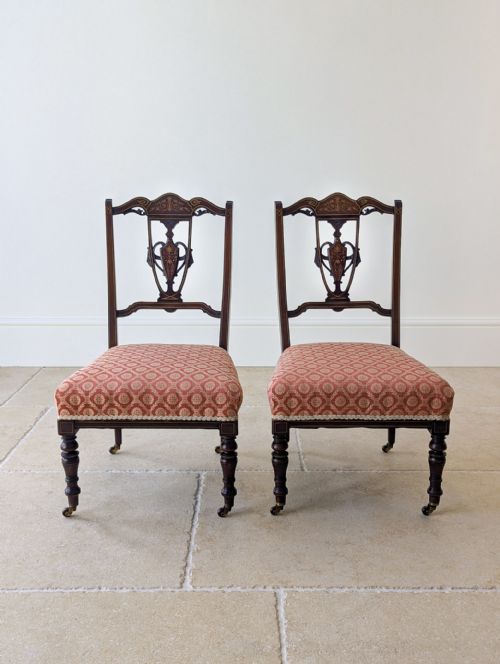
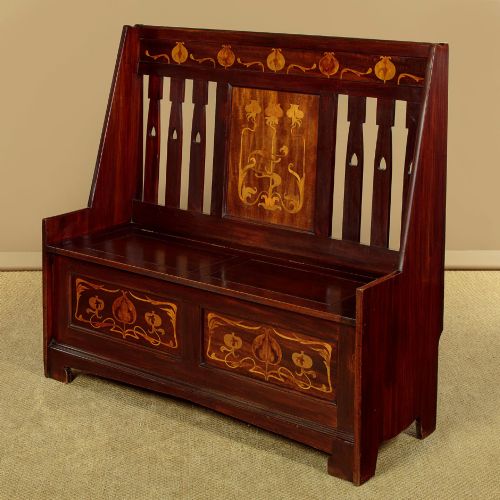
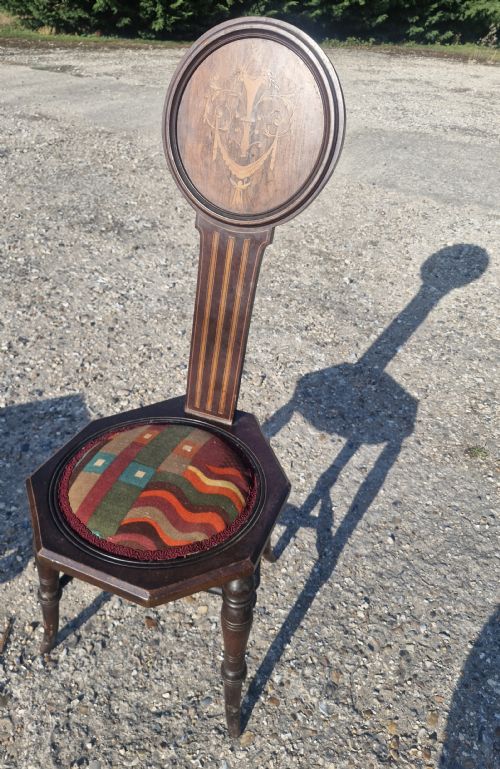
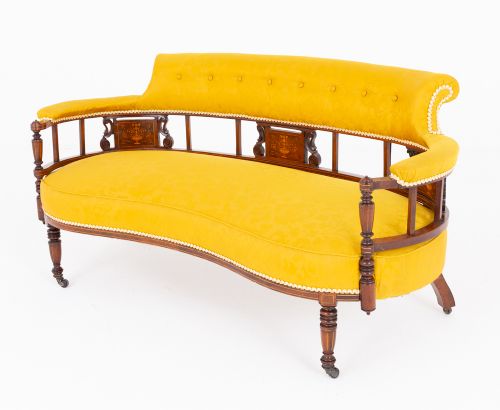
Makers built these pieces primarily using solid mahogany, rosewood, and walnut as structural timbers, frequently applying satinwood and boxwood veneers for decorative contrast. Artisans incorporated marquetry and string inlay techniques to pattern the timber surfaces with floral motifs, urns, and linear banding.
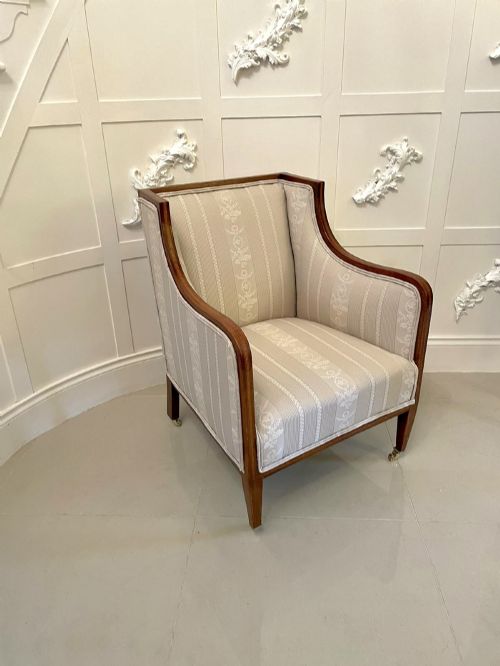
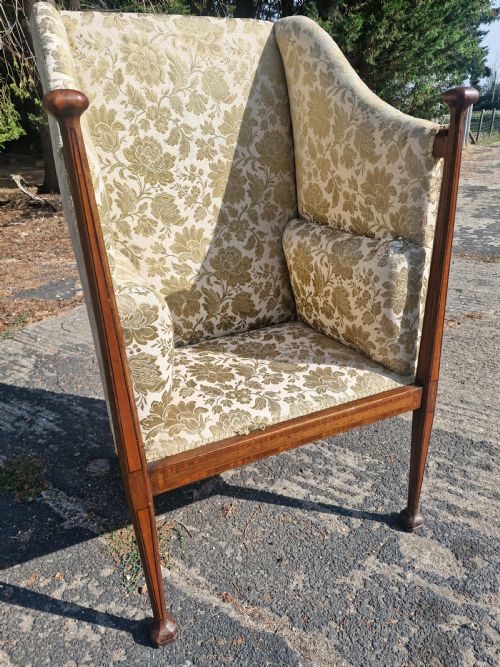
Upholstery played a central role in construction, with seating surfaces padded and covered in materials like fabric, velvet, and leather. Certain specialised forms utilised cane work for seats or incorporated brass details such as castors and handles.

Assessing Quality
Quality rests heavily on the precision of the timber inlay and the crispness of the surrounding woodwork, where neatly fitted contrasting veneers distinguish finer workshops from simpler commercial production. The integrity of the frame construction and the choice of primary timbers, such as dense mahogany or figured satinwood, further separate standard examples from exceptional ones.
The survival of original upholstery materials and the subtlety of stylistic details, such as carved splats or harmonious proportions in revival forms, elevate certain pieces. Chairs that retain their structural stability alongside intact decorative marquetry represent the upper tier of the range.
Edwardian Inlaid Chair Retail Price Guide 2026
Typical asking prices for edwardian inlaid chair among the pieces listed under this phrase on Sellingantiques today, from the lower quarter to the upper quarter. They describe what is for sale here now, not the wider market.
Pieces span from the late nineteenth-century Victorian and Arts and Crafts periods through to the Edwardian era and the nineteen-twenties.
James Shoolbred & Co·Cowtan & Sons
The Edwardian Inlaid Chair Glossary
- Marquetry
- Form of inlay that applies pieces of veneer to a structural panel to form decorative pictures or patterns. It often depicts floral arrangements or classical motifs across chair backs.
- Satinwood
- Hard, yellowish timber prized for its smooth grain and reflective surface. Makers used it extensively for contrasting inlay work against darker woods like mahogany.
- Sheraton Revival
- Design movement drawing inspiration from the late eighteenth-century neoclassical work of George Sheraton. These pieces typically feature tapered legs, delicate stringing, and balanced geometric proportions.
- Bergere
- Fully or partially upholstered armchair featuring woven cane panels on the back and sides. This French-inspired form appeared frequently in comfortable domestic seating.
Edwardian Inlaid Chair: Frequently Asked Questions
How do I identify an Edwardian inlaid chair?
Look for light wood stringing and marquetry motifs set into mahogany or satinwood frames, reflecting the lighter aesthetic of the early twentieth century. These details often accompany tapered legs and slender structural proportions.
Compare the construction methods and wood ageing with standard period indicators, keeping in mind that nineteenth-century revival pieces share similar decorative vocabularies.
Were these chairs used for dining or sitting?
They served multiple functions across the home, appearing as dedicated dining sets, bedroom chairs, and occasional seating for salons. Different forms catered to specific rooms, from desk chairs to nursing chairs.
Armchairs and corner chairs provided comfortable seating for studies and parlours, while lighter side chairs complemented larger dining tables.
What is Sheraton Revival style?
Sheraton Revival refers to late Victorian and Edwardian interpretations of eighteenth-century neoclassical furniture designs. These pieces emphasise symmetry, straight tapered legs, and delicate contrasting inlays.
Craftsmen drew upon pattern books from the earlier period while adapting proportions and construction methods for contemporary Edwardian homes.
How should I care for inlaid wood?
Keep wooden surfaces away from direct sunlight and sudden temperature shifts to prevent the delicate veneer and stringing from lifting. Regular dusting with a soft, dry cloth preserves the polished finish without harming the inlay.
Avoid placing moisture-holding items directly on the timber and maintain stable indoor humidity to protect both the wood and any attached fabric upholstery.