
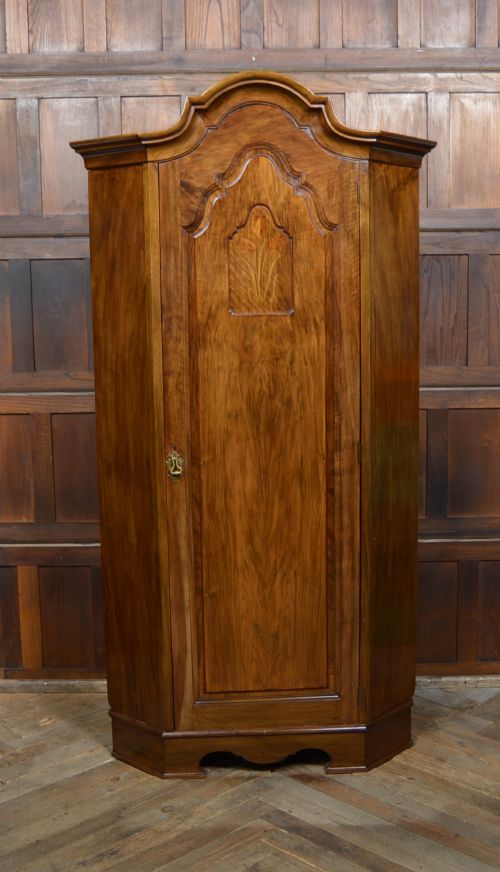
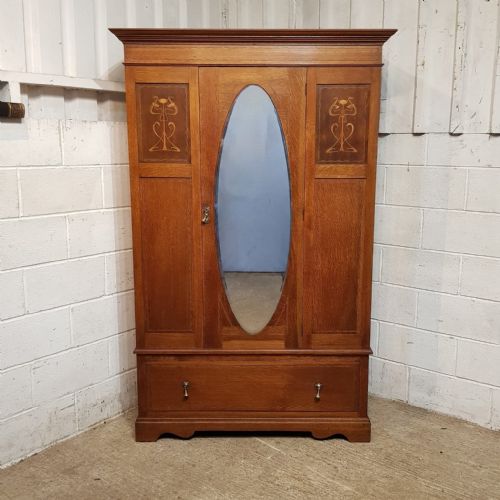
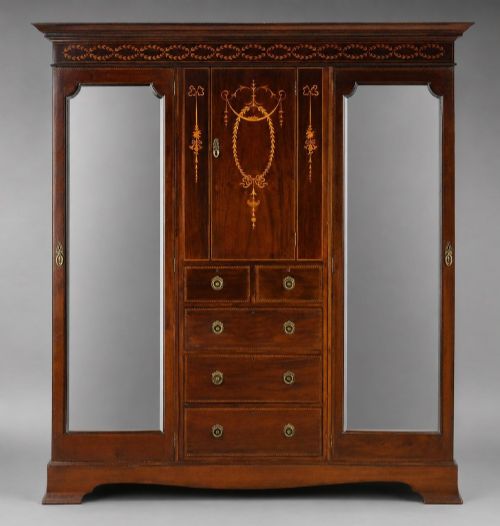
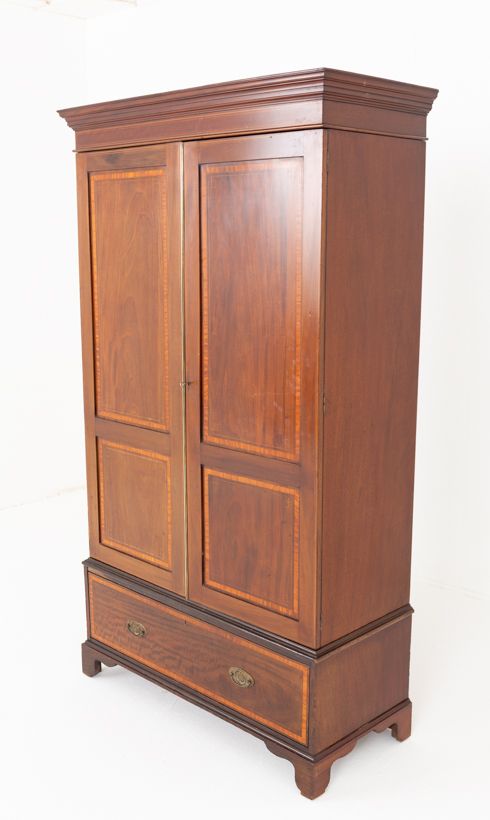
Edwardian Inlaid Armoire
An edwardian inlaid armoire brings generous proportions and precise decorative detail to a bedroom, combining large storage capacity with refined cabinetwork.
Edwardian Inlaid Armoire
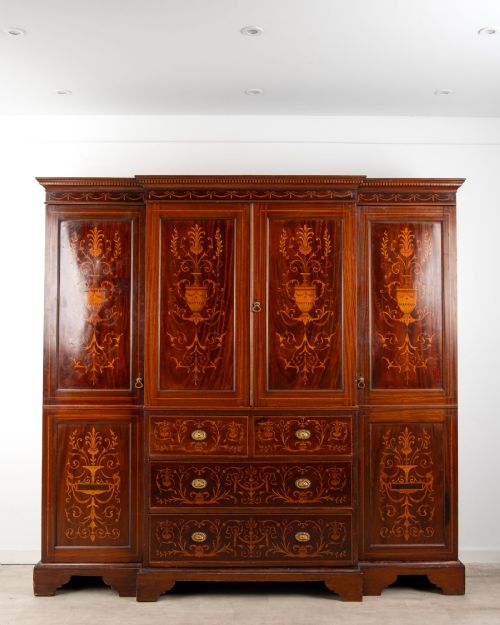
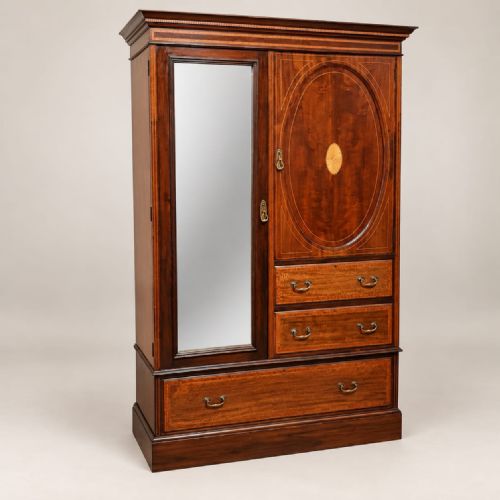
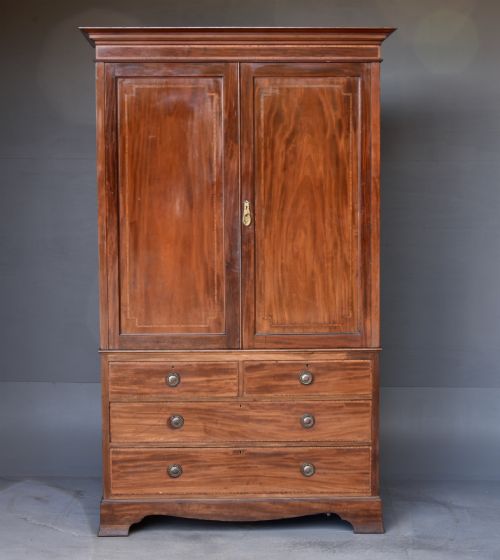
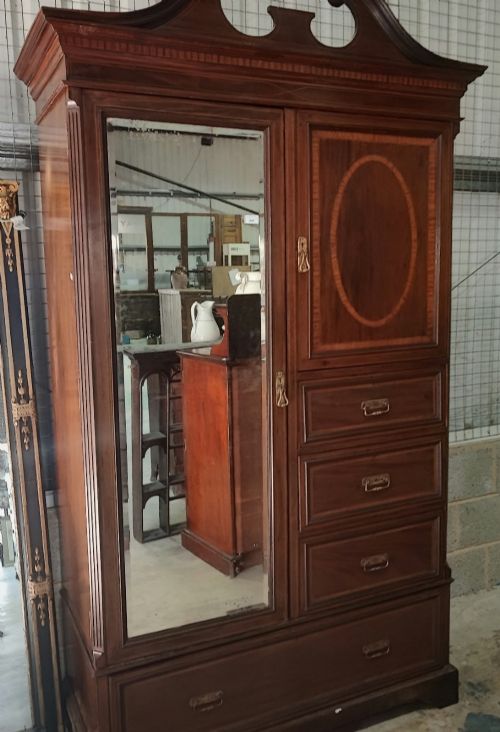
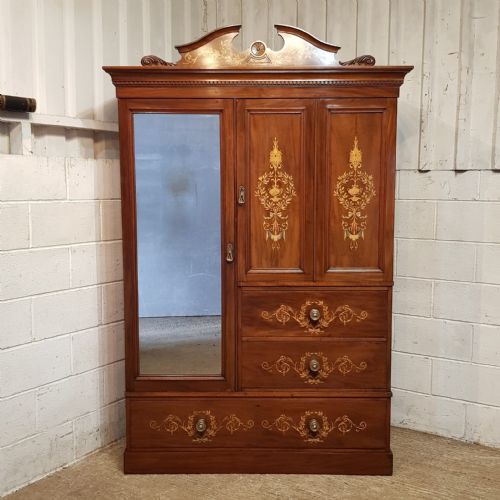
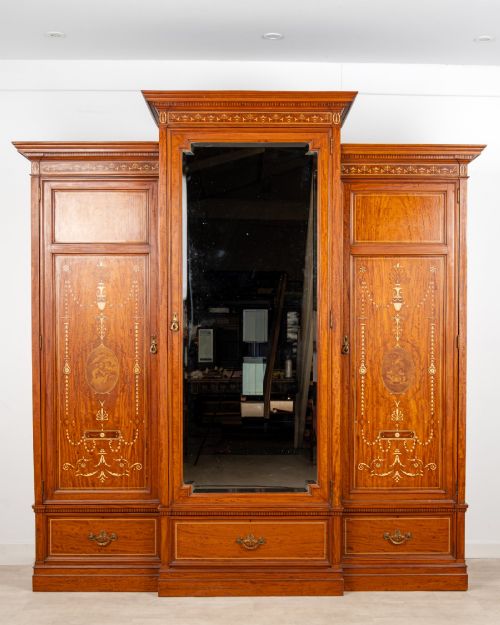
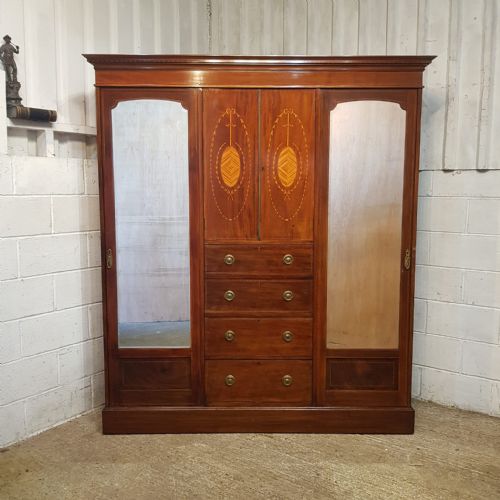
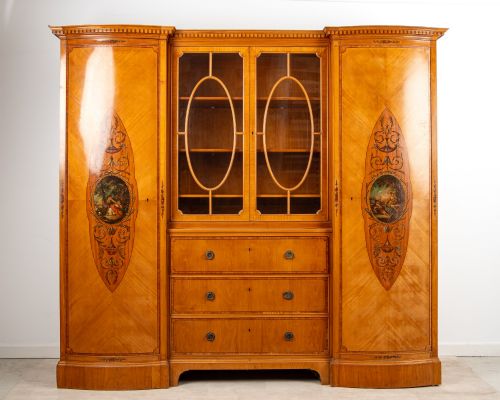
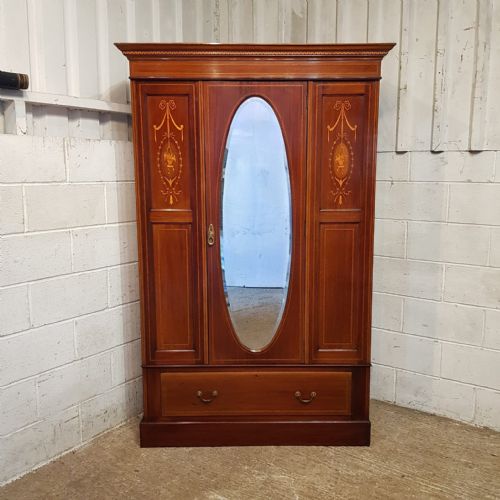
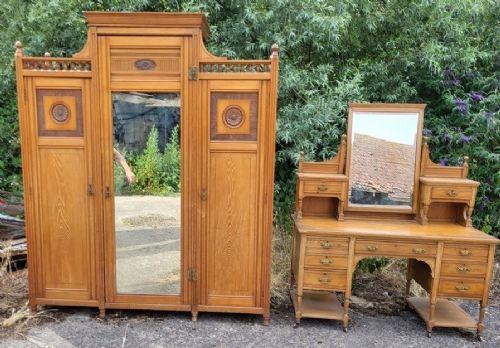
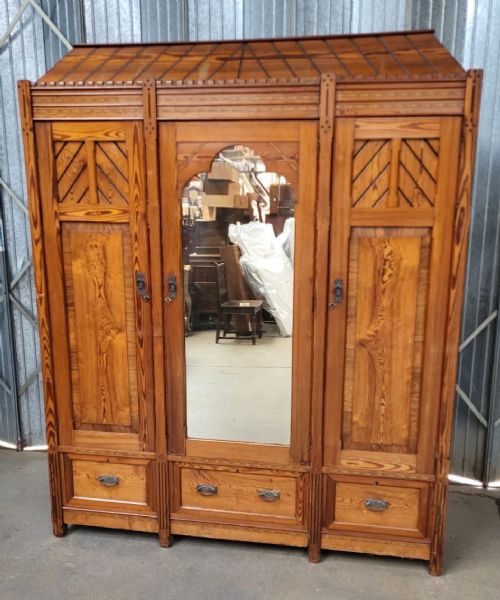
An edwardian inlaid armoire typically manifests as a substantial mahogany, satinwood or walnut wardrobe designed for principal bedrooms. These tall pieces frequently incorporate hanging compartments, internal drawers, linen presses and mirrored doors.
While many examples originate from the Edwardian period and circa nineteen hundred, the selection extends to late Victorian pieces sharing the same aesthetic of fine woodwork. Buyers encounter single door compactums, double wardrobes and expansive triple sections with satinwood inlay.
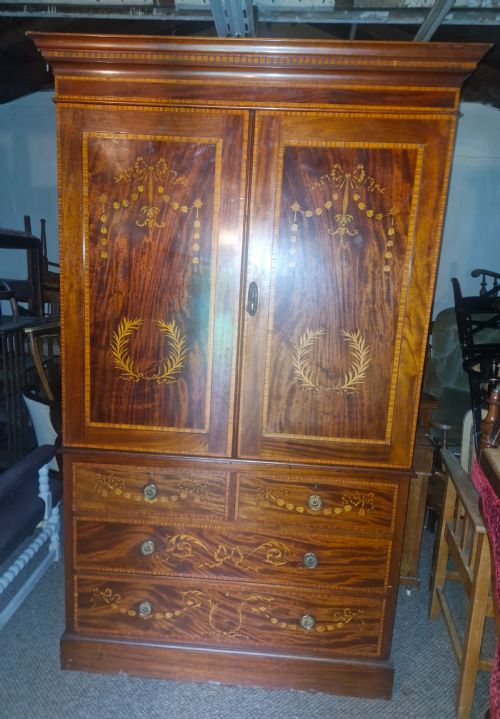
Cabinetmakers of the era drew heavily on Sheraton Revival and Neo-Classical vocabulary, applying delicate boxwood and contrasting wood stringing to architectural facades. The resulting furniture balances functional domestic storage with ornate decorative presence.
What varies in quality
The standard of an edwardian inlaid armoire rests upon the crispness of the cabinetmaking and the complexity of the timber selection. Master workshops such as Maple and Company or Edwards and Roberts employed dense mahogany and finely figured satinwood veneers that remain intact and stable.
Detailing differentiates standard production from exceptional pieces, particularly the precision of the boxwood inlay and the execution of carved mouldings. Pieces featuring fitted internal drawers, linen slides and original bevelled mirror glass represent the upper tiers of craftsmanship.
maples & co·edwards and robert·shapland & petter·druce & co.·wylie lochhead·gillows of lancaster
The Edwardian Inlaid Armoire Glossary
- Compactum
- A multi-compartment wardrobe combining hanging space, linen drawers and shelves within a single unified piece of furniture.
- Inlay
- A decorative technique where contrasting strips or pieces of wood are fitted into recesses flush with the surrounding surface.
- Sheraton Revival
- A late nineteenth and early twentieth century design movement replicating the lighter, neoclassical furniture forms of the eighteenth century.
- Linen Press
- A tall storage cabinet featuring sliding trays or shelves in the upper section above a base fitted with drawers.
- Marquetry
- Elaborate veneer work arranged in pictorial or decorative patterns using various tinted and textured woods.
Edwardian Inlaid Armoire: Frequently Asked Questions
What is a compactum wardrobe?
A compactum is a multi-functional piece that integrates hanging space, shelving and internal drawers into one substantial unit. It offers comprehensive bedroom storage without requiring separate chests of drawers.
These configurations typically divide the interior vertically, separating hanging compartments from modular drawer stacks and linen slides.
Are these wardrobes easy to dismantle?
Many large Edwardian wardrobes and armoires were constructed to be modular, allowing the cornice, base and flanking sections to separate. This modular design enabled delivery and assembly in tall Victorian and Edwardian bedrooms.
Buyers should examine the internal knock-down fittings and securing bolts to understand how the particular carcass disassembles.
What is the difference between an armoire and a wardrobe?
Historically, an armoire refers to a large cupboard with doors enclosing hanging space or shelves, originating in continental Europe. In British cabinetmaking, the term frequently overlaps with large wardrobes, particularly those featuring decorative inlaid facades and mirrored doors.
Both forms served the same primary function of storing garments and household linens in substantial bedrooms.