


Edwardian Index Cabinet
An edwardian index cabinet keeps papers and small items in order, combining functional drawer banks with the warm timber tones of the early twentieth century.
Edwardian Index Cabinet
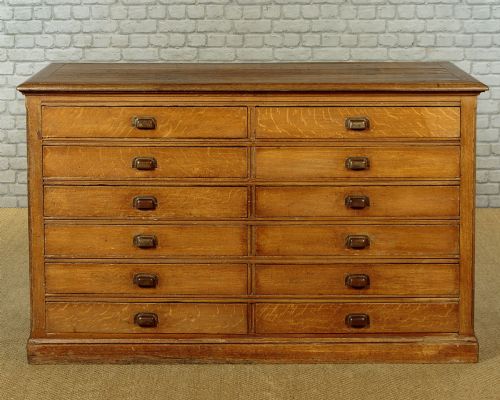
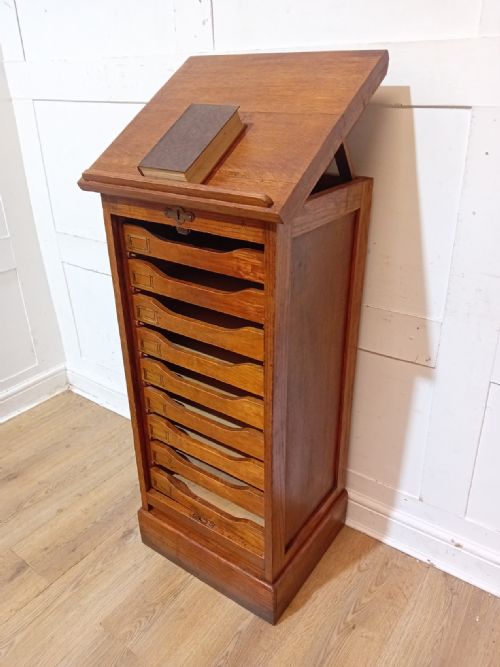
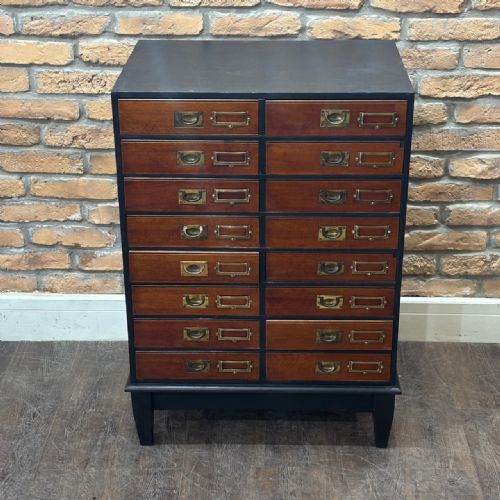
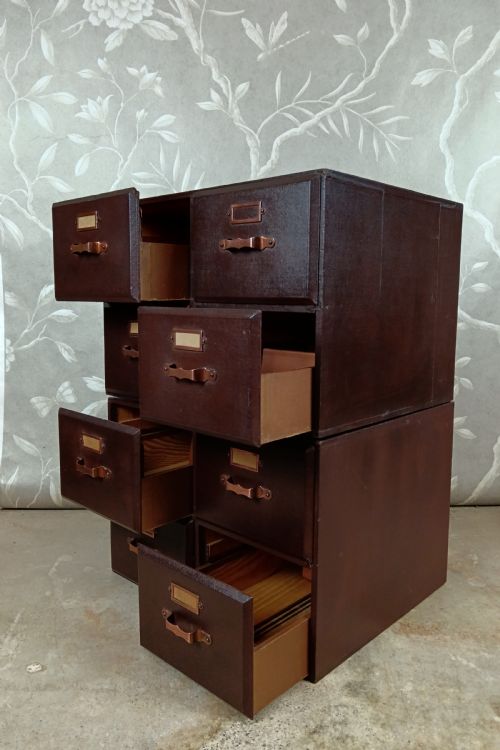
An edwardian index cabinet brings together multi-drawer filing units, banks of drawers, and library card storage designed for systematic organisation. These pieces range from compact desktop filing sets to tall multi-drawer banks used in offices, libraries, and workshops.
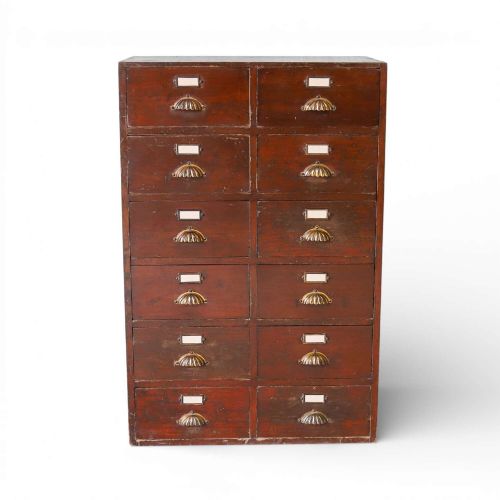
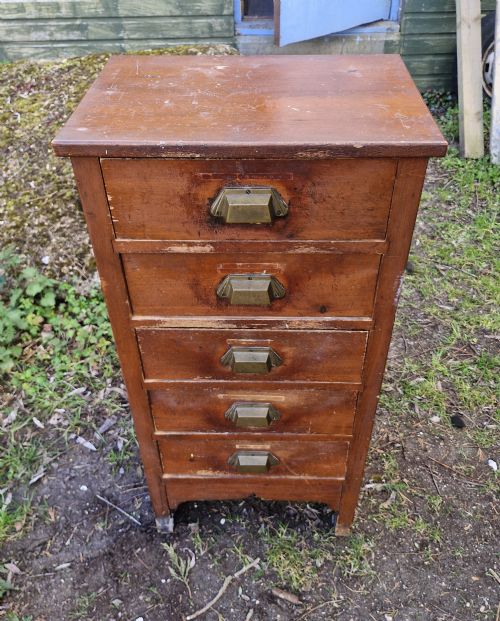
Oak and mahogany form the foundation of these pieces, often featuring original brass label holders and shell pulls. The selection spans straightforward utilitarian office furniture alongside finer domestic walnut chests and arts and crafts pine collectors cabinets.
How they were made
Makers utilised solid timbers such as oak, mahogany, pine, and walnut to construct sturdy housing capable of enduring heavy daily use. Drawer construction relies on traditional joinery to withstand the constant pulling and pushing of numerous small drawers.
Listings feature woods including oak, mahogany, walnut, and pine, alongside metal office furniture and painted finishes across multiple periods.
What varies in quality
The degree of refinement in the timber and hardware separates standard office utility pieces from finer cabinet work. Original brass fittings and intact label holders elevate the integrity of a piece compared to later replacements.
Proportion and scale distinguish standard multi-drawer chests from specialised collectors cabinets or patented filing systems. The presence of matching timber fronts and uncompromised internal drawer construction defines the better examples.
The Edwardian Index Cabinet Glossary
- Shell pull
- A stamped or cast brass handle shaped like a seashell, commonly found on early filing drawers to accommodate a paper label beneath.
- Label holder
- A small metal frame fixed to the front of a drawer designed to hold a card indicating the contents within.
- Bank of drawers
- A multi-drawer carcass or chest designed for sorting and housing large quantities of small items or documents.
- Patent cabinet
- A storage unit incorporating a specific mechanical filing system or locking mechanism invented to secure and organise correspondence.
- Haberdashery cabinet
- A tall bank of shallow drawers originally utilised in retail settings for storing textiles, ribbons, and small goods.
Edwardian Index Cabinet: Frequently Asked Questions
What were index cabinets used for?
These cabinets served offices, libraries, and businesses to organise correspondence, index cards, and reference materials systematically.
Smaller multi-drawer units also functioned in workshops or retail environments to sort small components, patterns, and stationery.
How do I care for a wooden filing cabinet?
Keep the timber clean with a dry cloth and apply a traditional wax polish occasionally to nourish the grain and protect the finish.
Avoid placing the cabinet near direct heat sources or in damp conditions to prevent the numerous drawers from sticking within their runners.
Are all these cabinets from the Edwardian period?
While many pieces date from the early twentieth century and the Edwardian era, the selection also includes late Victorian designs and occasional mid-century office pieces.
Makers continued producing similar utilitarian multi-drawer formats across several decades, maintaining traditional timber construction methods well into the twentieth century.
Can I use an index cabinet for modern paperwork?
Many smaller drawers suit stationery, craft supplies, and modern index cards, though older formats may require checking against standard paper sizes.
Larger configurations function well as desktop organisers or accent chests in studies and living spaces.