




Edwardian Gothic Table
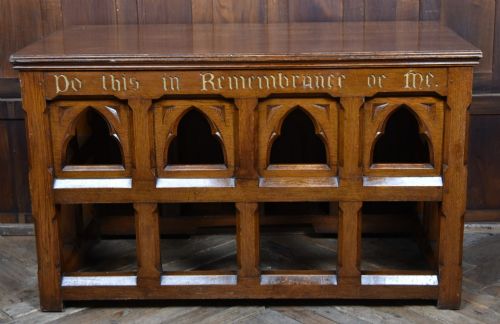
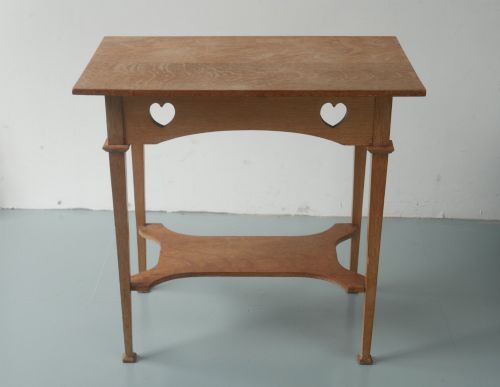
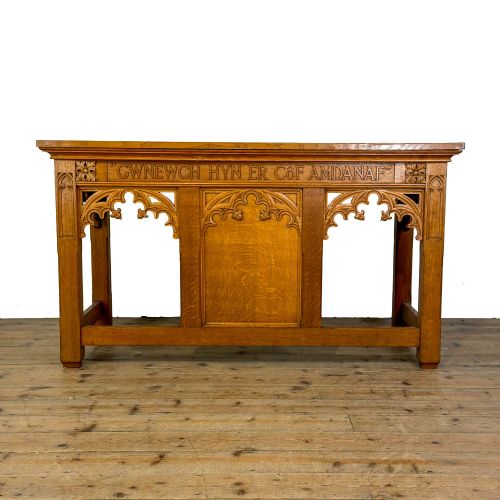
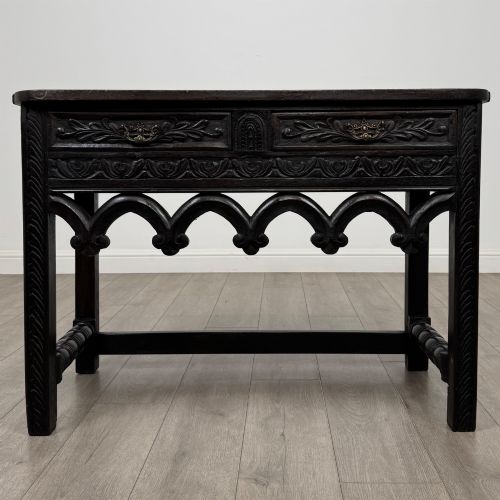
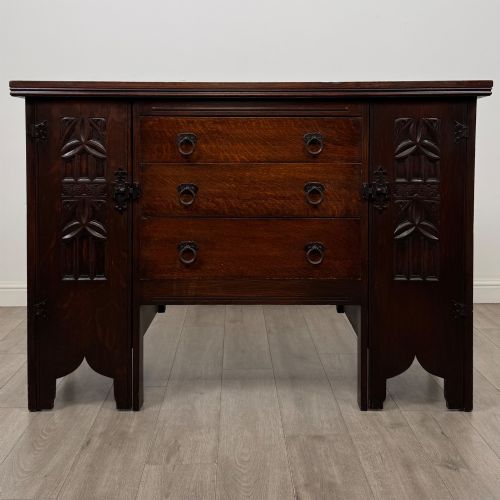
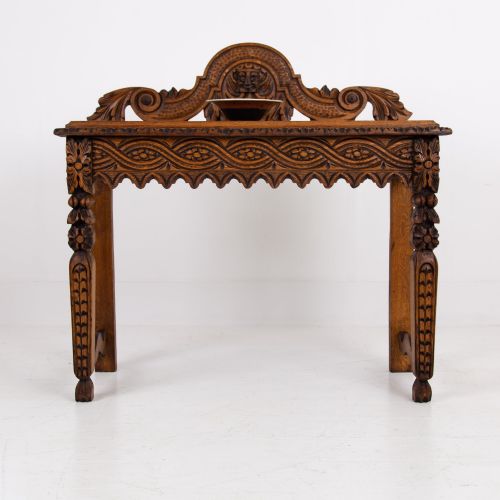
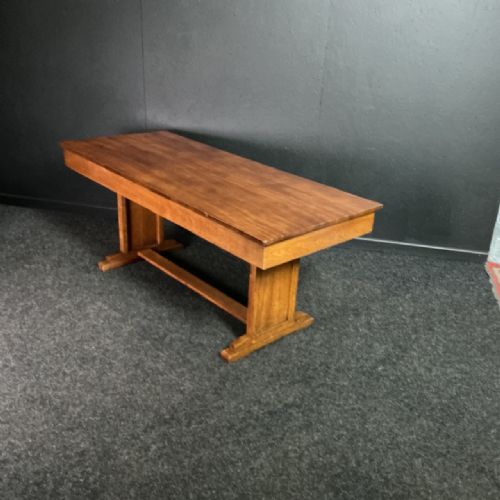
These edwardian gothic table examples are sturdy timber pieces reflecting architectural revival taste, offering a purposeful surface with distinct medieval character.
Edwardian Gothic Table
When you search for an edwardian gothic table, you encounter robust timber surfaces drawing heavily on architectural motifs. These pieces typically manifest as occasional tables, side tables, and hall tables with period revival details.
The most common examples on this page combine Edwardian manufacture dates with Gothic Revival or Arts and Crafts stylistic elements. They serve practical domestic functions while displaying pointed arches, heavy legs, and traditional joinery.
Originating largely from British workshops and institutional contexts, these tables range from simple country oak hall pieces to more elaborate library and centre tables. Their proportions suit modern hallways, studies, and living spaces alike.
Materials and construction
Makers relied primarily on solid oak, walnut, and mahogany, selecting timber for strength and prominent grain patterns. Secondary materials such as brass, leather, and occasional glass inserts appear on specific forms.
Carpenters employed traditional mortise and tenon joinery alongside hand-carved decorative elements like tracery, chamfered edges, and linenfold panels. Surfaces were often wax-polished to protect the wood while retaining a natural matte finish.
Listings demonstrate a strong preference for solid oak and walnut timbers, frequently paired with Gothic Revival and Arts and Crafts design influences.
Assessing craftsmanship
Quality rests heavily on timber selection and the crispness of the carved detail. Superior pieces exhibit deeply undercut carvings and quarter-sawn oak with prominent medullary rays.
Structural integrity differentiates simpler utility pieces from finer examples. Well-made tables maintain rigid frames through solid internal framing and pegged joints rather than modern metal brackets.
Baillie Scott·Wm. Tonks & Sons
The Edwardian Gothic Table Glossary
- Gothic Revival
- An architectural and decorative style drawing inspiration from medieval forms, pointed arches, and ecclesiastical design. This aesthetic heavily influences the ornamentation found on these tables.
- Arts and Crafts
- A design movement valuing hand craftsmanship, simple forms, and local materials over industrial mass production. It often intersects with Gothic taste in this period.
- Centre table
- A freestanding piece designed to stand away from walls and be viewed from all sides. These often feature octagonal or round tops.
- Reformed Gothic
- A late nineteenth-century sub-movement emphasising structural honesty, flat ornament, and simplified medieval lines. It marks a shift towards lighter domestic furniture.
- Occasional table
- A small, movable side table intended for specific, intermittent domestic tasks. These provide functional surfaces without dominating a room.
Edwardian Gothic Table: Frequently Asked Questions
Where should I place an edwardian gothic table?
These tables suit hallways, landings, and studies where their robust timber presence anchors the room. Their compact side or occasional formats allow them to function easily beside seating or beneath a window.
Ensure the piece avoids direct heat sources and excessive sunlight to protect the aged polish and timber stability.
How do I care for antique oak furniture?
Maintain the surface by dusting with a dry lint-free cloth and applying a traditional beeswax polish sparingly twice a year. Avoid silicone-based sprays, which can penetrate the timber pores and damage the finish.
Keep indoor humidity stable to prevent the solid wood from shrinking or splitting over seasonal changes.
What distinguishes Gothic Revival from Arts and Crafts?
Gothic Revival relies on overtly medieval architectural motifs such as pointed arches, quatrefoils, and heavy linenfold carving. It looks back to ecclesiastical and cathedral design.
Arts and Crafts focuses more on visible construction, honest materials, and simpler utility, though the two styles frequently overlap in Edwardian catalogues.
Are these tables suitable for daily use?
Solid oak and walnut construction makes these pieces remarkably durable for everyday tasks such as holding lamps, books, or post. Their sturdy underframes handle standard domestic weight with ease.
Using coasters and placemats helps protect the historic surface finishes from moisture rings and scratches during normal use.