

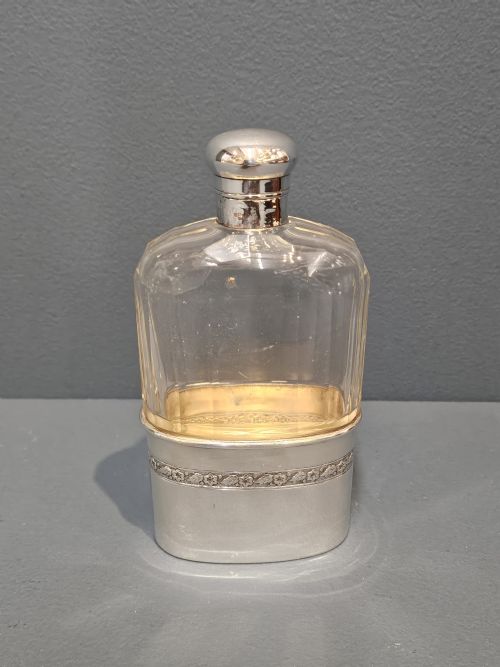


Edwardian Glass Pocket Flask
An edwardian glass pocket flask is a robust companion for field sports, combining cut crystal or plain glass with sterling silver and leather.
Edwardian Glass Pocket Flask
The edwardian glass pocket flask is a compact vessel designed to carry spirits during outdoor pursuits, frequently appearing from the late Victorian period through the nineteen-thirties. You will most often encounter examples that pair clear glass bodies with sterling silver mounts, screw caps, and sometimes removable drinking cups at the base.
Many variants integrate protective sleeves made from crocodile skin or embossed leather, while others showcase cut crystal patterns or Mary Gregory style painted decoration. These objects served gentlemen and ladies on hunts, walks, and travels, fitting neatly into a pocket or hamper.
How they were made
Makers combined blown or cut glass vessels with fitted metalwork, utilising sterling silver or silver plate for the collars, hinged caps, and collapsible cups. The metal components often bore hallmarks from assay offices like London and Sheffield, recording the year of production.
Protective coverings involved wrapping the glass bodies in genuine crocodile skin or leather, frequently stitched or textured to mimic reptile hide. Artisans also applied hammered finishes to silver mounts or decorated the glass with floral patterns and cut facets.
The evidence shows flasks spanning the late Victorian period, the Edwardian era, and into the Art Deco nineteen-thirties.
What varies in quality
The distinction between standard utility flasks and high-end pieces lies in the weight of the silver mounts and the clarity of the cut crystal. Makers known for luxury goods utilised heavier gauge silver and integrated complex mechanisms like collapsible cups.
The choice of exterior covering also alters the character of the piece, with genuine crocodile skin representing a more costly option compared to plain leather or bare glass. Crisp hallmarks and intact glass threads on the screw caps further separate finer examples from simpler ones.
Asprey London·W A Ellwick Ltd·James Dixon
The Edwardian Glass Pocket Flask Glossary
- Sterling silver
- A silver alloy containing 92.5 percent pure silver by mass, widely utilised for the caps and cups of these flasks. Hallmarks on this metal help date the piece accurately.
- Cut crystal
- High-clarity glass featuring deep geometric incisions that catch the light, commonly used for the bodies of better-quality spirit flasks.
- Collapsible cup
- A removable metal drinking vessel fitted to the base of certain flasks that telescopes outwards when detached for use.
- Hallmark
- A series of official marks stamped onto precious metal items in the United Kingdom, indicating the maker, assay office, and year of testing.
- Mary Gregory glass
- Glass decorated with white enamelled silhouettes of children, birds, or foliage, occasionally found on liquor flasks from this era.
Edwardian Glass Pocket Flask: Frequently Asked Questions
What is an edwardian glass pocket flask?
An edwardian glass pocket flask is a small portable container made to hold spirits, featuring a glass body encased or mounted in silver and leather. They were built for outdoor use during shooting parties and travel.
Most examples include a secure screw cap to prevent leaks in a coat pocket. Some versions feature a matching cup that slips over the bottom of the flask.
How were these flasks used?
Owners filled them with whisky, brandy, or other spirits to provide a warming sip during cold days outdoors. They were slipped into deep overcoat pockets or hunting bags.
The attached cups allowed the owner to pour a measure without drinking straight from the bottle. This made sharing a dram with companions during a hunt straightforward and civilised.
How do I date an antique flask?
You can date most British flasks by examining the silver hallmarks stamped on the collar, cap, or cup. These marks include letters that correspond to specific assay years.
Stylistic clues also help, as Art Deco pieces tend to show cleaner geometric lines while Victorian and Edwardian examples often feature floral engraving or textured leather wraps.
Are these flasks safe to use?
Most of these flasks remain functional if the glass is sound and the interior is thoroughly cleaned. The screw caps on quality pieces were designed to form a tight seal.
However, collectors often treat them primarily as display items or decorative barware rather than daily carriers for modern drinks. Checking the cork or washer inside the cap is essential if you intend to use it.