



Edwardian Gilt Side Tables
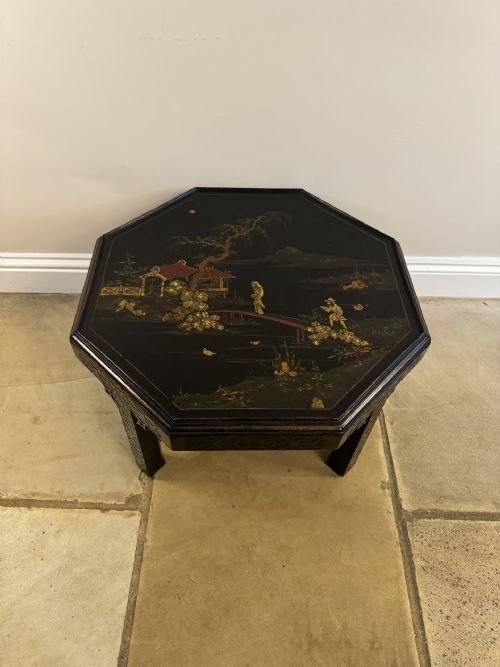
Edwardian gilt side tables bring surface and surface-shimmer into a room through lacquer, gilding and marble.
Edwardian Gilt Side Tables
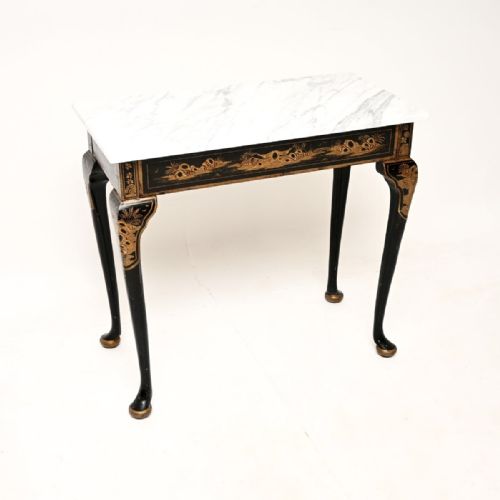
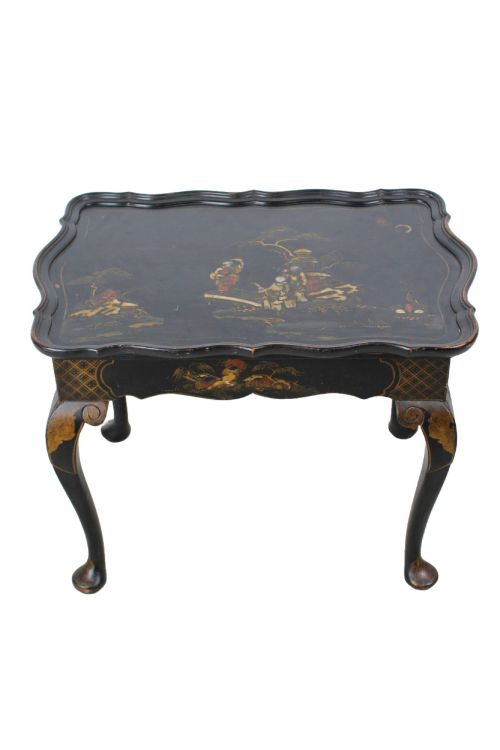
Edwardian gilt side tables encompass compact occasional furniture, tray top tables and nests designed for flexibility and display. These pieces combine lightweight portability with decorative impact, serving practical functions beside seating or against walls.
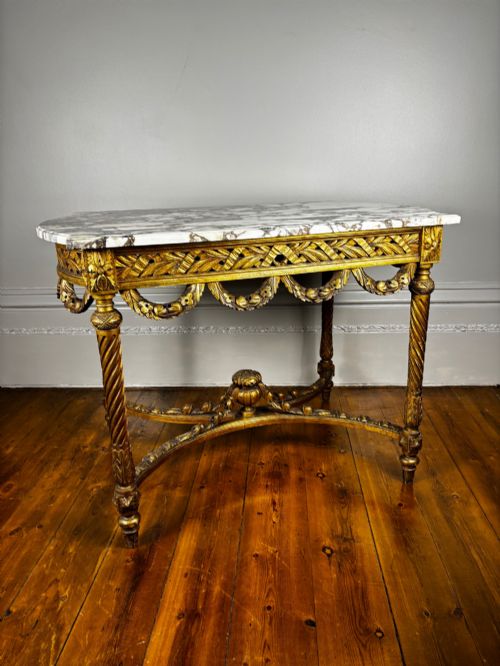
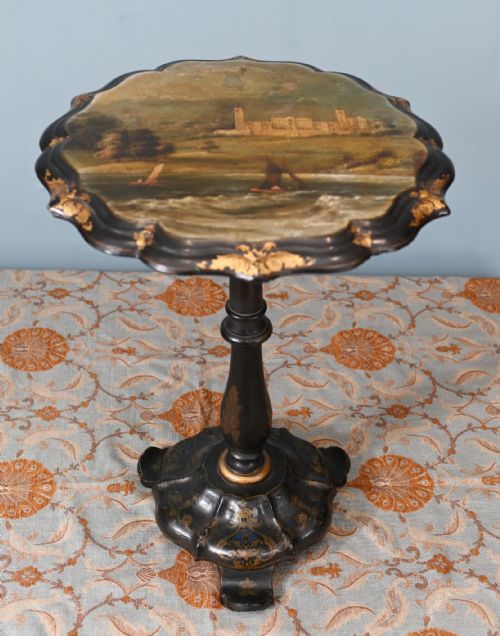
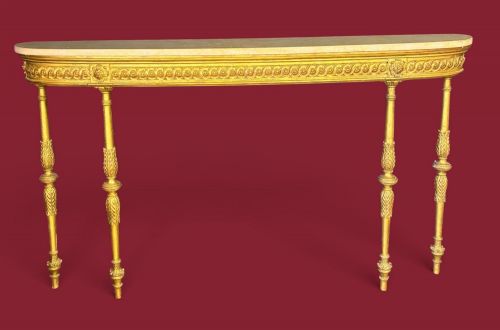
The selections span from chinoiserie decorated surfaces to French revival giltwood and marble configurations. Buyers encounter varied formats including stacking quartetto tables and console designs rooted in earlier revival vocabularies.
While specific output clusters around the Edwardian era and turn of the twentieth century, related pieces draw from Victorian aesthetic movements and Regency traditions. Each variation relies on surface embellishment to catch light within domestic interiors.
Materials and Construction Techniques
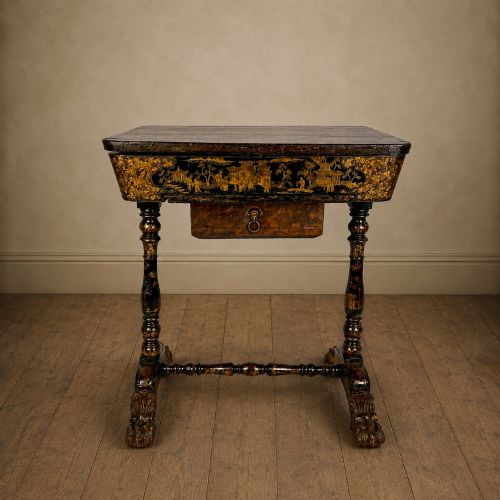
Construction relies on timber foundations including mahogany, walnut, and ebonised woods, often built to support applied decorative schemes. Surface enrichment employs gold leaf, ormolu mounts, and intricate lacquer work rendered in black, red, and gilt pigments.
Inlaid details utilise burr thuya, ebony, and parquetry veneers to introduce geometric pattern alongside painted motifs. Heavy inset marble tops provide contrasting cool stone surfaces above gilded or carved wooden frames.
Listings feature woods such as mahogany, walnut, burr thuya, and ebonised timber paired with marble and lacquer.
Distinctions in Execution and Detail
Quality rests in the precision of the hand-applied decoration, from the depth and register of chinoiserie motifs to the crispness of giltwood carving and ormolu mounts. Finer examples display meticulous attention to secondary timbers and the integrity of lacquer surfaces over time.
Structural harmony separates routine production from superior workshop output, particularly in nests of tables where stacking tolerances and leg proportions must remain exact. The choice of materials, such as genuine marble slabs versus lighter alternatives, dictates the physical weight and presence of the piece.
François Linke·Thomas Hope·Whytock and Reid·E. Daligny
The Edwardian Gilt Side Tables Glossary
- Chinoiserie
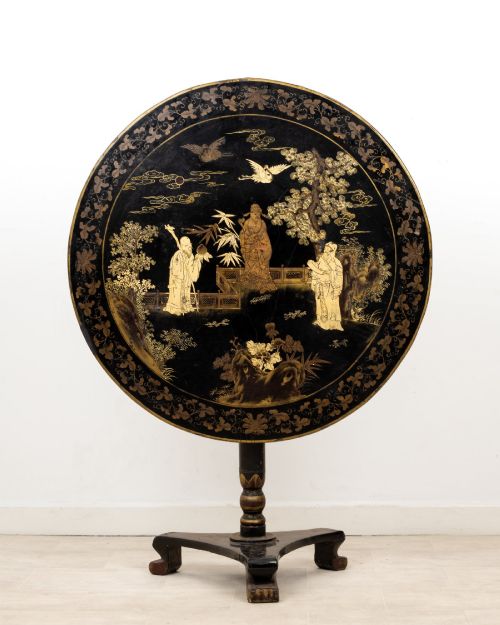
- European decorative style imitating Chinese artistic traditions, featuring figures, landscapes and pagodas in gold or colour upon lacquered grounds. This aesthetic defines many of the painted tables seen in this category.
- Ormolu
- Gilded bronze mounts applied to furniture edges and legs, cast and chased to impart metallic brilliance. Makers utilised these brass and bronze additions to echo French court furniture styles.
- Quartetto tables
- A nested set of four small tables designed to stack beneath one another when not in use. This space-saving form gained popularity during the late nineteenth and early twentieth centuries.
- Giltwood
- Timber carved and coated with gold leaf or metallic powder to simulate solid gold. It provides the reflective framework for numerous console and occasional tables.
- Parquetry
- Geometric mosaic woodwork formed by small veneer pieces laid down in patterned arrangements. Tables often display this technique on top surfaces.
Edwardian Gilt Side Tables: Frequently Asked Questions
How do I care for gilt and lacquered surfaces?
Dust surfaces gently using a soft, dry cloth without chemical polishes or abrasive pads. Protect the finish from direct sunlight and moisture to preserve the delicate gold leaf and lacquer layers.
Maintain stable room humidity to prevent timber movement beneath the decorative coatings. Avoid placing hot cups or damp items directly onto antique marble or wood tables.
Were these tables made for everyday use?
Many occasional and nest tables served practical functions for tea, sewing or holding small lamps in Edwardian drawing rooms. Their lightweight construction allowed servants or residents to move them about easily.
While functional, their decorative lacquer and gilt finishes meant they remained status items within fashionable homes. Today they continue to serve as lamp tables or display surfaces.
What distinguishes Edwardian chinoiserie from Victorian examples?
Edwardian interpretations often lean towards lighter proportions and brighter palettes compared to earlier Victorian counterparts. The execution of figures and landscapes reflects a turn-of-the-century revival interest in delicate, airy interiors.
Victorian pieces frequently employ heavier carcase construction and darker ebonised or mahogany grounds. Examining the underlying timber and secondary woods helps clarify the manufacturing period.
How do I identify French revival pieces?
French revival tables display curved cabriole legs, ormolu mounts, and kidney-shaped or marble tops redolent of Louis XV and Louis XVI styles. Craftspeople drew inspiration from royal French furniture designs.
Makers working in Britain and France produced these luxury items for elite domestic spaces. Their reliance on gilt bronze and intricate marquetry separates them from simpler vernacular tables.