
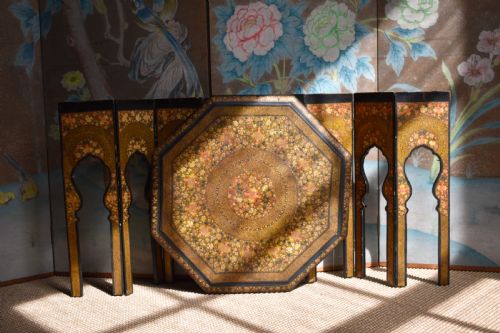


Gold Painted Side Table
A gold painted side table brings instant warmth and metallic theatre to a room, catching the light in a way plain timber simply cannot manage.
Gold Painted Side Table
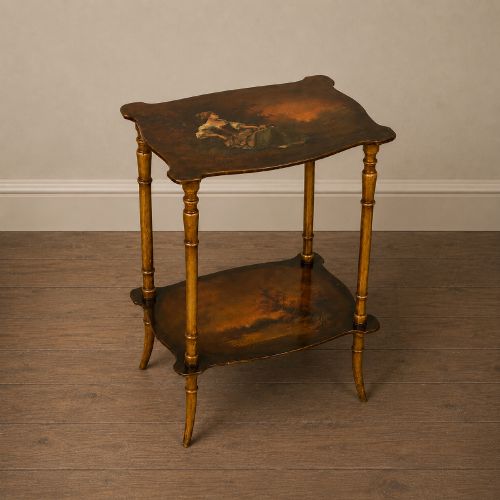
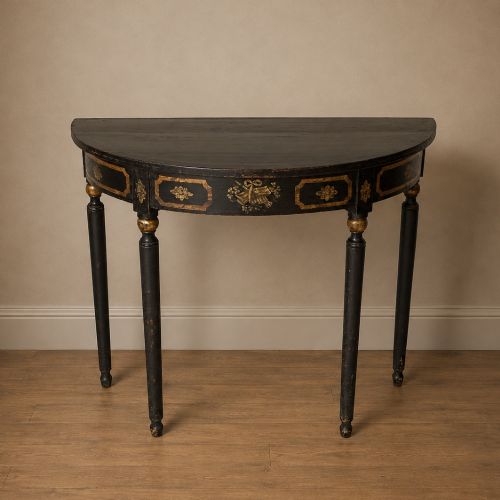
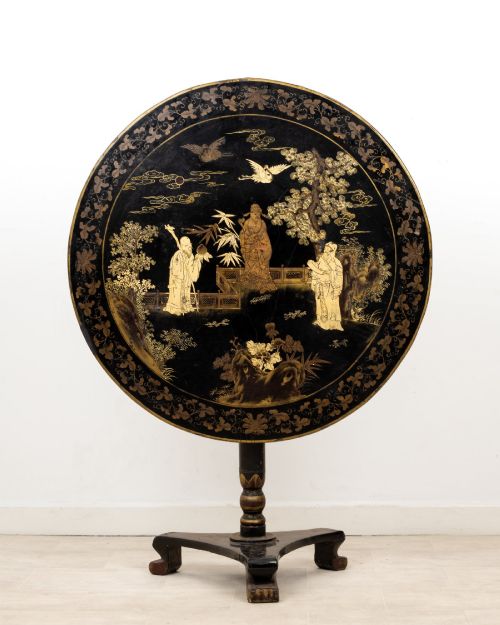
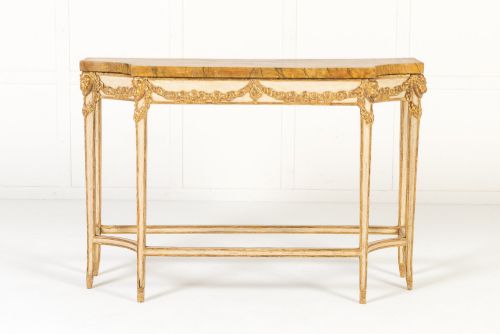
When you search for a gold painted side table, you encounter a varied collection of small support furniture designed to sit against a wall or beside a seat. These pieces emerge from periods spanning the eighteenth century through to the 1930s, encompassing styles such as Chinoiserie, Rococo Revival, Regency, and Italian Neoclassical. You will find forms ranging from console tables and demilune shapes to nests of tables, lamp tables, and étagères.
The most common versions on this page are twentieth-century occasional tables and nineteen-twenties lamp tables decorated in lacquer, Chinoiserie, or painted finishes with parcel-gilt detailing. Italian workshops and French provincial designs appear frequently, alongside occasional Anglo-Indian and Kashmiri pieces in painted wood. Buyers choose these tables to introduce decorative surface pattern and reflective highlights into domestic interiors without committing to massive case pieces.
Materials and construction
Construction relies heavily on traditional timber frames finished with painted surfaces, gesso, and gold leaf or giltwood. Artisans applied thin layers of metal leaf over prepared gesso grounds to catch the ambient light, frequently sealing the work with clear or tinted varnishes. Papier-mâché also forms the core of certain tray tables and occasional stands from the nineteenth century, providing a smooth, stable ground for black lacquer and hand-painted decoration.
Surface ornamentation defines the group, utilising hand-painted motifs, Chinoiserie lacquer work, and parcel-gilt highlights on wood. Marble tops, including rouge and Sienna varieties, appear inset into console and lamp tables, adding weight and cool stone contrast to the gilded and painted wooden bases. Joinery methods match the respective periods, from eighteenth-century console framing to early twentieth-century stacking nest frames.
Some tables hide their talents inside nests of four, ready to fan out across the carpet when unexpected guests arrive for tea.
Assessing quality in painted and gilt tables
Quality rests in the precision of the hand-applied brushwork, the depth of the lacquer or paint layers, and the crispness of the carved or moulded details beneath the gilding. Superior examples display subtle tonal variations in the paint and genuine gold leaf that patinates softly over decades, rather than flat modern metallic paints that lack dimensional warmth. The integration of inset marble tops and the stability of structural joints also distinguish finer craftsmanship from standard utility pieces.
The sophistication of the decorative scheme separates masterwork from mass production, particularly in Chinoiserie and Venetian items where pictorial narrative or floral arrangement requires a trained hand. Signed pieces or works featuring detailed regional ornamentation, such as Kashmiri or Florentine workshops, command greater interest through individual artistic execution. Preservation of the original surface finish dictates the ultimate integrity of each table.
E Daligny
The Gold Painted Side Table Glossary
- Giltwood
- Wood that has been coated with gold leaf or gold dust over a prepared ground layer. This technique gives furniture a brilliant reflective surface that warms under candlelight or daylight.
- Demi-lune
- Half-moon shape, commonly applied to console tables and small side tables designed to stand flush against a wall. This form saves floor space while offering a display surface.
- Gesso
- Plaster-like mixture used as a base for paint and gold leaf on wood surfaces. It provides a smooth, absorbent ground for delicate gilding and relief ornamentation.
- Étagère
- Open tiered piece of furniture designed for displaying small objects or lamps. Multiple shelves provide vertical storage within a compact footprint.
Gold Painted Side Table: Frequently Asked Questions
What rooms suit a gold painted side table?
These tables work effectively in drawing rooms, hallways, and bedrooms where compact surfaces are required next to seating or walls. Their reflective finishes bounce light around darker corners.
They pair well with both traditional antique interiors and contemporary spaces seeking a touch of metallic contrast. A small lamp table or nest functions easily beside a sofa or armchair.
How do I care for antique gilt surfaces?
Gilt and painted finishes require gentle dusting with a soft, dry cloth to prevent abrasion to the delicate metal leaf. Avoid commercial cleaning sprays and water.
Keep these tables away from direct heat sources and strong sunlight to prevent the underlying wood and gesso from drying and cracking over time.
Are these tables sturdy enough for daily use?
Most occasional and lamp tables were built for light domestic duties such as holding books, drinks, or small lighting fixtures. They manage everyday items without trouble.
Heavier marble-topped console tables offer greater structural mass, though care should still be taken when moving them across uneven floors to protect the joints and painted decoration.
How do I distinguish eighteenth-century pieces from later revivals?
Eighteenth-century consoles and tables exhibit traditional joinery marks, hand-carved wooden structures, and deep, aged patination on the gesso and paint layers. Timber shrinkage and hand-forged fixings often provide clues to true age.
Nineteenth and twentieth-century revivals, such as Edwardian or 1920s interpretations, often utilise machine-sawn timbers and different secondary woods while imitating earlier Baroque or Rococo styles.