


Edwardian Gilt Porcelain Vase
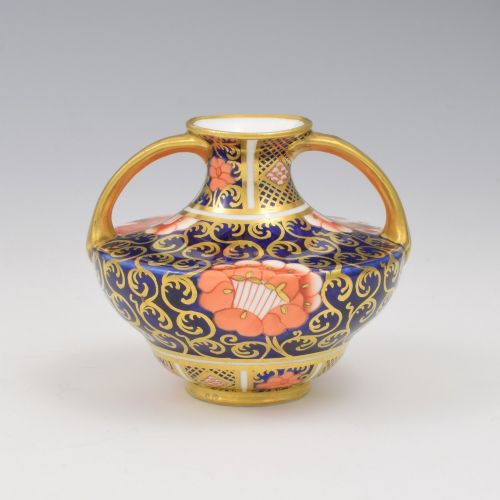
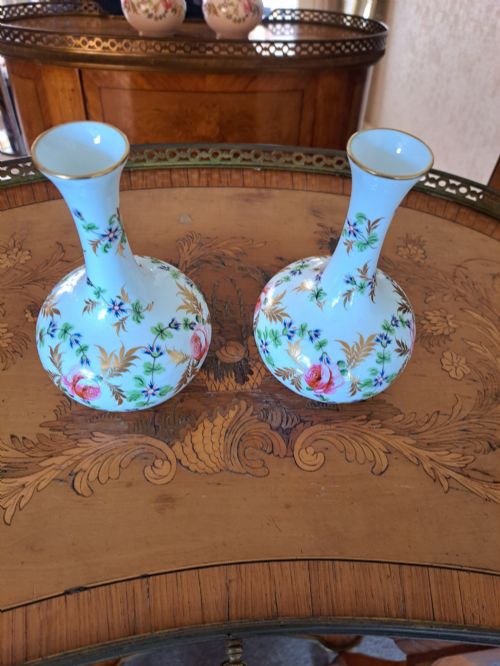
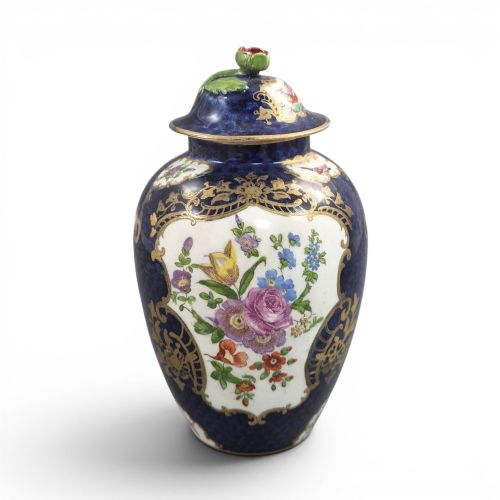
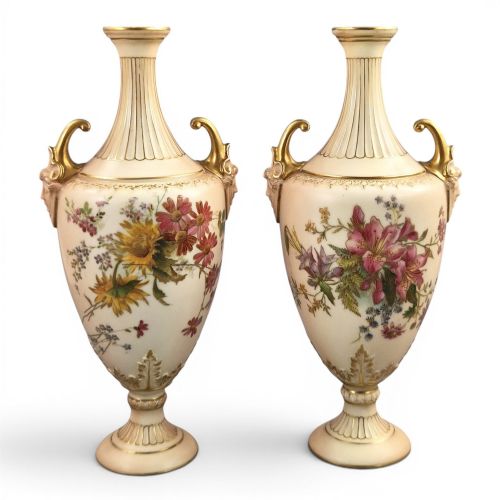
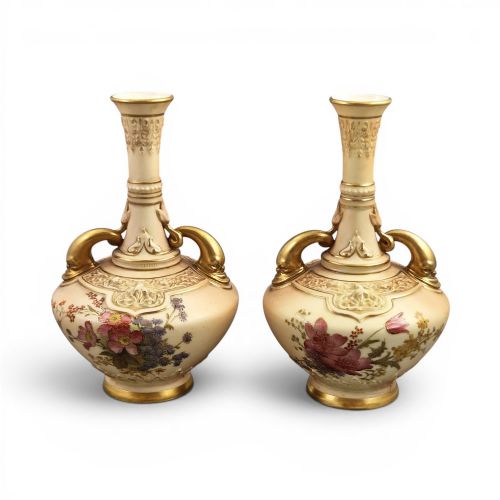
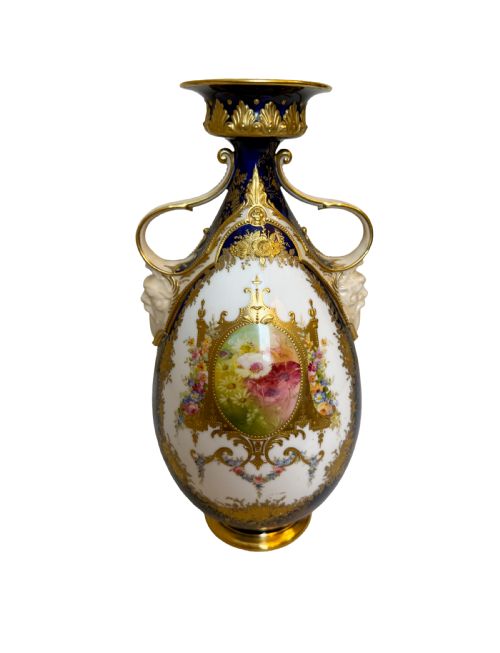
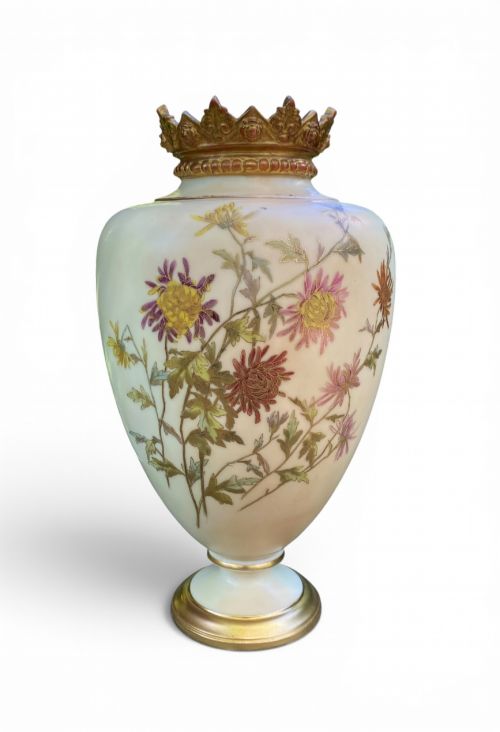
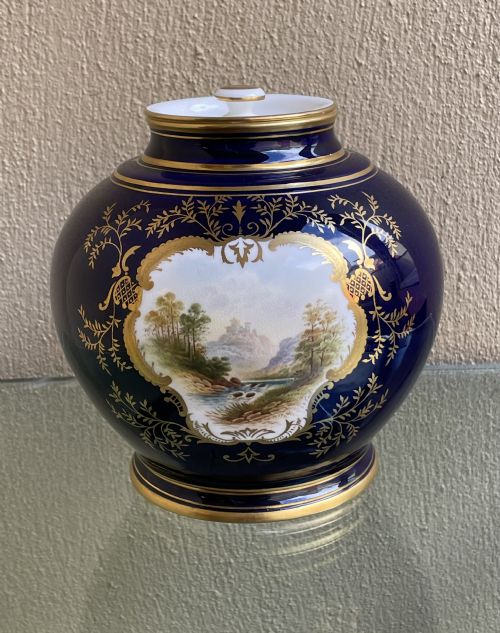
These pieces are an edwardian gilt porcelain vase, bringing hand-painted flora, birds and gilding to a room.
Edwardian Gilt Porcelain Vase
An edwardian gilt porcelain vase brings together ceramic bodies and applied gold leaf, often taking the form of bulbous urns, slender spill vases, or twin-handled decorative vessels. The pieces found here span the late nineteenth century through to the interwar decades, showing the persistent favour for ornate, painted porcelain.
Makers such as Royal Worcester dominate the output alongside Royal Crown Derby, Coalport and Royal Doulton, producing items that range from intimate cabinet pieces to substantial table centrepieces. Surface decoration leans heavily towards natural subjects, depicting painted pheasants, highland cattle, swans and florals set against blush ivory or coloured grounds.
Buyers will encounter various forms, including reticulated bodies pierced with intricate lattice patterns, covered vases with lids, and miniature bud vases. While Edwardian production is central, the selection extends across Victorian and later periods, uniting them through porcelain bodies and metallic gilding.
Materials and methods
Makers shaped fine porcelain and bone china into vessels, applying liquid ceramic slips to moulds or throwing them on wheels before initial firing. These white ceramic bodies provided a smooth canvas for subsequent painting and glazing.
Artists painted subjects by hand using enamel colours, depicting birds, landscapes and floral arrangements directly onto the ceramic surface before sealing them in a kiln. Gilding involved the careful application of gold leaf or gold paint to handles, rims and borders, often burnished to achieve a bright finish.
The selection spans from the late nineteenth-century Victorian era through the Edwardian period into the early nineteen-thirties.
Judging quality
The distinction between ordinary and exceptional pieces rests primarily upon the skill of the painter and the prestige of the studio ceramicist. Signed works by notable artists command greater attention due to the minute detail and individual artistry present in hand-painted motifs like swans, storks or cattle.
The complexity of the ceramic body also dictates standing, where reticulated piercing or hand-modelled twin handles demonstrate advanced craftsmanship. The crispness of the gilding and the preservation of delicate enamel colours without fading determine the overall visual success of the vessel.
Royal Worcester·Royal Crown Derby·Royal Doulton·Coalport·Wedgwood
The Edwardian Gilt Porcelain Vase Glossary
- Blush ivory
- A soft, matte cream-coloured ceramic glaze developed by Royal Worcester to imitate the tone of natural ivory.
- Reticulated
- Ceramic work featuring an openwork lattice or pierced pattern cut into the body before firing.
- Spill vase
- A tall, narrow vessel designed originally to hold slender tapers used for lighting fires and candles.
- Imari
- A decorative palette of underglaze blue, iron red and gold, inspired by traditional Japanese export wares.
- Pot pourri
- A decorative vase or jar featuring a pierced lid intended to diffuse scented dried plant materials into a room.
Edwardian Gilt Porcelain Vase: Frequently Asked Questions
How do I clean an edwardian gilt porcelain vase?
Dust the surface gently with a soft, dry brush to prevent accumulating dirt on delicate painted scenes and raised gilding.
Avoid using water, chemical detergents or abrasive cloths, as these substances can wear away the thin gold leaf and enamel paints.
Were these vases used for fresh flowers?
Many smaller forms like bud vases and spill vases served practical functions for holding single stems or taper lights.
Larger decorative urns and cabinet pieces were made primarily for display on mantelpieces, sideboards and tables rather than everyday floral arrangements.
How can I tell an Edwardian piece from a Victorian one?
Edwardian items often feature softer blush ivory grounds, pastel tones and naturalistic bird or cattle paintings associated with the early twentieth century.
Victorian examples tend towards deeper colours, scale blue grounds, and denser aesthetic movement patterns or elaborate imari designs.
Who painted these porcelain vases?
Factories employed specialised artists who trained extensively in botanical, avian or landscape painting on ceramic surfaces.
Many skilled painters signed their work subtly on the body or base, allowing modern collectors to identify individual studio hands.