



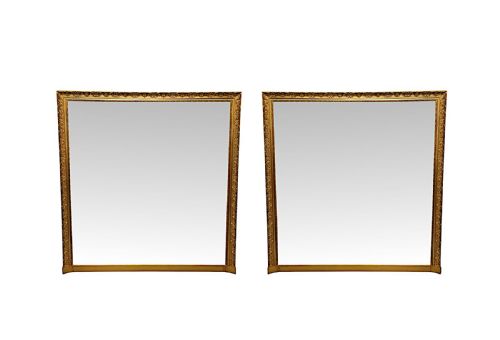


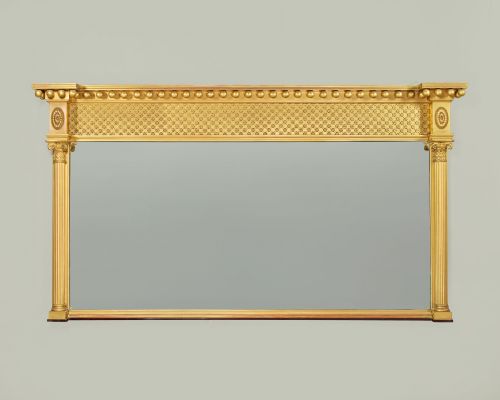


Edwardian Gilded Overmantel Mirror
An edwardian gilded overmantel mirror brings warmth and reflective depth above a fireplace, anchoring a room with period proportion.
Edwardian Gilded Overmantel Mirror
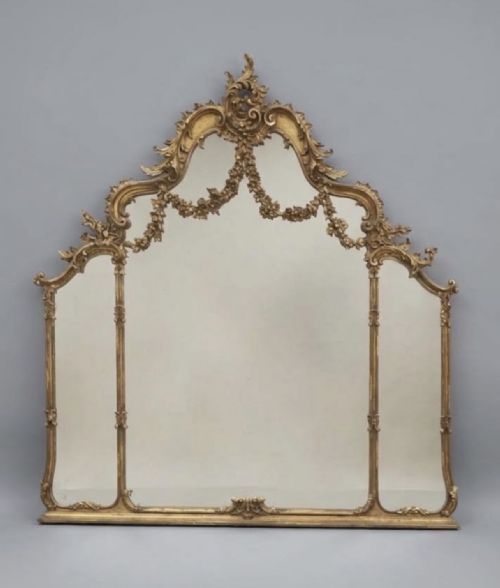
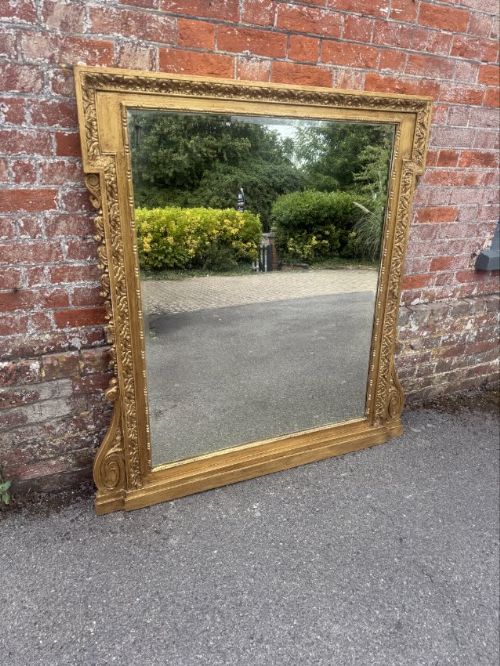
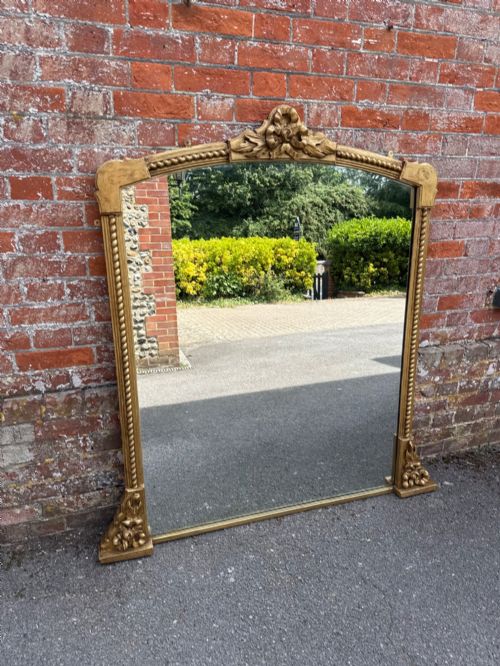
An edwardian gilded overmantel mirror is a large decorative glass designed to sit directly on the mantelpiece above a hearth, reflecting light into the room. These pieces originate across the late nineteenth and early twentieth centuries, spanning Edwardian, Victorian, and revival periods.
Buyers will encounter various formats including arched top, shaped top, and rectangular frames in both large scale overmantel proportions and smaller wall-hanging formats. The designs draw heavily from Adam Revival, Regency Revival, and French influences, alongside simpler early twentieth-century examples.
How They Were Made
The primary structure relies on carved wood, often reinforced with gesso, plaster, or composition ornaments moulded into relief patterns along the frame. Artisans applied gold leaf or gilt finishes over these prepared surfaces to create a luminous metallic sheen.
Mirror glass of the period was fitted into the wooden rabbet, secured from the back, and paired with substantial framing timbers to support the generous scale of overmantel installations.
Every large mirror secretly knows how many mantelpiece arguments it has silently watched unfold over the decades.
What Varies in Quality
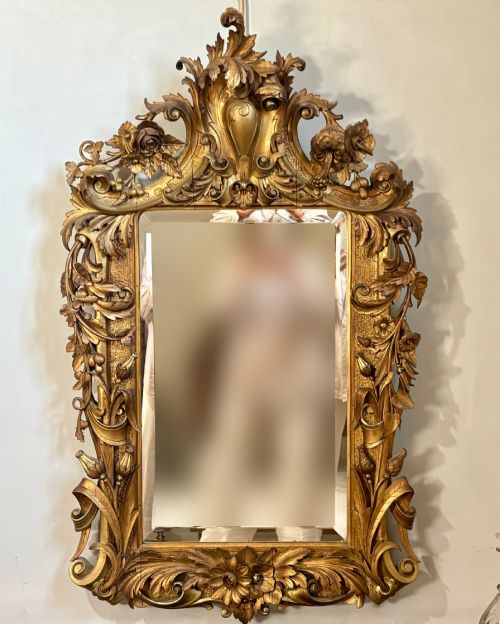
The crispness of the carved wood and moulded gesso decoration determines much of the visual merit, where sharp, hand-finished details outperform softer, heavily moulded composition ornament. The depth and integrity of the original gilding, whether gold leaf or giltwood, dictate the richness of the surface light.
Structural robustness also matters, as large frames require sound joinery and stable timber backing to support the weight of heavy antique mirror glass over decades of wall mounting.
The Edwardian Gilded Overmantel Mirror Glossary
- Gesso
- A plaster-like mixture applied to wood frames to provide a smooth surface for gilding and low-relief moulding. It allows intricate decorative motifs to be built up before the final gold finish is applied.
- Giltwood
- Timber that has been coated with gold leaf or metallic powder. This material forms the primary golden structure of traditional decorative mirrors.
- Overmantel
- A large mirror specifically proportioned to sit on the mantelpiece above a fireplace. These pieces were traditionally designed to echo the architectural lines of the fireplace surround.
- Composition
- A moulded mixture of whiting, resin, glue, and linseed oil pressed into decorative ornaments. It was widely used as a quicker alternative to hand carving on Victorian and Edwardian mirror frames.
- Pier Glass
- A tall mirror designed to hang on the wall space between windows. They share many stylistic traits with overmantel mirrors but are scaled for narrower wall sections.
Edwardian Gilded Overmantel Mirror: Frequently Asked Questions
Where should an overmantel mirror be hung?
These mirrors traditionally sit directly on the mantelpiece shelf, often secured safely to the wall behind to prevent tipping. They anchor the fireplace wall and draw the eye upward.
Positioning them here also maximises the reflection of natural light from windows across the room, brightening darker corners.
How do I identify an Edwardian mirror?
Edwardian pieces often feature lighter frames, restrained neo-classical revival details, and cleaner lines compared to heavier Victorian predecessors. They frequently draw upon Adam or Regency styles.
Examining the backing boards, fixings, and construction methods helps confirm the early twentieth-century production era.
Can these mirrors be hung without a mantelpiece?
While designed primarily for overmantel placement, many of these large mirrors function successfully as wall-hung statement pieces. Proper wall anchors and weight-bearing fixings are essential due to the substantial timber and glass mass.
Hanging them independently on a prominent wall creates a similar architectural focal point in rooms without working fireplaces.