


Edwardian Fretwork Bookcase
An edwardian fretwork bookcase brings delicate openwork carving and timber shelving together, offering a refined way to house a collection.

Edwardian Fretwork Bookcase
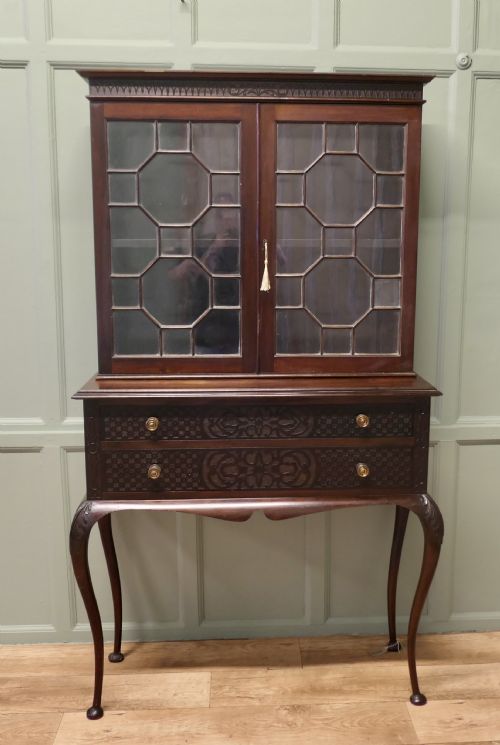
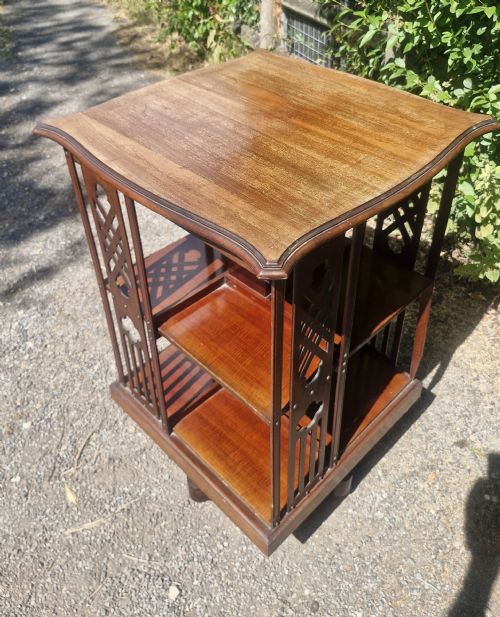
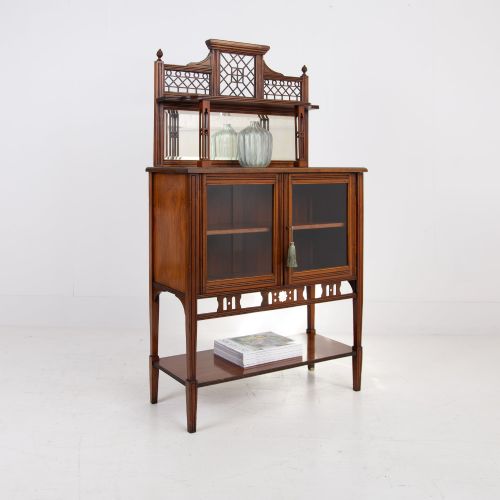
An edwardian fretwork bookcase combines display storage with pierced wooden ornamentation, taking forms such as revolving bookcases, wall shelves, and cabinets. The pieces on this page span the Edwardian and Victorian periods, along with examples from the early twentieth century and the Regency era.
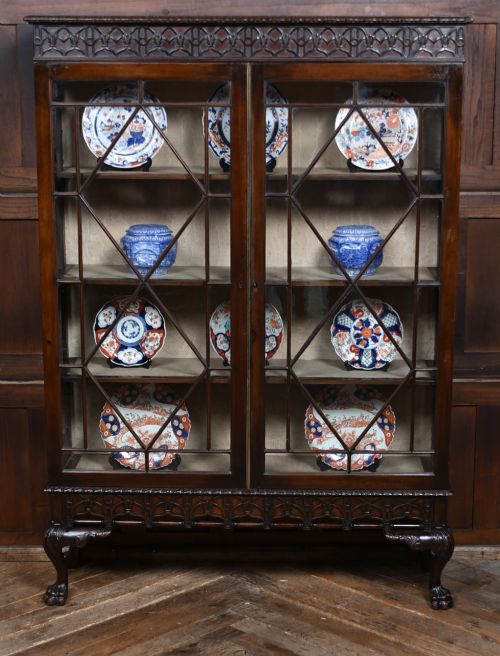
Buyers meet variations ranging from large display cabinets on stands to compact hanging whatnot shelves and corner units. Mahogany and walnut dominate the construction, often enhanced by glass panels, mirror backs, and intricate fret-cut details.
The style draws heavily on Chinese Chippendale and Chippendale Revival influences, showing how cabinetmakers adapted earlier ornamental traditions for Edwardian and Victorian homes.
How they were made
Cabinetmakers utilised dense timbers like mahogany, walnut, burr walnut, and oak to build the carcasses and shelves. These woods provided the structural stability needed to support heavy volumes while taking fine decorative carving.
Fretwork panels were painstakingly pierced and cut by hand or with early mechanical saws, creating intricate geometric or lattice patterns. Glazing bars, brass fittings, and inlay work completed the construction, adding textural contrast to the timber surfaces.
Listings feature periods from Regency to Edwardian, utilising mahogany, walnut, oak, and brass alongside glass and mirror.
What varies in quality
The crispness and depth of the fret-cut carving separate standard production from finer examples. Sharp, well-defined pierced patterns require careful hand-finishing, whereas simpler work appears rounded or shallow.
Timber selection and grain matching dictate visual appeal, particularly in pieces utilising burr walnut or figured mahogany. Superior construction shows in the joinery of the shelves and the integration of decorative elements like mirror backs and inlay.
The Edwardian Fretwork Bookcase Glossary
- Fretwork
- Openwork ornamentation carved or pierced through thin timber to create decorative patterns. This technique defines the visual lightness of the style.
- Astral glazing
- Cabinet doors fitted with slender wooden bars dividing the glass into geometric panes. It provides an unobstructed view of the books or objects inside.
- Whatnot
- A set of open shelves standing on legs, designed for displaying ornaments and small books. They became popular in the Victorian and Edwardian periods.
- Revolving bookcase
- A compact bookcase mounted on a hidden turntable so it spins easily for access. These are typically square or circular in plan.
- Inlay
- Contrasting woods or materials embedded into the surface of a piece to form decorative motifs. It highlights the craftsmanship of the cabinetmaker.
Edwardian Fretwork Bookcase: Frequently Asked Questions
Where should I place an edwardian fretwork bookcase?
These pieces suit living rooms, studies, or hallways where their open fretwork and display shelves can be appreciated. Avoid positioning them in direct sunlight or damp areas to protect the timber.
Ensure the floor is level, particularly for revolving bookcases or tall cabinets, to keep the structure stable and functioning correctly.
How do I care for the fretwork carving?
Dust the intricate pierced woodwork gently using a soft brush or a dry cloth to prevent dirt accumulation in the crevices. Avoid using liquid polishes that can build up within the carved patterns.
Maintain a stable room temperature to prevent the timber from drying out or the delicate fretwork from splitting over time.
Can these bookcases hold heavy books?
Most pieces are designed for standard volumes, decorative items, or display rather than heavy sets of encyclopaedias. Wall-mounted shelves and smaller cabinets require secure fixings if used for weight.
Revolving bookcases work best for everyday reading material and lighter books that are frequently accessed.
How do I tell Edwardian pieces from Victorian ones?
Edwardian pieces often feature lighter framing and brighter mahogany or walnut tones, reflecting a shift towards airier interiors. Victorian examples tend to be denser, incorporating heavier turning and deeper mouldings.
Stylistic revivals during both periods frequently borrowed Chinese Chippendale motifs, so construction methods and timber finishes provide the clearest guide to age.