

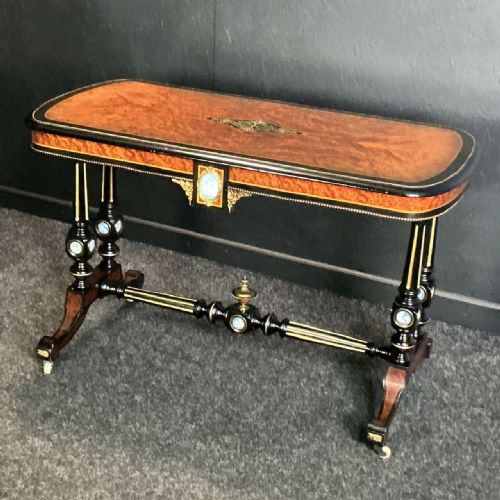
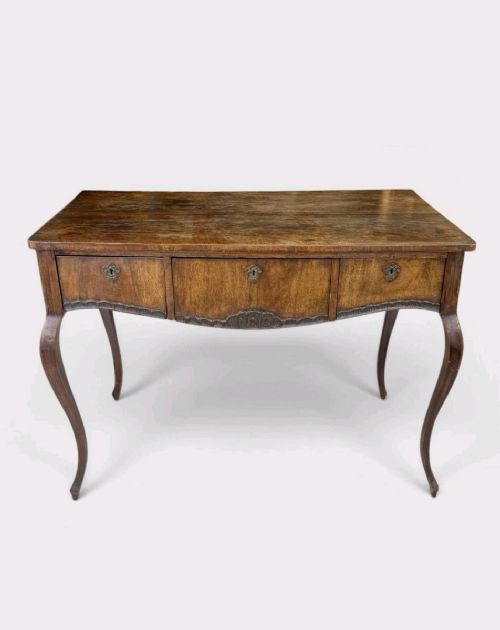
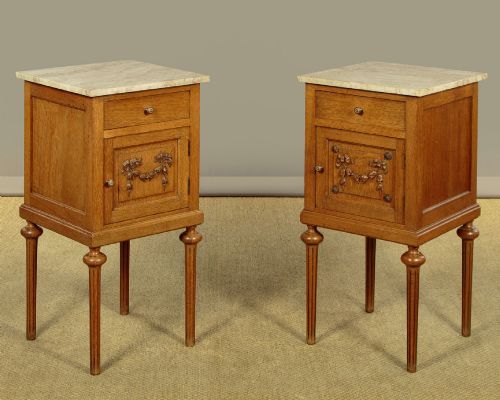
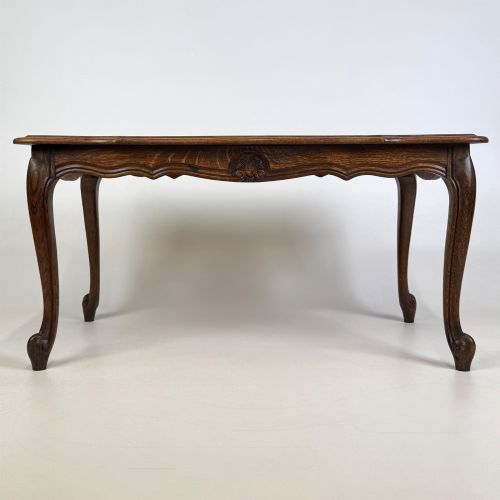
Edwardian French Tables
Edwardian French tables bring together continental revival elegance and domestic utility, offering refined surfaces and mounts for the home.
Edwardian French Tables
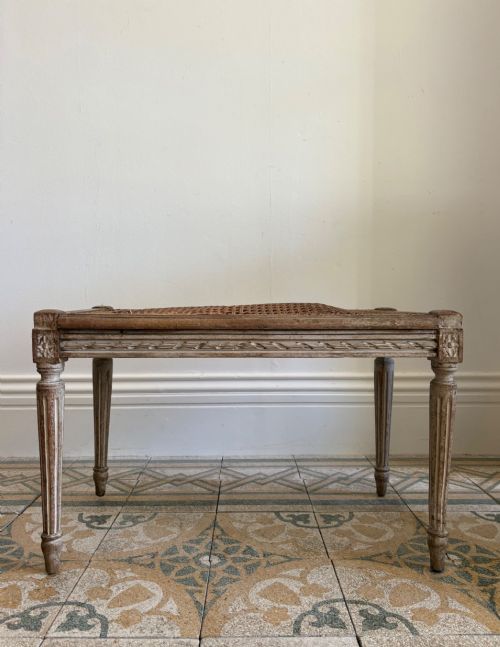
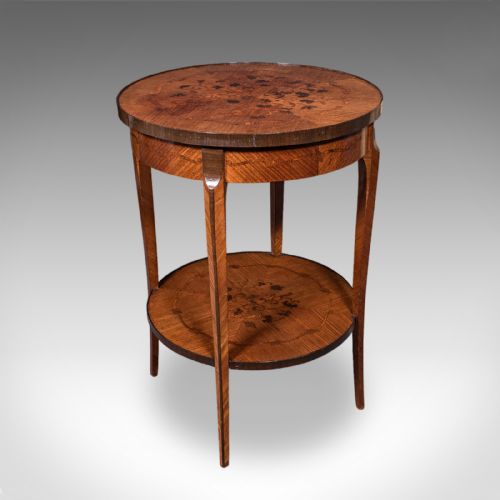
When searching for edwardian french tables, buyers encounter a selection spanning occasional, bedside, coffee, and bijouterie forms influenced by Louis XV and Louis XVI revivals. These pieces frequently combine continental silhouettes with the lighter proportions favoured during the Edwardian period.
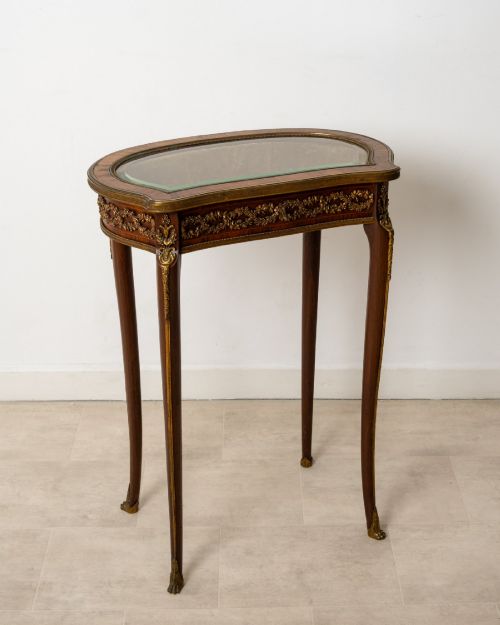
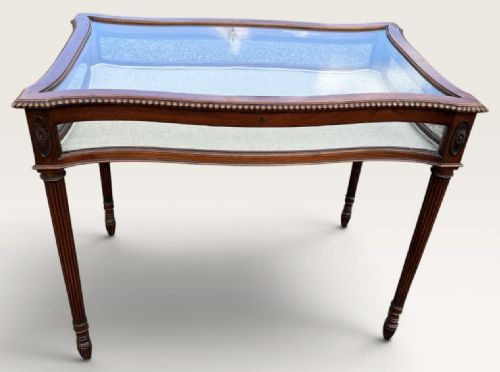
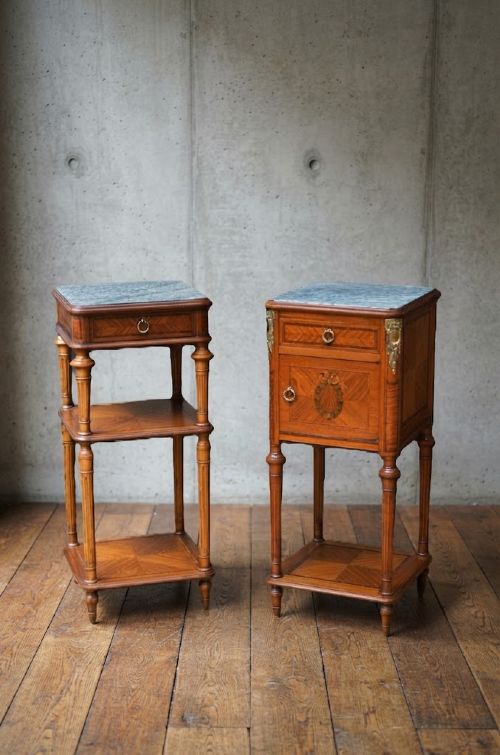
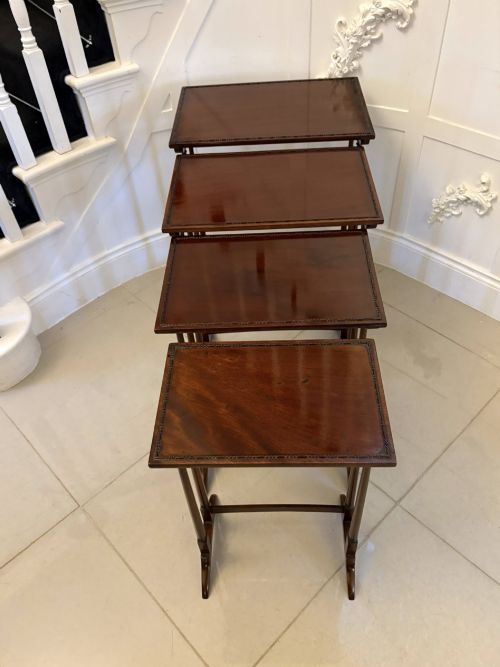
The evidence shows forms ranging from small display tables with glass tops to marble-topped side tables and nesting sets, often produced in mahogany, satinwood, or kingwood. Alongside these tables, the broader selection includes related bedside cabinets, writing desks, and occasional pieces originating between the late nineteenth century and the early twentieth century.
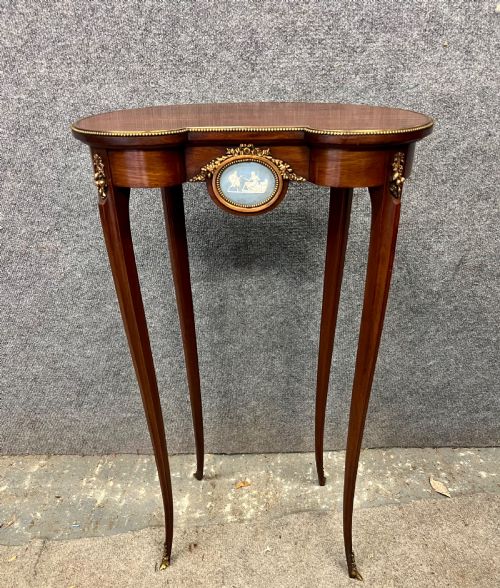
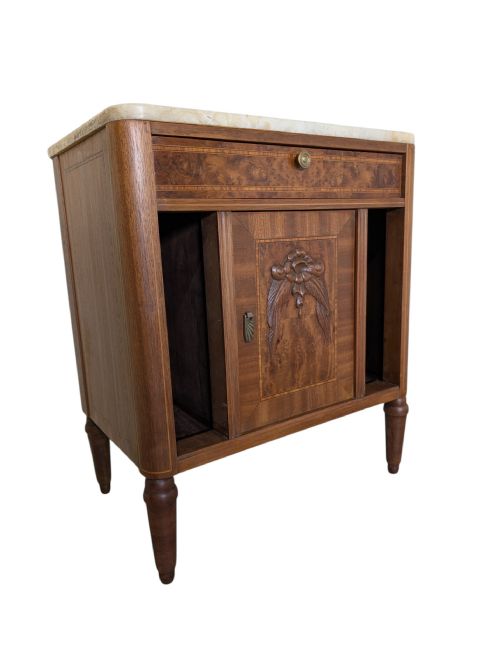
Buyers are most likely to meet mahogany or satinwood occasional tables and marble-topped variants mounted with gilt metal or ormolu. These survivors bridge traditional French cabinetmaking styles with Edwardian interior requirements.
How they were made
Cabinetmakers utilised dense timbers such as mahogany, satinwood, walnut, and kingwood, frequently applying intricate inlay, parquetry, and ebonised details to the wooden surfaces. These timbers provided a stable foundation for serpentine shapes and curved profiles.
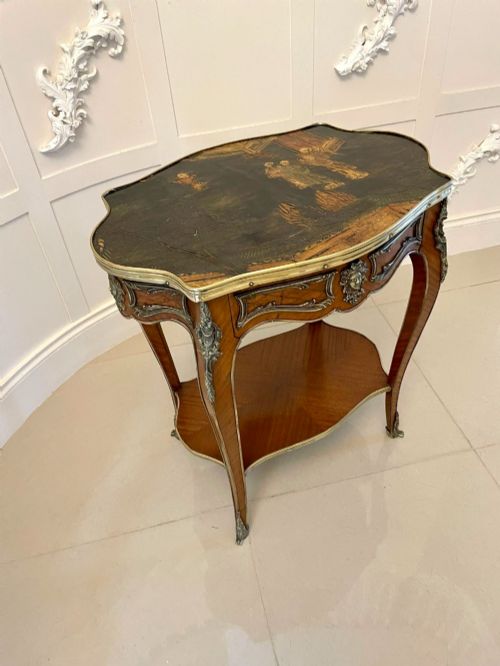
Metal mounts cast in ormolu, gilt bronze, and gilt metal were applied to corners, legs, and aprons, echoing earlier French royal workshops. Inset panels of rouge or white marble supplied contrasting durable surfaces to tables and cabinets.
The listings on this site record periods from the nineteenth century up to 1920, with a strong concentration of Edwardian pieces.
What varies in quality
The distinction between tiers rests upon the crispness of the cast ormolu mounts and the precision of the parquetry and inlay work. Superior examples exhibit hand-chased bronze details and carefully matched timber veneers that follow complex curves without distortion.
Construction methods determine durability, visible in the tightness of the joints, the weight of the marble tops, and the finish applied to the timber. Pieces retaining original glass panels and unmarked fire-gilt mounts stand apart from simpler or later-assembled variants.
Edward s And Roberts·Maples of London and Paris·R Varnier·Walker and Hall·Dugourc
The Edwardian French Tables Glossary
- Ormolu
- Gilt bronze mounts applied to furniture and clocks. This technique involved coating a bronze base in mercury-gilt to produce a bright golden finish.
- Bijouterie table
- A display table featuring a glass top and glazed sides. These pieces were designed to exhibit small collections of jewellery, medals, or curiosities.
- Parquetry
- Geometric patterns formed by small pieces of wood veneer fitted together. It differs from marquetry by relying on angular or geometric motifs rather than pictorial designs.
- Gueridon
- A small French round table supported by one or more columns or pedestals. They frequently feature marble tops and gilt mounts.
- Kingwood
- A dense, heavily figured South American timber with dark violet-brown tones. It was widely utilised by elite cabinetmakers for high-status French revival furniture.
Edwardian French Tables: Frequently Asked Questions
What distinguishes Edwardian French tables from Victorian pieces?
Edwardian French tables generally lean towards lighter proportions and brighter timber selections, such as satinwood, compared to heavier Victorian counterparts. They often incorporate refined Louis XV or Louis XVI revival motifs without the dense massing seen earlier in the nineteenth century.
At the same time, stylistic crossovers are common because late nineteenth-century workshops continued production into the Edwardian era. Examination of the timber grain, mount casting, and overall weight helps clarify the period of manufacture.
How were bijouterie tables used in period homes?
Bijouterie tables served as specialised display furniture in drawing rooms and boudoirs. Their glazed tops allowed hosts to exhibit portable collections of small decorative items safely while keeping them visible to guests.
Inside the home, they functioned as conversation pieces that doubled as occasional surfaces. The glass protected delicate items from dust while maintaining an open, light appearance in the room.
How do I care for marble-topped tables?
Marble surfaces require simple dusting with a soft cloth and prompt wiping of spills to prevent staining. Acidic liquids like citrus juice or wine can etch polished stone if left unattended.
Avoid placing abrasive objects directly onto the marble top to preserve the polish. Using coasters and protective mats safeguards both the stone and the underlying wooden frame.
Are ormolu mounts made of solid gold?
Ormolu consists of a cast bronze base coated with a thin layer of gold, historically applied via a mercury amalgamation process. The method produces the appearance of solid gold while utilising a durable, less costly metal underneath.
Over time, genuine ormolu develops a warm patina rather than tarnishing like brass. Cleaning should be done gently with a dry cloth to preserve this historical finish.