


Edwardian Folding Tea Stand
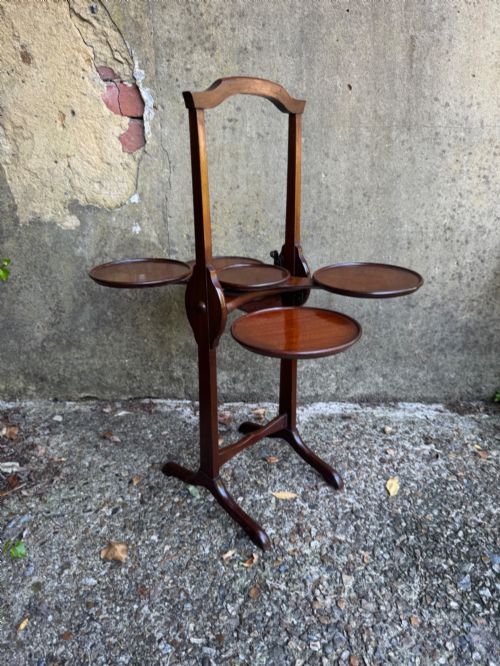
An Edwardian folding tea stand brings practical hospitality to a room, offering clever tiered surfaces that collapse flat when afternoon tea is cleared.
Edwardian Folding Tea Stand
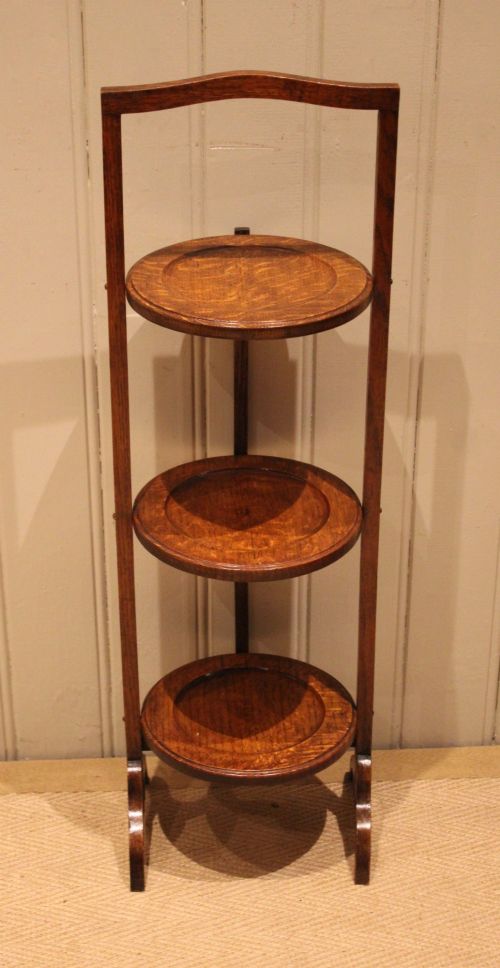
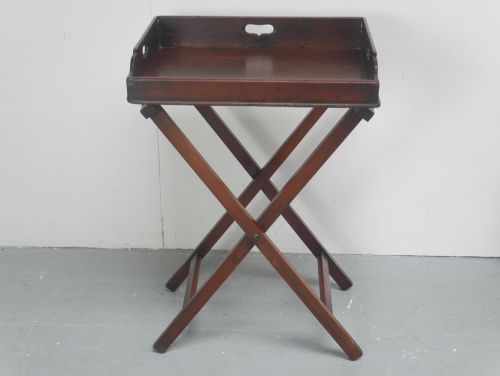
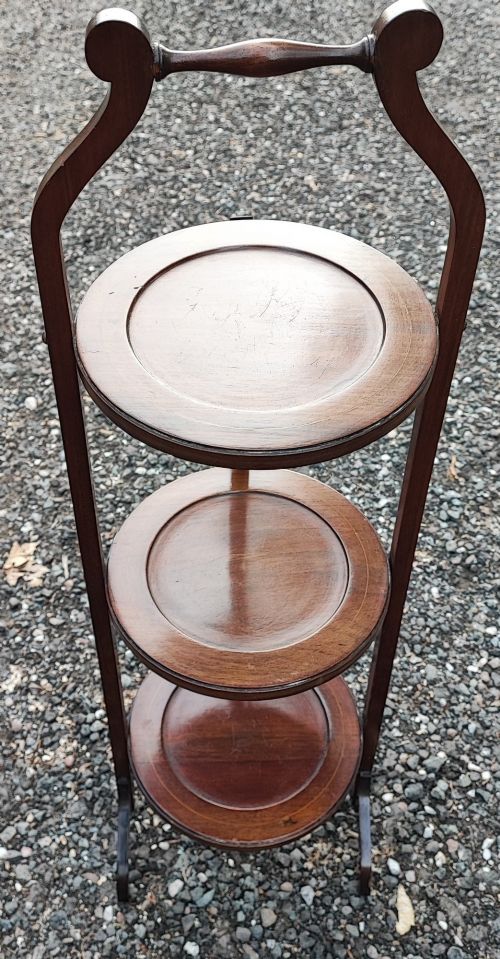
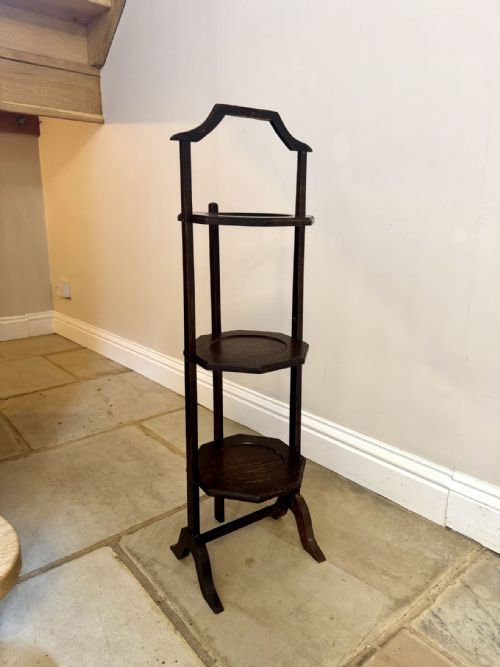
The edwardian folding tea stand is primarily represented here by mahogany and oak tiered cake stands, alongside butler tray tables and occasional folding furniture. Most examples date from the Edwardian period and the early twentieth century, though older pieces occasionally appear from the nineteenth century and the Georgian era.
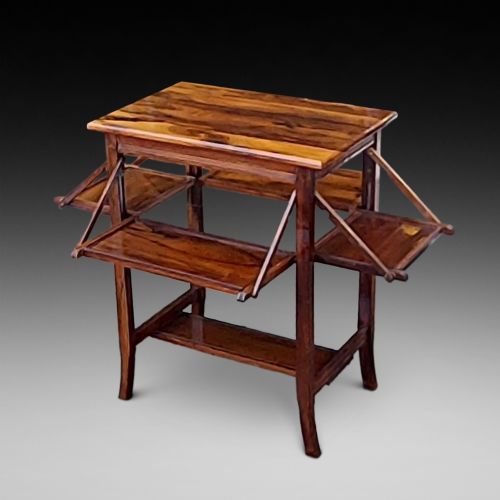
Forms range from simple two and three-tier cake stands to sophisticated inlaid pieces and Anglo-Indian carved teak tables. Buyers will find that standard folding mechanisms and multi-tiered circular trays dominate the selection, designed specifically for easy storage and serving.
Origins stretch from British workshops following Sheraton revival styles to overseas pieces such as carved octagonal tables from Hoshiarpur. This mix provides both traditional domestic serving furniture and more decorative imported occasional tables.
How they were made
Construction relies heavily on timbers such as mahogany, oak, teak and rosewood, chosen for strength and finished with polished surfaces. Cabinetmakers utilised boxwood and satinwood for delicate stringing and inlay work, particularly on Sheraton revival pieces.
Hinged and folding mechanisms allow the tiered frames and tray supports to collapse smoothly without losing structural integrity. Brass fittings often secure the joints and trays, while carved details adorn the teak surfaces of Anglo-Indian examples.
Monoplane tables share their name with early flying machines, capturing Edwardian enthusiasm for aviation in unexpected domestic furniture.
What varies in quality
Quality rests on the choice of timber and the crispness of any inlay or carved detail, distinguishing standard utility stands from finer decorative pieces. The precision of the folding mechanism and the stability of the tiers when fully open also mark the standard of manufacture.
Finer examples display careful timber selection, such as figured mahogany or rich rosewood, paired with tidy marquetry or intricate hand-carved panels. Lesser pieces rely on plain solid oak or simple turned supports with minimal ornamentation.
The Edwardian Folding Tea Stand Glossary
- Cake stand
- A tiered freestanding piece of furniture designed to hold plates of small cakes and pastries during afternoon tea. These items frequently feature folding frames for convenient storage.
- Butlers tray table
- A removable wooden tray resting upon a separate folding stand, traditionally used for serving drinks or food. The design allowed servants to carry the tray independently of its base.
- Sheraton revival
- A late nineteenth and early twentieth century design style drawing inspiration from the neoclassical furniture of George Sheraton. Pieces often incorporate light wood inlay, satinwood, and tapered legs.
- Hoshiarpur
- A town in India renowned for intricate woodwork, producing collapsible tables and stands carved from teak and inlaid with contrasting materials. These imported decorative items became popular in British homes.
- Stringing
- A narrow strip of contrasting timber inlaid into the surface of a piece to create decorative borders. This technique is commonly found on mahogany tables from the Edwardian era.
Edwardian Folding Tea Stand: Frequently Asked Questions
How were folding tea stands used?
These stands served domestic households during afternoon tea, holding cakes, sandwiches, and small pots without cluttering the main dining table.
When the tea service concluded, the tiers folded flat so the stand could be stored away in a corner or cupboard.
How do I tell an Edwardian stand from a later piece?
Edwardian stands typically show specific characteristics in their timber selection, such as rich mahogany or inlaid satinwood details characteristic of the early twentieth century.
Later reproductions or twentieth-century variants often use simpler construction methods or lighter modern fixings that differ from period examples.
Can I use a folding stand for daily living?
These pieces suit everyday use as side tables, plant stands, or occasional surfaces for holding drinks and books.
Their original folding design makes them practical for modern rooms where flexible, space-saving furniture is useful.