



Edwardian Folding Divider
These edwardian folding divider pieces are flexible partitions that shape large interiors with polished mahogany frames, painted surfaces, and folding panels.
Edwardian Folding Divider
When you search for an edwardian folding divider, you encounter multi-panel screens spanning from late Victorian decades into the early twentieth century. These objects function primarily to partition interior spaces or serve as privacy dressing screens.
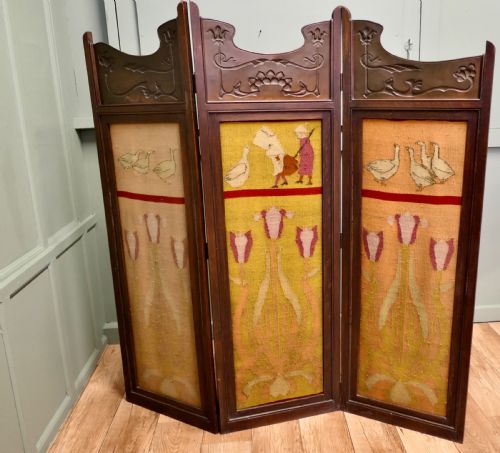
Mahogany frames emerge frequently across the available selections, often incorporating inlaid details, glass inserts, or folding triple panel arrangements. You also meet variants constructed in walnut, oak, brass, and black lacquer.
The regional origins and styles stretch from English Arts and Crafts workshops to French revival designs and Chinoiserie lacquered works. Folding screens, room dividers, and fire screens make up the core of this category.
Materials and construction methods
Makers utilised solid timbers including mahogany, walnut, and oak to build the structural hinge-connected frames. Ebonised finishes and brass fittings frequently reinforce these folding structures.
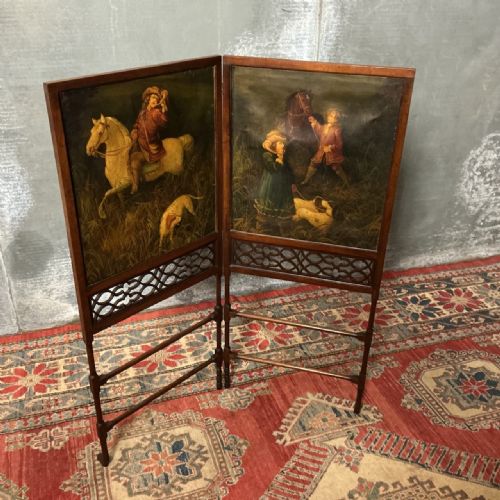
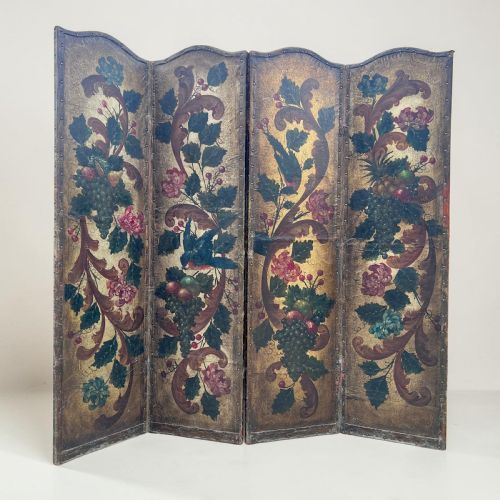
Surface ornamentation involved hand painting, oil paintings on canvas, and applied oil paint scenes. Artisans also integrated fabric panels such as William Morris velvet, leather, and naive wool work.
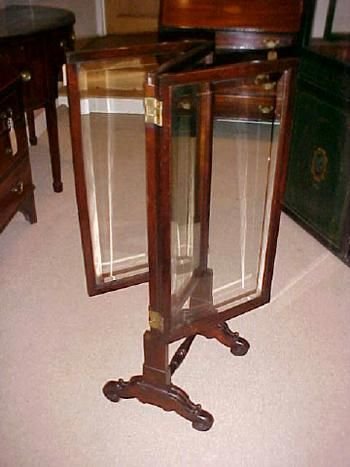
Specialised techniques include black lacquer work, papier mâché construction, fretwork, and hardstone mounting found on Chinese export pieces. Glass and mirror panels appear within specific dressing room variants.
One photographer's prop screen once held a room together while subjects posed briskly in front of painted pastoral scenes.
Distinguishing quality across pieces
Superior examples demonstrate meticulous joinery in the hinge mechanisms and frame assembly, ensuring the multiple folds operate smoothly without sagging. Lower tiers show looseness in the joints and wear on the connecting hinges.
The artistic execution of the painted surfaces dictates the upper range of value. Hand-painted pastoral scenes, fine oil paintings, and intricate lacquer work demand greater skill than plain fabric or standard scrap panels.
Material selection separates standard production from exceptional pieces. Hardwood frames with detailed fretwork or genuine hardstone mounts outweigh basic softwood or simple fabric-covered partitions.
The Edwardian Folding Divider Glossary
- Bergere
- A panel of woven cane work integrated into wooden furniture frames. This technique provides lightweight ventilation within partitions.
- Chinoiserie
- European decorative art imitating Chinese artistic styles. These pieces typically feature lacquered black backgrounds and gilt motifs.
- Fretwork
- Ornamental perforated woodwork created by cutting patterns through thin boards. It adds decorative lightness to heavy screen frames.
- Scrap screen
- A folding partition decorated with pasted paper scraps, engravings, and prints. Victorian makers frequently produced these amateur craft items at home.
- Triple panel
- A screen configuration consisting of three hinged sections. This layout allows the object to stand independently in a zig-zag formation.
Edwardian Folding Divider: Frequently Asked Questions
What rooms suit an edwardian folding divider?
These folding pieces work effectively in bedrooms as dressing room partitions or in large living areas to create intimate zones. Their mobility allows you to shift them easily as room layouts change.
They also function well to conceal fireplaces during warmer months or to block draughts near doorways. Proper placement depends on the height and fold count of the specific screen.
How do I care for lacquered screens?
Keep lacquered and painted wooden panels away from direct sunlight and excessive heat sources to prevent cracking. Dust them gently with a dry microfibre cloth without applying modern liquid polishes.
Leather and fabric panels require careful vacuuming using a low suction brush attachment. Avoid placing damp items against the base of antique wooden frames.
Are these screens fully reversible?
Certain configurations feature finished decoration on both sides, allowing the screen to face any direction in an open plan room. Others maintain a plain back designed to face a wall.
Check the hinge construction and surface finish on the reverse side to determine its placement flexibility. Fully finished multi-fold screens offer the greatest versatility for room division.
How do I distinguish Edwardian from Victorian screens?
Victorian examples often lean towards heavier black lacquer, ornate Chinoiserie, or dense scrap work created around eighteen-ninety. Edwardian pieces frequently showcase lighter mahogany frames, inlaid details, and simpler fabric or glass inserts.
Stylistic shifts move from heavy revival aesthetics toward cleaner Edwardian proportions by nineteen-ten. Comparing the primary wood choice and decorative motifs clarifies the manufacturing decade.