



Edwardian Fold Leaf Table
These pieces known as an edwardian fold leaf table bring clever folding mechanisms and compact surfaces into daily use.
Edwardian Fold Leaf Table
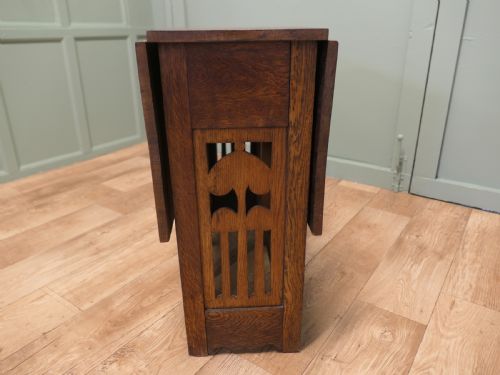
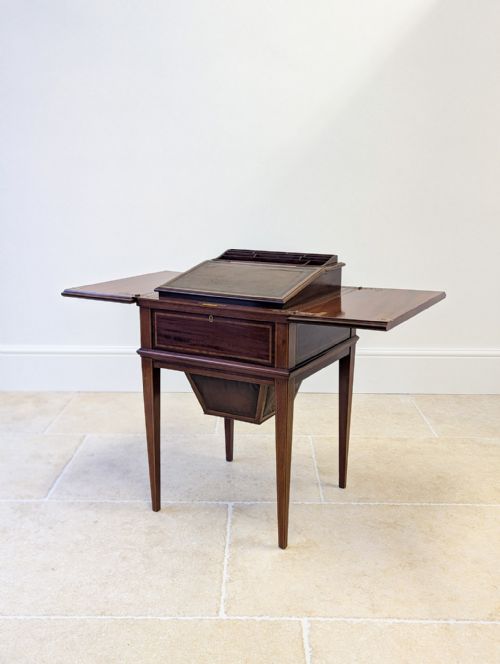
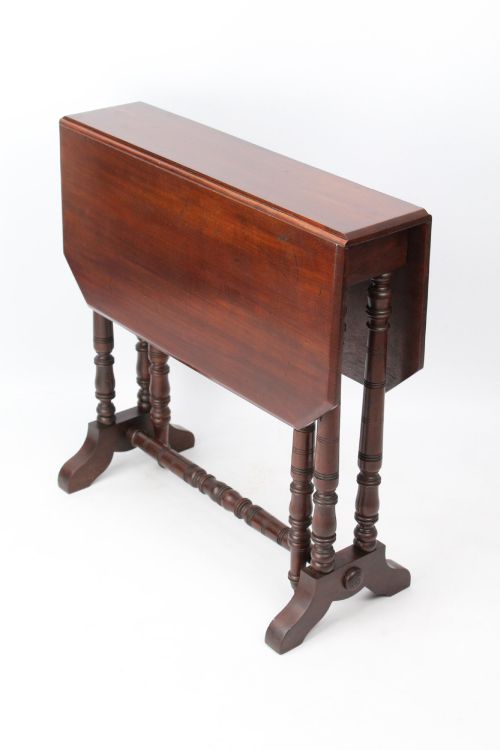
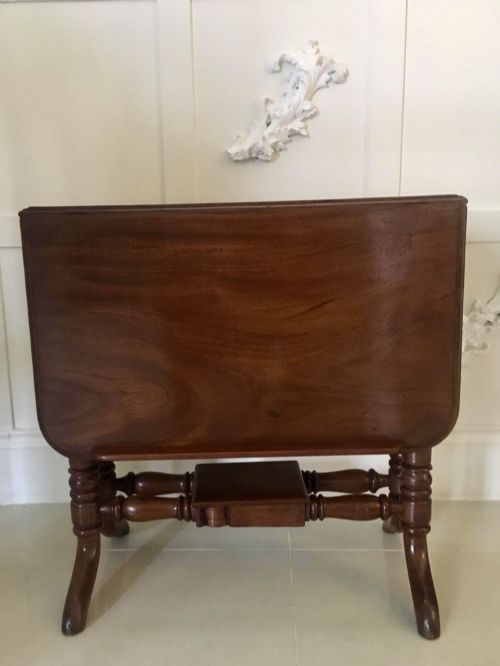
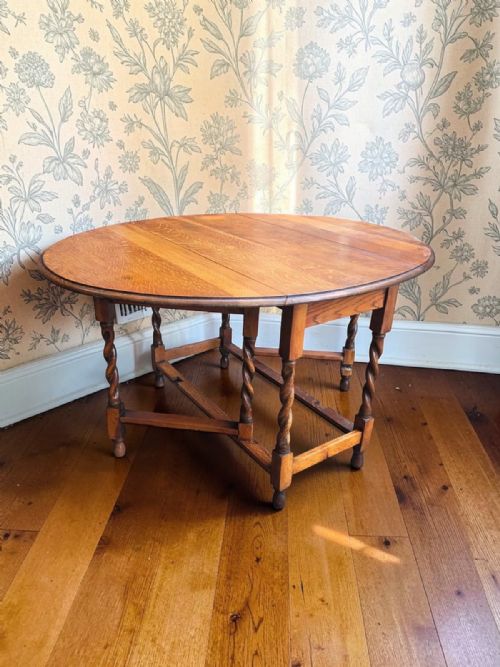
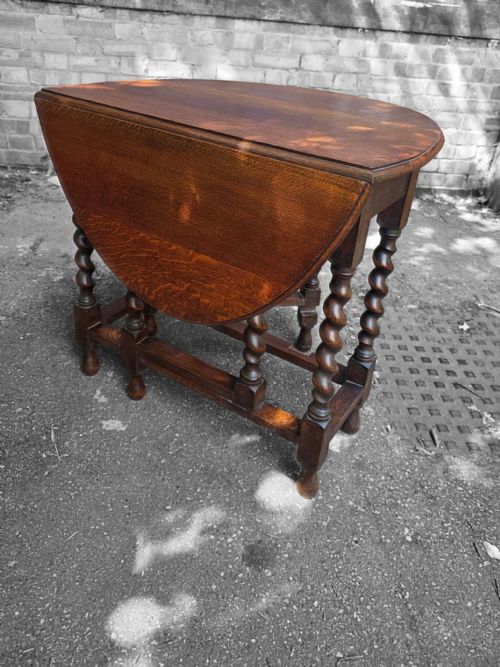
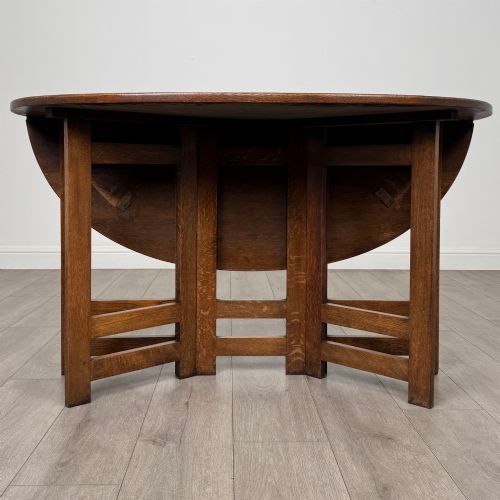
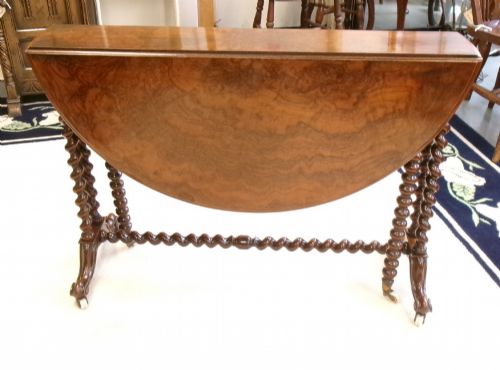
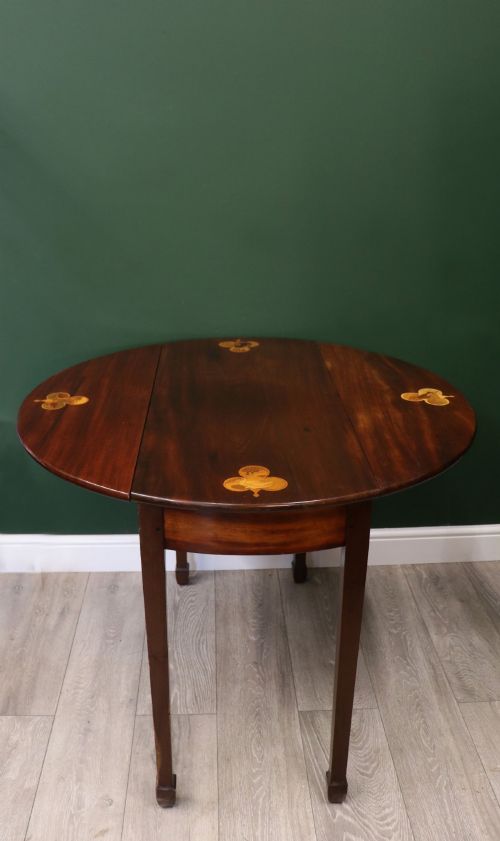
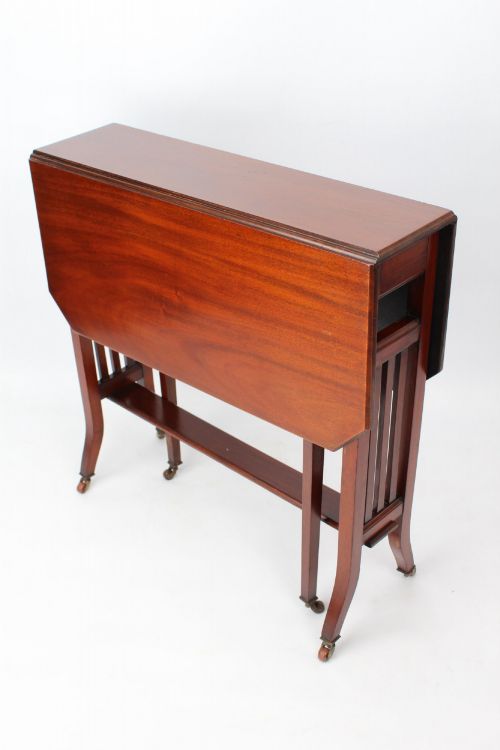
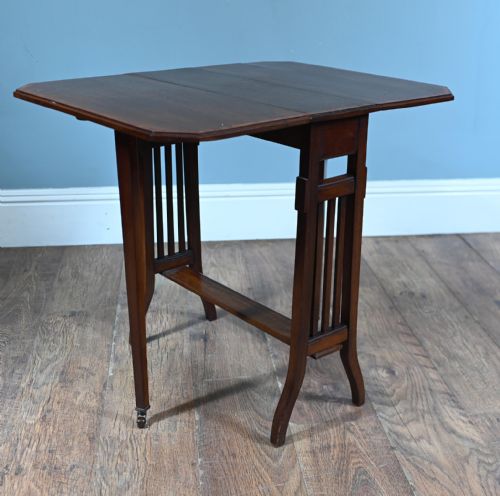
An edwardian fold leaf table functions primarily as an adaptable surface designed to expand when needed and fold away compactly for smaller rooms. These pieces appear most frequently in forms such as Sutherland tables, gateleg tables, and Pembroke tables.
The materials span from rich mahogany and satinwood to solid oak, often featuring brass castors or ceramic components. Makers constructed these versatile items to serve as tea tables, dining tables, or occasional writing desks.
Originating predominantly from the Edwardian era alongside late Victorian periods, the selection includes revival styles such as Jacobean and Sheraton. Buyers encounter numerous variations utilising drop leaves and folding flaps to maximise domestic space.
How they were made
Cabinet makers utilised solid timbers such as mahogany and oak alongside decorative veneers like burr walnut and satinwood. Construction relied heavily on sturdy gateleg actions, hinged drop leaves, and clever folding mechanisms to support the moving flaps.
Surface decoration frequently incorporated boxwood inlay, delicate stringing, and painted details. Joinery techniques ensured that folding leaves remained stable and balanced whether resting flat or dropped down.
Certain dining tables boast four folding flaps designed to accommodate unexpected tea guests without dominating the parlour floor.
What varies in quality
Superior examples demonstrate refined proportions, precise inlay work, and robust folding hinges that operate smoothly without sagging. Lower tiers often display simpler turned legs and heavier, less harmonious framing.
The choice of primary timber and secondary wood dictates the overall calibre, with finely figured mahogany and satinwood commanding higher craftsmanship. Structural integrity in the drop leaf joints remains paramount for daily functionality.
Maple & Co·Liberty & Co·Whytock & Reid of Edinburgh
The Edwardian Fold Leaf Table Glossary
- Gateleg table
- A table with hinged leaves supported by legs that swing outward like a gate. This traditional mechanism provides sturdy support for dining and tea tables.
- Pembroke table
- A rectangular table featuring two drop leaves on opposing sides and frequently containing a single drawer. Sheraton and Edwardian cabinet makers often shaped these with oval or serpentine profiles.
- Barley twist
- A carved wooden leg style resembling a twisted rope, commonly found on oak Jacobean revival pieces. This decorative turning technique adds visual texture to vertical supports.
- Inlay
- A technique where contrasting woods or materials like boxwood are fitted into recessed spaces on the surface. Makers utilised this method to create geometric borders and floral motifs.
Edwardian Fold Leaf Table: Frequently Asked Questions
How did people use an edwardian fold leaf table?
Households utilised these versatile surfaces for serving tea, writing letters, or expanding dining space in compact rooms. The folding leaves allowed owners to tuck the furniture against a wall when floor space was required.
In daily domestic life, the tables moved easily between sitting rooms and parlours depending on the social occasion. Their adaptable design suited the shifting requirements of Edwardian entertaining.
How do you distinguish an edwardian fold leaf table from Victorian examples?
Edwardian versions often showcase lighter satinwood or inlaid mahogany timbers with restrained decorative motifs. Victorian predecessors tend to feature heavier proportions, darker walnut or mahogany, and more robust turned supports.
Stylistic cues such as Sheraton revival details or Arts and Crafts simplicity help pinpoint the Edwardian period. Examining the secondary woods and construction methods further clarifies the date of manufacture.
What is a Sutherland table mechanism?
A Sutherland table relies on exceptionally narrow drop leaves supported by swinging gatelegs on either side. When lowered, the leaves hang almost vertically, allowing the piece to occupy minimal floor space.
This clever hinged design distinguishes the form from standard gateleg dining tables. The resulting silhouette remains remarkably slim until fully extended for tea or dining.
Where should I place an edwardian fold leaf table in my home?
These pieces fit naturally behind sofas, along hallways, or as occasional lamp tables in drawing rooms. With the leaves dropped, they serve well in narrow spaces where full-sized tables would obstruct movement.
When guests arrive, the leaves lift easily to create extra surface area for drinks or dining. Their compact footprint makes them practical additions to modern living areas.